

Ever thought about why coffee grounds are great for gardening but can also harm plants? It all comes down to how you use them. Coffee grounds can be a powerful plant fertiliser, but it depends on how you apply them. This article will show you how to use them wisely, so your plants thrive.
Key Takeaways
- Coffee grounds can enrich soil but may also harm plants if overused.
- Understanding the composition of coffee grounds is essential for effective use.
- Proper application techniques maximise benefits while minimising risks.
- Acid-loving plants benefit most from coffee grounds as a fertiliser.
- Regularly testing soil pH can help prevent negative effects on plant health.
- Consider composting coffee grounds to enhance soil quality more efficiently.
What Are Coffee Grounds?
Coffee grounds are what’s left after you brew coffee. They’re often thrown away, but they’re great for your garden. These organic materials are full of nutrients that can make your soil healthier. Instead of tossing them, use them to care for your plants. They’re a green way to turn waste into something useful for your garden.
The Composition of Coffee Grounds
Coffee grounds are made of organic stuff with lots of good stuff for plants. They’re not too acidic, with a pH of 6.5 to 6.8. This makes them perfect for many types of gardens.
Nutrients in Coffee Grounds
Coffee grounds have some nutrients like nitrogen, potassium, and phosphorus. But they’re not enough on their own to feed your plants. Mix them with other fertilisers to give your plants the best chance to grow.
Common Misconceptions About Coffee Grounds
There are a few myths about coffee grounds. One is that they make soil too acidic. But they don’t really change the pH much. Another myth is that caffeine in coffee grounds is bad for plants. While it might keep some pests away, it can slow down the growth of plants like tomatoes. Knowing these myths helps you use coffee grounds right in your garden.
Benefits of Using Coffee Grounds in Your Garden
Using coffee grounds in your garden has many benefits. It improves plant health and soil quality. It’s not just about getting rid of waste; it makes your garden better and adds nutrients.
Enhancing Soil Structure
Coffee grounds make compacted soil more aerated. This means better drainage and moisture retention. Their coarse texture also adds organic matter, which helps microbes grow.
This creates a healthier place for your plants. Adding coffee grounds to your soil can make your plants more vibrant.
Attracting Beneficial Microorganisms
Coffee grounds attract good microbes in the soil. These microbes are key in breaking down organic matter and making the soil richer. They help prevent diseases in plants.
The nitrogen in coffee grounds feeds these microbes. This keeps your plants healthy. Even indoor plants benefit from these advantages, growing stronger and more resilient.
| Benefit | Description |
|---|---|
| Soil Aeration | Coffee grounds improve soil structure by preventing compaction and enhance drainage. |
| Moisture Retention | The organic matter from coffee grounds helps retain moisture, reducing the need for frequent watering. |
| Nutrient Boost | Coffee grounds are rich in nitrogen, supporting strong plant growth and healthier yields. |
| Microbial Activity | They promote beneficial microorganisms that break down organic materials and enrich soil health. |
Potential Risks of Coffee Grounds for Plants
Using coffee grounds as plant fertiliser has many benefits. But, there are risks to consider. Knowing these dangers can keep your garden healthy and thriving.
The Danger of Overuse
Too much coffee grounds can make the soil too dense. This stops air and water from reaching your plants. It can also harm soil bacteria, leading to nutrient shortages.
To prevent these problems, use coffee grounds sparingly. Aim for no more than 20% of your compost mix.
Effects on Soil pH Levels
Coffee grounds are slightly acidic. But, they might not change your soil’s pH enough. Their effect on pH is short-lived and small.
For plants like blueberries and azaleas, coffee grounds alone are not enough. Test your soil regularly to keep the pH right for your plants.
| Risk | Description | Prevention |
|---|---|---|
| Overuse | Can lead to soil compaction and nutrient deficiencies. | Limit to 20% of total compost volume. |
| pH Levels | Short-term acidity effect does not significantly alter soil pH. | Regular soil testing to monitor pH levels. |
| Nutrient Imbalance | Possible nutrient deficiencies due to excess coffee grounds. | Mix with other compost materials. |
Best Plants for Coffee Ground Fertilisation
Coffee grounds are great for fertilising many plants, thanks to their slightly acidic nature. Knowing which plants benefit from coffee grounds can make your garden vibrant and productive. Here are some types of plants that do well with coffee grounds.
Acid-Loving Plants
Roses, hydrangeas, and rhododendrons love acidic soil, making them perfect for coffee grounds. This organic boost helps them grow lush and bloom more. Just remember to use it in small amounts to avoid overdoing it.
Vegetables That Thrive with Coffee Grounds
Carrots and radishes grow better with coffee grounds, thanks to the improved soil. These vegetables that thrive with coffee grounds taste better and are healthier. But, be careful with tomatoes and peppers as too much coffee can harm them. Always mix the grounds with compost first for the best results.
For more tips on using coffee grounds in your garden, check out online resources.
How to Use Coffee Grounds Effectively
Using coffee grounds in gardening can really boost soil quality and plant health. Learning how to compost and mulch with coffee grounds is key. This way, you get the most out of coffee grounds for your garden.
Composting with Coffee Grounds
Composting coffee grounds makes a great soil booster. To mix coffee grounds well, aim for a balanced compost pile. A layered approach works best. Mix coffee grounds with dry leaves or wood in a 1:3 ratio.
This mix helps break down faster and keeps nutrients in. Once it’s fully composted, it’s perfect for feeding your plants.
Mulching with Coffee Grounds
Mulching with coffee grounds needs mixing with other organic stuff to avoid water problems. A thin layer helps keep weeds down and soil moisture right. But, don’t let coffee grounds pile up too thick.
This can stop water and air from getting to your plants’ roots, harming them.
| Method | Benefits | Considerations |
|---|---|---|
| Composting with Coffee Grounds | Nutrient-rich soil amendment | Maintain a 1:3 ratio with dry materials |
| Mulching with Coffee Grounds | Weed suppression and moisture retention | Avoid dense layers that block air and water |
Tips for Applying Coffee Grounds Safely
Using coffee grounds as plant fertilizer can make your garden better. But, it’s important to do it carefully. Here are some key tips to keep your plants healthy when using coffee grounds.
Moderation Is Key
Remember, a little goes a long way. Only use a small amount of coffee grounds and spread them out in your garden. This stops the soil from getting too dense and blocking air and water.
Keep an eye on how your plants react. This way, you can make sure you’re not using too much. It helps your garden grow well without harming it.
Testing Soil pH Before Applying
Before adding coffee grounds, test your soil’s pH. Coffee grounds are a bit acidic. Knowing this helps you match your plants’ needs.
This way, you can make sure your coffee grounds help your garden grow. It stops them from hurting plants that need different soil conditions.
Coffee Grounds in Container Gardening
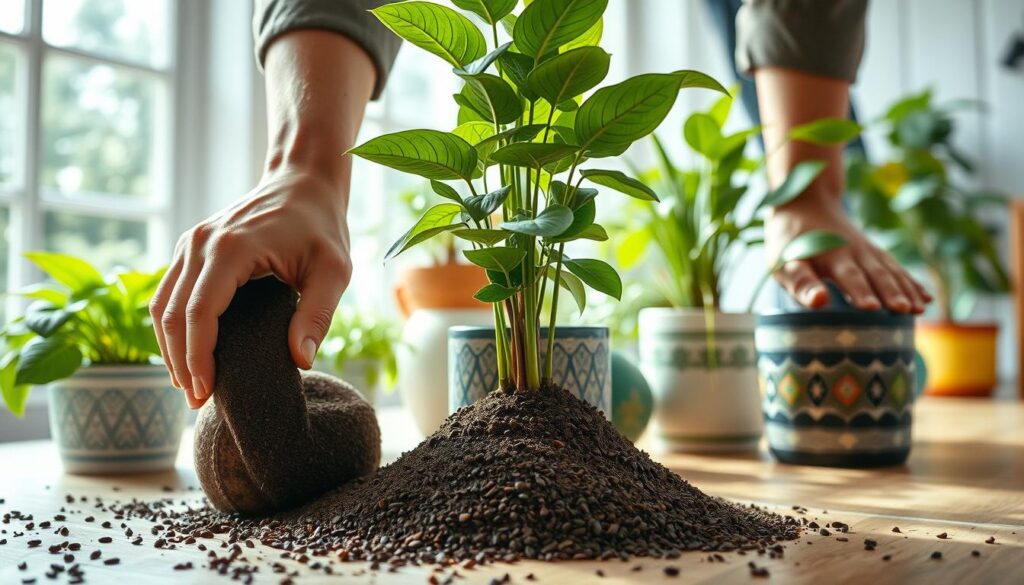
Container gardening is a great way to use coffee grounds. Even with limited space, coffee grounds can improve soil quality and keep it moist. This is perfect for indoor plants, making gardening rewarding and enjoyable.
Limited Space, Maximum Benefit
Using coffee grounds in container gardening is space-efficient. It’s great for herbs and flowering plants, which love the nutrients in coffee grounds. This enriches the soil, helping your plants grow well.
Monitoring Moisture Levels
It’s key to watch moisture levels when using coffee grounds. The grounds help keep water in, but too much can harm plants. Adjusting how often you water is important to keep your garden healthy.
| Aspect | Details |
|---|---|
| Benefit | Enhances soil nutrients |
| Best Plants | Herbs, flowering plants |
| Moisture Retention | Aids in water retention |
| Potential Risk | Waterlogging if overused |
| Watering Adjustment | Essential for balance |
Avoiding Common Mistakes with Coffee Grounds
Using coffee grounds as plant fertilizer can be tricky. Knowing the common mistakes can make a big difference. It helps your plants grow well, not struggle.
It’s important to understand how caffeine in coffee grounds affects plants. This knowledge helps avoid problems.
Not Ignoring Caffeine Content
Caffeine in coffee grounds can harm plant growth. Seedlings, in particular, may not do well. It’s best to watch how plants react to coffee grounds.
Some plants might like coffee grounds, while others may not. This can lead to slow growth.
Combining with Other Amendments
Try mixing coffee grounds with other fertilisers for a better mix. This can give your plants more nutrients. It helps keep them healthy.
Adding coffee grounds to compost or other organic matter is a good idea. It ensures your plants get a wide range of nutrients safely.
The Science Behind Coffee Grounds and Plant Growth
Coffee grounds are getting more attention from gardeners and scientists. They help improve soil health and boost plant growth. Studies and expert opinions show how coffee grounds can benefit your garden.
Research Findings and Expert Opinions
Experts from Oregon State University share their knowledge on using coffee grounds. They say coffee grounds add important nutrients to the soil. This helps plants grow better and supports soil health.
But, experts also warn of the dangers. Too much coffee ground can harm plants. It’s important to use them in the right amount. This way, they can help plants grow without causing harm.
| Aspect | Benefits | Potential Risks |
|---|---|---|
| Nutrient Content | Rich in nitrogen, phosphorus, and potassium. | Excessive caffeine may impede growth. |
| Soil Structure | Improves aeration and drainage. | Over-application may compact soil. |
| Microbial Activity | Encourages beneficial bacteria and decomposers. | Potential for attracting unwanted pests. |
Coffee Grounds and Pest Control
Coffee grounds can help keep pests away from your garden. Many gardeners use them to keep unwanted visitors out. The gritty texture and caffeine in coffee grounds make them unappealing to some insects and slugs.
It’s important to know which pests coffee grounds can keep away. Slugs, for instance, don’t like coffee grounds. This makes them a good choice for protecting your garden. Insects that prefer moist environments might also find coffee grounds less welcoming.
To get the best results, use coffee grounds regularly. Spread them around your plants to keep pests at bay. It might take time to see the effects, so be patient and keep using them.
Creative Uses for Coffee Grounds Beyond Gardening
Coffee grounds have many uses beyond the garden. They can make your home and personal care routine better. These versatile leftovers are great for eco-friendly products and daily tasks. Let’s look at some creative ways to use coffee grounds.
Eco-Friendly Cleaning Products
Coffee grounds are great for scrubbing tough stains. They’re a natural choice for cleaning. Mix them with warm water or natural ingredients for a powerful scrub.
This method cleans surfaces well. It also reduces chemical use and waste.
Homemade Beauty Treatments
Coffee grounds are also good for beauty treatments. They offer a natural way to care for your skin. Mixing them into scrubs or face masks exfoliates and improves blood flow.
This eco-friendly beauty option boosts your skin’s health. It also uses a resource that would be wasted.
Final Thoughts on Using Coffee Grounds
Using coffee grounds in your garden needs both knowledge and practice. It’s key to know the good and bad sides of coffee grounds. Too much can harm your soil.
Knowing what your plants need helps. Use coffee grounds wisely, matching them to plants that love acidic soil or need extra nutrients. This way, you get the most out of coffee grounds.
Keep an eye on how your plants react. Make changes as needed. With a little effort, your garden will thrive and grow beautifully.