Ever thought about why mulch might not be the best for a dry garden? Using rocks instead can change how you design your garden. Rocks not only make your garden look better but also help with water and are easier to care for, which is great for dry areas. This article will show you how rocks can make your garden both beautiful and sustainable.
Key Takeaways
- Rocks provide an effective alternative to traditional mulch.
- They help conserve water and maintain adequate soil moisture.
- Rock garden designs can enhance the aesthetic appeal of your garden.
- Lower maintenance is achieved by using rocks instead of organic materials.
- This approach promotes sustainable gardening practices.
- Rocks can prevent soil erosion, improving soil management.
Why Choose Rocks for Your Dry Garden?
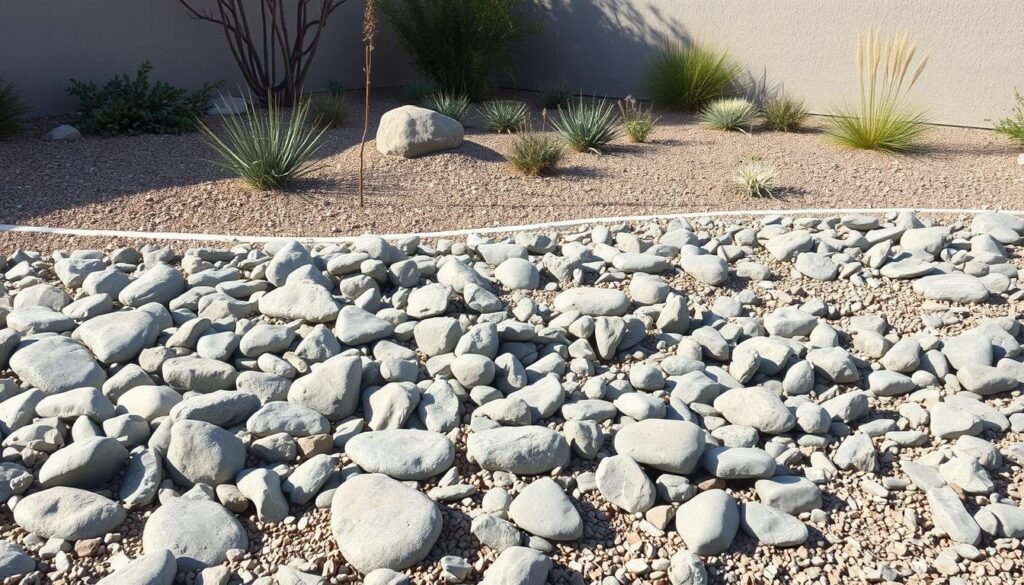
Choosing between mulch and rocks for your dry garden is key. Rocks offer better maintenance, look, and last longer. They are perfect for dry areas where things need to last.
Benefits of Using Rocks
Landscaping stones bring many benefits to your garden. They don’t break down like mulch, so you don’t need to replace them often. This saves money in the long run.
- Less maintenance, as rocks do not require regular replacement.
- Excellent weed suppression, creating a cleaner garden space.
- Natural erosion prevention, safeguarding your soil.
- A barrier against soil disturbance, helping maintain plant health.
Comparing Rocks to Traditional Mulch
Mulch has its downsides. It can attract pests and become a home for insects if not kept up. Rocks, by contrast, stay pest-free and clean.
Rocks also reflect sunlight, adding beauty without the mess of organic materials. This makes them a great choice for anyone with a dry garden.
Choosing the Right Rocks for Your Garden
When designing your dry garden, picking the right rocks is key. They add beauty and function. Different rocks offer unique benefits, from decorative gravel to large stones. Knowing what each type offers helps you make a stunning, eco-friendly garden.
Types of Rocks Ideal for Garden Use
Many types of rocks work well in gardens. Here are some top picks:
- Decorative Gravel: It’s light and flexible, great for paths and ground cover. It drains well and looks good.
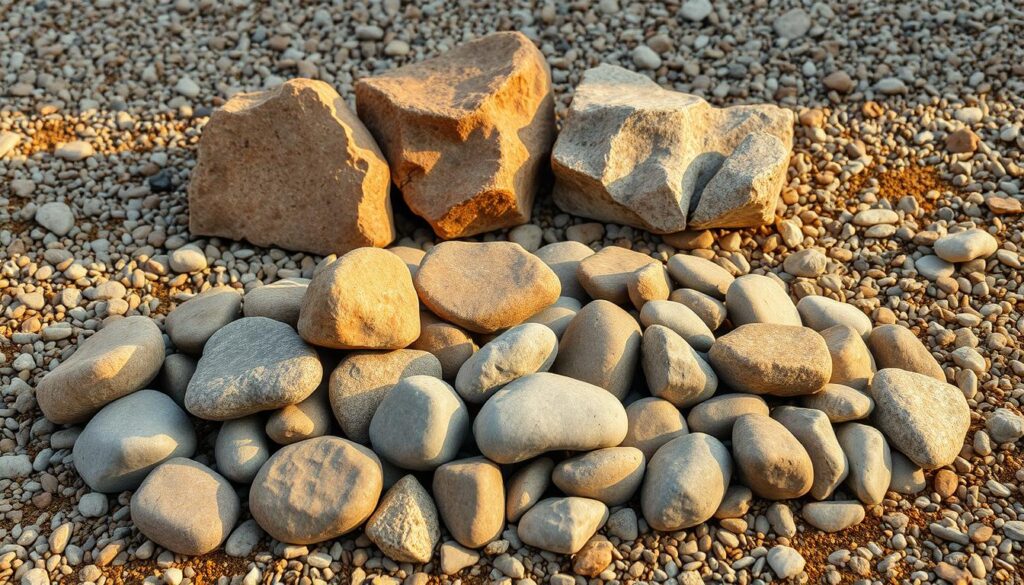
- River Rocks: These smooth stones come in many sizes and colours. They’re perfect for highlights or borders, adding to your garden’s look.
- Decomposed Granite: It’s solid and attractive. Its colours blend nicely, making your garden welcoming.
Size and Texture Considerations
The size and texture of rocks matter a lot in gardens. Think about these points:
| Rock Type | Size | Texture | Functionality |
|---|---|---|---|
| Decorative Gravel | Small (5-15mm) | Rough and jagged | Great for drainage and aesthetic appeal |
| River Rocks | Medium to Large (20-50mm) | Smooth | Ideal for landscaping and erosion control |
| Decomposed Granite | Fine (0-5mm) | Granular | Provides a solid surface and looks attractive |
Choosing the right mix of rocks improves your garden’s look and use. With the right picks, you can make a beautiful, useful space.
How Rocks Help with Soil Moisture Management
Rocks are key in managing soil moisture in your garden. They help reduce moisture loss and stop erosion. This makes your garden a better place for plants to grow.
Reflective Properties of Rocks
Some rocks reflect sunlight. This means less heat hits the soil, lowering evaporation. A cooler soil is better for roots in hot months, helping plants grow well.
Preventing Soil Erosion
Rocks act as a barrier against soil erosion. They are great for gardens on slopes or in windy spots. By stopping erosion, they keep nutrients and moisture in the soil, which is good for your garden’s health.
Designing Your Dry Garden with Rocks
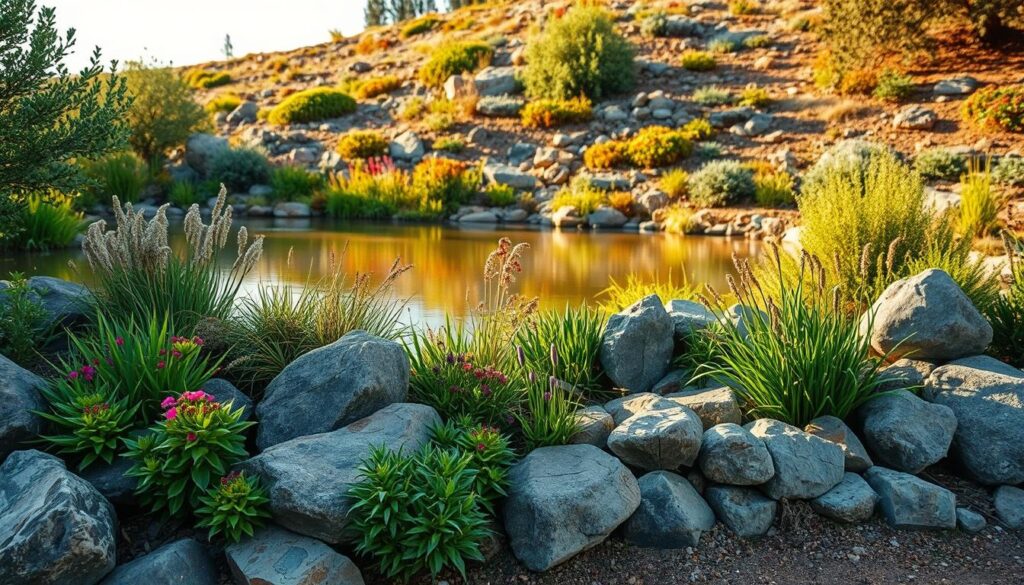
Arranging rocks in your garden can make it look stunning and peaceful. Good rock garden design uses placement strategies to make your outdoor space look great. Grouping rocks of different sizes can create a natural terracing effect, like a hillside.
Adding plants around the rocks makes the garden even more beautiful. They provide lush greenery that contrasts with the hard rock surfaces.
Placement Strategies for Visual Appeal
When placing rocks, aim for balance. Use big rocks as focal points and smaller stones for paths or borders. This guides the eye through the garden.
Varying the rock orientation adds depth and interest. Mixing colours and textures in your rock selection also helps achieve harmony.
Creating Layered Effects
Layering rocks can make your garden look amazing. Start with big boulders at the back and use smaller stones towards the front. This creates a tiered look that draws the eye.
Using plants that love rocky places can highlight these layers. They add colour and greenery against the rugged rocks.
Maintenance Tips for Rock Gardens
Keeping a rock garden in top shape is key to its beauty and health. Simple maintenance tips can make your rocks shine and plants flourish. Regularly clean your rocks and use smart weeding methods to keep your garden looking great.
Cleaning and Refreshing Your Rocks
It’s important to clean your rocks from time to time. This removes dirt, algae, and debris that builds up. A brush and a vinegar-water mix can make your rocks look new again.
Cleaning not only makes your rocks look better but also stops moss from growing. Moss can harm your plants. Lighter rocks might need more cleaning to stay bright.
Weeding Strategies in Rock Gardens
Weeds can compete with your plants for food and water. So, it’s vital to weed regularly. Pull out weeds by hand or use a hoe to get rid of them.
Using landscape fabric under your rocks can also help fight weeds. It stops weeds without harming your garden’s water flow. This way, your rock garden stays healthy and weed-free, without needing harsh chemicals.
The Environmental Benefits of Rock Gardens
Rock gardens are more than just pretty. They help the environment in many ways. By using rocks in your garden, you make a space that looks good and helps nature. This part talks about how rock gardens help animals and save water.
Encouraging Biodiversity
Rock gardens are homes for many creatures. The spaces between rocks are perfect for small animals and insects. By planting local plants, you make your garden a haven for bees and butterflies.
This helps the whole ecosystem. It makes your garden a place where everything can live and grow well together.
Reducing Water Consumption
Rock gardens are great for saving water, which is important in dry areas. They need less water because the rocks keep the soil warm. This helps plants grow even when it’s dry.
By choosing a rock garden, you help save water. This is good for the planet and helps with water conservation.
| Feature | Benefits |
|---|---|
| Encouraging Biodiversity | Provides habitats for wildlife, attracting pollinators and enriching the ecosystem. |
| Water Conservation | Minimises irrigation needs, effectively reducing water consumption. |
Incorporating Plants with Rocks
Combining plants with rocks can make your dry garden look great. It’s key to pick the right plants for a healthy garden. Many plants do well in rocky areas, looking good and staying strong.
Learning about companion planting can help your garden grow better. This means choosing plants that work well together.
Best Plant Choices for Rock Gardens
For your rock garden, think about these tough plants:
- Lavender: It smells nice, loves the sun, and drains well.
- Sedum: These plants need little water and grow in poor soil.
- Thyme: It’s a hardy herb that looks good and smells nice when walked on.
- Portulaca: These plants have bright flowers, adding colour.
- Agave: It’s a striking plant that fits well in dry, rocky spots.
Companion Planting Techniques
Companion planting helps your plants grow better together. For example, lavender and thyme work well together. They keep pests away and help each other grow.
Planting sedum near yucca also helps. It covers the ground, stopping weeds and keeping the soil moist.
Creating a Pathway with Rocks
Designing a rock pathway can make your dry garden more charming. It also serves a practical purpose. Choosing the right pathway rocks and installing them smoothly can transform your landscape. It becomes both functional and beautiful.
Types of Pathway Rocks
Choosing the right materials is key for a rock pathway design. Here are some popular options:
- Flagstone: Known for its large, flat surfaces, flagstone provides a rustic look and stability.
- Gravel: A versatile and cost-effective choice, gravel can fill gaps between larger stones or serve as a base.
- River Rock: Smooth and rounded, river rocks offer a natural feel and work well for casual pathways.
- Slate: This layered stone adds elegance and can be cut into various shapes.
Step-by-Step Installation Guide
Installing your chosen pathway rocks needs careful planning and execution. Follow this guide to create a sturdy and attractive pathway:
- Plan the layout: Visualise and mark the desired pathway using string or garden stakes.
- Clear the area: Remove grass, weeds, and debris from the marked pathway.
- Establish a base: Lay down landscape fabric to prevent weed growth, followed by a layer of gravel or sand for drainage.
- Lay the pathway rocks: Carefully position your chosen rocks, ensuring they fit snugly together for stability.
- Fill gaps: Use smaller stones or gravel to fill any spaces between the larger rocks.
- Secure the pathway: For added durability, consider using mortar or polymer sand between the stones.
Enhancing Aesthetics with Decorative Rocks
Decorative rocks can make your garden look amazing. The right colours and styles can match your plants and make your garden more beautiful. They can also create a nice contrast with flowers or greenery, making your outdoor space welcoming.
Colour and Style Considerations
Choosing the right colours for your decorative rocks is key. Warm earthy tones or cool blue shades can change how your garden looks. Try using crushed granite or river rock to get unique looks that work well with your plants.
Seasonal Changes and Rock Selection
Seasonal changes affect what decorative rocks you should choose. Bright rocks can add warmth in winter, while softer colours are better in summer. Changing your rocks with the seasons keeps your garden looking great all year. For more tips on using decorative rocks, see this guide on decorative rocks in landscape design.
Common Mistakes When Using Rocks
Creating a beautiful rock garden needs careful planning. Many gardeners make common mistakes that affect their garden’s look and function. By knowing these mistakes, you can make your garden a stunning visual masterpiece. This includes avoiding overcrowding and making smart choices when picking rocks.
Avoiding Overcrowding
One big mistake is overcrowding your rock garden. Putting too many rocks or plants together can stop growth. It also makes it hard for plants to get sunlight and water. Make sure to leave enough space for each element to thrive and for the rocks to stand out.
Choosing the Wrong Type of Rock
Choosing the wrong rocks is another common error. The wrong rocks can cause drainage problems or clash with your garden’s look. When picking rocks, think about your local climate, soil, and garden design. Making smart choices will keep your garden looking good and working well.
DIY Projects for Rock Gardens
Turning your rock garden into a personal oasis is fun with DIY projects. These activities let you connect with your outdoor space. They make it both useful and beautiful. Think about building raised beds for planting and adding decorative touches that show your style.
Building Raised Beds
Building raised beds is great for gardening fans. It lets you grow herbs, veggies, and flowers easily. Choose rot-resistant timber or stone that matches your rock garden.
- Measure and mark the area for your raised bed.
- Cut your materials to size, making sure it’s easy to reach.
- Build the structure securely, thinking about drainage.
- Fill it with good soil and compost for healthy plants.
Creating Decorative Features
Decorative features can make your rock garden special. They add charm and invite people to explore. Here are some ideas for your projects:
- Make patterns or borders with colourful stones around plants.
- Create a small water feature with pebbles and stones for peace.
- Build a welcoming archway with rocks to guide visitors through.
Resources for Further Reading and Inspiration
Learning more about rock gardening can make your dry garden better. There are many resources for both new and experienced gardeners. These can help you learn and get inspired for your garden.
Books and Magazines on Rock Gardening
Start by reading books from famous gardening authors. “Rock Gardening: Reimagining a Classic Style” is a great choice. It gives new ideas on plants and design.
Magazines like “The Garden” also have useful articles. They cover different rock gardening topics. This keeps your garden up-to-date and beautiful.
Online Communities and Forums
Online forums are great for sharing ideas and getting advice. Sites like Reddit have gardening forums. Here, people share their experiences and solutions.
Joining these forums lets you ask questions and learn from others. You’ll find new ways to improve your rock garden.