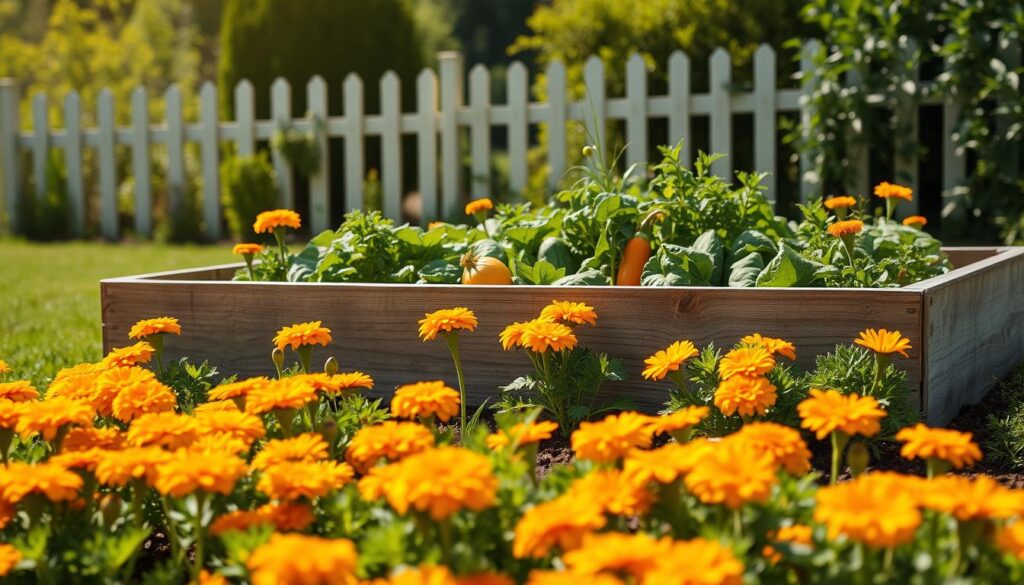
Have you thought about how your vegetable bed could grow better with a bit of colour? Marigolds are not just pretty; they bring many benefits to your garden. They help keep pests away and make the soil better for your plants.
Marigolds add a splash of colour and make your garden look great. They also help your vegetables grow stronger and healthier. This makes gardening more enjoyable and rewarding.
Key Takeaways
- Marigolds can improve soil health through nitrogen fixation.
- They deter harmful pests, protecting your vegetables.
- Marigolds attract beneficial insects, improving pollination.
- They offer vibrant colours, making your garden more beautiful.
- Companion planting with marigolds can lead to better vegetable growth.
Overview of Marigolds in Gardening
Marigolds hold a special spot in gardening, loved by those who garden organically. They are known for their bright colours and toughness. They’re perfect for adding beauty to vegetable beds.
These flowers do more than just look good. They help keep the garden healthy and balanced.
A Brief Introduction to Marigolds
The French marigold is a favourite for its easy growth. It’s tough and adaptable, making it a go-to for many gardeners. Its flowers add beauty and help the health of vegetable beds.
The Popularity of Marigolds
Marigolds have become very popular. They’re great for attracting beneficial insects and adding colour to gardens. This makes them a top choice for organic gardening.
Benefits Beyond Aesthetics
Marigolds offer more than just beauty. They naturally keep pests away, protecting other plants. They also improve soil health, helping other plants grow better. This is why marigolds are key in any garden.
| Feature | Details |
|---|---|
| Variety | French marigold is ideal for vegetable beds. |
| Growth | Resilient and easy to grow. |
| Benefits | Pest deterrent and soil improver. |
| Uses | Enhancing biodiversity and aesthetics. |
How Marigolds Improve Soil Health
Adding marigolds to your garden boosts soil health, making it better for veggies. These bright flowers are not just pretty. They also help the soil they grow in.
Nitrogen Fixation Benefits
Marigolds can increase soil nitrogen levels. Their roots release compounds that fight off harmful nematodes. This helps plants grow better.
They make the soil healthier. This means nutrients are easier for plants to use. Your veggies will do well because of it.
Adding Organic Matter
Marigolds add organic matter to the soil as they break down. This makes the soil better for water and air. It also gives nutrients to your veggies.
Growing marigolds in your garden makes it look great. It also helps your soil and veggies grow strong. It’s a win-win for your garden.
Marigolds as Pest Deterrents
Marigolds are great at keeping pests away from vegetable gardens. They release special smells from their roots and leaves. These smells help keep pests from harming your crops.
What Pests Do They Deter?
Marigolds are good at keeping many garden pests away. They protect against:
- Nematodes
- Aphids
- Whiteflies
- Various beetles
Using marigolds in your garden helps a lot. They reduce pest problems, so your plants can grow well without chemicals.
How They Signal Other Plants
Marigolds do more than just keep pests away. They also talk to other plants. They send out chemical signals to warn them of pests.
This helps all plants in the garden stay healthy. Healthier plants mean better food for you.
Companion Planting with Marigolds
When planting marigolds, it’s key to think about their role as a companion for veggies. These bright flowers make your garden look great and help your veggies grow better. Picking the right veggies to grow with marigolds can make your garden more productive and healthy.
Best Vegetables to Pair with Marigolds
Many veggies do well with marigolds, forming a good relationship that keeps pests away and helps them grow. Some top veggies to grow with marigolds are:
- Tomatoes: Marigolds keep nematodes and other pests away from tomatoes.
- Cucumbers: Marigolds’ scent confuses pests, protecting cucumbers from damage.
- Peppers: Growing marigolds with peppers can increase your pepper yield and health.
- Squash: Marigolds keep squash beetles away and add diversity to your garden.
Coping with Companion Planting Issues
Marigolds bring many benefits, but it’s important to handle any planting issues. Too many plants can fight for sunlight and nutrients, harming your veggies. Here are some tips to avoid these problems:
- Make sure each plant has enough space for sunlight and nutrients.
- Change where you plant each year to keep the soil healthy.
- Keep an eye on your garden for signs of too many plants.
Adding marigolds to your veggie garden can make it better. By choosing the right veggies and watching out for problems, you can have a lush and lively garden.
Attracting Beneficial Insects
Adding marigolds to your vegetable bed can really help your gardening. These bright flowers are not just pretty. They also attract good insects.
Marigolds help create a welcoming space for insects. This space supports pollination and keeps pests away.
Pollinators Love Marigolds
Marigolds attract bees and butterflies. Their bright colours and smells are irresistible to these insects. Planting marigolds in your garden boosts pollination.
This leads to a better harvest. More gardeners are using marigolds because they work so well.
Predators that Control Pests
Marigolds also draw in insects that eat pests. Ladybugs and lacewings live among marigolds and eat aphids. This keeps your vegetables safe.
Using marigolds in your garden makes plants healthier. It also makes your garden more diverse. For more on marigolds, check out this resource.
Seasonal Considerations for Planting
Timing your planting is key to marigolds’ success in vegetable beds. Knowing when to sow these flowers ensures they grow well with other plants. It’s important to consider the season for marigolds to make the most of your garden. Let’s look at the best planting times and their growth cycle.
When to Plant Marigolds
Plant marigolds after the last frost in your area. This lets them grow well in the warm months. You can sow them directly in the soil or start them indoors and then move them outside. Seed packets often give advice on when to plant in your region.
Growing Cycle of Marigolds
Marigolds grow from seed to flower in 60 to 90 days, depending on the type. To plant marigolds well, think about their growth stages. Planting them at the right time means you’ll get beautiful flowers that help your vegetables grow.

Caring for Marigolds in Your Vegetable Bed
Understanding what marigolds need is key to their growth. These flowers love full sun and don’t need special soil. They’re great for new gardeners. With the right watering and light, your marigolds will bloom beautifully.
Watering Practices
Marigolds need regular water to bloom well. But, they’re also good at handling dry spells. Water them deeply but not too often. This helps their roots grow strong.
Light and Soil Requirements
Marigolds need lots of sunlight to bloom brightly. They should get at least six hours of direct sun a day. They can grow in many soils, but well-drained soil with organic matter is best. This keeps them healthy and helps your vegetable bed.
The Aesthetic Appeal of Marigolds
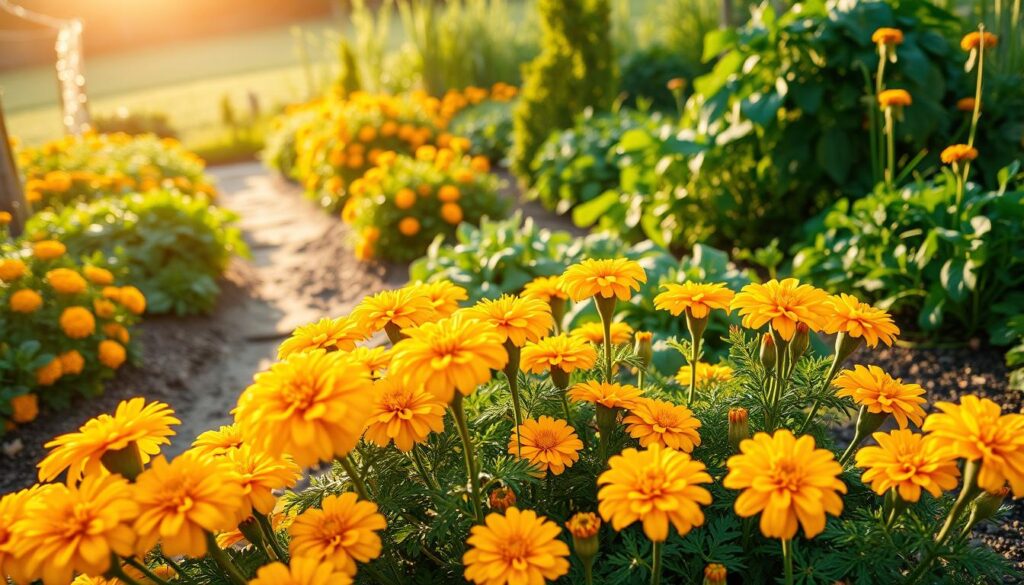
Marigolds add vibrancy and charm to your vegetable bed. Their bright colours capture the eye and enhance garden design. The yellows, oranges, and reds create a warm, inviting atmosphere.
Colour Varieties and Their Impact
Marigolds come in many colours, each adding something special to your garden. From cheerful yellows to deep oranges, they can turn a simple bed into a lively display. Their colours contrast, making other plants stand out and adding visual interest.
Enhancing Your Garden Design
Placing marigolds thoughtfully around your bed can greatly improve your garden’s look. They can create visual paths, guiding the eye through your space. This makes your garden more attractive and invites beneficial wildlife, creating a healthy ecosystem. Let marigolds add beauty to your garden.
Common Challenges with Marigolds
Marigolds are known for their bright colours and ability to keep pests away. But, they can face some challenges that might affect their growth. Knowing about diseases and pests is key to keeping your garden healthy. We’ll look at common problems and how to solve them so your marigolds can thrive.
Diseases and Pests Affecting Marigolds
Marigolds can get sick with various diseases, including:
- Powdery Mildew: This fungal disease shows up as white powdery spots on leaves.
- Root Rot: Caused by too much water or poor drainage, it harms the roots.
- Spider Mites: These pests make leaves turn yellow and create webs on plants.
Spotting these problems early can help save your plants. If you ignore them, they could harm your marigolds and other plants in the garden.
Solutions to Typical Problems
Dealing with common marigold issues often requires a few steps:
- Regular Monitoring: Watch your plants closely for any signs of trouble or pests.
- Crop Rotation: Move your plants to a different spot each season to keep pests away.
- Proper Watering Techniques: Make sure the soil drains well and don’t overwater to avoid root rot.
- Fungicides and Insecticides: Use these as a last resort, choosing organic options when you can.
By following these tips, you can lower the risk of diseases and pests. This will help keep your garden full of life and colour.
Harvesting Marigolds for Your Garden
As the growing season ends, it’s time to harvest marigolds. Their vibrant blooms, even when wilting, are full of uses. Knowing when and how to harvest ensures you make the most of your garden while keeping plants healthy.
When and How to Harvest
The best time to harvest marigolds is when their flowers start to fade but are colourful. Use sharp scissors or garden shears to cut the blooms. Deadheading, or removing spent flowers, encourages more growth and lets you collect petals.
Uses for Harvested Marigolds
Harvested marigolds add colour and flavour to your cooking and gardening. Their petals are great in salads, adding a citrusy taste. They also make herbal teas with unique aromas and tastes.
You can dry the petals for later use in decoration or potpourri. Dried marigolds are also perfect for crafting, adding beauty to your home.
Conclusion: The Value of Marigolds
When planning your garden, remember the many benefits of marigolds. They do more than make your garden look good. They improve soil health, keep pests away, and attract important pollinators. This creates a lively ecosystem that helps your vegetables grow well.
Marigolds also make your garden look beautiful, making gardening more fun. They are easy to care for, which makes them perfect for organic gardening. They work well with your plants, helping them grow strong and healthy.
So, why not add marigolds to your garden? They bring many advantages and make your garden welcoming. By planting marigolds, you’ll make your garden a joy to be in, and it will thrive.