Ever wondered if a compost fork is better than a regular pitchfork? This question makes us rethink our gardening tools. We’ll look into the compost fork vs regular pitchfork debate. We’ll highlight their designs, uses, and benefits to guide you in choosing the right tool for your garden.
Key Takeaways
- The compost fork and regular pitchfork serve different purposes in gardening.
- Understanding their specific designs aids in selecting the right tool for your needs.
- Each tool has unique advantages that enhance gardening efficiency.
- Choosing the right fork can reduce strain and improve is ergonomics.
- Knowing when to use each type will lead to better garden management.
Introduction to Forks in Gardening
Having the right tools is key to good gardening. A garden fork is more than just a tool; it’s made for specific tasks. Choosing the right tools makes gardening easier and more comfortable.
Using the right fork helps avoid strain and makes your work better. This leads to better results in your garden.
Importance of Choosing the Right Tool
Choosing the right gardening tools is very important. The right fork and other supplies make gardening more efficient and fun. Each fork is for a different job, helping you work with different soils.
Getting the right tools means less effort and more joy in gardening.
Overview of Gardening Forks
Gardening forks are essential for many gardeners. There are different forks, like the compost fork and the regular pitchfork. The compost fork is for mixing compost, while the pitchfork is for moving heavy stuff like hay.
Knowing what each fork is for helps you use them better. This improves your gardening skills.
What is a Compost Fork?
A compost fork is a special tool for managing compost. It’s different from regular pitchforks because it’s made for composting. It has features that help you do your composting job better.
Design Specifications
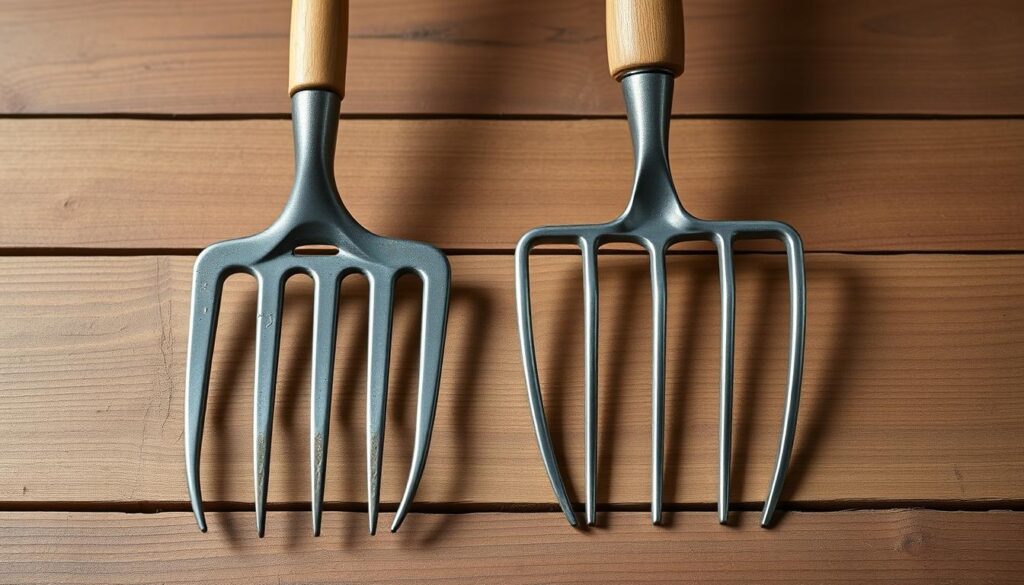
This tool has four to six short, curved tines. The curved shape makes it easy to scoop and lift dense compost. The short tines help you control the compost while mixing and aerating.
When you’re looking for garden essentials, a durable compost fork is a must-have.
Ideal Uses of a Compost Fork
A compost fork is great for turning, aerating, and mixing compost heaps. It’s perfect for making sure compost gets enough air. This is key for breaking down waste.
It works well with both new and older compost.
Benefits of Using a Compost Fork
Using a compost fork makes gardening more efficient. Its design is ergonomic, which means it’s easier on your back. This lets you work longer without getting tired.
It’s a valuable tool for any gardener. It helps make your soil healthier.
What is a Regular Pitchfork?
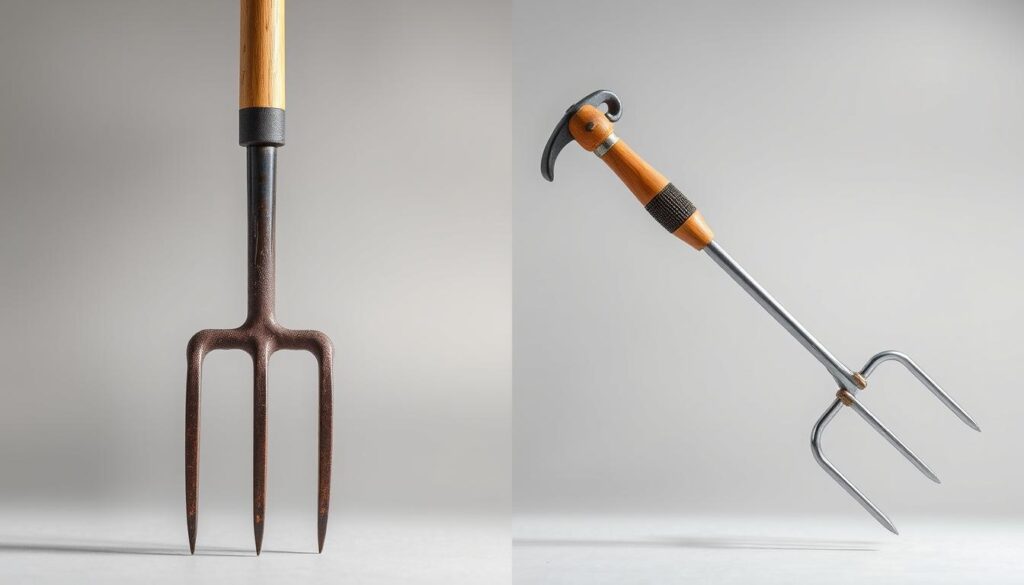
A regular pitchfork is a key garden tool known for its design and versatility. It has longer, straighter tines for lifting and moving heavy stuff like hay, straw, and soil. This makes it great for digging deep into piles, perfect for gardening tasks.
Characteristics of a Pitchfork
The regular pitchfork stands out with its unique features:
- Long Tines: These give you more reach and power, making it easier to lift heavy stuff.
- Robust Build: Made from strong materials, pitchforks can handle outdoor challenges well.
- Ergonomic Handle: Many have designs that make them comfortable to use for a long time, easing hand and wrist strain.
Common Uses in Garden and Farm
This handy tool is used in both gardens and farms. Here are some of its main uses:
| Use | Description |
|---|---|
| Soil Loosening | Perfect for breaking up hard soil, improving aeration and drainage. |
| Turning Compost | Good at mixing and aerating compost piles, speeding up decomposition. |
| Removing Sod | Helpful in lifting and removing grass and topsoil for landscaping. |
| Transporting Bulk Materials | Great for moving large amounts of straw or mulch in the garden. |
Key Differences Between Compost Forks and Pitchforks
Knowing the differences between fork types can make gardening easier. Compost forks and pitchforks may look similar, but they’re used for different tasks. Let’s look at their main differences to help you choose the right one.
Tine Shape and Structure
Pitchforks have long, straight tines for handling heavy stuff like hay. Compost forks, with their short, curved tines, are better for aerating compost. This design helps keep air flowing in the compost heap.
Handle Length and Ergonomics
Handle length is a big difference between these forks. Compost forks have shorter handles for better control in tight spaces. Pitchforks have longer handles for lifting heavy loads. An ergonomic design helps prevent back strain.
Weight and Balance
Weight and balance are also key differences. Compost forks are light and balanced for easy use. Pitchforks are heavier, perfect for lifting dense materials. Choosing the right fork depends on your gardening needs. For more help, check out this guide on optimal pitchfork choices.
Advantages of Using a Compost Fork
A compost fork is a must-have for gardeners. It’s better than a regular pitchfork, thanks to its special features. These features are perfect for compost and heavy garden tasks.
Aerating Compost More Efficiently
The compost fork’s curved tines make aerating compost piles easy. This design helps mix materials well. It speeds up decomposition, making compost rich in nutrients.
Adding a compost fork to your gardening tools is a smart move. It’s a key item for any gardener.
Ease of Turning Heavy Materials
Turning dense materials is easier with a compost fork. Its strong, shaped tines can penetrate and lift well. This is great for handling wet, bulky compost.
Compared to a regular pitchfork, the compost fork is better for these tasks. It makes gardening more fun.
Reducing Strain on Your Back
The compost fork is also good for your back. Its ergonomic design helps you keep a straight posture. This reduces back and arm strain, which is a big plus for those with big compost heaps.
Using the right tool makes gardening more comfortable. It helps you reach your gardening goals without discomfort.
| Feature | Compost Fork | Regular Pitchfork |
|---|---|---|
| Aeration Efficiency | High | Moderate |
| Turning Heavy Materials | Easy | Challenging |
| Back Strain | Low | High |
| Best Use | Composting | General Forking |
Advantages of Using a Regular Pitchfork
A regular pitchfork is a versatile tool that makes gardening better. It can do many tasks and is strong for different gardening jobs. Knowing its benefits helps you choose the right tools for your garden.
Versatility in Various Tasks
The regular pitchfork is great for many tasks. It’s good for turning compost and lifting heavy things like sod. Its design fits many gardening needs, making it a key tool for gardeners.
Cost-Effectiveness
Compared to other tools, the regular pitchfork is a good value. It can do many things, so you don’t need to buy lots of tools. This is great for gardeners who want to save money without sacrificing quality.
Availability and Selection
There are many regular pitchforks to choose from. You can find them in different styles and materials. This means you can pick one that fits your needs and budget, ensuring every gardener finds the right pitchfork.
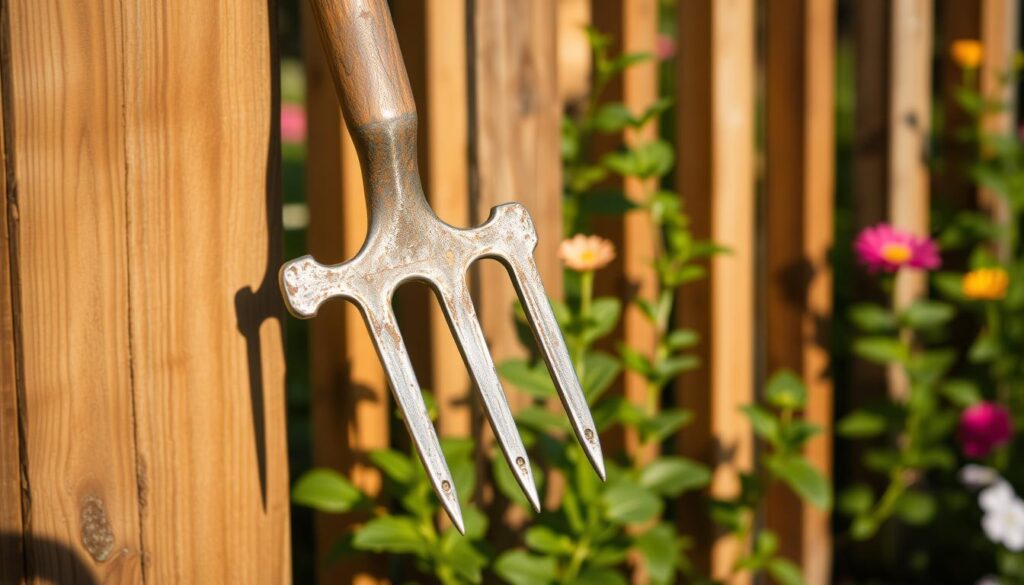
When to Use a Compost Fork
Using a compost fork can really improve your gardening. It’s best when you use it in the right situations. This way, your garden gets the nutrients it needs.
Ideal Scenarios for Compost Fork Usage
A compost fork is very useful in a few key situations:
- Aerating compost heaps to improve airflow.
- Turning over materials to promote even decomposition.
- Mixing in fresh compost ingredients such as kitchen scraps or lawn clippings.
Seasonal Considerations
Each season brings different gardening tasks. In spring, a compost fork helps prepare nutrient-rich compost for new plants. Autumn is for adding organic waste to your compost pile. This keeps your garden healthy all year.
| Season | Action | Benefits |
|---|---|---|
| Spring | Aerate and mix compost | Promotes nutrient availability for new plants |
| Autumn | Incorporate organic waste | Enhances compost quality for overwintering |
Using a compost fork in these situations makes composting easier. It also makes your soil better, helping your garden grow well. Knowing when and how to use this tool is key to gardening success.
When to Use a Regular Pitchfork
Knowing when to use a regular pitchfork can make gardening easier. It’s great for certain tasks because of its design. This makes it a key tool in your garden arsenal.
Tasks Best Suited for Pitchforks
A regular pitchfork is perfect for:
- Lifting heavy loads such as straw, hay, and mulch.
- Turning garden soil to aerate and prepare it for planting.
- Planting cover crops into dense soil.
- Efficiently removing sod during landscaping projects.
Types of Materials to Handle
The regular pitchfork is versatile for handling different materials:
- Straw and Hay: Great for reorganising and moving these heavy materials.
- Mulch: Makes spreading or lifting mulch in garden beds easy.
- Soil: Perfect for breaking through compacted soil when preparing garden plots.
Maintaining Your Forks for Longevity
To keep your gardening forks in top shape, regular maintenance is key. Both compost forks and pitchforks need special care to last longer. Simple cleaning and storage tips can make a big difference in your gardening.
Cleaning Tips for Both Types
Always rinse off soil and debris after using your forks. This stops rust and damage. For composting tools, a stiff-bristled brush helps remove tough dirt. Dry them well after cleaning to avoid rust.
Storage Recommendations
Storing your gardening tools right is important for their longevity. Keep them in a dry, sheltered spot to protect from the weather. A shed, garage, or a special garden area works well.
Check your tools often for wear or damage. This ensures they stay in good condition. It helps you handle different fork types efficiently in your gardening.
Common Myths About Compost and Pitchforks
Knowing the truth about gardening tools like compost forks and regular pitchforks can make gardening better. Many myths confuse gardeners about these tools’ effectiveness and use. One myth is that all forks are the same, which is not true.
Each tool is made for specific tasks. It’s important to understand these differences to choose the right tools for your garden.
Myth Busting: What’s True and False
Many think compost forks and pitchforks are the same. But, they are not. Compost forks have wider, thinner tines for aeration. This makes them perfect for compost management.
Pitchforks, on the other hand, are for lifting and moving heavy stuff. They are made for different tasks.
Clarifying Misconceptions in Gardening
Another myth is that one fork can do it all. But, compost forks and regular pitchforks have their own jobs. Knowing this helps you pick the right tool for your gardening tasks.
By choosing the right tools, gardening becomes more fun and productive. Debunking these myths helps you make better choices.
Conclusion: Making the Right Choice
At first glance, compost forks and regular pitchforks might seem the same. But they have different uses that can make gardening better. The compost fork is great for mixing compost and turning materials. This helps the composting process.
A regular pitchfork is better for lifting heavy things and working with soil. It’s perfect for tasks like turning over garden beds or moving hay.
When choosing gardening supplies, think about what you like to do most. If you love making compost, a compost fork is a must. But if you often lift and move heavy stuff, a regular pitchfork is the best choice.
Having both types of forks can really improve your gardening. They make your gardening work easier and more fun. Having the right tools means you can do many gardening tasks well.