Ever thought a special spot for gardening could change your experience? A DIY potting bench is a cost-effective way to improve your garden space. It makes gardening more fun and efficient. This guide will show you how to build a potting bench that fits your garden perfectly. Enjoy making it your own while saving money on DIY projects!
Key Takeaways
- Creating a DIY potting bench offers a budget-friendly alternative to store-bought options.
- A dedicated garden workbench enhances your gardening efficiency.
- It’s an opportunity to personalise your outdoor furniture to fit your garden’s aesthetic.
- The process of building your own potting bench can be a fulfilling DIY project.
- Consider incorporating materials that complement your existing outdoor decor.
Why You Need a Potting Bench in Your Garden
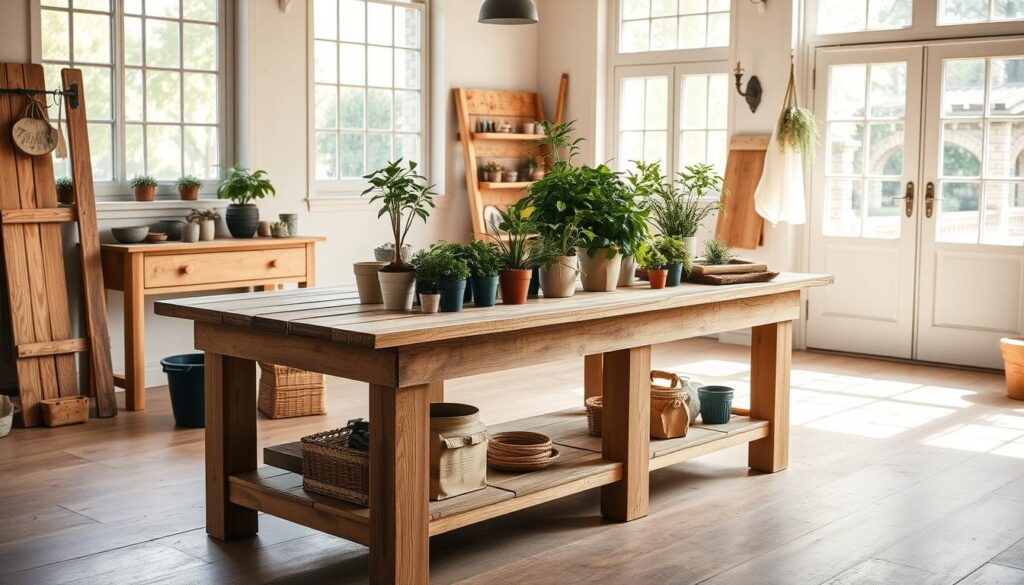
Having a potting table can change how you garden. It gives you a place to sort your tools, plant seeds, and pot plants. This makes gardening more fun and efficient.
This outdoor space helps keep your gardening stuff tidy. It stops gardening from getting messy.
Benefits of a Potting Bench
There are many good things about having a potting bench:
- Convenience: You can find your tools and materials quickly, without digging through a shed or garage.
- Organisation: You can store things like pots, soil, and fertiliser in one spot.
- Comfort: Working at a good height helps avoid back pain when potting or caring for seedlings.
- Customization: You can make the space fit your gardening style and needs, making it more efficient.
Factors to Consider Before Building
Before you start building your gardening bench, think about these things:
- Size: Make sure the bench fits in your garden and meets your needs.
- Design: Pick a style that looks good in your garden and works well for you.
- Purpose: Think about how you’ll use the bench and add features that make it better.
Essential Tools and Materials Required
Starting woodworking projects means getting the right tools and materials. These will make your DIY potting bench both useful and good-looking. Knowing what you need helps you work more efficiently and ensures a great result.
Basic Tools You’ll Need
- Circular saw for cutting timber to size
- Drill for creating holes and driving screws
- Measuring tape to ensure precision
- Level for ensuring surfaces are even
- Screwdriver set for assembly
Recommended Materials
Building your potting bench needs careful planning of materials. Choose pressure-treated timber for its durability against rot and weather. Use screws and brackets for a strong build. Here’s a suggested list:
| Material | Purpose | Approximate Quantity |
|---|---|---|
| Pressure-treated timber | Frame and surface | 6 planks |
| Screws | Assembly | 100 screws |
| Brackets | Stabilisation | 4 brackets |
Optional Accessories for Your Bench
Adding optional accessories can make your potting bench even better. Hooks for tools keep things neat, and shelves add storage for pots and soil. A coat of paint or stain can also make it look great, turning your bench into a garden highlight.
Planning Your DIY Potting Bench
Planning is key when starting backyard projects, like building a potting bench. It makes gardening better and keeps your garden tidy. First, measure your space well to ensure the bench fits right. Then, pick a design that matches your gardening style and the look you want.
Measuring Your Space
Before you start building, measure the spot for your potting bench carefully. This makes sure it fits well in your garden and leaves enough room to move. Don’t forget to think about nearby plants and garden features.
Choosing the Right Design
Choosing a design means thinking about what you need as a gardener. Do you want a small bench or one with extra storage? Look at DIY potting benches for ideas on different styles and uses.
Sketching Your Plan
After measuring and picking a design, make a sketch. A sketch helps keep your ideas clear and guides you during building. It ensures your project goes smoothly and efficiently.
Step-by-Step Guide to Building Your Potting Bench
Starting a diy project to build a potting bench is rewarding and easy. With a clear guide, you can make a strong bench for gardening. This tutorial will help you through each step.
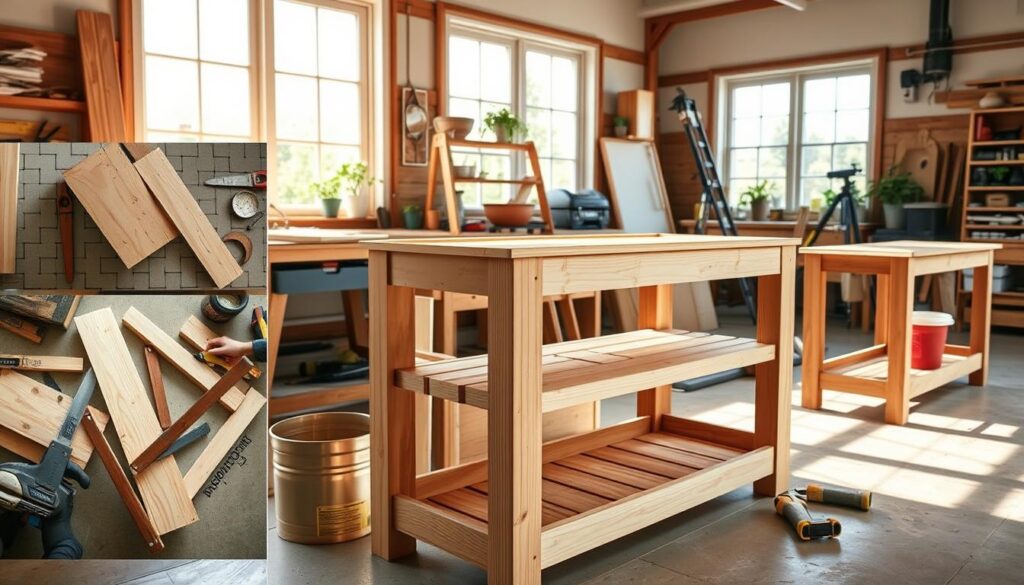
Creating the Frame
First, measure and cut your timber to the right lengths. The frame is key, so make sure the corners are tight with screws. Use 2×4 timber for extra strength.
As you build, check each corner is square. This prevents the bench from wobbling later.
Adding the Surface
After the frame is ready, add the surface. Place your boards on top, making sure they’re evenly spaced for drainage. Use screws to fix them in place, ensuring it’s level.
A good surface gives you plenty of room for potting. It makes gardening easier.
Constructing the Legs
Now, focus on the legs. Cut and attach timber pieces at each corner. Secure them with screws for stability.
The legs must be strong to hold your plants and tools. With everything fixed, your bench is ready for use.
Customising Your Potting Bench
Personalising your potting bench shows off your style and makes it more useful. You can pick from many customisation ideas. This lets you choose finishes and add shelves and hooks. These features help make a space that’s just right for gardening.
Paint and Finish Options
Choosing the right paint or finish is key for both looks and durability. Use exterior-grade paints to protect the wood and add colour. Opt for non-toxic finishes that are safe for your plants.
Classic shades like earthy greens, neutrals, or bright colours can make your bench look great.
Practical Additions: Shelves and Hooks
Shelves and hooks help keep your tools and supplies organised. Shelves can hold pots, soil bags, or gardening books. Hooks are perfect for tools and gloves, keeping your area tidy.
These additions make your bench not just useful but also easy to use.
Personal Touches for Aesthetic Appeal
Adding personal touches can turn your potting bench into a beautiful garden feature. Think about using vintage pots or cute signs to show your style. Plants or herbs in nice containers can add life and colour.
Maintenance Tips for Your Potting Bench
Keeping your potting bench in good shape is key to a successful garden. Use weather-proofing solutions, care for it regularly, and fix common problems. This will make your bench last longer and improve your gardening.
Weather-Proofing Solutions
Protect your bench from bad weather with outdoor stains or sealants. These not only look good but also shield your bench from moisture and UV rays. Applying these coatings often will help avoid damage from rain, sun, and snow.
Regular Care and Upkeep
Looking after your potting bench is vital. Here are some important steps to add to your routine:
- Clean it often with mild soapy water.
- Check for wear, like splintering or loose screws.
- Fix any damage quickly to stop it getting worse.
By doing these things, your bench will stay in great shape for gardening.
Addressing Common Issues
Issues like wood rot or pests can harm your bench. Here’s how to deal with them:
- Watch for rot and treat it with wood preservative.
- Keep an eye out for pests, like termites, and use pest control if needed.
- Replace any badly damaged parts to keep your bench strong and useful.
Acting fast on these problems will keep your potting bench a trusted gardening tool.
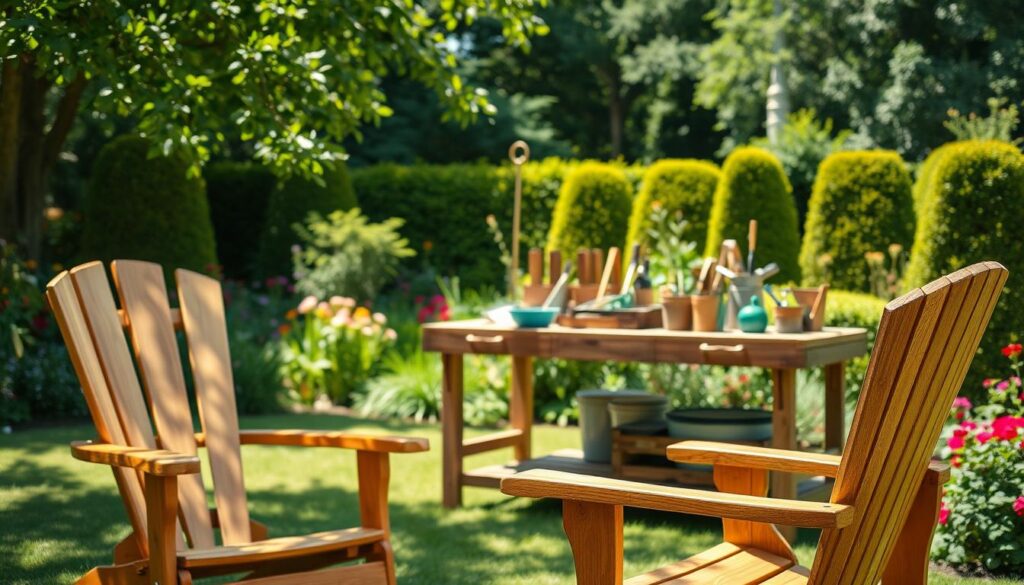
Where to Place Your Potting Bench
Choosing the right spot for your potting bench is key. A good garden layout makes your bench both useful and enjoyable. Think about sunlight and easy access to make it perfect for gardening.
Choosing an Ideal Location
Find a spot that’s sheltered but gets lots of light. Being close to your garden makes handling plants and tools easier. Make sure you can move easily between the bench and your garden beds.
Maximising Sunlight Exposure
Sunlight is vital for plant health. Place your bench where it gets direct sunlight. This warmth helps your plants grow strong and healthy. If your garden is shady, adjust your layout to get more light for your plants.
Ensuring Accessibility
Easy access is vital for a good gardening experience. Your bench should be near your gardening stuff. A clear path to the bench saves you effort. Think about how to store your tools and supplies for better organisation.
Budgeting for Your DIY Potting Bench
Budgeting is key to a successful DIY potting bench project. With smart planning, you can pick projects that save money without losing quality. It’s important to choose materials that fit your budget but are also durable and stylish.
Cost-Effective Material Choices
Here are some affordable material options:
- Treated wood lasts long and fights off the weather, making it a smart choice.
- Recycled materials add a special touch and save money.
- Pallet wood is free or cheap, great for creative projects.
- Outdoor-rated plywood is a budget-friendly option for surfaces and shelves.
Tips to Keep Expenses Down
Here are ways to stretch your budget:
- Buy materials from local lumber yards for better prices.
- Watch for sales and discounts to get things cheaper.
- Instead of buying tools, borrow or hire them to save money.
- Join gardening forums or groups for tips on saving money.
Follow these tips to stay within your budget and have a successful project without spending too much.
| Material | Estimated Cost (£) | Durability | Source |
|---|---|---|---|
| Treated Wood | 20-30 per sheet | High | Local lumber yard |
| Recycled Materials | Free | Variable | Community swaps |
| Pallet Wood | Free | Medium | Local stores |
| Outdoor Plywood | 15-25 per sheet | Medium to High | Home improvement stores |
Keep an eye on your material costs and use smart budgeting to enjoy gardening without worrying about money.
Eco-Friendly Choices for Your Bench
Choosing eco-friendly materials for your potting bench is key to helping the planet. Sustainable options make your garden look great and support green gardening.
Sustainable Materials to Consider
Using sustainable materials in your project is good for both you and the planet. Here are some great choices for your potting bench:
- Cedar: Cedar is great because it fights off rot and bugs naturally.
- Redwood: This wood is strong and looks good, even outside.
- Reclaimed Wood: Using wood from old places adds a special touch and cuts down on waste.
- Recycled Plastic: Plastic containers made from old stuff can hold tools and supplies.
Recycling Old Furniture for Parts
Turning old furniture into parts for your bench is creative and helps the environment. It lets you make something unique and personal. Here are some ideas:
- Old Pallets: Pallets can be used for shelves or table tops, making them very useful.
- Natural Finishes: Eco-friendly oils like linseed or tung oil give a nice look and protect your bench.
- Water-Based Varnishes: These keep wood safe without harming the environment.
Using recycling methods makes your project better and supports a greener lifestyle. Eco-friendly choices help you create a useful outdoor space.
Common Mistakes to Avoid
Starting a DIY potting bench project? It’s key to avoid common errors to meet your goals. Many people miss out on important steps, leading to problems that can be prevented. Knowing these mistakes helps you build smoothly and successfully.
Skipping the Planning Phase
Ignoring the planning phase can lead to rushed decisions that harm your project. Skipping this step can cause unexpected problems during building, leading to expensive mistakes. Spend time designing your bench and imagining the end result to avoid future issues.
Underestimating Material Costs
Many DIYers underestimate the cost of materials. This oversight can lead to budget problems as the project goes on. Make a detailed list of materials and check their prices to budget correctly.
Neglecting Safety
Don’t overlook safety during your project. Ignoring safety can lead to accidents and serious injuries. Always wear protective gear and work in a safe area to stay safe while building.
Inspiring DIY Potting Bench Ideas
Adding a stylish and functional potting bench to your garden can change your gardening experience. Choose designs that show off your style and meet your gardening needs. For example, a multi-tiered bench offers lots of space and looks great in your garden.
Think about adding unique features to your bench. Integrated seating makes gardening more comfortable. Movable parts let you change your bench for different tasks. You could even add built-in compost bins to make gardening easier.
Your potting bench should be both creative and practical. Pick colours and storage solutions that fit your garden’s theme. Create a bench that inspires you every time you garden.