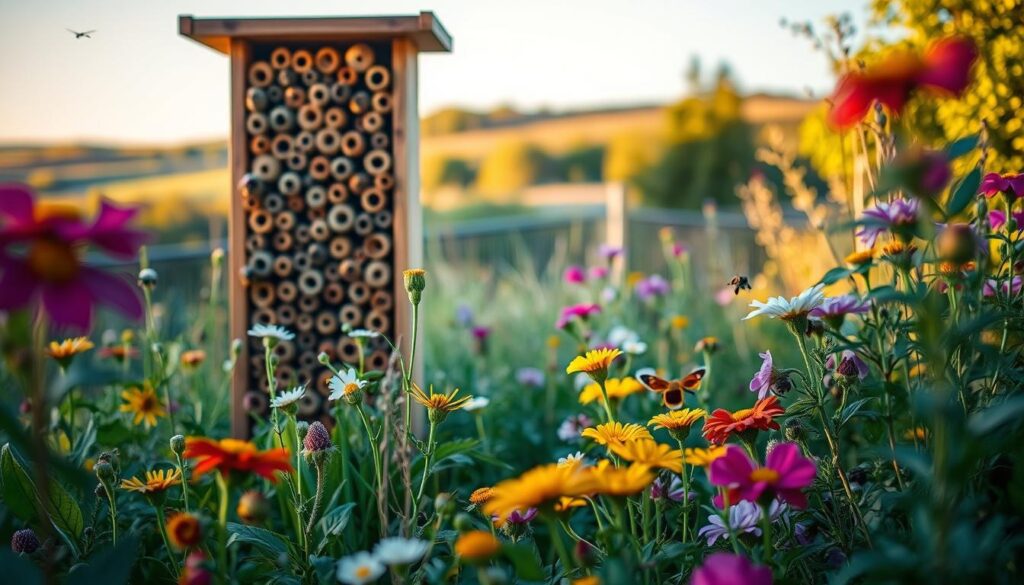
Ever thought a small garden feature could help solitary bees? A simple bee hotel is key to creating a home for native bees. It’s a big help for pollinator conservation. With over 19,000 bee species, many need places to nest.
Building a bee hotel is not just good for your garden. It’s vital for bees like mason and leafcutter bees. For more on attracting these bees, check out this guide: pollinator conservation.
Key Takeaways
- A simple bee hotel supports vital solitary bee populations in your garden.
- Creating native bee habitats encourages biodiversity.
- Over 19,000 bee species exist, many of which need cavities for nesting.
- Supporting pollinator conservation can enhance your garden’s growth.
- A properly placed bee hotel can attract a variety of local pollinators.
What Is a Bee Hotel?
A bee hotel is a special structure for bees, mainly solitary ones. It looks like their natural homes, where they can safely lay eggs. You can make one yourself from everyday items or buy a more detailed one from wood or bamboo.
Knowing about bee hotels helps you choose the best one for your garden.
Understanding the Basics of a Bee Hotel
A bee hotel is like a home for solitary bees. It’s made of things like hollow reeds or wooden blocks with holes. These homes help bees and keep the ecosystem healthy.
Making a bee hotel yourself can be fun and good for the environment.
Types of Bee Hotels Available
There are many bee hotels, each for different bees:
| Type | Materials Used | Ideal Species |
|---|---|---|
| Reed Bundles | Hollow reeds tightly bundled together | Leafcutter bees, Mason bees |
| Drilled Wooden Blocks | Wooden blocks with varied hole sizes | Solitary wasps, Carpenter bees |
| Repurposed Containers | Plastic bottles, metal cans filled with straw | Various species depending on setup |
Choosing the right bee hotel attracts certain bees to your garden. Mixing different designs can attract more bees.
Why Pollinators Matter to Your Garden
Understanding pollinators is key to a better garden. Bees and other insects help plants grow and keep nature diverse. They work closely with plants, making your garden a lively place for both.
The Role of Bees in Ecosystems
Bees are vital to our ecosystems. They help plants make seeds and fruits, which feed many animals. Without bees, 87% of plants would struggle to reproduce.
How Pollinators Impact Food Production
Pollinators are essential for growing food. They help plants like fruits and veggies to produce well. By welcoming them, you improve your garden’s health and what it can offer.
The Benefits of Building a Simple Bee Hotel
Creating a simple bee hotel is a lovely way to add to your garden. It also helps local bees a lot. As cities grow, fewer places are left for bees to nest. So, making a bee hotel is key to keeping native bees safe.
These hotels are great for solitary bees like leaf cutters and mason bees. They need places to nest, and your hotel can be their home.
Supporting Local Bee Populations
Building a bee hotel helps vital solitary bee species. These bees are important for pollinating flowers. They make your garden healthier and more productive.
By giving them a safe place to nest, you help them survive. This lets local bee populations grow, even with less space to live.
Encouraging Biodiversity in Your Garden
A bee hotel does more than help bees. It makes your garden a better place for all living things. It attracts many pollinators, which is good for your plants.
This diversity makes your garden stronger. It helps your plants and their pollinators work better together. This can lead to a bigger harvest for you.
How to Choose the Right Location
Finding the perfect spot for your bee hotel is key to attracting local pollinators. You need to think about sunlight, weather protection, and being close to flowers. Each of these is important for your urban pollinator project’s success.
Factors to Consider for Optimal Placement
When choosing the best spot, consider a few important things:
- Face the bee hotel towards the morning sun. This warmth helps pollinators come out early in the day.
- Make sure it’s at least 4 feet off the ground. This keeps it safe from ground predators and makes it easier for pollinators to get in.
- Choose a spot that’s sheltered from strong winds and heavy rain.
- Put it near flowers for easy food access.
Sunlight and Shelter Needs
It’s important to find a balance between sunlight and shelter for your bee hotel. Sunlight is needed for warmth, but shelter protects pollinators from bad weather. Think about your local weather to find the perfect spot. With careful planning, your bee hotel will flourish, helping your urban pollinator project a lot.
Materials You Can Use
Choosing the right materials is key when building a bee hotel. You need to pick options that are safe and welcoming for solitary bees. There are many sustainable choices that are both durable and safe for these pollinators.
Sustainable Options for Your Bee Hotel
Using sustainable materials is good for the environment and helps bees. Here are some great options:
- bamboo is lightweight and durable, perfect for tunnels>
- hollow plant stems are a natural choice, the right size for bees>
- untreated wood provides insulation and protects from the weather>
These materials are eco-friendly and attract various bee species to your hotel.
Avoiding Toxic Materials
It’s important to avoid toxic materials that can harm bees. Don’t use chemical treatments that pollute the environment. Opt for natural finishes and substances for a healthy bee habitat.
Using recycled items is a great way to build your hotel. It reduces waste and supports sustainability. By choosing wisely, you can ensure your materials are safe for bees and the environment.
Building Your Own Simple Bee Hotel
Building a DIY bee hotel is a fun project that can bring your family closer to nature. This step-by-step guide makes it easy to follow. It breaks down the process into simple steps.
Step-by-Step Guide to Construction
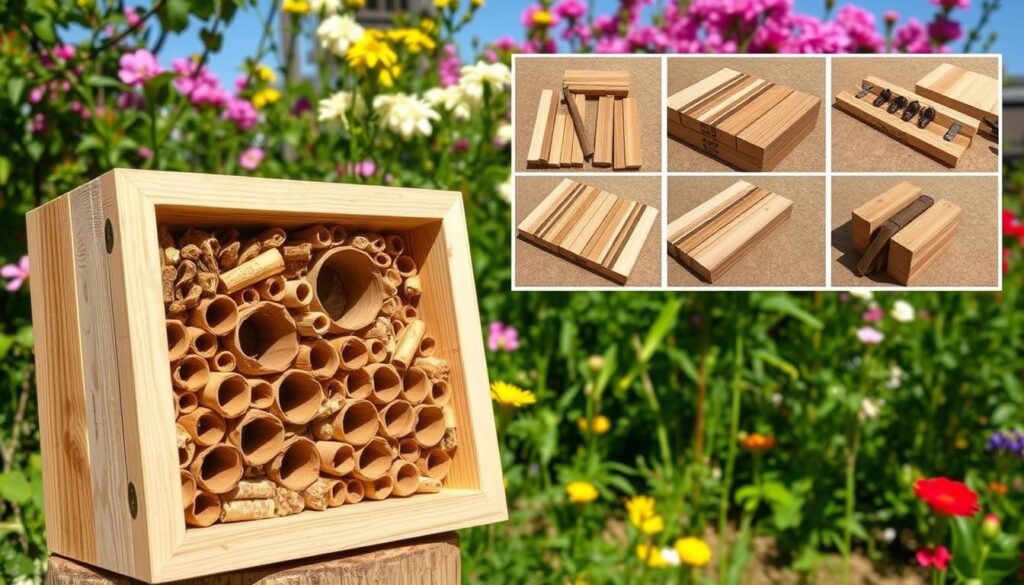
To begin, collect tubes that are 5-8 inches in diameter and length. You can use bamboo, paper straws, or hollow wood. Here’s what to do next:
- Seal one end of each tube with non-toxic material like mud or tape. This makes a nesting chamber.
- Put the open ends of the tubes into a container. A flower pot or wooden box is ideal.
- Make sure the tubes are secure and snug in the container.
- Place the container in a spot that gets sunlight but is also sheltered from the wind.
Crafting Tips for Beginners
Here are some tips to make your DIY bee hotel even better:
- Choose untreated wood for the container to avoid harmful chemicals.
- Use tubes of different lengths to attract various bee species.
- Decorate the outside with natural materials like stones or bark to blend it with your garden.
- Check your bee hotel regularly and replace any damaged tubes.
Accommodating Different Species of Bees
It’s important to know about the different types of bees when setting up a bee hotel. Not all bees are the same when it comes to where they like to nest. Solitary bees, for example, have many species, each with its own needs.
Some bees, like mason and leaf cutter bees, like to nest alone. But swarm bees, like honey bees, don’t usually nest in bee hotels. Knowing this helps you make your bee hotel welcoming to local pollinators.
Solitary Bees vs. Swarm Bees
Solitary bees live alone, with each female bee making her own nest. They like small, tubular spaces to lay eggs and gather food for their young. Swarm bees, on the other hand, live in big colonies.
In your bee hotel, focus on making spaces for solitary bees. This will help more pollinators.
Creating Diverse Habitats Within Your Hotel
It’s vital to create different habitats in your bee hotel. You can use tubes of different sizes and materials. This variety is perfect for solitary bees, helping them make homes in your hotel.
By having diverse habitats, your bee hotel becomes a lively place for many beneficial species.
Maintaining Your Bee Hotel
Regular care is vital for your bee hotel to stay a lively home for local pollinators. By keeping your bee hotel in good shape, you help the bees and boost your garden’s biodiversity. Seasonal care is a big part of this.
Seasonal Care Tips
At the end of the forage season, clean the tubes well. This stops harmful mould and moisture that bees don’t like. Also, check for pests like ants or spiders, as warmer weather brings them out.
Replace worn-out materials every few years. This keeps your hotel safe and comfy for bees.
What to Watch For
When you’re cleaning, watch for signs of trouble in the bee community. Look out for disease or pests that could harm your hotel. With proper care, your bee hotel will be a thriving spot for pollinators, helping your garden a lot.

Common Challenges and Solutions
Bee hotels are great for pollinators, but they face challenges. Pests and predators can harm these tiny homes. To keep your bee hotel safe, use the right management and prevention.
Dealing with Pests and Predators
Ants, wasps, and beetles might try to get into your bee hotel. Ants look for food, and wasps might eat solitary bees. Here are ways to fight these pests:
- Put sticky barriers around the bee hotel to keep crawling insects away.
- Check and clean the hotel often to stop infestations.
- Use wire mesh to keep out bigger predators.
Preventing Disease in Pollinator Hotels
Diseases can harm bees, often because of too many bees or dirty materials. Keep your pollinators healthy with these tips:
- Change the nesting materials often to stop disease spread.
- Watch the bees’ health closely to catch sickness early.
- Make sure the hotel has good airflow to avoid dampness and fungal issues.
How You Can Get Involved Locally
Helping out in local conservation efforts can really help pollinators. Joining community projects boosts your own efforts and helps protect bees. By working on local projects, you help keep ecosystems healthy.
Joining Community Initiatives
Being part of community projects offers many chances to help. These projects help create homes for bees, which they need to live. Working with local groups can lead to bigger changes in both cities and countryside. It’s a great way to meet people who care about the environment and bees.
Educating Others About Pollinator Conservation
Telling others about bees and their homes is very important. Workshops, talks, or school lessons can help spread the word. You could even teach people how to make bee hotels, like those shown on this website. Teaching others can increase community action and involvement.
Future of Pollinators and Bee Hotels
Looking ahead, pollinators face big threats like climate change and losing their homes. These issues can mess up the balance bees need to survive. But, creating more bee hotels is key to helping our native bees.
The Impact of Climate Change
Climate change is changing where bees live, affecting their ways of life and breeding. Rising temperatures and changing weather make it hard for bees to adapt. Building bee hotels helps these insects in tough times. They provide safety and help bees breed, making their populations stronger.
Long-Term Benefits of Urban Bee Conservation
Helping pollinators in cities is vital for their future. Bee hotels boost biodiversity and help cities be greener. As more people help, we can make a big difference. You can inspire others to protect pollinators, helping them thrive in UK cities.