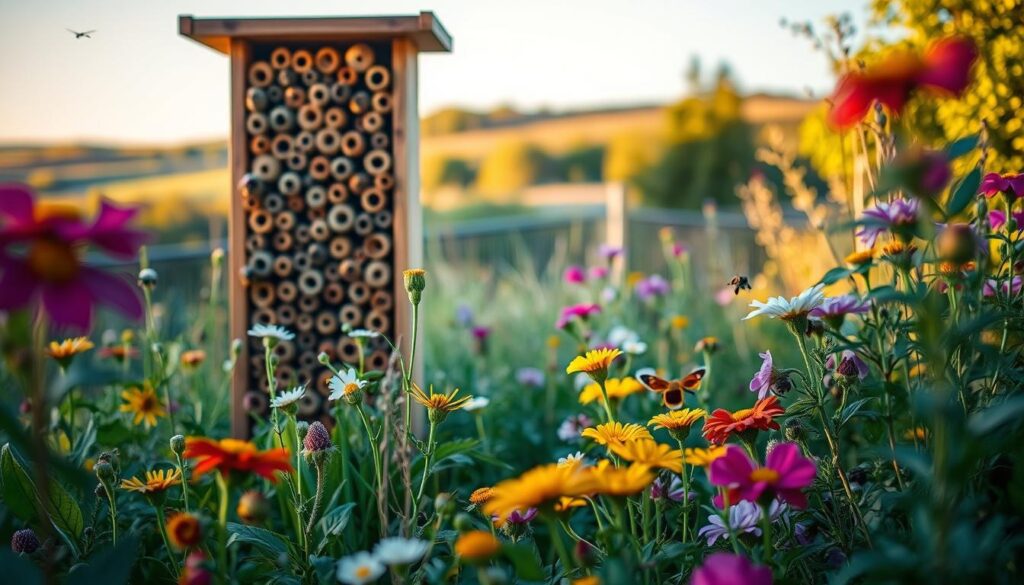
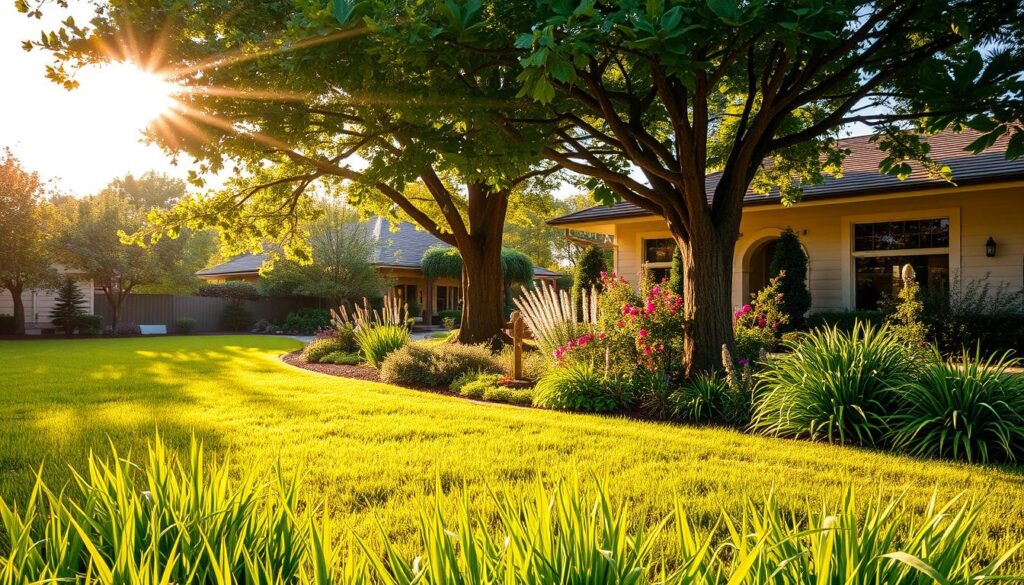
Have you thought about how your garden plants affect your water bill? The link between native plants and saving water is stronger than you might think. Using native plants in your garden not only makes it look better but also helps save water. This approach supports biodiversity and can cut down your water costs.
Key Takeaways
- Native plants require less water, contributing to a lower water bill.
- Sustainable landscaping ideas can transform your garden into a low-maintenance paradise.
- Eco-friendly gardening tips support both your wallet and the environment.
- Incorporating local flora boosts biodiversity and promotes a healthier ecosystem.
- Simple changes in plant choice can lead to significant long-term savings.
Understanding the Importance of Native Plants
Native plants are key to a sustainable garden that does well in its local area. They have grown naturally and fit well with the soil, climate, and wildlife. Using native plants in your garden makes it beautiful and helps the environment.
What Are Native Plants?
Native plants are those that grew up in a certain area. They live alongside local wildlife and are part of the ecosystem. Knowing about native plants helps us see their role in supporting nature. They need less care, making them perfect for gardens and helping local animals.
The Benefits of Native Plants
Native plants bring many benefits to your garden. They use less water than other plants, saving water and money. They also help bees and butterflies, which are important for plants to grow. Plus, they fight off pests and diseases without chemicals. Using native plants makes your garden strong and eco-friendly.
The Impact of Conventional Landscaping
Traditional landscaping often uses non-native plants and lots of grass. This means a lot of water is needed, which increases water bills. Homeowners may see their water costs go up, affecting both their pockets and local water supplies.
Water Usage in Traditional Gardens
Traditional gardens use a lot of water, with lawns being a big part of the problem. Studies show lawns can use up to 50% of a household’s water in summer. This is bad for the environment and can make water scarce for other important uses.
How Conventional Plants Contribute to Water Bills
Choosing non-native plants adds to the problem. They need more care, like regular watering and fertilising. This makes maintenance expensive. So, using plants that need less water can help cut down on bills.
Advantages of Drought-Tolerant Plants
Drought-tolerant plants are great for gardens, saving water. They grow well with little water once settled. Many are from dry places, making them ideal for saving water.
Adding them to your garden makes it sustainable and beautiful. It also helps local wildlife.
Definition of Drought-Tolerant Plants
Drought-tolerant plants can handle dry conditions after they’re planted. They have deep roots or special ways to keep water. This means you use less water, saving money and the planet.
Examples of Drought-Tolerant Plants for Your Garden
There are many beautiful drought-resistant plants to choose from. Here are a few:
- Lavender – It smells great and grows well in dry soil.
- Sedum – This succulent is great for ground cover, adding colour with little water.
- Yarrow – It’s a hardy perennial that attracts pollinators and handles drought.
- Agave – This plant adds beauty and is very easy to care for.
Using these plants makes your garden look better and helps the environment.
Choosing the Right Plants for Your Area
Choosing the right plants for your garden starts with knowing your local climate. This affects which plants will do well in your garden. The UK has different climates, with varying rainfall, temperatures, and soil types. By understanding these, you can pick plants that will grow well, making your garden lush and easy to care for.
Understanding Your Local Climate
Your local climate greatly affects how much water your plants need and their health. Think about:
- Temperature variations that tell you which plants can handle the seasons.
- Rainfall levels that change how often you need to water your plants.
- Soil types that differ in nutrients and how well they drain, affecting plant choice.
By knowing your climate, you can choose plants that will make your garden vibrant. This also helps with sustainable gardening.
Resources for Researching Native Plants
Using resources to find native plants can help a lot. Here are some good places to start:
- Local extension services that give advice specific to your area.
- Native plant societies that focus on using local plants.
- Botanical gardens that show native plants and offer learning programs.
These resources help you pick the best plants for your garden. This makes your garden beautiful, saves money, and is good for the environment.
| Climate Factor | Impact on Plant Choice | Examples |
|---|---|---|
| Temperature | Determines suitability for specific plant species | Roses, Lavender |
| Rainfall | Affects irrigation needs | Succulents, Ferns |
| Soil Type | Influences nutrient availability and drainage | Clay, Sandy Soils |
Creating a Sustainable Garden Design
When designing a sustainable garden, the layout is key to saving water. Planning your plants carefully helps your garden use water wisely. Grouping plants by their water needs cuts down on unnecessary watering and helps them grow better.
Layout Considerations for Water Conservation
Your garden’s layout should focus on catching rain and stopping water from running off. Using materials that stay cool in the sun helps keep your garden cooler. Placing paths and seating wisely can also help water reach where it’s needed most.
These ideas not only make your garden look good but also save a lot of water.
The Role of Mulching in Moisture Retention
Mulching is a key method for keeping soil moist. Using organic materials like bark chips or straw reduces evaporation. This means you need to water less and your soil gets better as the mulch breaks down.
Using these eco-friendly tips helps your garden thrive and supports sustainable gardening.
| Mulch Type | Moisture Retention Effectiveness | Additional Benefits |
|---|---|---|
| Bark Chips | High | Long-lasting, enhances visual appeal |
| Straw | Moderate | Great for vegetable gardens, adds nutrients |
| Wood Shavings | High | Breaks down slowly, improves soil structure |
| Grass Clippings | Low | Free, excellent for recycling waste |
By carefully planning your garden’s layout and using mulching, you can make a sustainable garden. It will be beautiful and use water wisely.
Implementing Efficient Watering Techniques
Using efficient watering methods can change how you garden. These methods help plants grow better and use less water. By picking the right way and time, you can have a green garden and save on water bills.
Drip Irrigation vs. Traditional Methods
Drip irrigation is a top choice for saving water. It sends water straight to the roots, cutting down on evaporation and runoff. It’s more efficient than sprinklers, helping you use less water in your garden. While it costs a bit to set up, it’s worth it for the savings and healthier plants.
Best Times to Water for Efficiency
When you water is as important as how you water. Watering in the early morning or late evening is best. It reduces water loss due to heat and sun. This not only saves water but also makes your plants healthier.
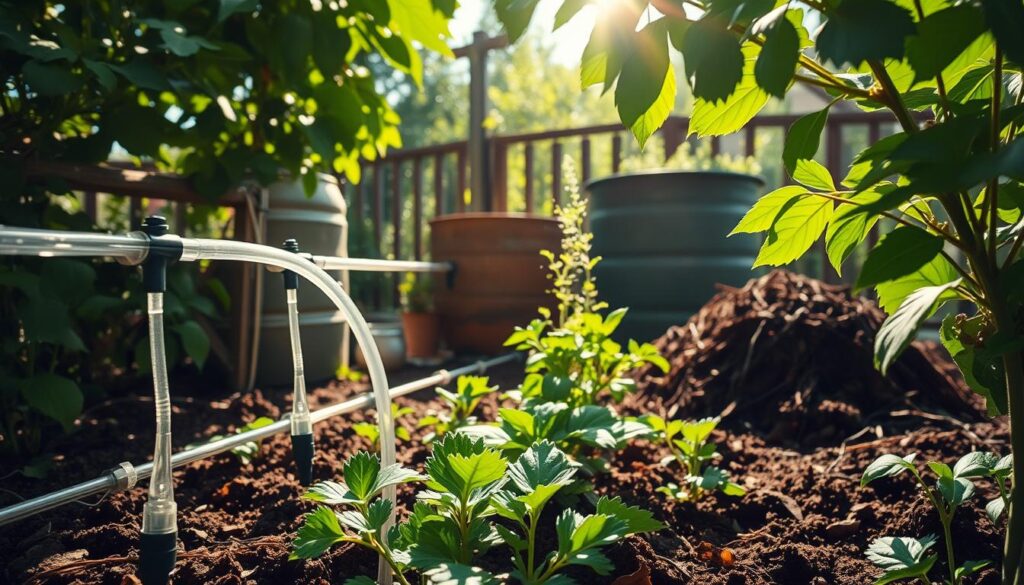
| Watering Method | Efficiency | Cost Implication |
|---|---|---|
| Drip Irrigation | High | Initial setup cost but long-term savings |
| Traditional Sprinklers | Moderate | Lower initial cost, higher water bills |
| Soaker Hoses | Moderate to High | Affordable and effective for small gardens |
| Hand Watering | Low to Moderate | Variable costs depending on water use |
The Role of Soil Health in Water Retention
Healthy soil is key to a thriving garden. It helps keep water in the soil, reducing the need for frequent watering. Soil rich in organic matter holds moisture better, supporting plant growth.
How Healthy Soil Can Lower Water Usage
Soil health affects how much water your garden needs. Healthy soil keeps moisture in, reducing evaporation and the need for watering. By keeping soil quality high, you support plant health and a greener environment.
Techniques for Improving Soil Quality
Several methods can improve your soil’s water-holding ability. Here are a few:
- Composting: Adds organic matter, improving soil texture and nutrients.
- Crop rotation: Changes plants to replenish nutrients and fight pests.
- Mulching: Keeps moisture in and stops weeds.
These methods help plants grow better and use less water. With good soil management, your garden can thrive with less water.
| Technique | Benefits |
|---|---|
| Composting | Enhances soil structure and nutrient availability |
| Crop rotation | Reduces pests and replenishes nutrients |
| Mulching | Retains moisture and prevents weed growth |
The Cost Benefits of Native Plant Gardens
Turning your garden into a native plant haven can save you money. These plants love the local weather and need less water than others. This means you can cut down on your water bill and keep your garden healthy without breaking the bank.
Reduced Water Bills Over Time
Native plants are made for the local rainfall, so they don’t need much extra water. Their deep roots grab water from the ground, cutting down on the need for irrigation. As your water bill goes down, you’ll see the long-term savings. Native plants are good for the planet and your wallet.
Potential Savings on Maintenance Costs
Native plants also need less care. They don’t need as many fertilizers and pesticides, saving you money. By choosing native plants, you’ll spend less on garden upkeep. For more on saving money with native gardening, check out this useful guide. Native plants are a smart choice for your garden, boosting your property’s value and helping the environment.
Community Gardens and Shared Resources
Community gardens are lively places where neighbours meet and work together. They share resources and learn eco-friendly gardening tips. This helps everyone use less water and appreciate nature more.
By joining these gardens, you can learn about sustainable gardening. This not only helps your garden but also supports local wildlife.
Benefits of Gardening in Communities
Being part of a community garden has many benefits:
- Access to water-saving garden plants that do well in our area.
- Lower costs for gardening stuff because you buy together.
- Opportunities to learn from others and share your own gardening secrets.
- It’s good for your mind to be around people who like gardening as much as you do.
- It makes your community stronger and more united.
Examples of Successful Community Initiatives
There are many community gardens in the UK that show the power of working together:
- The Edible Garden Project in Brighton turns empty spaces into gardens full of food.
- The Incredible Edible movement in Todmorden gets people growing food together in shared plots.
- Grow Sheffield focuses on sustainability by getting locals involved in gardening projects.

These projects give you more than just a garden. They give you a community that cares about gardening in a green way. Being part of these groups makes gardening better, teaches you eco-friendly gardening tips, and helps you make your area a better place.
Real-Life Success Stories
Many people have found great benefits from using native plants in their gardens. They’ve cut down their water bills by choosing plants that need less water. These stories show how saving money can also make gardens look beautiful.
Case Studies of Reduced Water Bills
Homeowners in different areas have seen big drops in their water bills. They’ve made the switch to native plants. Here are some examples:
| Location | Previous Water Bill (£) | New Water Bill (£) | Annual Savings (£) |
|---|---|---|---|
| Brighton | 120 | 80 | 480 |
| Exeter | 150 | 90 | 720 |
| Cardiff | 100 | 60 | 480 |
Testimonials from Satisfied Gardeners
Many gardeners love to share their experiences with native plants. Here are a few testimonials:
- “My garden has never looked better with native plants. My water bill has dropped a lot, and I’m helping the environment!”
- “Switching to drought-resistant plants was a big change. Now, I have beautiful flowers without spending a lot on water. I highly recommend it!”
- “I was unsure at first, but I’ve seen a huge difference in my water use. It’s great to see my garden flourish while saving money!”
How to Get Started with Your Own Native Garden
Starting a native garden is rewarding and fun. A good plan is key to success. First, check your garden’s conditions and design with native plants in mind. Choosing different native plants makes your garden look good and helps local wildlife.
Tips for Planning Your Garden
- Check your garden’s sunlight, soil, and drainage.
- Plan a layout that lets plants grow well.
- Use a mix of native plants for a balanced garden.
- Think about adding a rain garden or a spot for pollinators.
Local Resources for Native Plants
Using local resources for native plants makes gardening better. Look for nurseries near you that sell native plants. Gardening clubs and local groups can also help a lot. They offer tips and advice just for you.
With local help and sustainable ideas, your garden will thrive. It will be good for the environment and save you money.
Conclusion: Enjoying a Beautiful, Cost-Effective Garden
Thinking about changing your garden? Native plants are a great choice. They use less water and need less care. This means your garden will be healthier and full of life.
Native plants are good for your wallet and the planet. They help you save money and protect the environment. Imagine a garden that’s beautiful, uses less water, and helps local animals.
Changing to native plants might seem hard, but it’s worth it. Begin with a few plants, learn about local species, and see the benefits. You’ll make your garden beautiful and help the planet for years to come.