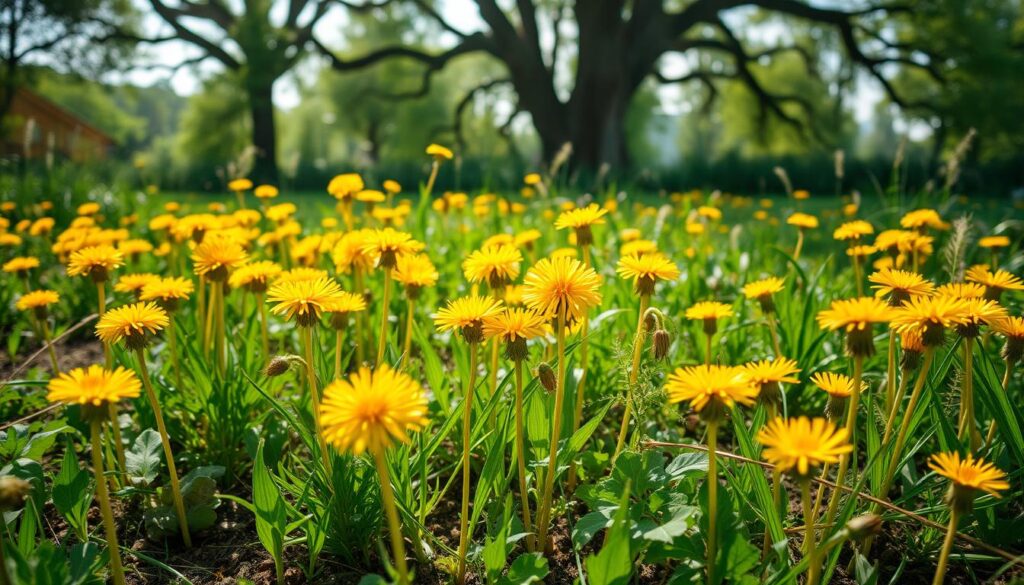
Have you thought about how dandelions could make your garden better? These bright flowers are often seen as weeds. But they’re key to a healthy, eco-friendly garden.
By adding dandelions, you help pollinators and improve soil. This article will show you why dandelions are great for a green garden. They’re not just pretty; they’re good for the planet.
Key Takeaways
- Dandelions offer numerous benefits to an eco-friendly garden.
- These flowers significantly contribute to soil health and nutrient richness.
- Dandelions serve as a natural food source for beneficial insects and pollinators.
- They promote biodiversity, nurturing local ecosystems.
- Incorporating dandelions can reduce lawn maintenance and chemical inputs.
- Dandelions provide creative uses, from culinary delights to medicinal remedies.
The Remarkable Benefits of Dandelions
Dandelions are more than just weeds. They bring many benefits that help the environment. They add nutrition and diversity to your garden, making them great for eco-friendly gardeners.
Nutritional Value of Dandelions
Dandelions are full of nutrients. Their leaves have vitamins A, C, and K, and minerals like iron and calcium. Adding them to salads or smoothies is a tasty way to get healthy.
Dandelion roots can even replace coffee. They give a caffeine-free warmth without the need for coffee.
Medicinal Uses in Herbal Remedies
Dandelions have been used in herbal medicine for a long time. They help the liver and aid digestion. This makes them a natural choice for gardeners looking for organic solutions.
Attracting Beneficial Insects
Dandelions attract bees and ladybugs, which are good for gardens. These insects help keep the garden balanced. By planting dandelions, you attract these helpers, making your garden stronger against pests.
This method also supports a diverse garden. It’s a way to mix plants for a healthier ecosystem. For more on this, check out this resource.
Dandelions and Soil Health
Dandelions are key to improving soil health, making them great for eco-friendly gardens. Their deep roots help break up hard soil and improve air flow. This helps other plants grow better, creating a healthier garden.
Natural Soil Aeration
The strong roots of dandelions dig deep into the soil. They help loosen compacted soil and improve air flow. This is essential for healthy roots and soil, helping other plants thrive.
Enhancing Soil Nutrients
Dandelions also make soil richer in nutrients. Their roots pull up nutrients from deep in the soil and bring them to the surface. When they break down, they add these nutrients back into the soil.
This makes the soil better for plants. For more on dandelions and soil health, check out this resource.
Promoting Biodiversity with Dandelions
Dandelions are key to boosting biodiversity in your garden. They make your garden a home for many species, helping local ecosystems thrive. Their bright yellow flowers bloom early, giving wildlife food when other plants are not ready.
Supporting Local Ecosystems
Dandelions are good for local ecosystems. They draw in helpful insects, which feed pollinators, birds, and small mammals. Using eco-friendly dandelion products in your garden helps create a balanced ecosystem. This benefits all living things.
Encouraging Pollinator Habitats
Dandelions are perfect for bees and butterflies. They offer nectar and pollen, vital for these important insects. By growing dandelions, you support pollinators, which are essential for our food. These plants are beautiful and vital for your garden and wildlife.
Dandelions as a Natural Food Source
Dandelions are packed with nutrients, making them a great choice for natural food lovers. You can eat every part of the plant, adding variety to your meals. From adding fresh leaves to salads to using roots as a coffee substitute, dandelions are a healthy and sustainable option.
Edible Dandelion Leaves
The young leaves of dandelions are perfect for fresh salads, giving them a peppery taste. Older leaves are milder and can be cooked to reduce bitterness. They’re full of vitamins A, C, and K, and minerals like calcium and iron.
Choosing dandelion leaves is a healthy and sustainable choice. It lets you enjoy the natural goodness of your garden.
Dandelion Roots for Coffee Alternatives
Dandelion roots make a tasty, caffeine-free coffee when roasted and ground. This alternative is not only good for you but also for the planet. It supports sustainable farming and offers a unique taste experience.
Eco-Friendly Pest Control with Dandelions
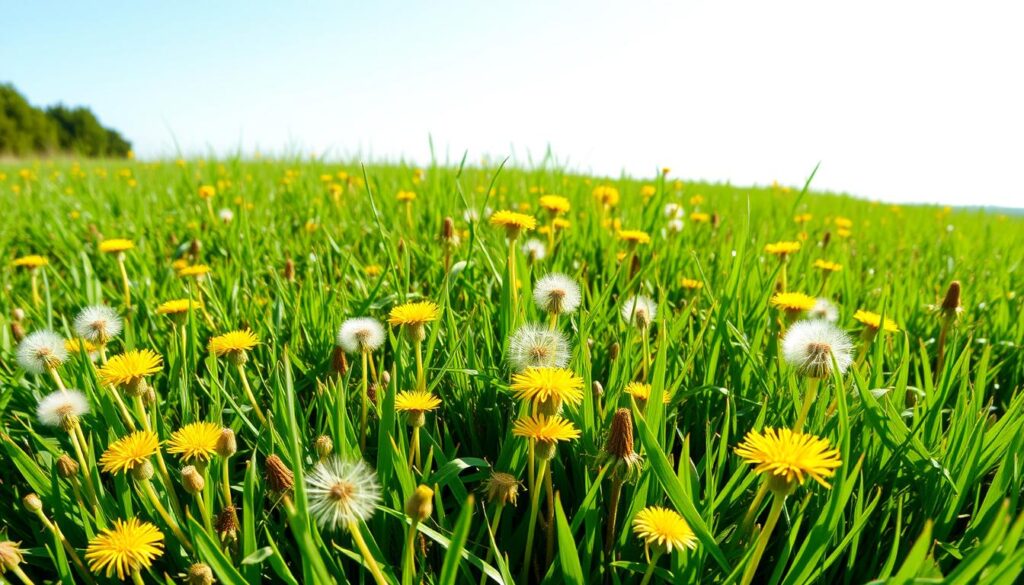
Dandelions are great eco-friendly alternatives with dandelion for pest control in your garden. They attract beneficial insects like ladybirds and lacewings. These insects help control harmful pests.
Dandelions are a natural part of your garden. They help create a healthy ecosystem. This reduces the need for harmful pesticides.
Dandelions can be planted near your vegetables and flowers. This improves their health and growth. It also adds to the garden’s biodiversity.
Using organic dandelion solutions makes gardening more sustainable. It cuts down on the use of chemicals.
Keeping Harmful Insects at Bay
Aphids and other pests can harm your garden. Dandelions attract beneficial insects that eat these pests. By adding dandelions to your garden, you create a space where good insects flourish.
Dandelions as Companion Plants
Dandelions are great as companion plants. Their deep roots help loosen soil. This improves water and nutrient flow to other plants.
This helps plants grow healthier. It also gives them a natural defence against pests. Dandelions are key for any gardener who cares about the environment.
How to Incorporate Dandelions into Your Garden
Adding dandelions to your garden can make it lively and support local wildlife. By using smart planting methods, you can grow these plants well. They like sunny places and can grow in different soils, making them great for gardens.
Planting Techniques for Success
To start your dandelion project, try these tips:
- Make ‘pollinator zones’ for dandelions to grow freely.
- Plant dandelions with other plants that help them grow.
- Strategic mowing helps dandelions live well with other plants.
Optimal Growth Conditions
For dandelions to grow well, they need the right environment. Here’s how to help:
- Give them lots of sunlight, at least 6 hours a day.
- They can grow in sandy, loamy, or clay soils.
- Water them regularly to help their roots grow strong.
Sustainability Practices with Dandelions
Using dandelions in your garden is a great way to be eco-friendly. These plants need little care, making your garden easy to maintain. They help you enjoy gardening more, without spending too much time on it.
Reducing Lawn Maintenance
Dandelions mean less mowing and upkeep for you. They add beauty to your garden, supporting many plants and animals. They can also cover the ground, stopping weeds from growing.
Minimising Chemical Inputs
Choosing eco-friendly dandelion products is better than using harmful chemicals. Dandelions fight off pests and diseases naturally. This keeps your garden safe for everyone and helps the environment thrive.
Creative Uses for Dandelions
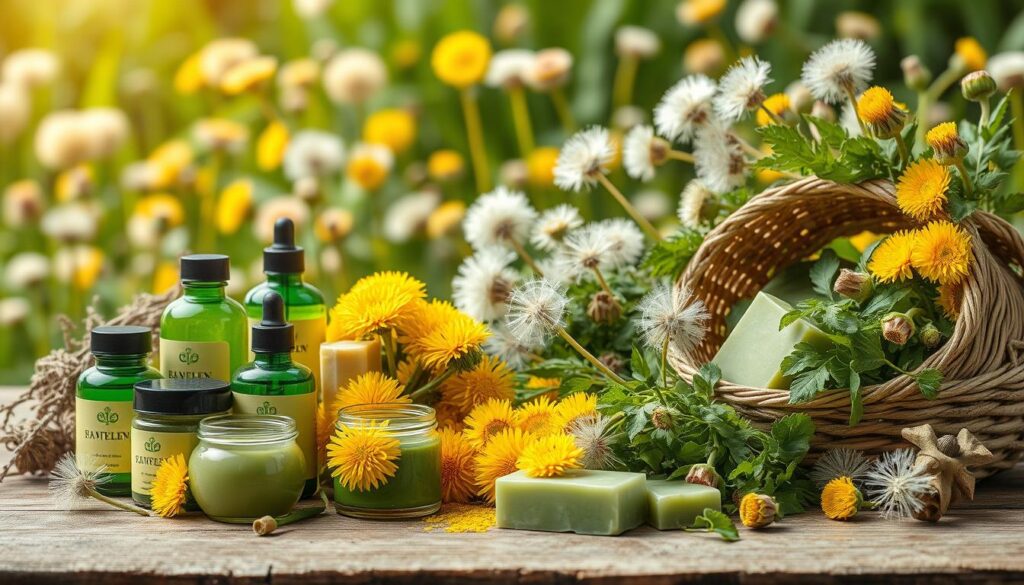
Dandelions are more than just garden plants. They can be turned into unique products like dandelion wine and salves. These items not only serve a purpose but also bring nature into your life.
Making Dandelion Wine
Making dandelion wine is a fun project that captures spring’s essence. You collect dandelion flowers and ferment them to make a refreshing drink. Each sip is like a taste of spring, making it a favourite among many.
The process takes time, but the homemade wine is worth the wait. It’s a delightful way to enjoy the season.
Crafting Dandelion Salves
Dandelion salves are great for natural skincare. You make them by infusing dandelion flowers and roots in oil. They’re perfect for soothing skin irritations and moisturising dry areas.
There are many recipes and tips online for making these salves. They show how versatile dandelions can be. You can find them here.
| Product | Main Ingredients | Uses | Shelf Life |
|---|---|---|---|
| Dandelion Wine | Dandelion flowers, sugar, water, yeast | Beverage, celebration | Up to 1 year |
| Dandelion Salve | Dandelion flowers, dandelion roots, carrier oil, beeswax | Skin moisturiser, irritation relief | Up to 1 year |
Using dandelions in these ways connects you to nature and promotes sustainable living. Whether you’re drinking homemade wine or using salve on your skin, dandelions offer a special way to appreciate nature’s gifts.
Myths and Misconceptions About Dandelions
Dandelions are often seen as bad weeds that ruin gardens and lawns. But they play a big role in our ecosystems. Learning about the environmentally friendly dandelion shows their benefits and value in your garden.
Debunking the Weed Myth
Many gardeners view dandelions as pests. But they are actually very useful. They help improve soil by breaking it up and adding nutrients. By seeing dandelions as helpful, you can change how you garden.
Instead of removing them, think of them as natural helpers for your soil.
Understanding Their Role in Nature
Dandelions attract many beneficial insects, making them biodiversity guardians. They feed pollinators like bees and make local ecosystems richer. Adding the environmentally friendly dandelion to your garden helps nature flourish.
This approach creates a harmonious relationship between your garden and the environment.
Dandelions in Popular Culture
Dandelions have made a big impact on popular culture, showing up in art and literature. These bright flowers stand out because they grow well in tough places. They show us the power of staying strong and holding onto hope.
As they bloom in fields and gardens, they spark creativity. They help us see the beauty of nature more clearly.
Art and Literature References
Artists and writers love the dandelion’s beauty. They’ve shown it in paintings and poems, symbolizing freedom and dreams. Many people remember making wishes by blowing dandelion seeds as kids.
Artists often use dandelions to talk about new starts and nature’s cycles. It’s a powerful way to show the beauty of life.
Symbolism in Different Cultures
In many cultures, the dandelion is special. It’s seen as a symbol of wishes, healing, and fresh starts. Its ability to grow in hard times speaks to us all.
The dandelion reminds us to be strong and take care of our planet. It encourages us to face life’s changes and protect the environment.
| Culture | Symbolism | Artistic Representation |
|---|---|---|
| Western | Wishes and dreams | Poetry and children’s stories |
| Chinese | Healing and longevity | Traditional medicine texts |
| Native American | Transformation and adaptability | Folklore and oral traditions |
| Japanese | Strength and resilience | Ikebana and floral arrangements |
Your First Steps to an Eco-Friendly Garden
Starting an eco-friendly garden is easy. Just add a small patch of dandelions. These bright flowers make your garden better and help the planet. They need little care and grow well in many places, perfect for beginners.
Starting Small with Dandelions
Let dandelions grow in your garden. Their yellow flowers bring in good bugs and improve soil. Adding dandelions makes your garden a haven for wildlife. Every small step helps, showing others the value of these plants.
Building Community Awareness
Teach your neighbours about dandelions’ benefits. Create a ‘pollinator zone’ with signs to spark talks about green living. Sharing your garden story and dandelions’ role can inspire others. This leads to more people caring for our planet.