The graceful silhouette of an Acer palmatum, with its delicate star-shaped leaves and architectural branching, can transform even the smallest garden into a space of serene beauty. These slow-growing Japanese maples are ideal for compact UK gardens, offering dramatic seasonal colour changes and elegant form without overwhelming limited spaces. Whether nestled in a courtyard corner, gracing a patio in a container, or creating a focal point in a tiny border, these versatile trees bring a touch of Eastern elegance to Western gardens.
Why Acer Palmatum Shines in Courtyards & Containers
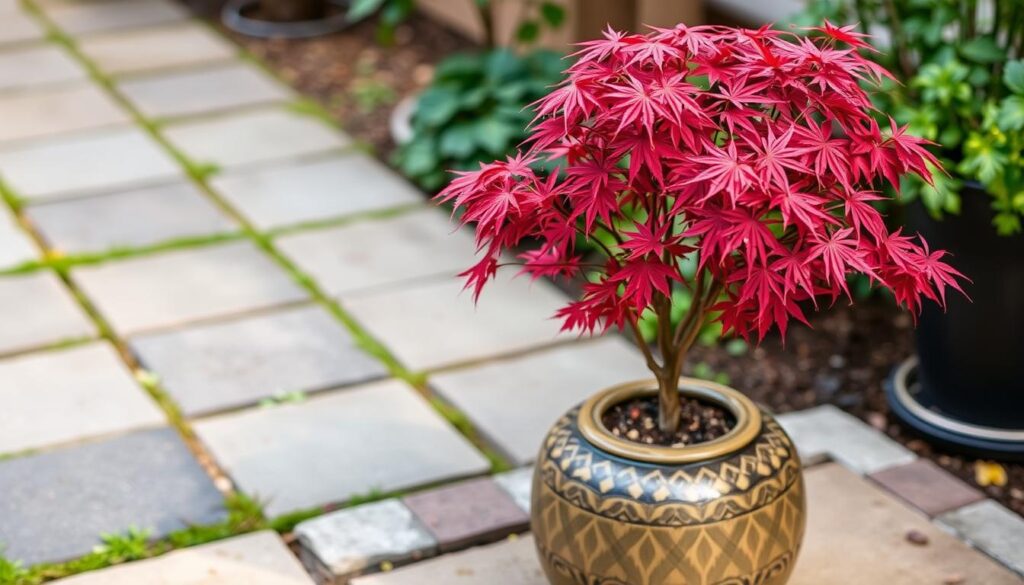
A container-grown Acer palmatum brings architectural interest to even the smallest patio
Acer palmatum for small gardens is the perfect solution when space is at a premium. These Japanese maples naturally maintain a compact, well-proportioned form that fits beautifully into limited areas without constant pruning. Most varieties grow slowly, adding just 10-30cm per year, allowing you to enjoy their beauty for many years before they reach their modest mature height of 2-3 metres.
The shallow, fibrous root system of Acer palmatum makes it particularly well-suited to container growing. Unlike trees with aggressive taproots, Japanese maples won’t quickly become pot-bound or destabilize paving. This characteristic allows them to thrive in large pots for many years with minimal root disturbance, perfect for patios, balconies, and courtyard gardens.
In the UK climate, these trees appreciate protection from harsh elements. Placing your Acer palmatum in a sheltered courtyard or against a wall provides the perfect microclimate, shielding it from strong winds that can damage delicate foliage and scorch leaves. This placement mimics their natural woodland edge habitat, where they receive dappled light rather than harsh direct sun.
Best Dwarf Varieties for Pots
- Acer palmatum ‘Garnet’ – Feathery red foliage, weeping habit, 2m height
- Acer palmatum ‘Shaina’ – Compact form with bright red spring growth, 1.5m height
- Acer palmatum ‘Katsura’ – Orange-yellow spring foliage, 2.5m height
- Acer palmatum ‘Beni-maiko’ – Bright crimson new growth, 1.5m height
- Acer palmatum ‘Mikawa yatsubusa’ – Layered growth with overlapping leaves, 1.5m height
Seasonal Drama: From Spring Buds to Autumn Fire


One of the greatest joys of growing Acer palmatum in small gardens is witnessing the spectacular seasonal transformations. These trees are never static, offering a constantly changing display throughout the year that brings life and interest to compact spaces.
Spring heralds the emergence of delicate new leaves in a stunning array of colours. Varieties like ‘Bloodgood’ unfurl deep crimson foliage, while ‘Orange Dream’ produces bright coral-orange leaves that seem to glow in the soft spring light. The fresh, vibrant colours of new growth create a sense of renewal and excitement after winter dormancy.
Summer sees the foliage deepen and mature, with red varieties like ‘Atropurpureum’ developing richer burgundy tones and green varieties like ‘Seiryu’ forming a lush canopy of verdant foliage. The fine texture of Japanese maple leaves creates dappled shade beneath, perfect for growing shade-loving plants in your small garden.
Autumn is when Acer palmatum truly steals the show. Few trees can match the fiery brilliance of Japanese maples in fall. ‘Osakazuki’ is renowned for its spectacular scarlet autumn display, while ‘Sango-kaku’ combines golden yellow leaves with coral-red stems. In small gardens, this concentrated burst of colour creates maximum impact in minimal space.
Even in winter, these trees maintain their appeal through elegant branching patterns and interesting bark. The coral stems of ‘Sango-kaku’ glow in the winter sun, while the architectural silhouette of varieties like ‘Shishigashira’ adds structural interest to the dormant garden.
Planting Partners: Japanese-Inspired Combinations

A harmonious combination of Acer palmatum with traditional Japanese companion plants
Creating a cohesive planting scheme around your Acer palmatum enhances its beauty and creates a sense of place in small gardens. Japanese-inspired combinations work particularly well, reflecting the tree’s heritage while maximizing impact in limited space.
Hakonechloa macra (Japanese forest grass) makes an ideal companion, with its graceful, arching habit and lime-green or variegated foliage that contrasts beautifully with the maple’s form. This low-growing grass creates movement at the base of the tree without competing for attention.
Ferns add a woodland feel that complements the natural habitat of Acer palmatum. Varieties like Dryopteris erythrosora (autumn fern) or our native Polystichum setiferum (soft shield fern) provide textural contrast with their feathery fronds while thriving in the dappled shade beneath the maple.
For seasonal flower power, dwarf azaleas and rhododendrons share the maple’s preference for acidic soil and provide a spectacular spring display. Choose compact varieties like Rhododendron ‘Wee Bee’ that won’t overwhelm small spaces.
In containers, create miniature Japanese landscapes by underplanting your Acer palmatum with small hostas, Ophiopogon planiscapus ‘Nigrescens’ (black mondo grass), and perhaps a small clump of Carex ‘Evergold’. Finish with a layer of moss or fine gravel mulch to retain moisture and create an authentic look.
5-Second Soil Test
To quickly check if your soil is acidic enough for Acer palmatum, mix a tablespoon of soil with vinegar. If it fizzes, your soil is alkaline (pH above 7). No reaction suggests acidic to neutral soil, ideal for Japanese maples. For alkaline soil, use ericaceous compost when planting and as a mulch.
Care Essentials for Thriving Acers
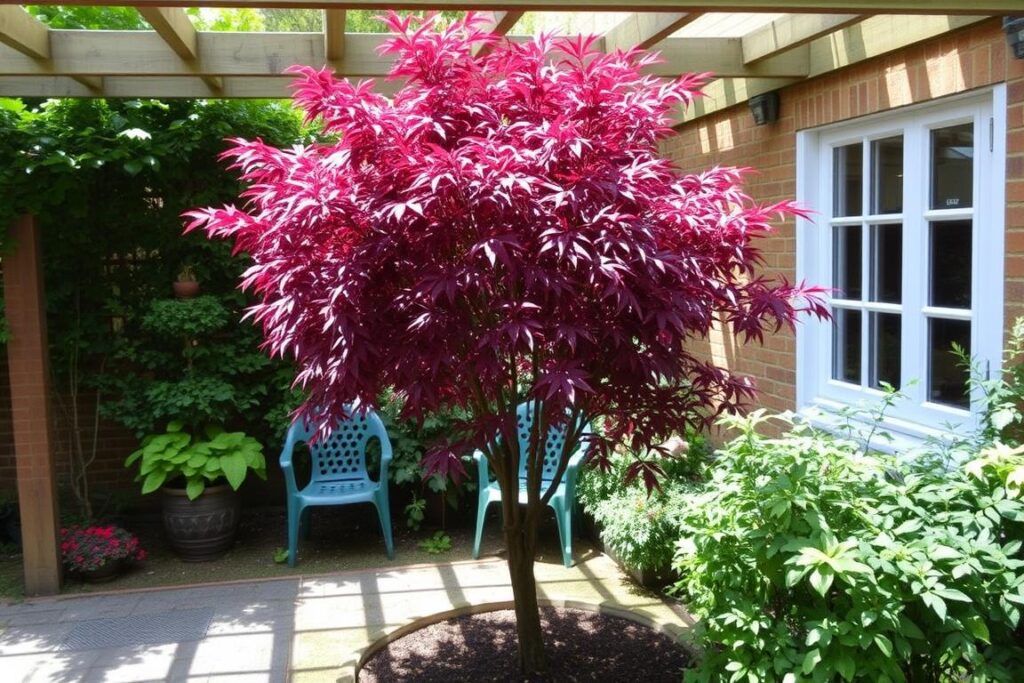
Proper care is essential for Acer palmatum to thrive in small gardens, but these trees are surprisingly low-maintenance once established. The key is getting the fundamentals right from the start.
Soil Preparation
Acer palmatum prefers slightly acidic soil with a pH between 5.5 and 6.5. In many UK gardens, particularly those on chalk or limestone, the soil may be too alkaline. Improve your planting area by incorporating plenty of ericaceous compost and leaf mould. For container growing, use a high-quality ericaceous compost mixed with about 20% fine bark to improve drainage.
Good drainage is crucial, as Japanese maples hate sitting in waterlogged soil. In heavy clay, consider planting on a slight mound or incorporating grit to improve drainage. For containers, ensure there are ample drainage holes and raise pots on feet during winter to prevent waterlogging.
Positioning
In small UK gardens, finding the perfect position for your Acer palmatum involves balancing light requirements with protection. Morning sun with afternoon shade provides ideal conditions, particularly for red and variegated varieties which need some direct light to develop their best colour.
East-facing walls or fences offer excellent locations, providing morning sunshine and afternoon protection. North-facing positions can work for green varieties but may result in less vibrant autumn colour. South and west-facing spots require careful consideration – the intense afternoon sun can scorch delicate leaves, particularly in hot summers.
In very small spaces, consider the vertical dimension. Planting your maple near a seating area allows you to look up through the canopy, appreciating the delicate leaf structure backlit by the sky – a technique used in Japanese gardens to make small spaces feel larger.
Pruning Techniques
One of the advantages of Acer palmatum for small gardens is that they require minimal pruning. Their natural form is usually well-balanced and proportionate. When pruning is necessary, follow these guidelines:
- Prune only during dormancy (November to January) to prevent sap bleeding
- Remove dead, damaged or crossing branches first
- Make clean cuts just above an outward-facing bud
- Step back frequently to assess the overall shape
- Aim to maintain the tree’s natural form rather than imposing a shape
- Never remove more than 20% of the canopy in one season
Wind Damage Fix
Protect your Acer palmatum from wind damage by creating a microclimate. Install decorative bamboo screens or trellis on the windward side, plant taller shrubs as windbreaks, or position large containers strategically. For established trees suffering wind scorch, temporary burlap screens during winter and early spring can protect delicate new growth.
Winter Protection & Long-Term Success
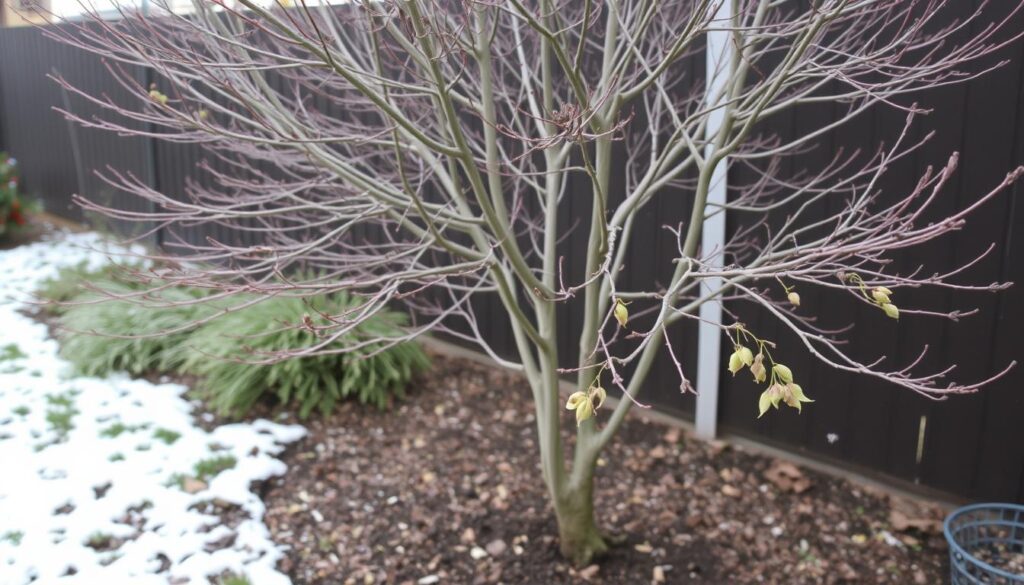
Winter reveals the elegant structure of Acer palmatum while proper protection ensures spring vitality
While most Acer palmatum varieties are hardy in UK gardens (typically to -10°C or USDA zone 6), taking extra precautions during winter ensures long-term success, particularly for container-grown specimens.
Frost Protection for Potted Specimens
Container-grown Japanese maples are more vulnerable to frost than those planted in the ground, as their roots have less insulation. During severe cold snaps, wrap pots in bubble wrap or hessian, ensuring the drainage holes remain unobstructed. Alternatively, move containers to a sheltered spot against a house wall where temperatures remain a few degrees warmer.
For extra protection, group containers together during winter. This creates a microclimate where the mass of soil in multiple pots provides mutual insulation. Raising pots on feet or bricks prevents waterlogging and reduces the risk of roots freezing in standing water.
Mulching Strategies
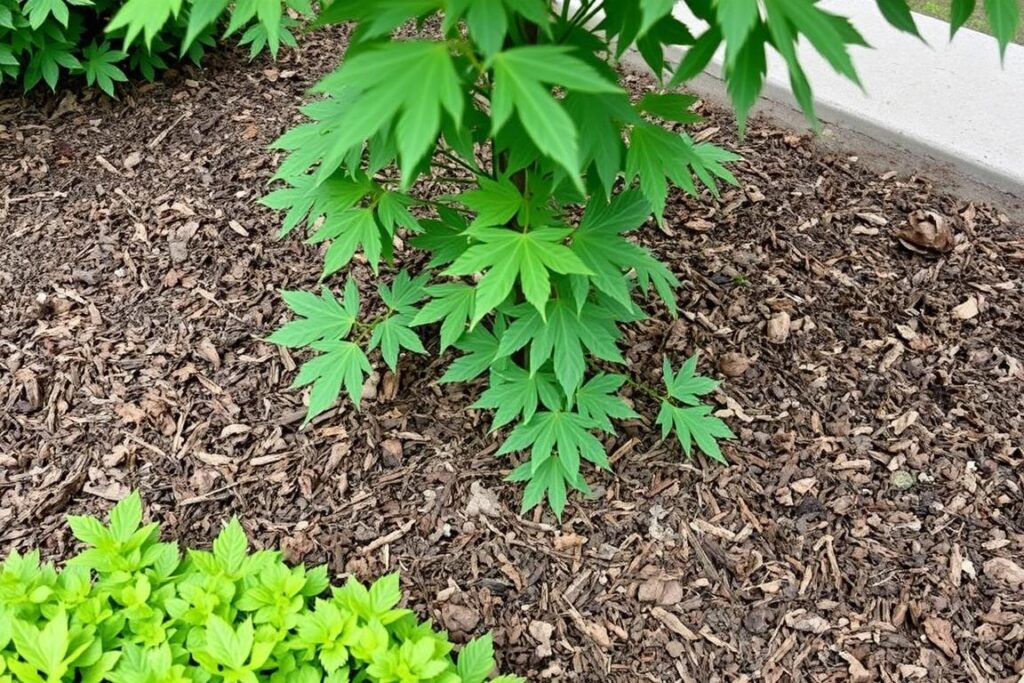
A 5-7cm layer of mulch applied in late autumn provides excellent protection for both container and garden-grown Acer palmatum. Leaf mould, well-rotted compost, or fine bark all make excellent mulches, insulating the roots while slowly releasing nutrients.
Keep mulch slightly away from the trunk to prevent rot, creating a donut-shaped ring around the base. Refresh the mulch layer annually in autumn after leaf fall, incorporating the old mulch into the soil to improve its structure and fertility.
Pest Prevention
Japanese maples are relatively trouble-free, but a few pests can cause issues. Aphids may attack new growth in spring – these can be controlled with a strong jet of water or, for persistent infestations, insecticidal soap. Scale insects occasionally affect older trees and can be treated with organic neem oil.
Vine weevil can be problematic for container-grown specimens. Apply nematodes as a biological control in late summer and early autumn when soil temperatures are appropriate. Regularly check for signs of damage and treat promptly to prevent spread.
The most common issue for Acer palmatum in small gardens is not pests but environmental stress – particularly leaf scorch from sun or wind. Proper positioning and protection as discussed earlier will prevent most problems and ensure your Japanese maple remains a beautiful focal point for many years.
Conclusion: A Lifetime of Beauty in Limited Space
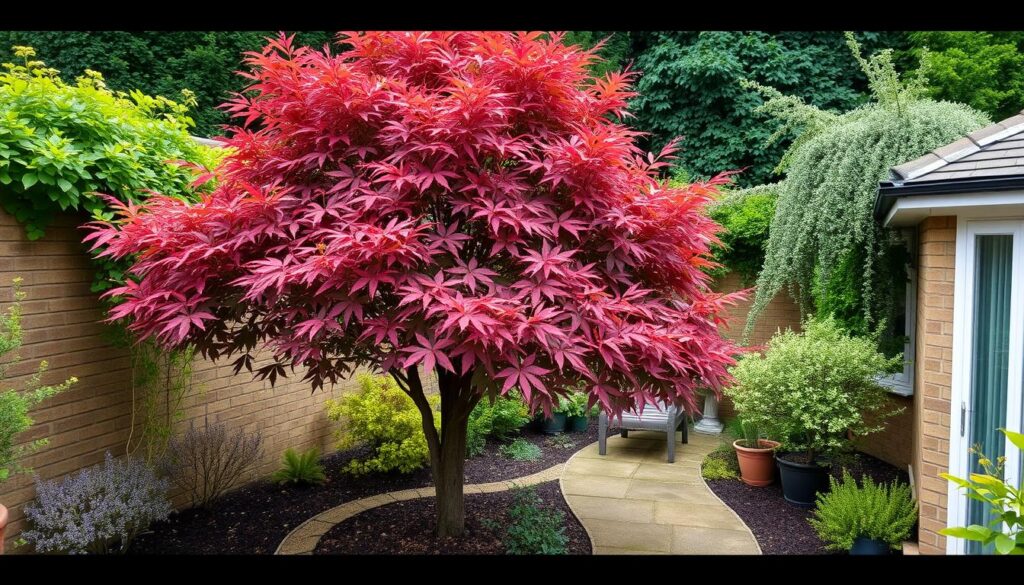
A mature Acer palmatum creates a timeless focal point in this compact garden
Acer palmatum for small gardens offers a perfect solution for space-conscious UK gardeners seeking to create impact without overwhelming limited areas. These versatile trees bring architectural interest, seasonal drama, and a touch of Japanese serenity to even the smallest outdoor spaces.
By selecting appropriate varieties, preparing the soil properly, and providing the right position and protection, you can enjoy the changing beauty of your Japanese maple for decades to come. Whether in a courtyard, on a patio, or in a tiny border, these elegant trees earn their place as one of the most rewarding plants for small gardens.
As your Acer palmatum grows and matures, it will develop more character and presence, becoming not just a plant but a living sculpture that marks the passing seasons and creates a sense of permanence and tranquility in your garden sanctuary.