
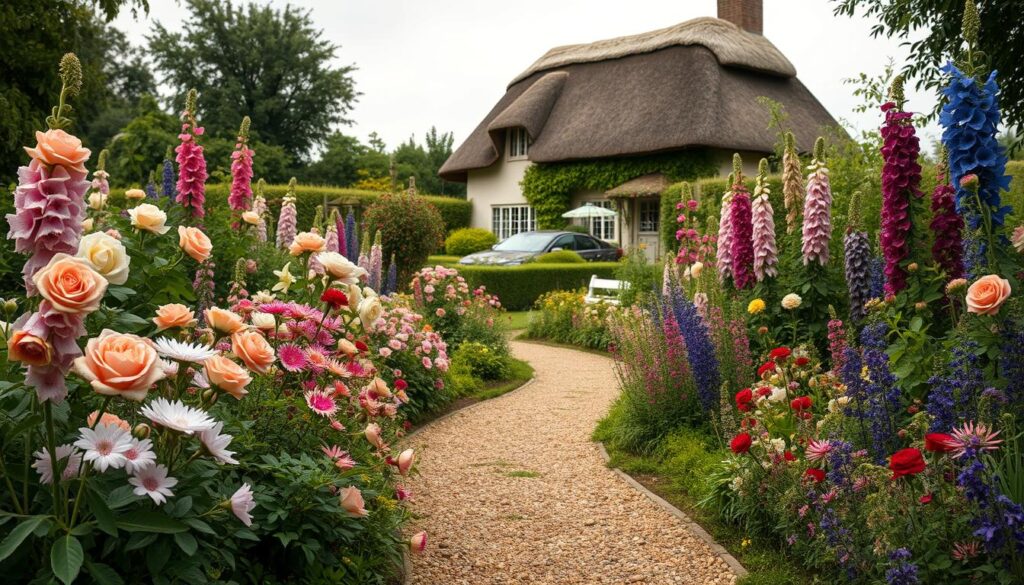
Picture yourself wandering down a winding gravel path, the air sweet with the mingled scents of roses and lavender. Hollyhocks stand tall against weathered brick walls, while a tapestry of foxgloves, delphiniums, and daisies spill over onto the pathway. Bees hum contentedly among the blooms, and somewhere nearby, the gentle rustle of leaves signals a bird settling into a sun-dappled corner. This is the quintessential traditional English cottage garden—a place where nature’s gentle disorder creates a scene of breathtaking beauty and tranquility.
The cottage garden isn’t just a style; it’s a philosophy that embraces imperfection, celebrates biodiversity, and creates a space that feels both wild and intentional. It’s where practical meets poetic, where food grows alongside flowers, and where every season brings new delights. Whether you have acres of land or just a small urban plot, the principles of the traditional English cottage garden can transform your outdoor space into a haven of whimsical abundance and natural charm.
The enchanting profusion of a traditional English cottage garden in full summer bloom
The Historical Roots of the Traditional English Cottage Garden
The story of the cottage garden begins not with aristocratic design but with humble necessity. In 16th century England, cottagers—rural workers who lived in small homes with modest plots of land—created gardens primarily for practical purposes. These early cottage gardens were working spaces where families grew vegetables, herbs, and fruit to feed themselves, medicinal plants to treat ailments, and perhaps a few flowers to brighten their homes.
Unlike the formal, geometric gardens favored by the wealthy, these cottage gardens were designed for efficiency and productivity. Every plant earned its place through usefulness, whether as food, medicine, or household material. Paths were functional rather than decorative, and plants grew where they thrived rather than according to rigid plans.
By the 19th century, the cottage garden began to evolve. The Arts and Crafts Movement, led by influential figures like William Morris and Gertrude Jekyll, rebelled against industrialization and formal Victorian garden designs. They found beauty in the informal, naturalistic style of the cottager’s garden and began to elevate it as an art form—one that celebrated traditional craftsmanship and a harmonious relationship with nature.

A 17th century English cottage garden showcasing the practical origins with vegetables and herbs intermingled with flowers
What began as necessity transformed into a beloved garden style that continues to captivate gardeners worldwide. Today’s traditional English cottage garden honors these humble origins while embracing the artistic principles that evolved over centuries—creating spaces that are both beautiful and functional, wild yet intentional, and always deeply personal.
Signature Plants of the Traditional English Cottage Garden
The soul of a cottage garden lies in its plantings—a seemingly casual but carefully considered collection that creates a tapestry of color, texture, and fragrance throughout the seasons. While modern cottage gardens might incorporate plants from around the world, certain signature plants have defined the traditional English cottage garden for centuries.

The romantic intermingling of roses, foxgloves, and lavender creates the signature cottage garden aesthetic
Structural Anchors
- Roses – Especially climbing varieties like ‘New Dawn’ and shrub roses that offer old-world charm and intoxicating fragrance
- Hollyhocks – Tall, stately biennials that provide vertical interest and cottage charm
- Foxgloves – Elegant spires that self-seed generously and thrive in dappled shade
- Delphiniums – Magnificent blue, purple, or white towers that create dramatic height
Middle Layer Favorites
- Lavender – Fragrant, drought-tolerant, and beloved by pollinators
- Peonies – Sumptuous blooms that return year after year with increasing abundance
- Aquilegia (Columbine) – Delicate, nodding flowers in a range of colors
- Geraniums (Cranesbill) – Long-flowering perennials that weave through other plants
Ground-Level Charmers
- Primroses – Early spring bloomers that brighten shady corners
- Violets – Sweet-scented flowers that naturalize beautifully
- Forget-me-nots – Self-seeding annuals that create clouds of blue
- Sweet Alyssum – Fragrant ground cover that softens edges
The Practical Side: Herbs and Edibles
True to their origins, traditional English cottage gardens blend ornamentals with edibles. These practical plants not only provide food and medicine but also contribute to the garden’s beauty and fragrance:
Essential Herbs
- Rosemary – Aromatic evergreen shrub with blue flowers
- Thyme – Low-growing, fragrant groundcover
- Sage – Soft, silvery leaves and purple blooms
- Lavender – Beautiful, fragrant, and useful for everything from sachets to baking
- Chamomile – Daisy-like flowers for tea and ground cover
Cottage Garden Edibles
- Fruit trees – Especially apple and pear, often trained against walls
- Soft fruits – Raspberries, gooseberries, and currants
- Root vegetables – Beetroot, carrots, and potatoes
- Leafy greens – Kale, lettuce, and spinach
- Edible flowers – Calendula, borage, and nasturtium
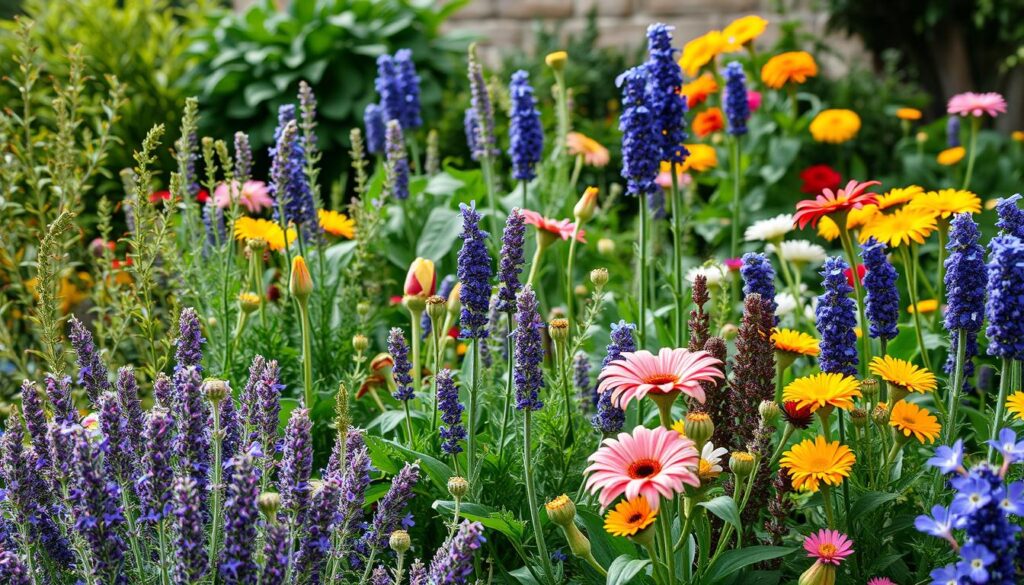
The beautiful integration of herbs, vegetables, and flowers creates the practical charm of a traditional cottage garden
The key to creating an authentic traditional English cottage garden is to mix these plants generously, allowing them to mingle and self-seed. Unlike formal gardens where each plant has its designated spot, cottage gardens celebrate the happy accidents that occur when plants are allowed to find their own perfect place.
Adapting the Traditional English Cottage Garden to Modern Spaces
You don’t need a thatched cottage in the Cotswolds to create an authentic cottage garden. The principles of this beloved style can be adapted to modern gardens of all sizes and settings—from sprawling country plots to compact urban spaces.
Small Space Solutions
Limited space doesn’t mean limited cottage garden charm. With some clever adaptations, even the smallest areas can capture the essence of a traditional English cottage garden:
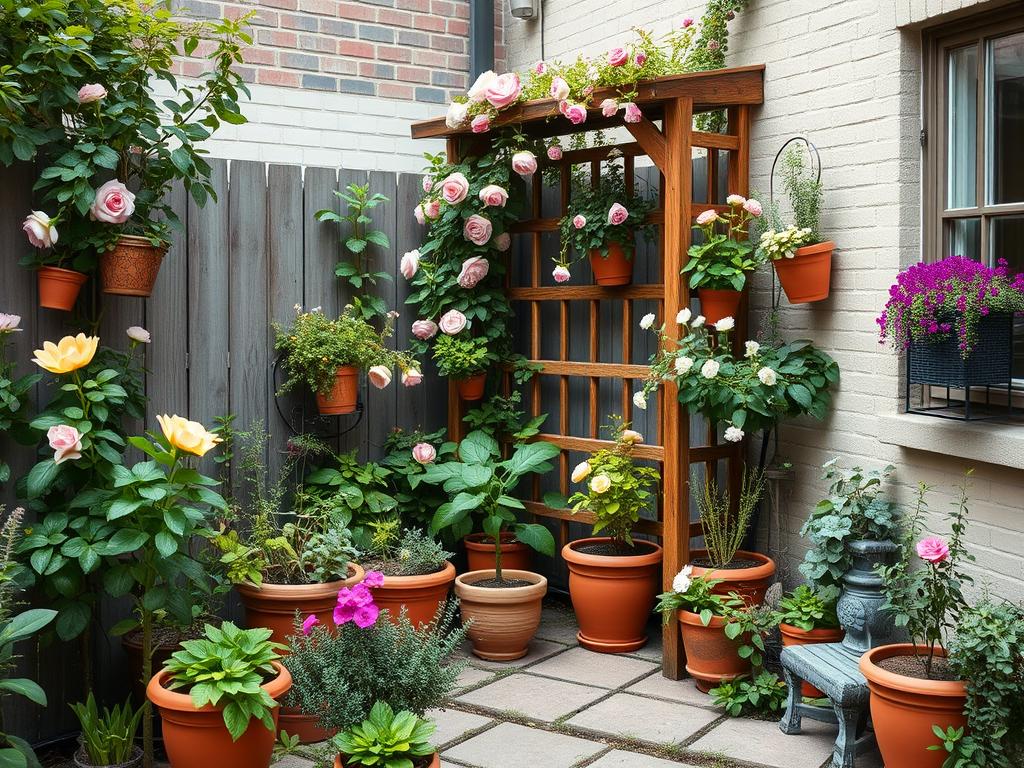
A small urban cottage garden demonstrating vertical growing techniques and container plantings
Vertical Gardening
- Install arches, obelisks, and trellises for climbing roses, clematis, and sweet peas
- Use wall-mounted planters for trailing herbs and flowers
- Train fruit trees as espaliers against walls or fences
- Stack vintage crates or build tiered planters to maximize growing area
Container Gardening
- Group terracotta pots of various sizes for an authentic cottage feel
- Plant herbs in window boxes and hanging baskets
- Use large containers for dwarf fruit trees and shrub roses
- Repurpose vintage items like watering cans, boots, or wheelbarrows as quirky planters
Compact Varieties
- Choose dwarf or patio varieties of traditional cottage plants
- Look for ‘compact’ or ‘container’ cultivars of foxgloves and delphiniums
- Plant miniature roses instead of full-sized shrub varieties
- Select trailing herbs that can cascade over edges to maximize space
Creating Structure in the Chaos
The beauty of a cottage garden lies in its seemingly untamed abundance, but without some underlying structure, it can quickly become a chaotic mess. These elements help create the perfect balance between wild and controlled:
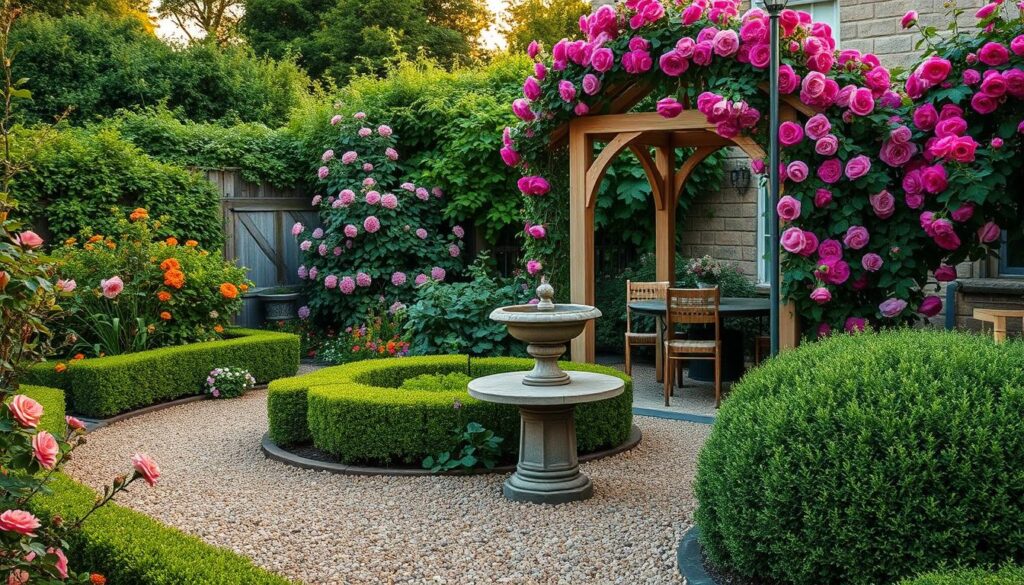
Structural elements like paths, arches, and low hedges provide essential organization in a traditional cottage garden
Pathways and Borders
- Create winding paths using gravel, brick, or stepping stones
- Edge beds with low-growing plants like lavender or boxwood
- Use reclaimed materials like weathered brick or local stone for authentic charm
- Allow plants to spill slightly onto paths for that characteristic cottage garden softness
Focal Points and Features
- Install arches, arbors, or pergolas as garden focal points
- Add a simple bench or seating area for quiet contemplation
- Incorporate bird baths, sundials, or other traditional garden ornaments
- Use weathered pots, vintage tools, or antique implements as decorative elements
Cultivating Biodiversity
One of the most delightful aspects of the traditional English cottage garden is its ability to support abundant wildlife. By embracing these principles, you’ll create a garden that buzzes with life:

Pollinators thrive in cottage gardens, contributing to the garden’s health and ecological value
- Plant for pollinators – Include nectar-rich flowers like echinacea, nepeta, and verbena to attract bees and butterflies
- Embrace diversity – Mix plants of different heights, shapes, and flowering times to support various wildlife species
- Avoid pesticides – Use natural pest control methods to maintain a healthy ecosystem
- Leave some wildness – Allow seedheads to remain over winter for birds, and create small habitat piles for beneficial insects
- Include water – Even a small birdbath or shallow dish provides essential hydration for garden visitors
The Art of Controlled Chaos: Planting Techniques
The signature look of a traditional English cottage garden—that perfect balance between wild abundance and artful arrangement—doesn’t happen by accident. It requires thoughtful planting techniques that create the illusion of casual beauty while ensuring the garden remains manageable and visually appealing.
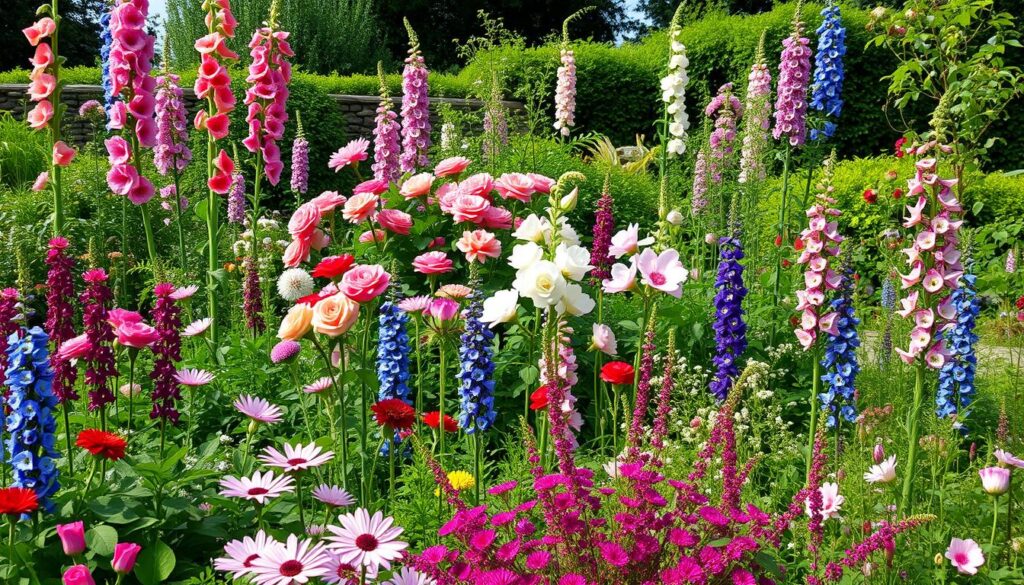
Layered planting creates the signature dense, abundant look of a traditional English cottage garden
Planting in Drifts and Clusters
Rather than planting single specimens, cottage gardeners create impact through generous groupings:
- Plant in odd-numbered groups (3, 5, 7) for a natural appearance
- Create drifts of the same plant that flow through different areas of the garden
- Repeat key plants throughout the garden to create rhythm and cohesion
- Allow plants to self-seed and naturally form their own pleasing arrangements
Layering and Succession Planting
A successful cottage garden offers interest in every season through careful layering:
Spring Layers
- Bulbs like daffodils, tulips, and crocuses for early color
- Primroses and violets for ground-level interest
- Flowering shrubs like lilac and quince for structure
- Spring-blooming biennials like wallflowers and forget-me-nots
Summer Layers
- Tall perennials like delphiniums and hollyhocks at the back
- Mid-height roses, peonies, and foxgloves in the middle
- Lavender, catmint, and geraniums for the front
- Ground covers like thyme and chamomile for the edges
Autumn into Winter
- Late-blooming perennials like asters and Japanese anemones
- Ornamental grasses for movement and winter structure
- Plants with attractive seedheads like teasel and eryngium
- Evergreen herbs and shrubs for year-round structure
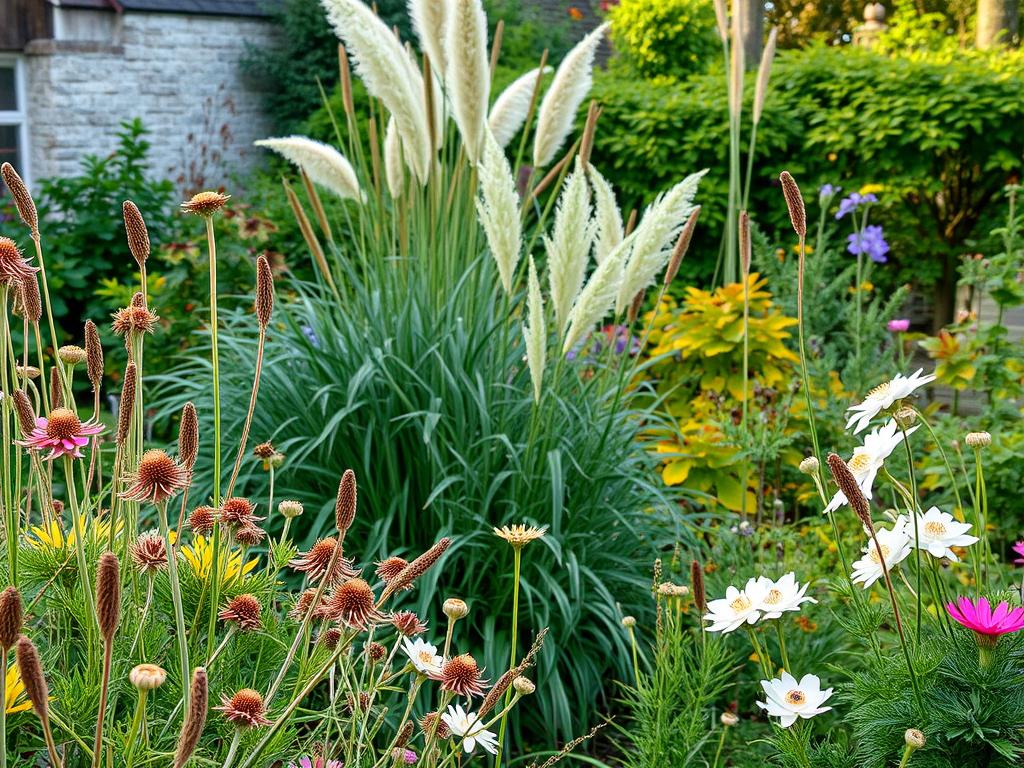
Autumn in the cottage garden reveals a different kind of beauty with seedheads and late-blooming flowers
Embracing the Weathered and Imperfect
The charm of a traditional English cottage garden lies partly in its lived-in, slightly weathered appearance:
- Choose materials that age gracefully—terracotta pots that develop patina, wooden structures that silver with time
- Allow some plants to sprawl and lean on each other rather than staking everything rigidly
- Incorporate reclaimed or vintage elements that bring character and history
- Practice “thoughtful neglect”—allowing some self-seeding and natural spreading while managing overall balance
Remember that a true cottage garden evolves over time, becoming more beautiful and established with each passing season. The first year may look sparse, but patience will reward you with the lush, layered look that defines this beloved garden style.
A Seasonal Guide to Maintaining Your Traditional English Cottage Garden
The beauty of a cottage garden changes with the seasons, each bringing its own tasks and pleasures. This seasonal approach to maintenance helps preserve the garden’s charm while keeping it healthy and productive.
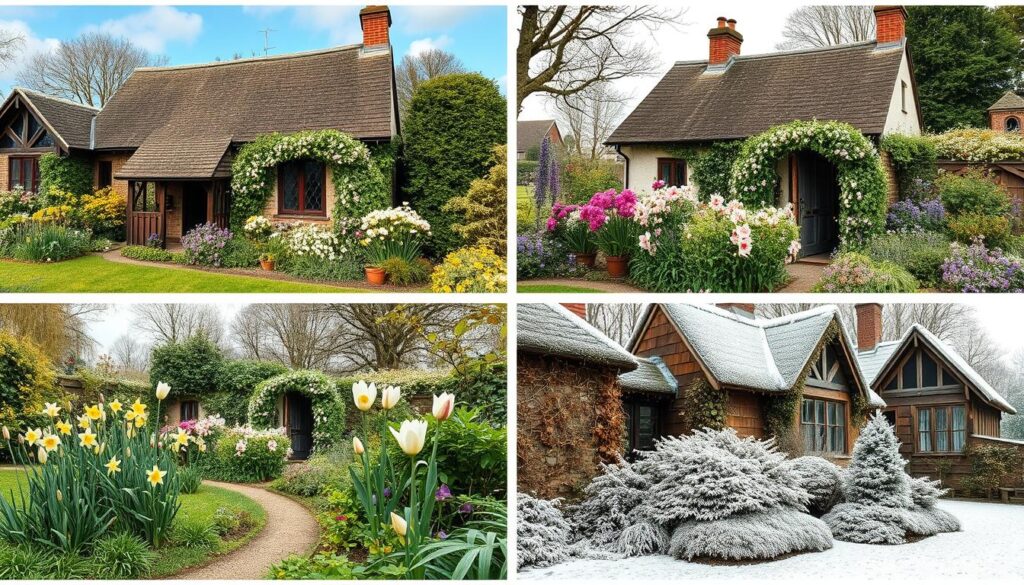
The changing faces of a traditional English cottage garden through the seasons
Spring
- Cut back winter-damaged growth
- Divide overcrowded perennials
- Plant summer-flowering bulbs
- Sow hardy annuals
- Apply compost to beds
Summer
- Deadhead regularly to prolong flowering
- Water deeply during dry spells
- Harvest herbs and edibles
- Stake tall plants as needed
- Take cuttings of favorite plants
Autumn
- Collect seeds from favorite plants
- Plant spring-flowering bulbs
- Divide overcrowded perennials
- Plant bare-root roses and shrubs
- Leave some seedheads for wildlife
Winter
- Prune roses and fruit trees
- Plan next year’s additions
- Clean and repair structures
- Protect tender plants
- Enjoy the garden’s winter structure
The Gentle Approach to Maintenance
Traditional cottage gardens thrive with a lighter touch than more formal styles:
- Selective deadheading – Remove spent flowers from roses and repeat bloomers, but leave some seedheads for birds and self-seeding
- Thoughtful pruning – Shape rather than control; allow plants to maintain their natural form
- Natural pest control – Encourage beneficial insects rather than reaching for chemicals
- Composting – Return garden waste to the soil to maintain its health and fertility
- Mulching – Use organic mulches to suppress weeds and retain moisture
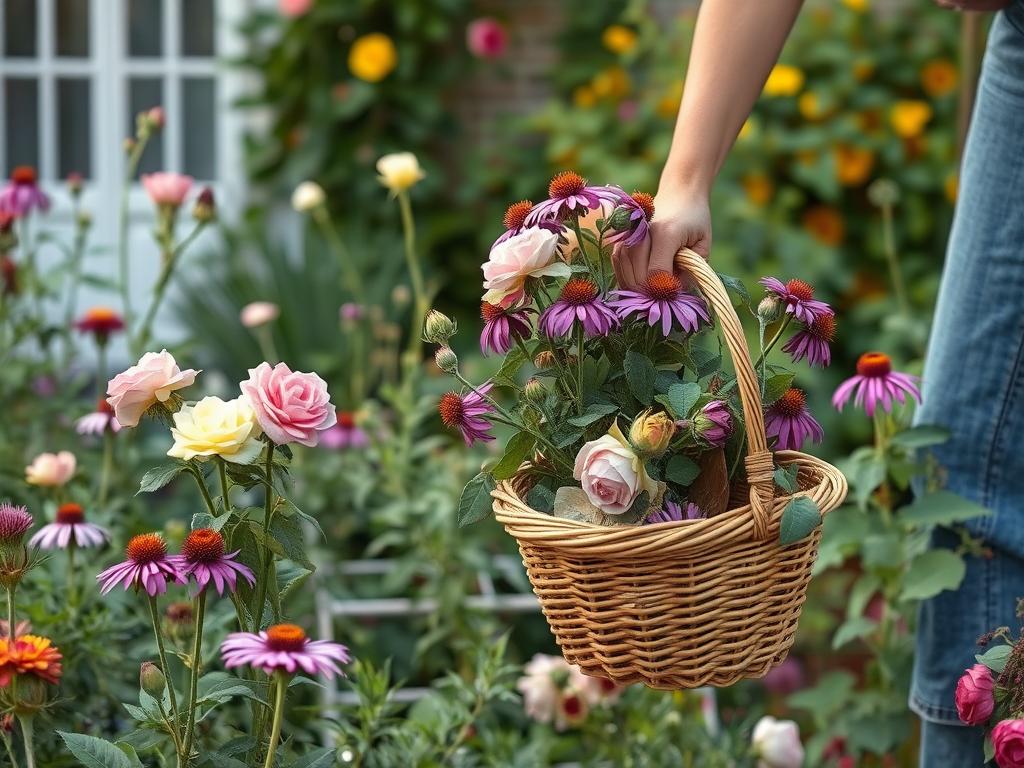
The gentle art of cottage garden maintenance: selective deadheading preserves beauty while supporting wildlife
Remember that a traditional English cottage garden is meant to look slightly untamed—a few self-seeded surprises and plants spilling over edges are part of its charm. The goal is to guide rather than control, allowing the garden to reveal its own unique character over time.
A Small-Space Cottage Garden Layout
Even in a compact area, you can create an authentic traditional English cottage garden experience. This sample layout for a 3m x 4m space incorporates all the essential elements:
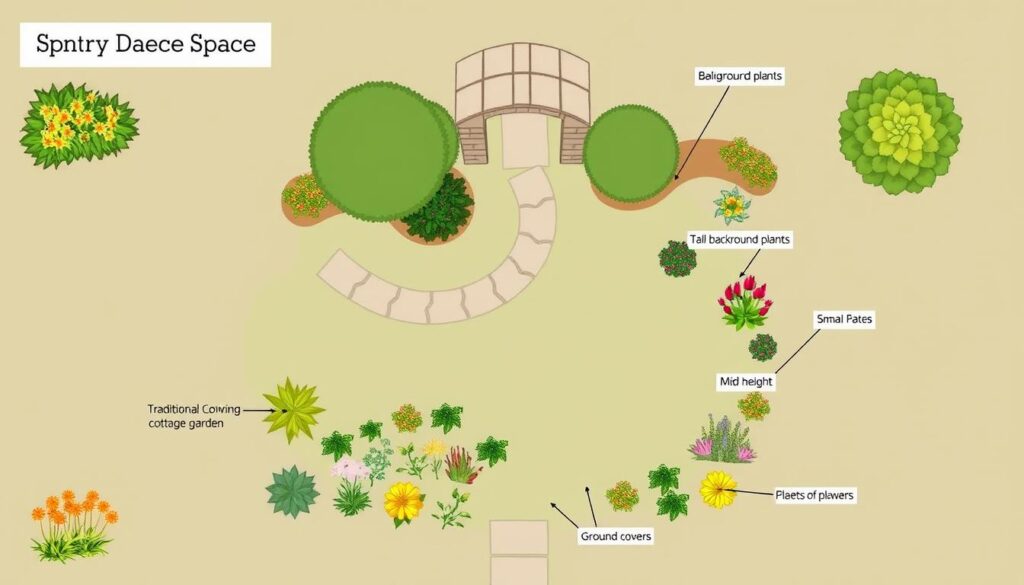
A practical layout for creating a traditional English cottage garden in a small space
Key Features
- Winding gravel path creates journey and divides planting areas
- Rose-covered arch provides vertical interest and entrance moment
- Small seating area for enjoying the garden
- Birdbath as focal point and wildlife attraction
- Mix of perennials, herbs, and compact shrubs
Planting Zones
- Zone A: Tall background plants (compact hollyhocks, delphiniums)
- Zone B: Mid-height flowering plants (roses, foxgloves, salvias)
- Zone C: Herbs and lower perennials (lavender, catmint, geraniums)
- Zone D: Path-edge plants (thyme, chamomile, alyssum)
- Containers: Seasonal color and edibles
Design Principles
- Plant in layers from tall to short
- Include plants for all seasons
- Mix ornamentals with herbs and edibles
- Create hidden views and discoveries
- Use vertical space with climbers and tall perennials
This layout demonstrates how even a small space can capture the essence of a traditional English cottage garden through thoughtful design and plant selection. The key is to embrace the vertical dimension, layer plants densely, and incorporate all the signature elements that make this garden style so beloved.
Embracing the Spirit of the Traditional English Cottage Garden
The true beauty of a traditional English cottage garden lies not in perfection but in personality. These gardens are deeply individual expressions that evolve with time, reflecting the passions and preferences of their creators. They connect us to centuries of gardening tradition while allowing for personal interpretation and adaptation to modern needs.
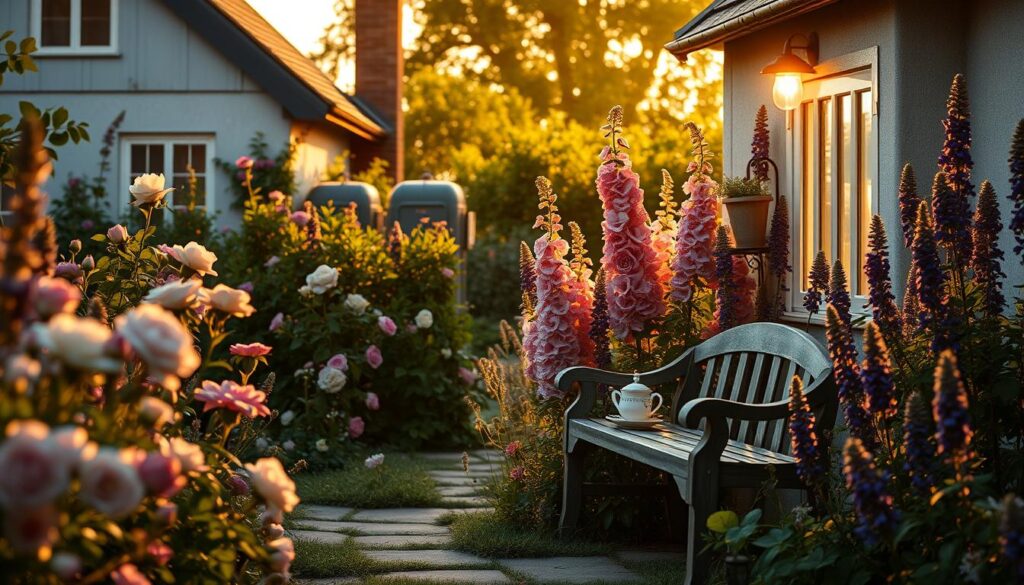
The traditional English cottage garden offers a place of beauty, biodiversity, and peaceful contemplation
As you create your own cottage garden, remember that this is a style that celebrates imperfection and evolution. Let some plants self-seed and find their own happy places. Allow your garden to surprise you with unexpected combinations. Embrace the changing seasons and the natural cycles of growth and rest.
Whether you have acres of land or just a small urban plot, the principles of the traditional English cottage garden can transform your outdoor space into a haven of biodiversity, beauty, and personal expression. It’s a garden style that nourishes not just wildlife and plants, but also the human spirit—offering a place of connection to nature, history, and the timeless rhythm of the seasons.
Begin with the plants that speak to you, add structure that suits your space, and then allow your garden the freedom to evolve into its own unique expression of the cottage garden tradition. In doing so, you’ll create not just a garden, but a living tapestry that will bring joy and discovery for years to come.
Plan Your Perfect Cottage Garden
Download our free Traditional English Cottage Garden Planning Guide with seasonal planting calendars, layout templates, and classic plant combinations to create your own enchanting space.
Never Miss a Gardening Season
Subscribe to our seasonal newsletter for cottage garden tips, plant recommendations, and maintenance reminders delivered straight to your inbox.
Ready to Create Your Own Cottage Garden?
Download our comprehensive Traditional English Cottage Garden Guide with planting plans, seasonal calendars, and maintenance tips tailored to UK growing conditions.