Core Principles of Japanese-Style Garden Design
Japanese gardens have evolved over centuries, influenced by Shinto, Buddhist, and Taoist philosophies. These gardens aren’t simply arranged plants and stones—they’re carefully composed landscapes that embody deeper principles. Understanding these foundations will help you create an authentic space that resonates with tranquility.
Balance Through Asymmetry
Unlike Western gardens that often emphasize symmetry, Japanese gardens find harmony through careful asymmetrical arrangements. This reflects the natural world, where perfect symmetry rarely exists. By placing elements in seemingly random but carefully considered positions, you create a more natural, flowing space.
Ma – The Power of Empty Space
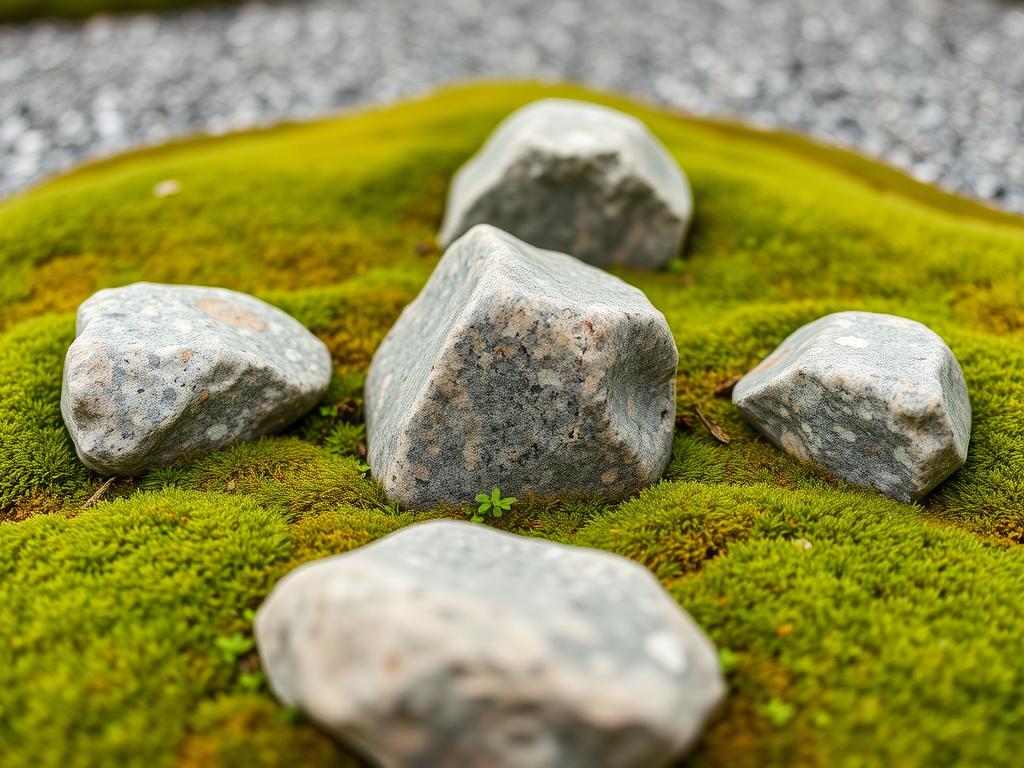
Perhaps the most misunderstood principle in Western gardening is ‘ma’—the Japanese concept of negative space. In your garden design, resist the urge to fill every area. Empty space creates breathing room and allows each element to be fully appreciated. How might your garden benefit from areas of intentional emptiness?
Symbolism and Representation
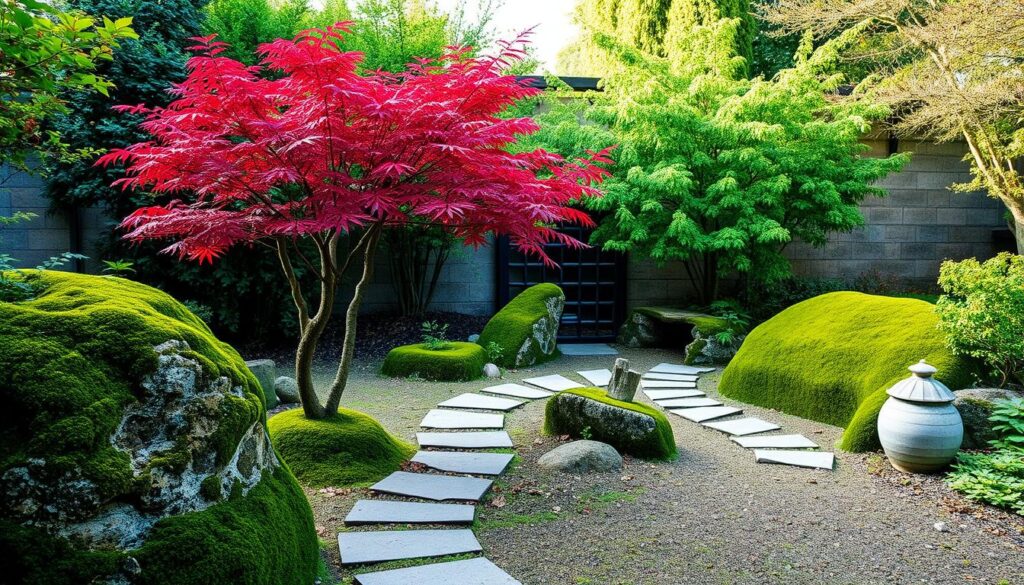
Every element in a Japanese garden carries meaning. Raked gravel represents flowing water, moss-covered stones suggest ancient mountains, and carefully pruned trees embody the persistence of life. As you design your garden, consider what each element symbolizes to create a space rich with personal meaning.
Key Elements of a Japanese-Style Garden
Stones: The Bones of the Garden
In Japanese garden design, stones are considered the most important element—the skeleton upon which everything else rests. UK gardeners can use locally sourced materials like Cornish slate, Yorkshire sandstone, or Scottish pebbles to create authentic-feeling arrangements.
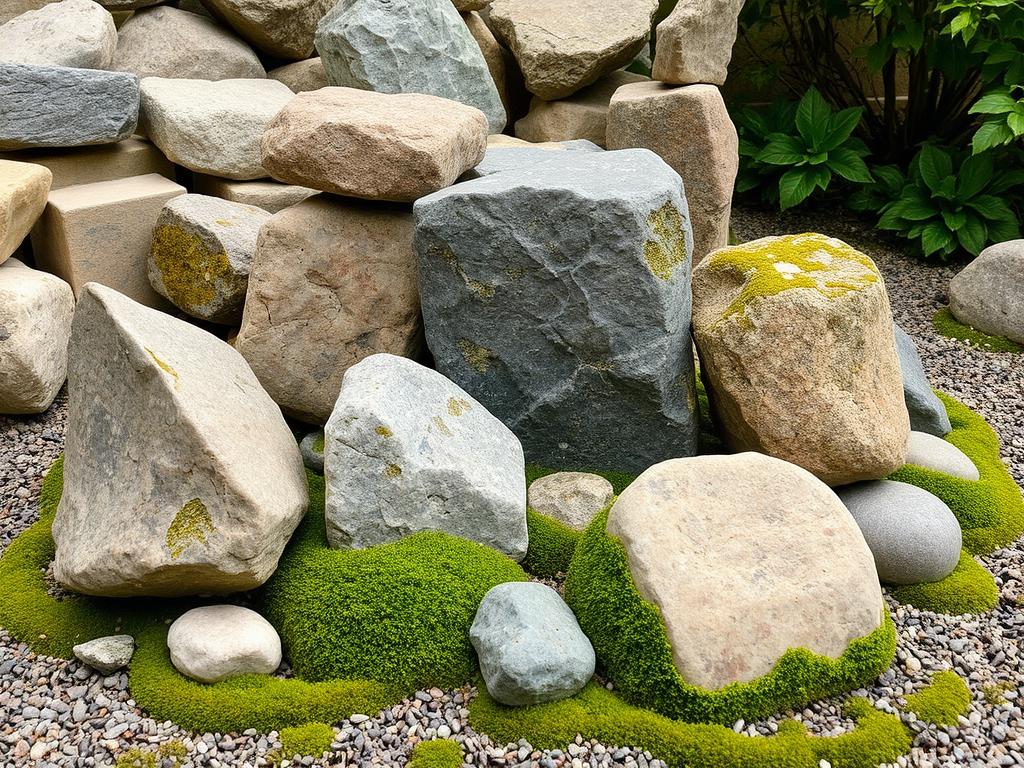
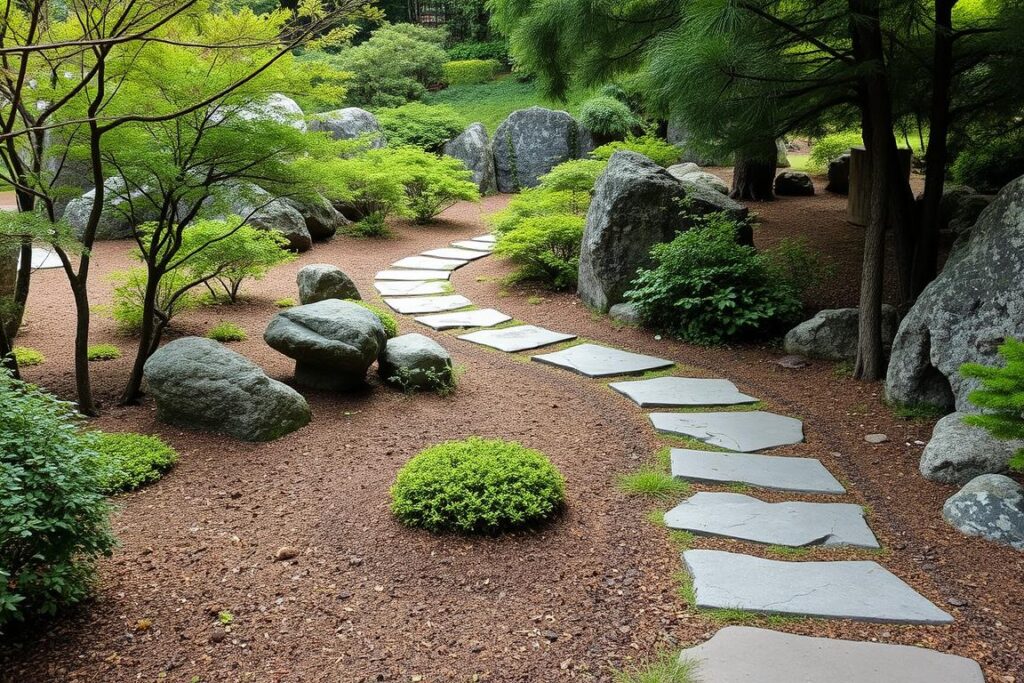
Place stones in groups of three, five, or seven, varying their sizes and orientations. Partially bury larger stones to give the impression they’re emerging naturally from the earth—as if they’ve been there for centuries. This technique, called “ishigumi,” creates a sense of permanence and stability.
Water: Real or Symbolic
Water brings movement, sound, and reflection to your garden. In the UK’s often rainy climate, consider how to harness natural rainfall in your design. A small pond with water lilies creates a focal point, while a simple bamboo water spout (shishi-odoshi) adds gentle sound.
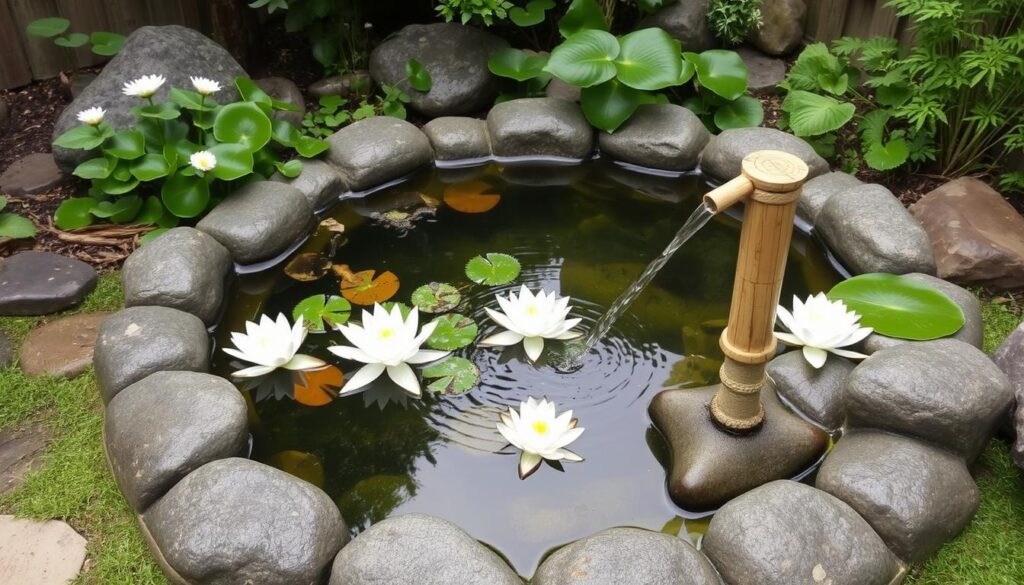
If space or practicality doesn’t allow for actual water, consider a dry landscape garden (karesansui) where raked gravel or sand symbolizes water. The patterns you create can represent ripples, waves, or flowing streams—bringing the essence of water without its maintenance requirements.
Moss and Ground Cover
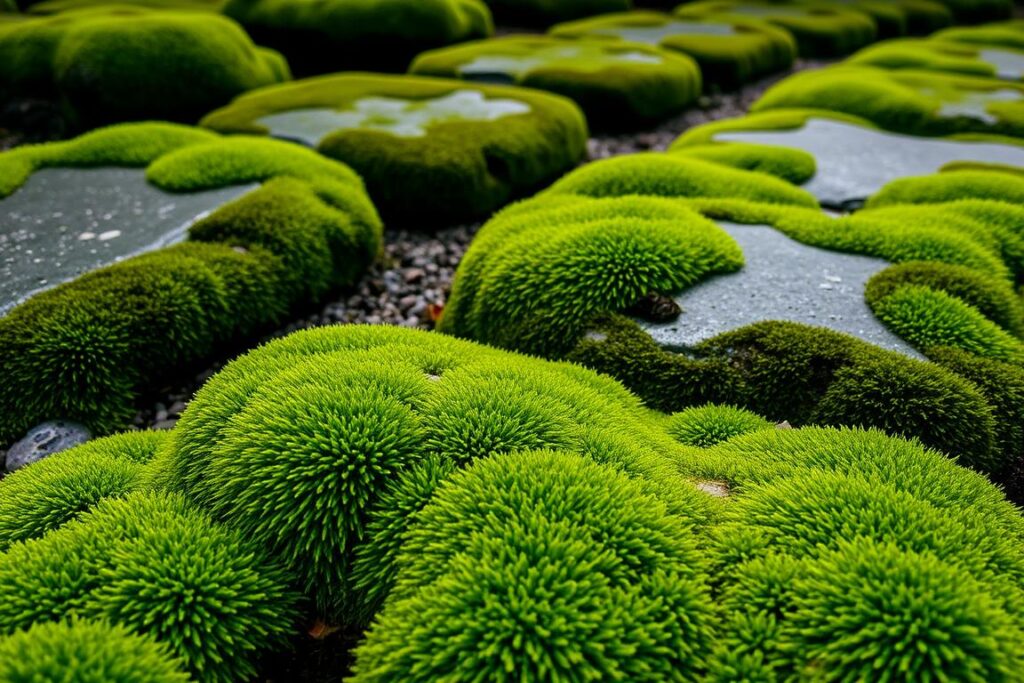
The UK’s damp climate is perfect for growing moss—a quintessential element in Japanese gardens. Encourage moss to grow between stepping stones and around the base of trees by keeping these areas shaded and moist. For areas where moss won’t thrive, consider alternatives like Irish moss (Sagina subulata) or creeping thyme.
Bamboo: Structure and Sound
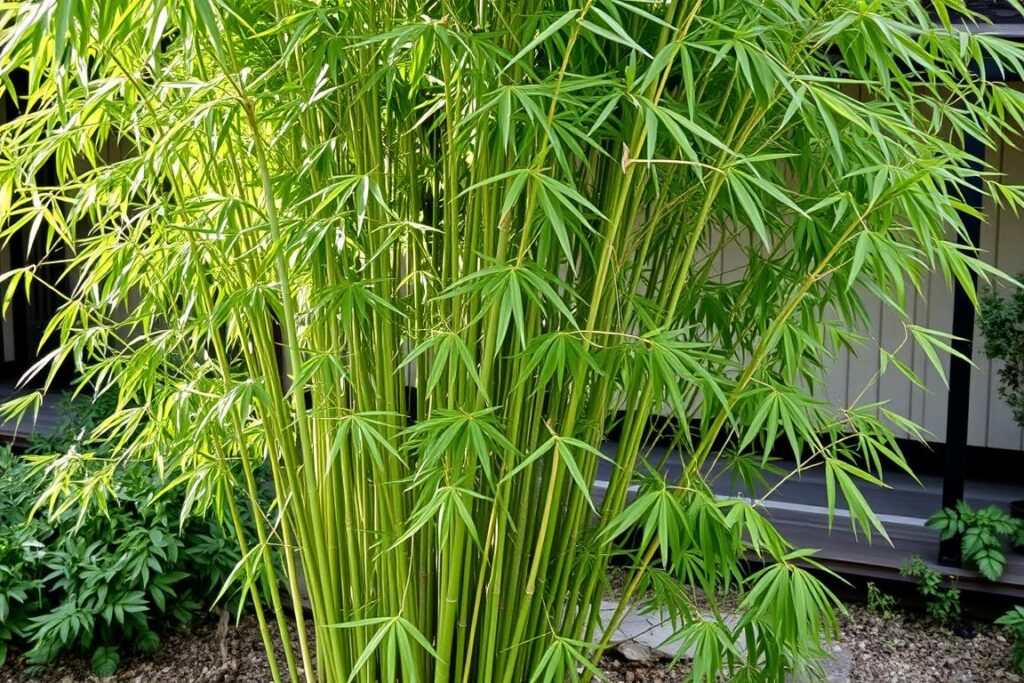
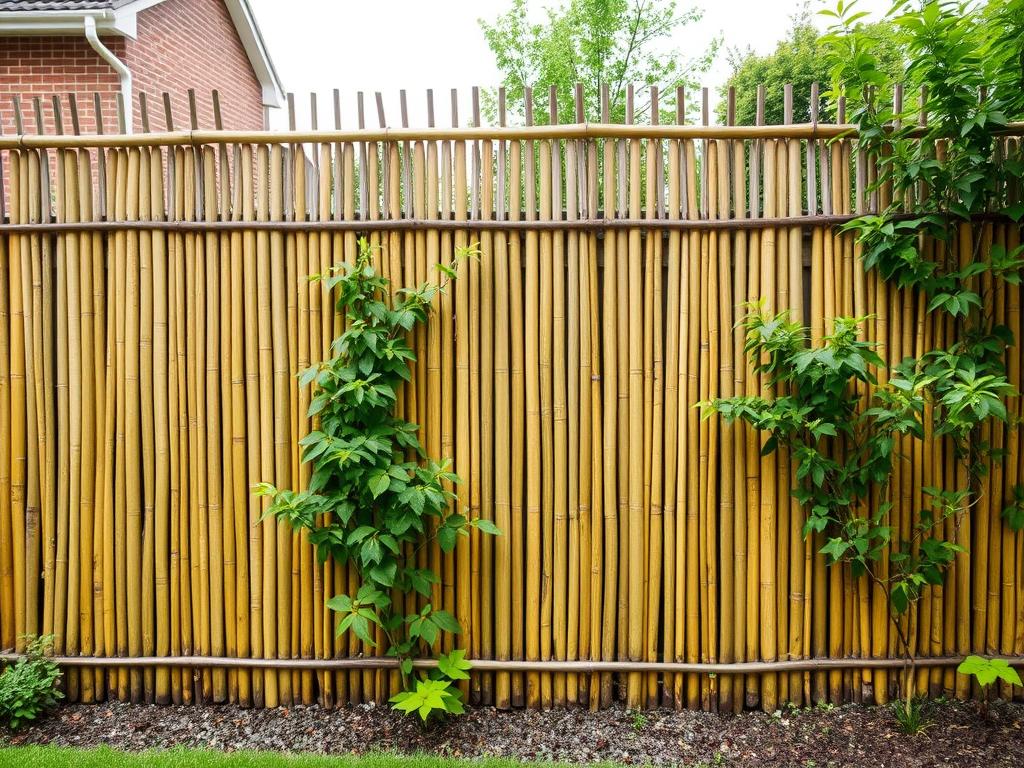
Bamboo adds height, structure, and a distinctive rustling sound when breeze passes through its leaves. For UK gardens, choose clump-forming varieties like Fargesia that won’t spread aggressively. Use bamboo for screens, fences, or to create a simple water feature.
Acers: Seasonal Colour
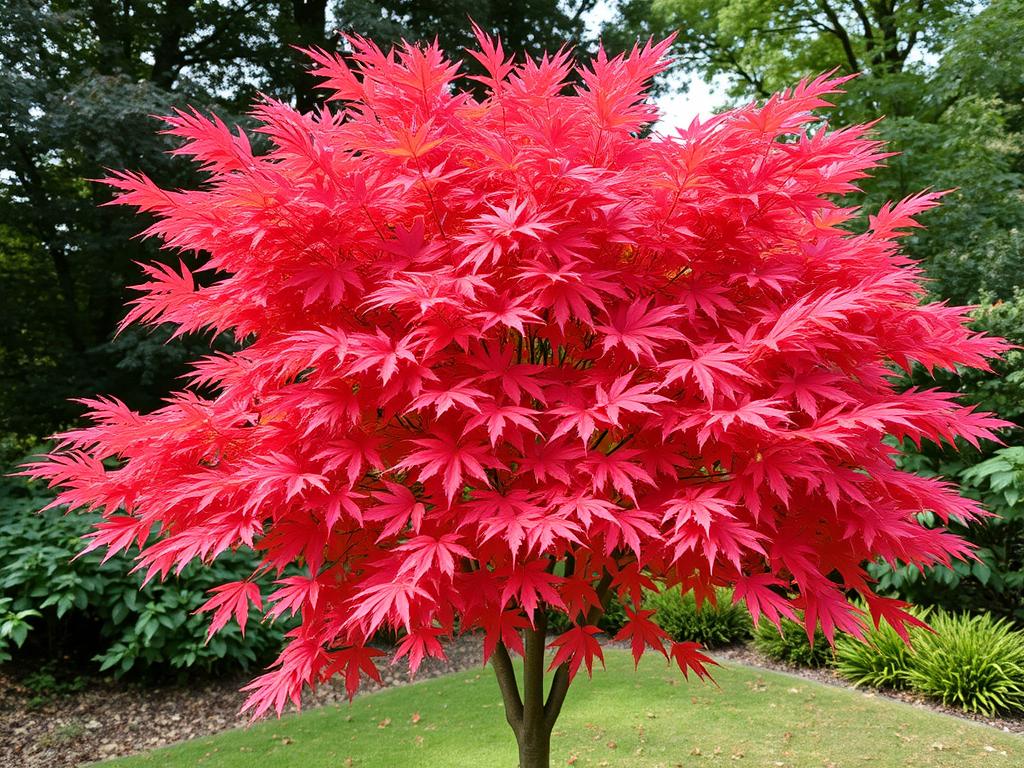
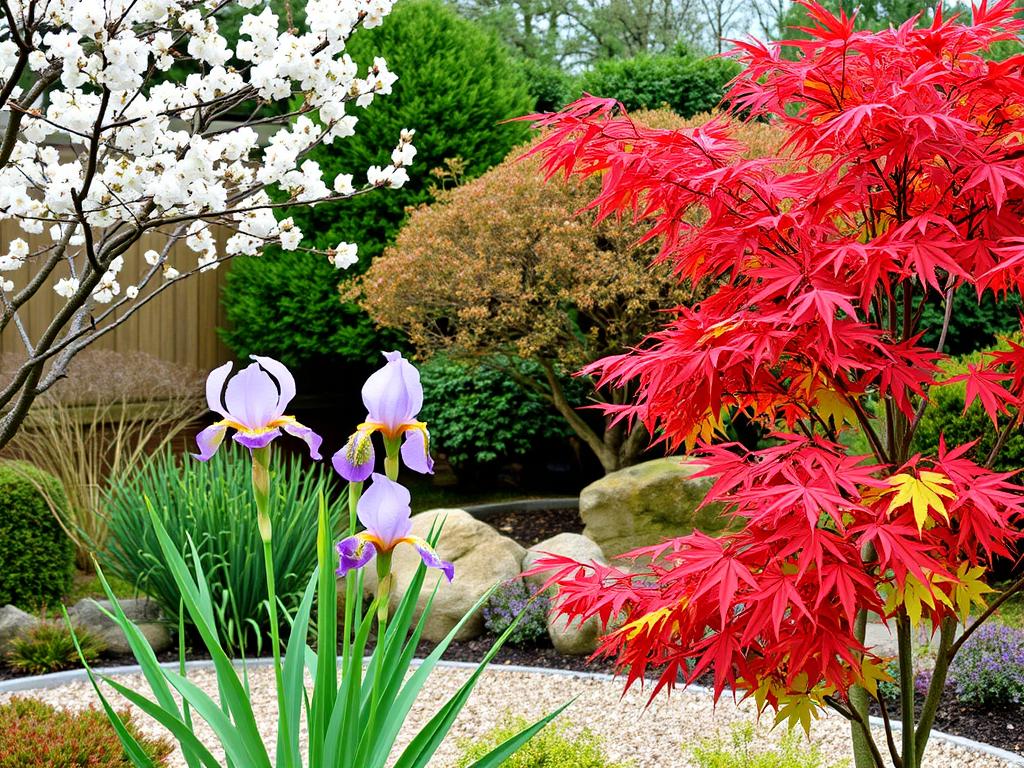
Japanese maple trees (Acer palmatum) provide the spectacular seasonal colour changes that define Japanese gardens. In the UK, these trees thrive in sheltered positions with dappled shade. For smaller spaces or challenging soil conditions, consider growing acers in large containers with ericaceous compost.
Essential Design Techniques
Shakkei: Borrowed Scenery
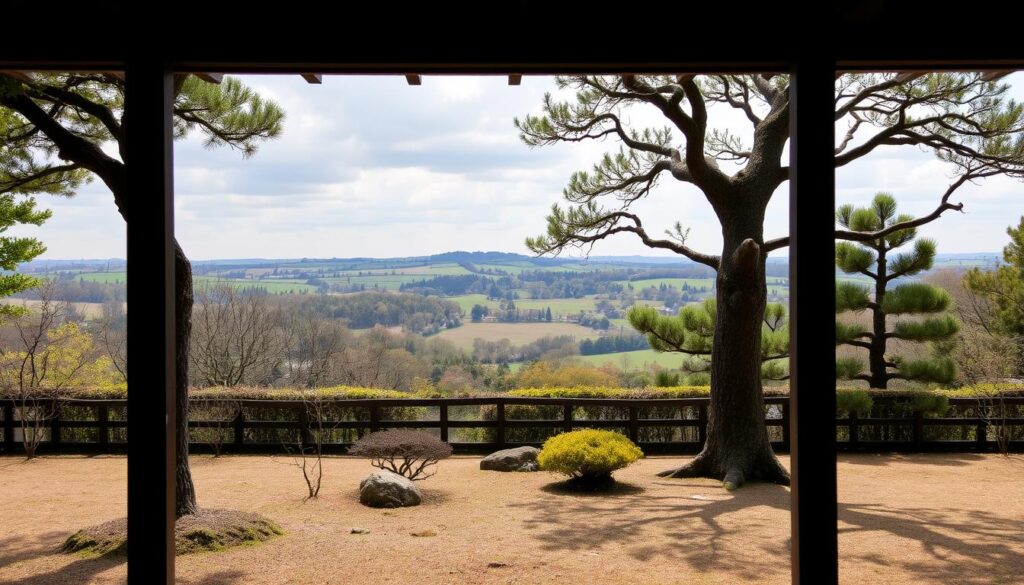
The Japanese concept of “borrowed scenery” involves incorporating distant views into your garden design. In the UK, this might mean framing a view of rolling hills, nearby woods, or even an attractive building. Position trees or structures to create “windows” that capture these views, making your garden feel connected to the wider landscape.
Miegakure: Hide and Reveal
Japanese gardens often employ the principle of “hide and reveal” (miegakure), where the entire garden is never visible from any single viewpoint. Create winding paths that reveal new scenes as you move through the space. This technique makes even the smallest garden feel larger and more mysterious.
Enclosure and Boundaries
Traditional Japanese gardens are often enclosed spaces that create a separate world from everyday life. In your UK garden, consider using bamboo screens, wooden fencing, or carefully pruned hedges to create this sense of separation. These boundaries don’t need to be tall or solid—even symbolic divisions can help create a sense of entering a special space.
Mindful Design: Creating Your Personal Sanctuary
Designing a Japanese-style garden is as much about the process as the result. Take time to observe your space throughout different times of day and seasons. Where does light fall in morning versus evening? How does rainfall move across your garden? Which areas naturally draw your attention?

Personal Symbolism
While traditional Japanese gardens use established symbolism, your garden can incorporate elements with personal meaning. Perhaps a particular stone reminds you of a special place, or a certain plant connects to a cherished memory. What elements would make your garden uniquely meaningful to you?
Seasonal Awareness
Japanese garden design emphasizes awareness of seasonal changes. Select plants that highlight different seasons: snowdrops and hellebores for winter, cherry blossoms for spring, irises for summer, and maples for autumn. This creates a garden that reveals new beauty throughout the year.
Small Space Solutions for UK Gardens
Limited space needn’t limit your Japanese garden ambitions. Even a balcony, courtyard, or small urban garden can embody the principles of Japanese design.
Tsuboniwa: Courtyard Gardens
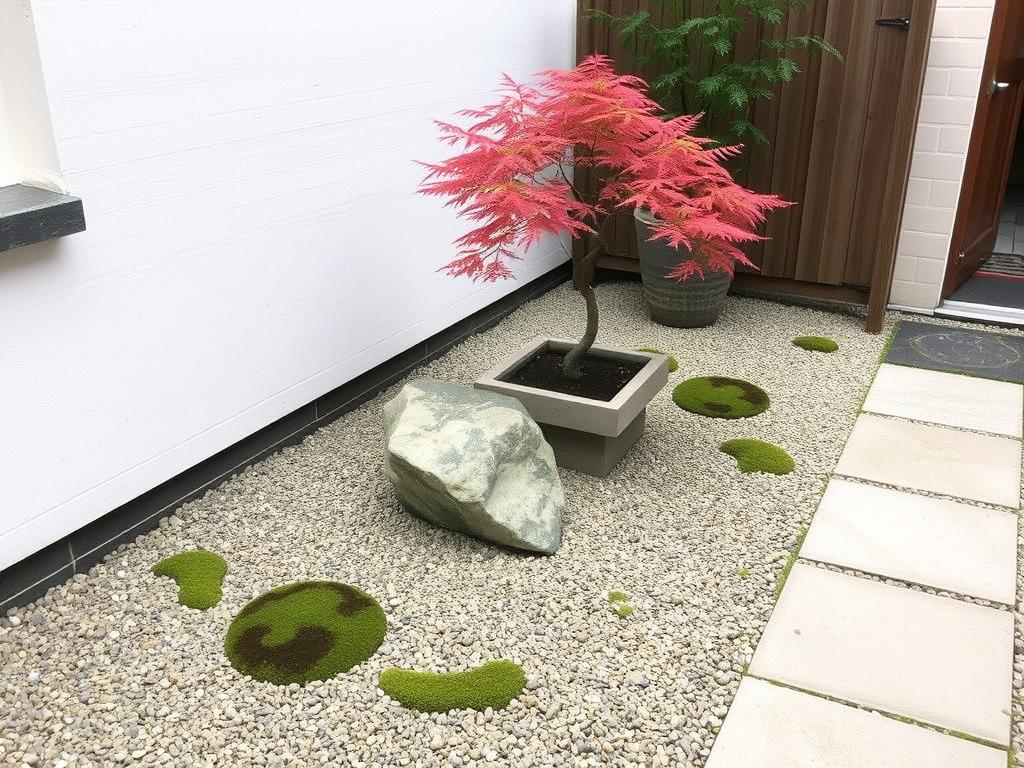
Traditional Japanese courtyard gardens (tsuboniwa) are often just a few square meters in size. Focus on a single focal point—perhaps a beautiful stone arrangement or a specimen acer—surrounded by simple ground covering and minimal additional elements.
Container Gardens
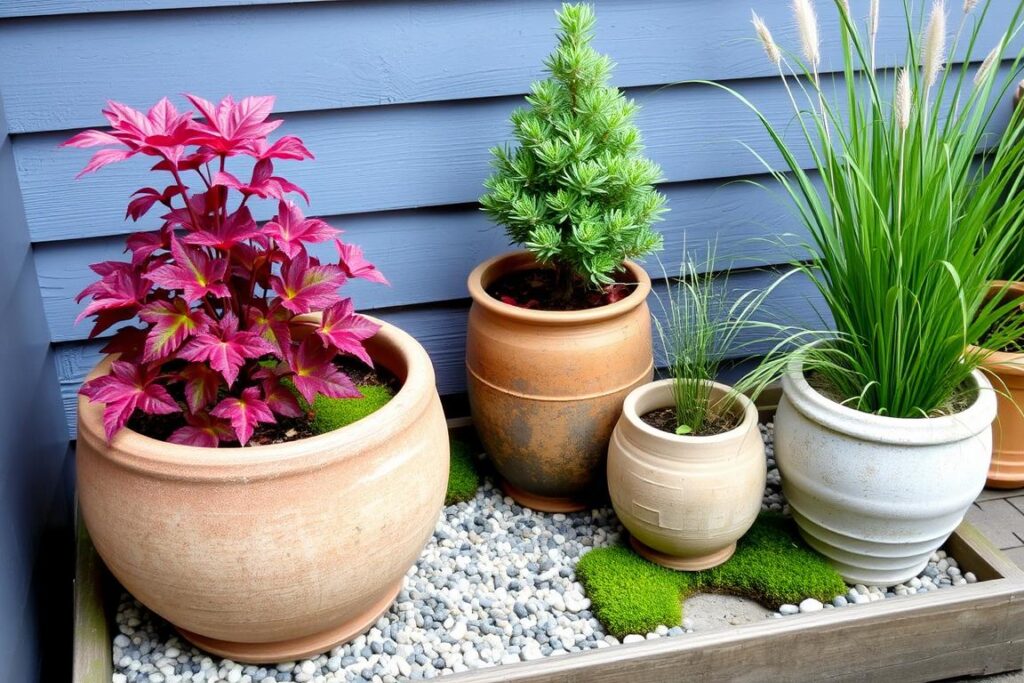
Create a Japanese-inspired container garden using weathered pots in natural materials. Group containers of different heights, with each featuring a single type of plant—perhaps an acer, a small conifer, and some grasses. Use gravel or moss between pots to unify the composition.
Vertical Elements
When floor space is limited, think vertically. Bamboo screens, climbing Japanese hydrangea (Schizophragma hydrangeoides), or wall-mounted features can bring Japanese elements to tiny spaces. Even a small wall-mounted water feature can create the soothing sound that’s so essential to Japanese gardens.
Mindful Maintenance
Maintaining a Japanese garden is itself a meditative practice. Rather than viewing garden tasks as chores, approach them as opportunities for mindfulness and connection with nature.
Pruning and Shaping
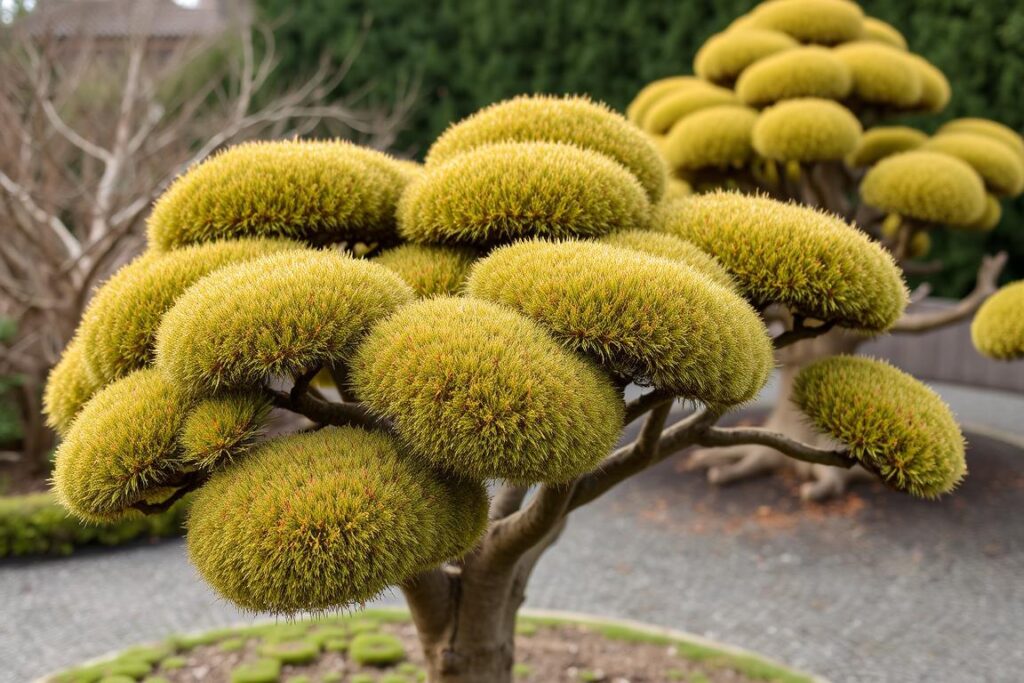
Japanese garden maintenance often involves careful pruning to maintain the intended form of plants. Learn the art of “cloud pruning” (niwaki) for shrubs and trees, where foliage is shaped into soft, cloud-like forms. This doesn’t require daily attention—seasonal pruning is usually sufficient.
Seasonal Rituals
Embrace seasonal maintenance rituals that connect you with the changing year. Spring might involve removing winter protection and pruning deciduous shrubs. Summer could focus on occasional watering and deadheading. Autumn brings leaf collection (with some left for texture), while winter is perfect for structural adjustments.

Finding Your Path to Tranquility
Creating a Japanese-style garden in your UK space is more than just an aesthetic choice—it’s an invitation to a different way of relating to your outdoor environment. As you incorporate these principles and elements, you’ll discover that the process itself brings a sense of calm and purpose.
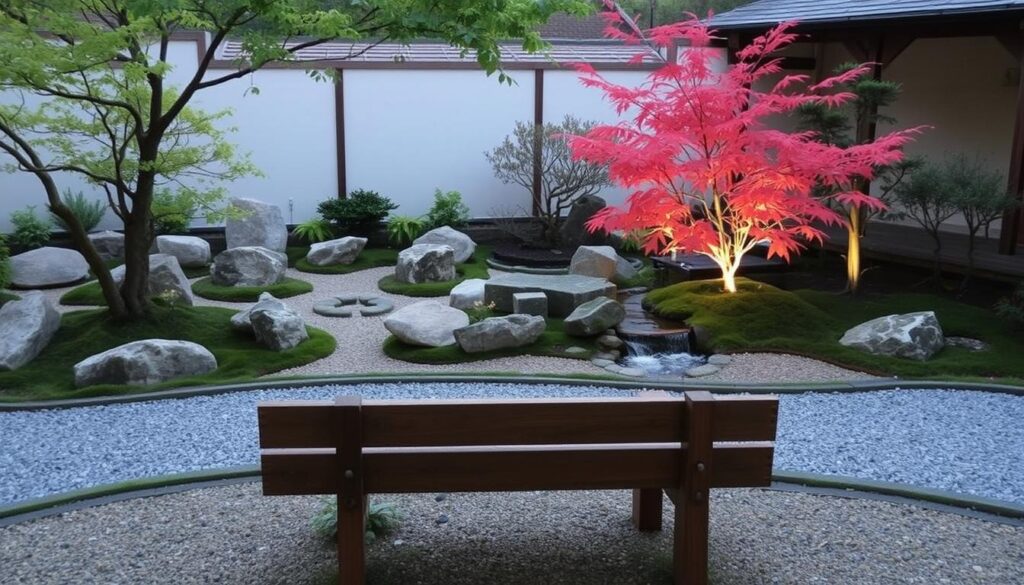
Remember that authenticity comes not from perfectly replicating a Kyoto temple garden, but from understanding the principles and adapting them thoughtfully to your unique space and climate. What matters most is creating a garden that invites you to slow down, observe closely, and find moments of tranquility in your daily life.
How might your garden become not just a place of beauty, but a space that nurtures mindfulness and connection with the natural world? The path to creating such a sanctuary begins with a single, mindfully placed stone.