
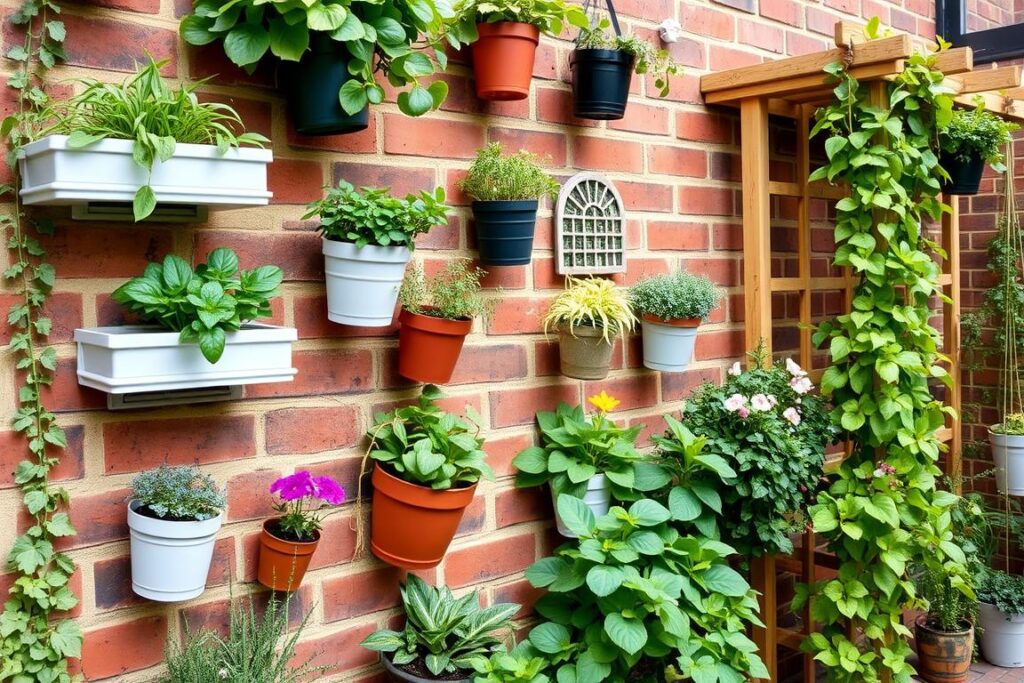
Living in the UK’s bustling urban areas often means compromising on outdoor space. Whether you have a compact balcony, a tiny patio, or a postage-stamp garden, the challenge of maximising small urban outdoor spaces is all too familiar. But limited square footage doesn’t mean limited potential.
With thoughtful design and clever solutions, even the smallest outdoor areas can become vibrant, functional extensions of your home. From vertical gardening to multifunctional furniture, this guide explores practical ways to transform your modest outdoor space into a personal sanctuary that works for your lifestyle.
Challenges and Opportunities of Small Urban Outdoor Spaces
A typical urban balcony before and after transformation with smart space-maximising solutions
Urban dwellers face unique challenges when it comes to outdoor spaces. Privacy concerns, noise pollution, limited sunlight, and restricted dimensions can all seem like insurmountable obstacles. However, these constraints can actually inspire creative solutions that wouldn’t be considered in larger gardens.
The key to success lies in thoughtful planning and making every centimetre count. By approaching your small outdoor space with intention, you can create an area that serves multiple purposes while reflecting your personal style.
Before You Begin: 3 Essential Planning Tips
- Measure your space accurately and create a simple scale drawing
- Identify how much direct sunlight your area receives throughout the day
- List your priorities (dining, relaxing, growing plants, etc.) to guide your design
Embrace Vertical Space: The Upward Solution
When floor space is at a premium, the only way is up! Vertical gardening is perhaps the most transformative approach to maximising small urban outdoor spaces. By utilising walls, fences, and railings, you can create lush greenery without sacrificing precious ground area.
Practical Vertical Gardening Solutions
Wall-Mounted Options
- Pocket planters – Fabric or plastic pouches that attach to walls
- Modular wall systems – Interlocking containers for customisable arrangements
- Repurposed pallets – Upcycled into vertical planters with minimal DIY skills
- Gutter gardens – Repurposed rain gutters mounted horizontally for herbs and small plants
Climbing Solutions
- Trellises – Classic supports for climbing plants like clematis and jasmine
- Wire systems – Nearly invisible supports for a cleaner aesthetic
- Obelisks – Freestanding structures perfect for container gardens
- Hanging baskets – Traditional but effective for adding height variation
“Vertical gardening isn’t just practical—it creates visual interest through varying heights and textures, making small spaces appear larger and more dynamic.”
UK-Friendly Plants for Vertical Gardens
For Sunny Spots
- Strawberries
- Thyme
- Lavender
- Trailing geraniums
For Partial Shade
- Heuchera
- Ferns
- Mint
- Ivy
For North-Facing Areas
- Hostas
- Ajuga
- Lamium
- Fuchsia
Container Planting: Flexible and Movable Gardens
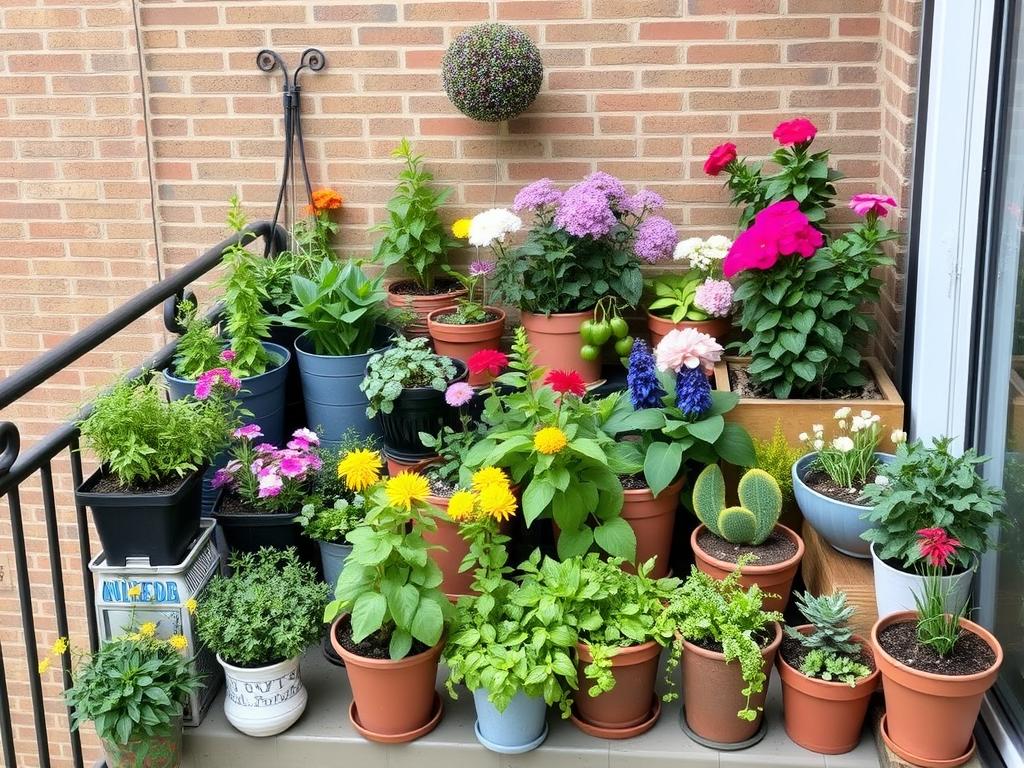
Containers offer unmatched flexibility for small outdoor spaces. They can be moved to follow the sun, rearranged for different occasions, and even brought indoors during harsh winter months. For UK gardeners, containers are particularly valuable as they allow for soil customisation in areas with poor existing ground.
Smart Container Strategies
- Tiered plant stands – Create vertical interest while maximising floor space
- Railing planters – Utilise balcony railings without consuming floor area
- Wheeled planters – Easily move larger containers to follow sunlight or create space
- Stackable containers – Build upward with specially designed stacking systems
- Upcycled containers – Repurpose items like colanders, tin cans, or wooden crates
Container Gardening Tip
In the UK’s variable climate, choose containers with good drainage and consider using water-retaining granules in your compost mix. This helps balance between our rainy days and unexpected dry spells.
Container Selection Guide
| Container Type | Best For | Pros | Cons |
| Terracotta | Mediterranean herbs, drought-tolerant plants | Natural look, breathable | Heavy, can crack in frost |
| Plastic | Most plants, especially moisture-loving | Lightweight, affordable, retains moisture | Can look cheap, degrades in UV |
| Metal | Contemporary designs, herbs | Durable, modern aesthetic | Can overheat roots, may rust |
| Wooden | Vegetables, mixed planting | Natural look, insulates roots | Rots over time, needs lining |
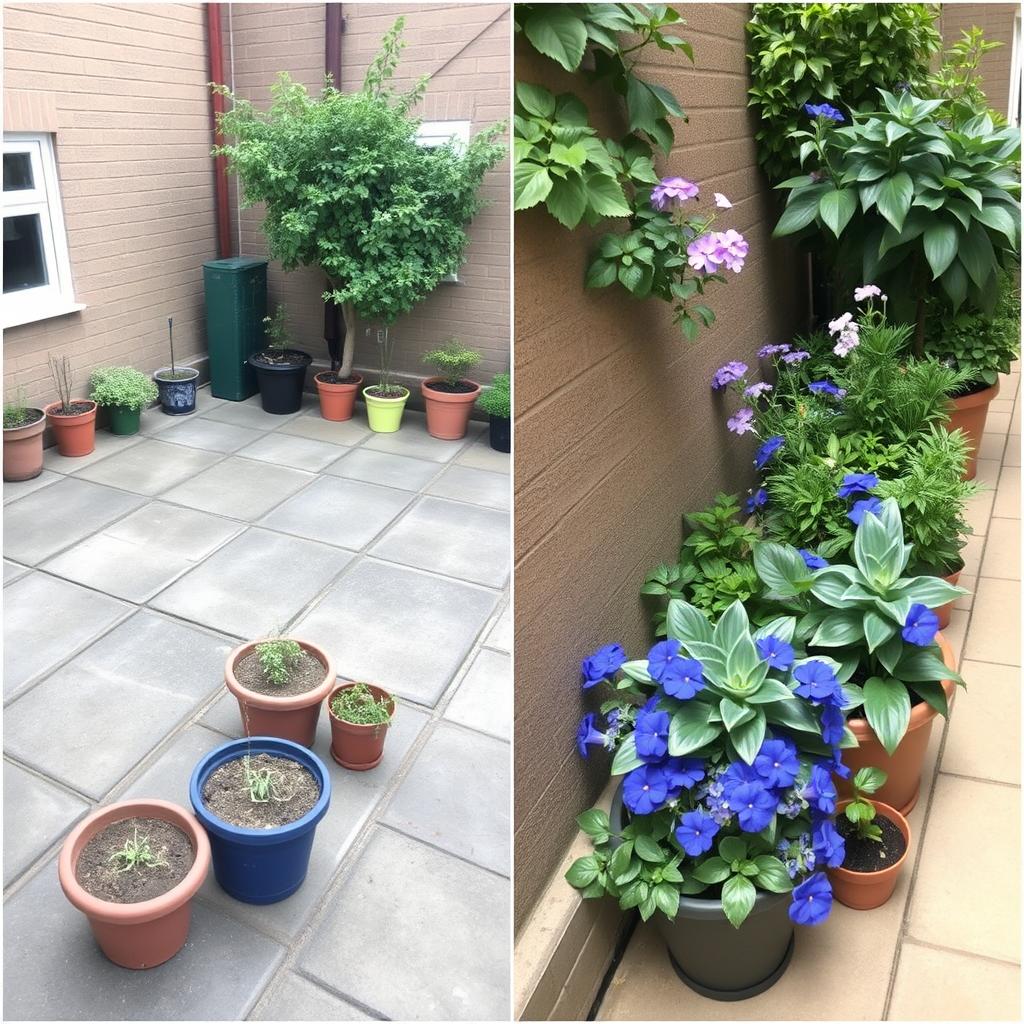
Before and after: Transforming a plain patio with strategic container placement
Creating Zones: Define Your Space
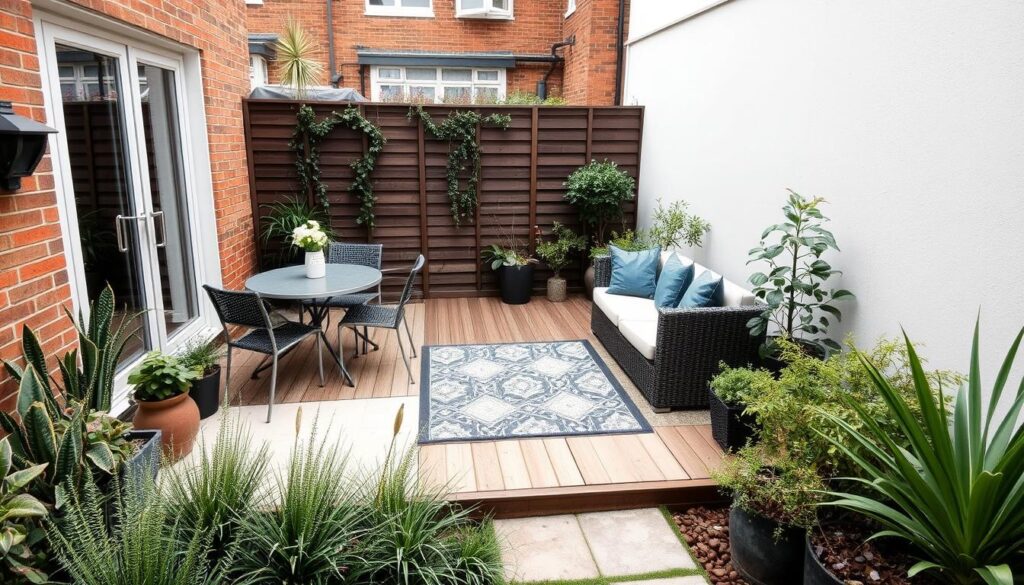
Even the smallest outdoor space benefits from thoughtful zoning. By creating distinct areas for different activities, you can maximise functionality while making the space feel larger and more purposeful. Zoning is particularly effective for balconies and patios that need to serve multiple functions.
Effective Zoning Techniques
Physical Dividers
- Foldable screens – Temporary dividers that can be stored when not needed
- Container plants – Strategic placement creates natural boundaries
- Outdoor rugs – Define seating areas while adding comfort
- Level changes – Even slight differences in height create distinct zones
Visual Dividers
- Colour schemes – Different palettes for different areas
- Lighting variations – Create atmosphere for each zone
- Material changes – Switch between decking, gravel, and pavers
- Overhead elements – Pergolas or canopies to define spaces

A 2x3m balcony effectively divided into dining and relaxation zones
Real-Life Transformation: 5m² Balcony
“My tiny London balcony seemed useless until I divided it into zones. Now I have a morning coffee corner with a bistro set, and an evening relaxation spot with a small bench and fairy lights. The zones are separated by tall grasses in containers, which also provide privacy from neighbouring flats.”
Multifunctional Furniture: Double-Duty Solutions

In small outdoor spaces, every piece of furniture should earn its place by serving multiple purposes. The right furniture choices can dramatically increase the functionality of your area without creating clutter or overwhelming the limited dimensions.
Smart Furniture Solutions
- Storage benches – Provide seating while hiding garden tools, cushions, or toys
- Folding or extendable tables – Adjust to your needs and store compactly
- Nesting tables or stools – Use as many as needed, then stack when not in use
- Convertible pieces – Ottomans that become side tables or benches that transform into loungers
- Wall-mounted tables – Fold down only when needed, saving valuable floor space
UK Weather Consideration
When selecting outdoor furniture for British weather, look for materials like powder-coated aluminium, synthetic rattan, or treated hardwoods that can withstand our variable climate. Consider storage options for cushions during unexpected rain showers.
UK Retailers for Space-Saving Outdoor Furniture
Budget-Friendly
- Argos
- Wilko
- B&M
- IKEA
Mid-Range
- John Lewis
- Next Home
- Made.com
- La Redoute
Premium
- Garden Trading
- Cox & Cox
- Neptune
- Barker & Stonehouse
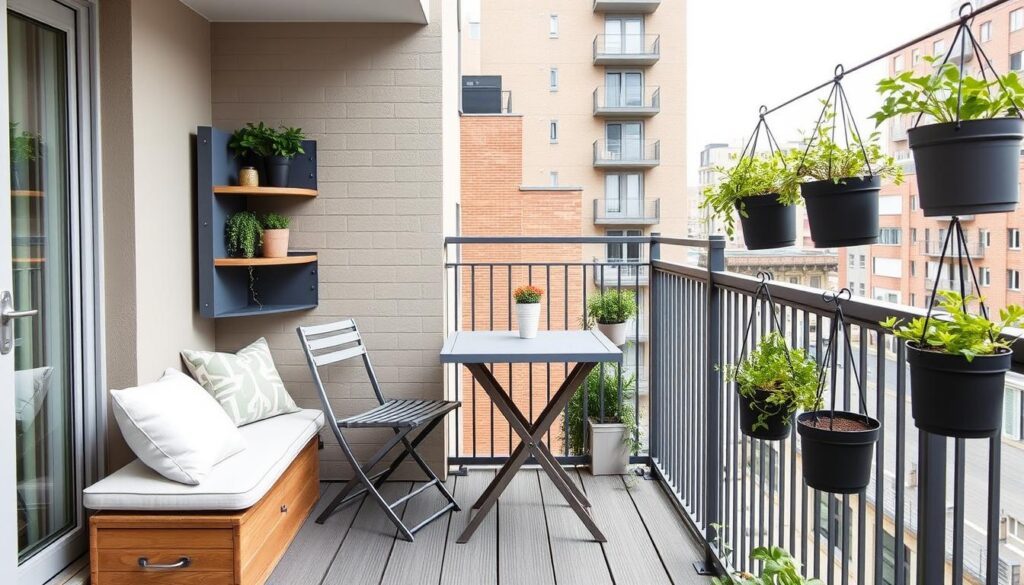
A compact balcony maximised with folding furniture and vertical storage
Design Hacks for Privacy and Atmosphere

Privacy concerns and creating the right atmosphere are particularly important in urban settings where outdoor spaces are often overlooked by neighbours or affected by street noise. Thoughtful design can transform an exposed area into a secluded retreat.
Privacy Solutions
Natural Screens
- Bamboo – Fast-growing and creates a natural screen
- Tall grasses – Movement and sound-buffering properties
- Climbing plants – Cover trellises or wire systems
- Potted trees – Strategic placement for privacy
Manufactured Screens
- Bamboo or reed screens – Natural look, affordable
- Decorative panels – Modern laser-cut designs
- Canvas or fabric – Sail shades or curtains
- Louvred panels – Adjustable for light and privacy
Smart Lighting Solutions
Lighting extends the usability of your space into the evening and creates atmosphere. For small urban areas, consider these options:
- Solar-powered options – No wiring needed, environmentally friendly
- String lights – Create a canopy effect and define the space
- Lanterns and candles – Portable and create intimate atmosphere
- Spotlights – Highlight features and create focal points
- LED strip lighting – Outline steps or edges for safety and effect
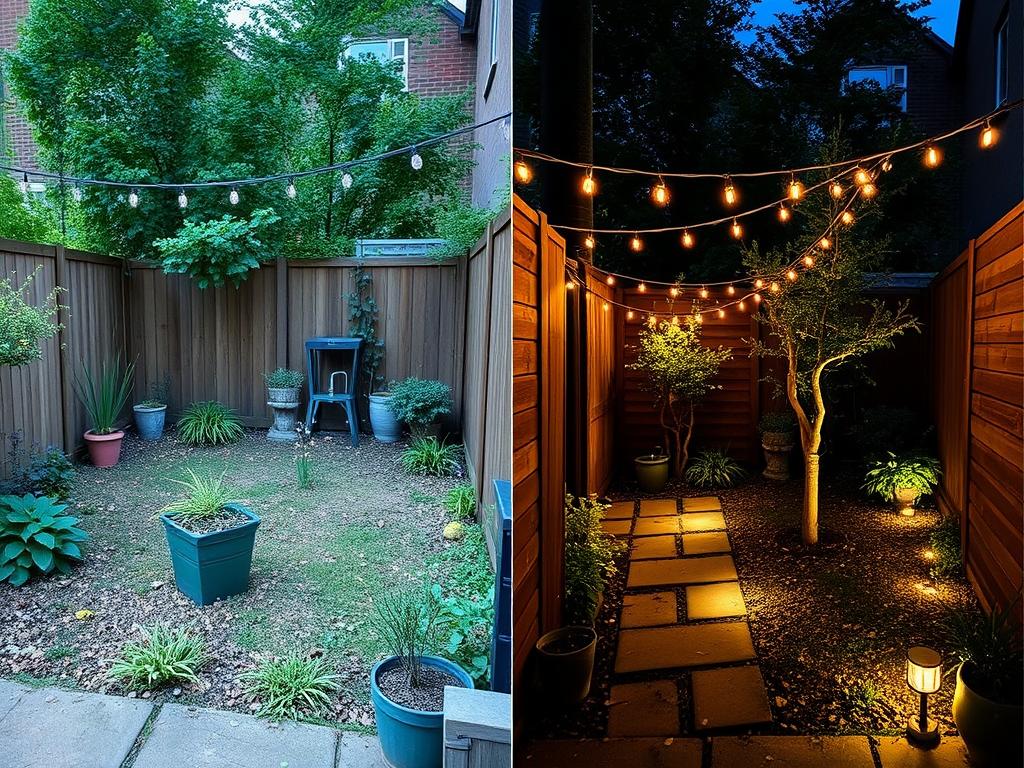
The transformative effect of thoughtful lighting in a small garden
“Light has the power to make a small space feel infinite. By creating pools of light and areas of shadow, you can add depth and mystery to even the most compact garden.”
Low-Maintenance Plants for Busy Urban Gardeners
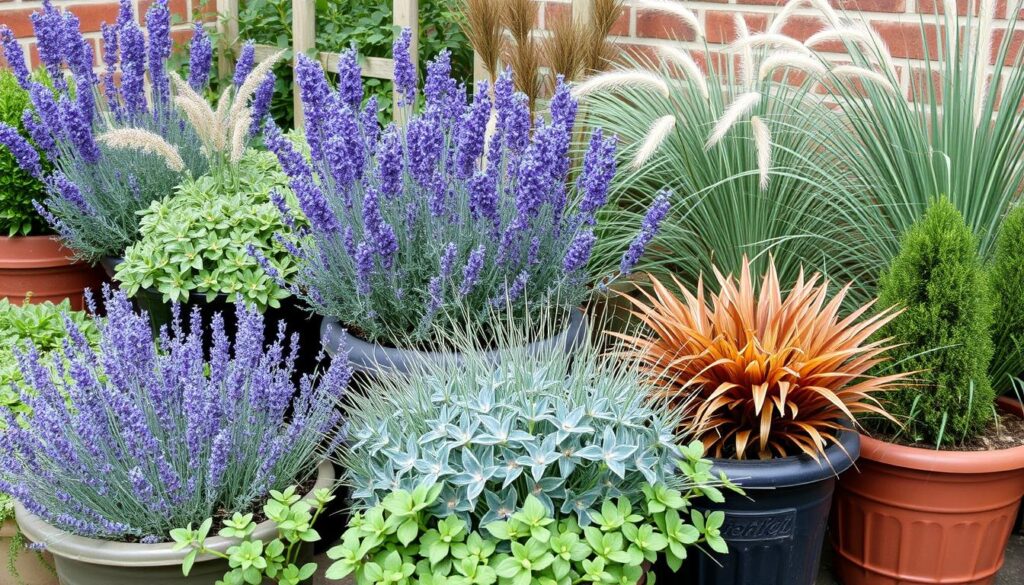
For many urban dwellers, time is as limited as space. Low-maintenance plants are essential for creating a garden that thrives despite busy schedules and occasional neglect. Fortunately, many drought-tolerant and hardy plants are perfectly suited to container growing in small spaces.
Top Low-Maintenance Plants for UK Urban Spaces
For Sunny Spots
- Lavender – Drought-tolerant and fragrant
- Sedum – Succulent foliage in various colours
- Rosemary – Edible and architectural
- Euphorbias – Structural with interesting foliage
For Partial Shade
- Heuchera – Colourful foliage year-round
- Skimmia – Evergreen with berries or flowers
- Hellebores – Winter and spring flowering
- Geranium macrorrhizum – Drought-tolerant groundcover
For Deep Shade
- Ferns – Various types for different conditions
- Hostas – Architectural foliage plants
- Pachysandra – Evergreen groundcover
- Tiarella – Pretty flowers and interesting leaves
Maintenance-Saving Tip
Group plants with similar water needs together in the same containers or zones. This prevents overwatering some while underwatering others, saving both time and resources.
Noise-Buffering Plants
In urban environments, plants can help reduce noise pollution by absorbing sound waves. Dense, thick foliage works best for this purpose:
- Bamboo – Creates a rustling sound that masks traffic noise
- Holly – Dense evergreen foliage for year-round screening
- Ornamental grasses – Movement and sound help distract from urban noise
- Climbers like ivy – Cover walls to reduce sound reflection
- Photinia – Thick, glossy leaves help absorb sound
UK-Specific Considerations
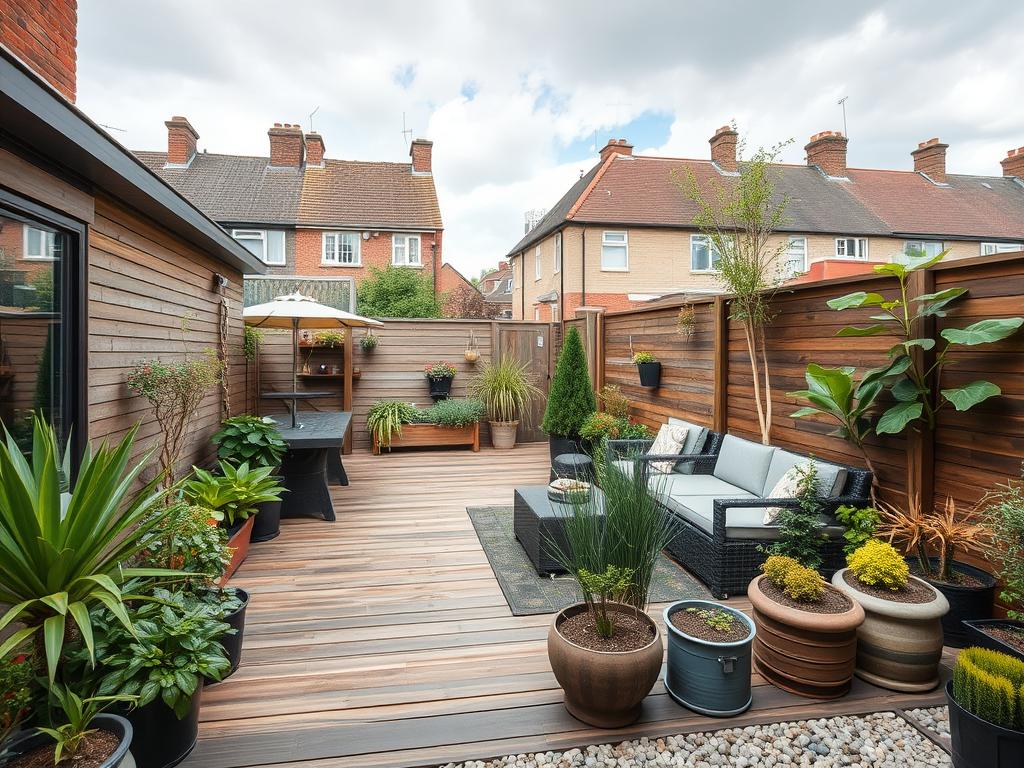
The British climate presents unique challenges and opportunities for small outdoor spaces. From frequent rain to variable temperatures, designing with our weather in mind ensures your space remains functional and enjoyable year-round.
Weather-Resistant Materials
- Composite decking – More durable than wood in wet conditions
- Porcelain tiles – Non-porous and frost-resistant
- Powder-coated metals – Resist rust and corrosion
- Synthetic rattan – Looks natural but withstands British weather
- Treated softwoods – Affordable option with proper maintenance
Rain Management
In the UK, managing rainwater is essential for maintaining a usable outdoor space:
- Water butts – Collect rainwater for irrigation during dry spells
- Permeable surfaces – Allow drainage and prevent puddles
- Covered areas – Create usable space regardless of weather
- Drainage channels – Direct water away from seating areas
- Rain chains – Decorative alternatives to downpipes
UK Planning Permission Note
Before installing permanent structures like pergolas or decking, check local planning regulations. Many urban areas, especially conservation zones, have restrictions on what can be added to balconies and gardens.
Extending the Season
Maximise the usability of your space throughout the UK’s variable seasons:
- Patio heaters or fire pits – Extend evening use into autumn
- Wind breaks – Shield from prevailing winds
- Retractable awnings – Provide shade in summer, shelter in light rain
- Evergreen structure – Ensure winter interest when deciduous plants are bare
- Spring bulbs – Early colour after winter
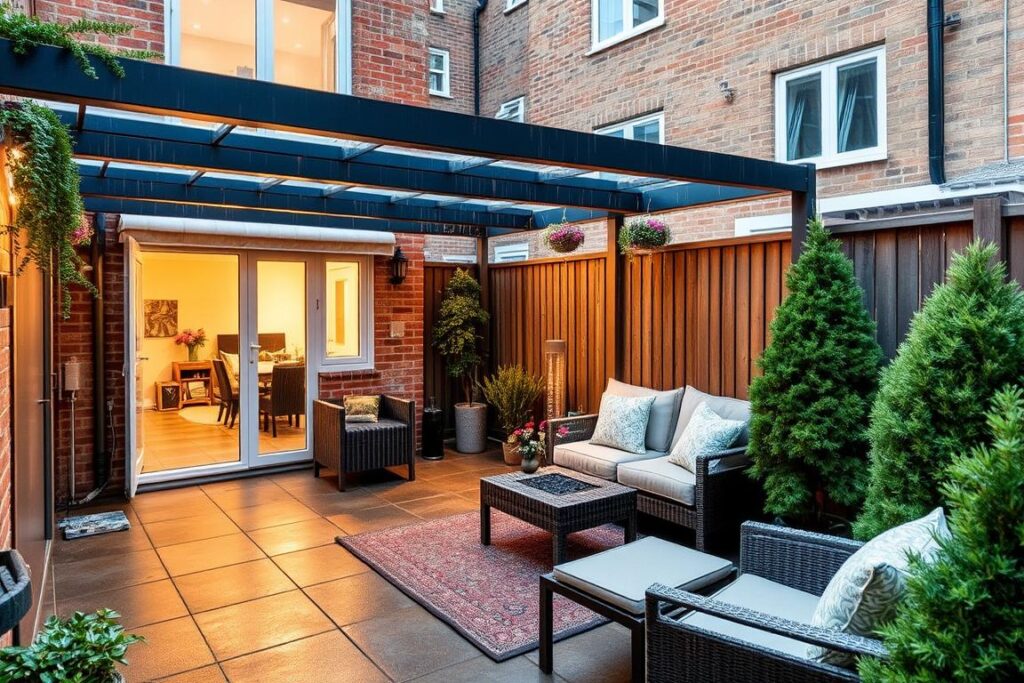
A year-round usable space with weather protection features
Real-Life Transformations
Before and after: A 5m² London balcony transformed with vertical planters and zoning
Case Study: 5m² Balcony in London
Challenge: A north-facing balcony with limited sunlight and privacy issues from neighbouring flats.
Solution: The space was divided into two zones – a morning coffee area with a small bistro set, and an evening relaxation corner with a compact bench and soft lighting. Tall ornamental grasses in containers provided privacy while shade-loving plants like ferns and hostas added greenery. A small storage bench housed gardening supplies and cushions.
Result: A functional space that serves multiple purposes despite its tiny footprint, with plants selected specifically for the challenging light conditions.
Case Study: 3x4m Patio in Manchester
Challenge: A small paved area that needed to function as both dining space and play area for children.
Solution: A fold-down wall-mounted table provided dining space when needed but could be tucked away to create room for play. Vertical planters and hanging baskets added greenery without consuming floor space. Weather-resistant storage boxes doubled as seating and contained toys.
Result: A flexible space that adapts to different needs throughout the day, with safety considerations for children incorporated into the design.
Before and after: A 3x4m patio transformed into a flexible family space
Conclusion: Your Small Space Journey
Maximising small urban outdoor spaces isn’t about trying to fit everything into a limited area—it’s about thoughtfully selecting what matters most to you and implementing solutions that serve multiple purposes. Whether you have a tiny balcony, a modest patio, or a compact garden, the principles remain the same: think vertically, embrace flexibility, create zones, and choose plants and materials suited to your specific conditions.
Remember that small spaces have distinct advantages—they’re more affordable to transform, quicker to maintain, and can feel incredibly cosy and personal when designed well. By implementing even a few of the ideas from this guide, you can create an outdoor sanctuary that feels spacious despite its dimensions.
Start small, perhaps with a vertical planter or a multifunctional furniture piece, and gradually build your perfect outdoor space. The most successful small gardens evolve over time as you discover what works best for your lifestyle and the unique conditions of your space.
Strategies for maximising small urban outdoor spaces include the use of vertical gardening techniques.
Understanding how to effectively achieve maximising small urban outdoor spaces can enhance your living experience.
For those exploring the concept of maximising small urban outdoor spaces, this guide will be invaluable.
Maximising small urban outdoor spaces can often be achieved through smart landscaping and thoughtful design choices.