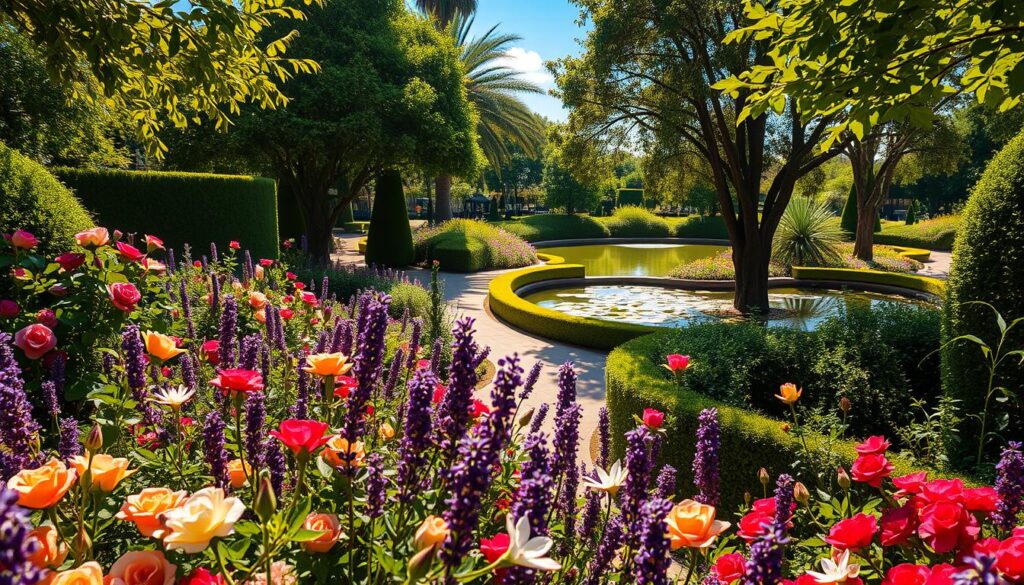
Formal garden design represents one of the most enduring and elegant approaches to landscaping, with roots stretching back centuries to the grand estates of Europe. These meticulously planned spaces celebrate order, symmetry, and geometric precision, creating outdoor areas that feel both serene and sophisticated. Whether you have a sprawling country estate or a modest urban garden, the principles of formal design can be adapted to create a space of timeless beauty that provides structure and interest throughout the seasons.
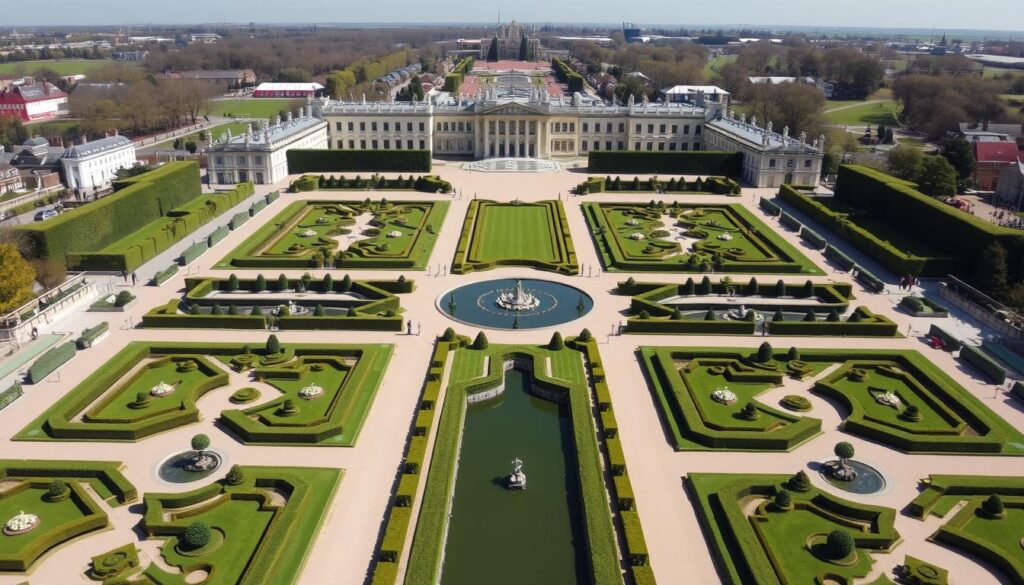
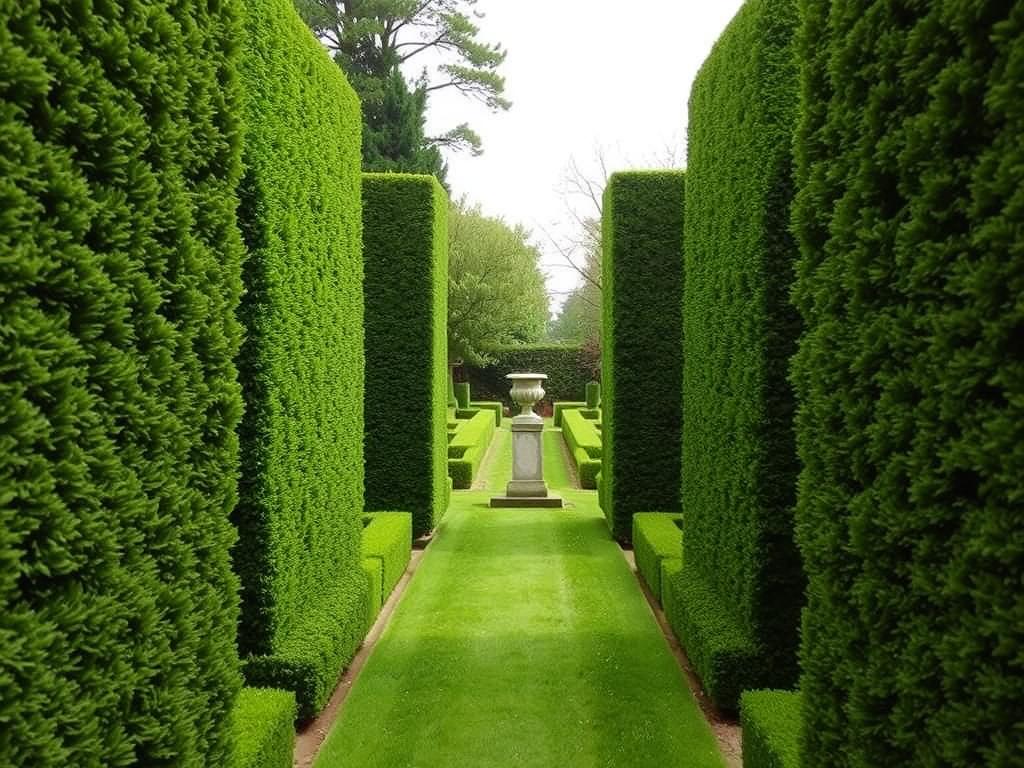
The historic formal gardens at Hampton Court Palace exemplify classical symmetry and geometric precision
Historical Context: The Rich Heritage of Formal Gardens
Formal garden design has a distinguished lineage that spans cultures and centuries. The earliest examples emerged in the walled gardens of Western Asia, where geometric patterns and water features created ordered sanctuaries from the surrounding wilderness. These principles were later embraced and refined in Renaissance Italy, where the concept of the garden as an extension of architecture took hold.
The French perfected formal garden design during the 17th century, most notably at the Palace of Versailles, where André Le Nôtre created vast geometric patterns that demonstrated human mastery over nature. In England, designers like Capability Brown initially rejected rigid formality but later, during the Victorian era, formal elements returned in the form of elaborate parterres and geometric bedding schemes.
Today’s formal gardens draw inspiration from these historical precedents while adapting to contemporary needs and environmental considerations. The enduring appeal lies in their ability to create a sense of order and tranquility that contrasts with our often chaotic modern lives.
Key Elements of Formal Garden Design
Creating a successful formal garden relies on several fundamental principles that work together to establish structure, balance, and visual harmony. Understanding these elements will help you develop a cohesive design that captures the essence of formal garden tradition.
Symmetry and Balance
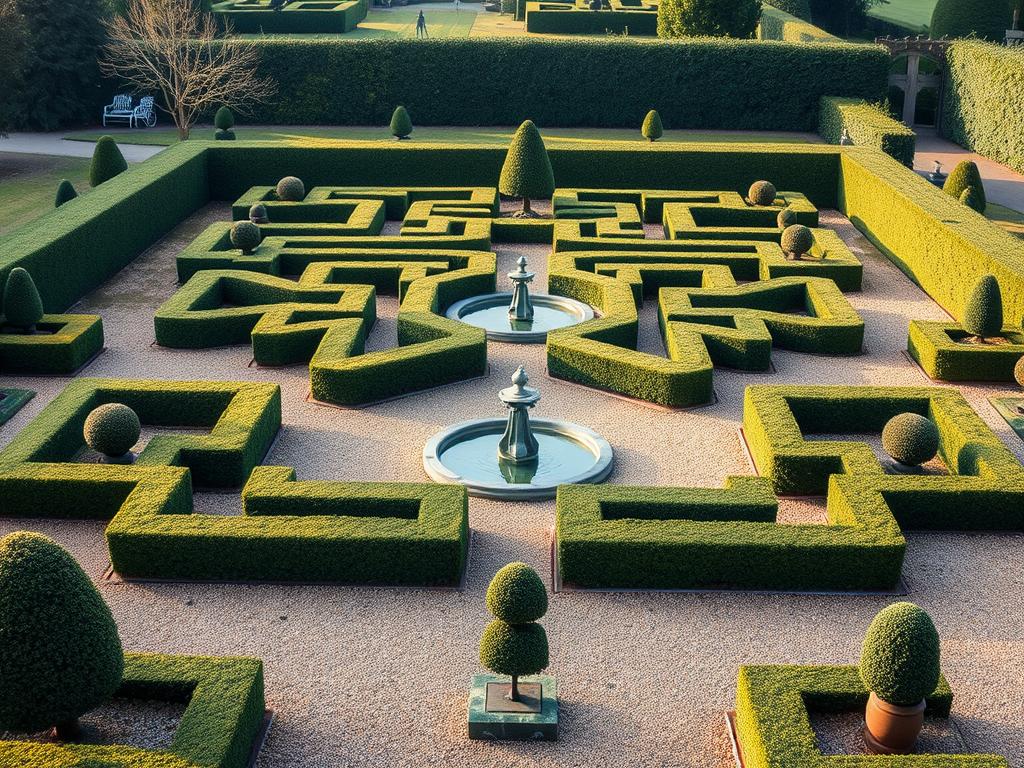
The cornerstone of formal garden design is symmetry—the mirroring of elements across a central axis. This creates a sense of balance and harmony that immediately signals formality. The main axis typically extends from the house into the garden, with secondary axes intersecting to create a grid-like structure that organizes the space.
Perfect bilateral symmetry, where one side precisely mirrors the other, creates the most formal effect. However, asymmetrical balance can also work within a formal framework, particularly in smaller gardens where perfect symmetry might feel too rigid.
Geometric Patterns
Formal gardens rely on clean, geometric shapes rather than the flowing curves found in naturalistic designs. Squares, rectangles, circles, and triangles form the backbone of the layout, creating a sense of order and intentionality. These shapes can be expressed through pathways, planting beds, lawns, and water features.
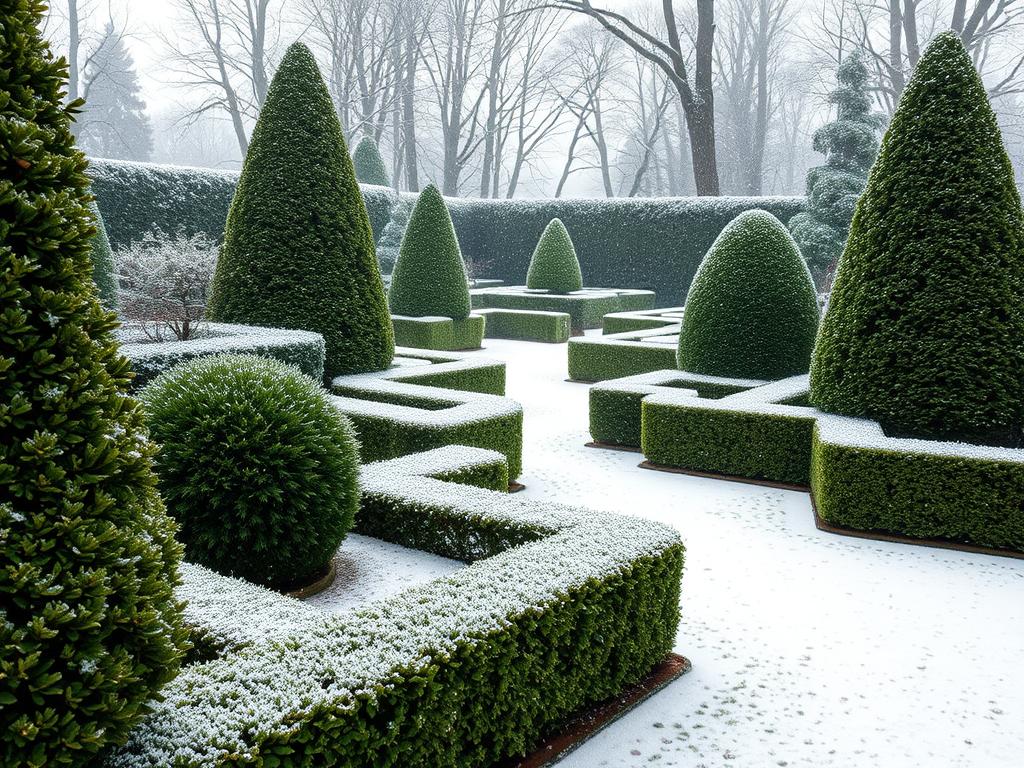
The parterre—a formal garden constructed on a level surface, consisting of planting beds in symmetrical patterns—is perhaps the ultimate expression of geometric garden design. Even on a smaller scale, geometric patterns can be incorporated through simple box-edged beds or circular lawns.
Axial Pathways
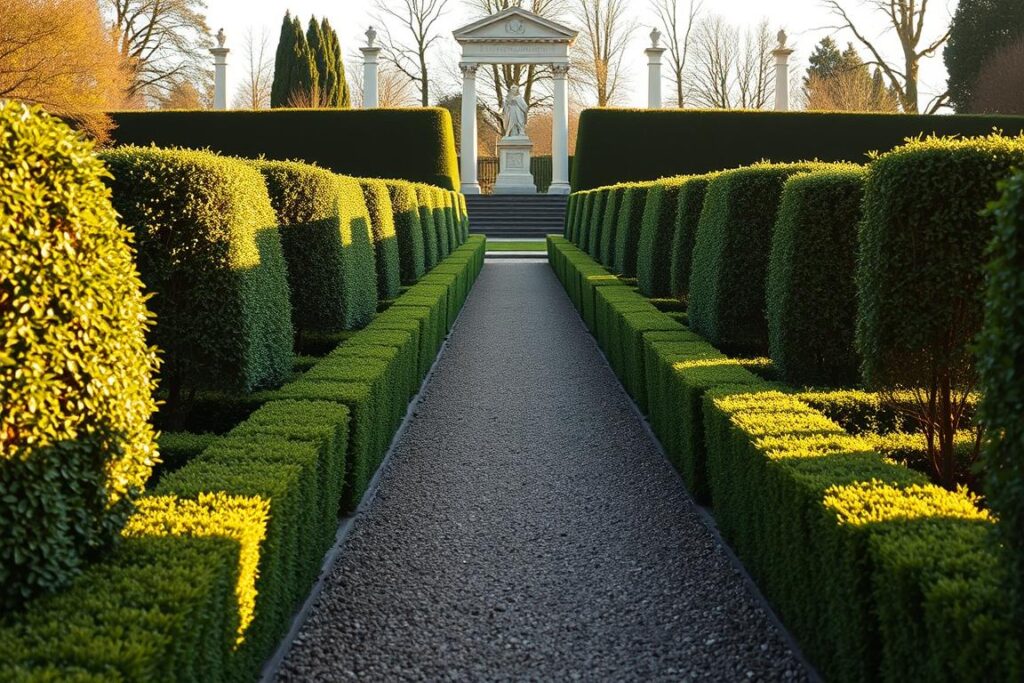
Straight pathways are essential in formal garden design, creating clear sightlines and reinforcing the geometric structure. The main axis typically leads to a focal point such as a statue, fountain, or specimen tree, drawing the eye through the garden and creating a sense of journey and discovery.
Secondary paths often intersect with the main axis at right angles, creating a grid that divides the garden into distinct rooms or sections. Materials for these paths should be formal in character—think gravel, brick, or stone pavers rather than casual stepping stones or wood chips.
Clipped Hedges and Topiary
Perhaps nothing says “formal garden” more clearly than meticulously clipped hedges and topiary. These living architectural elements provide structure and year-round interest, defining spaces and creating walls, rooms, and focal points within the garden.
Low hedges often outline planting beds in a parterre, while taller hedges can create garden rooms or screen unsightly views. Topiary—the art of training plants into clearly defined shapes—adds vertical interest and can range from simple balls and cones to elaborate animal forms or geometric shapes.
Water Features
Water features in formal gardens are typically geometric and controlled rather than naturalistic. Rectangular reflecting pools, circular fountains, and symmetrical cascades all reinforce the ordered nature of the design while adding movement, sound, and reflective qualities.
Even a simple birdbath or small fountain can serve as an effective focal point in a smaller formal garden, providing the garden has the appropriate geometric setting to support it.
Plant Selection for Formal Gardens
The plants chosen for a formal garden should reinforce its structured character while providing seasonal interest. While the backbone consists of evergreen structural elements, flowering plants add color and soften the rigidity of the design.
Evergreen Structure
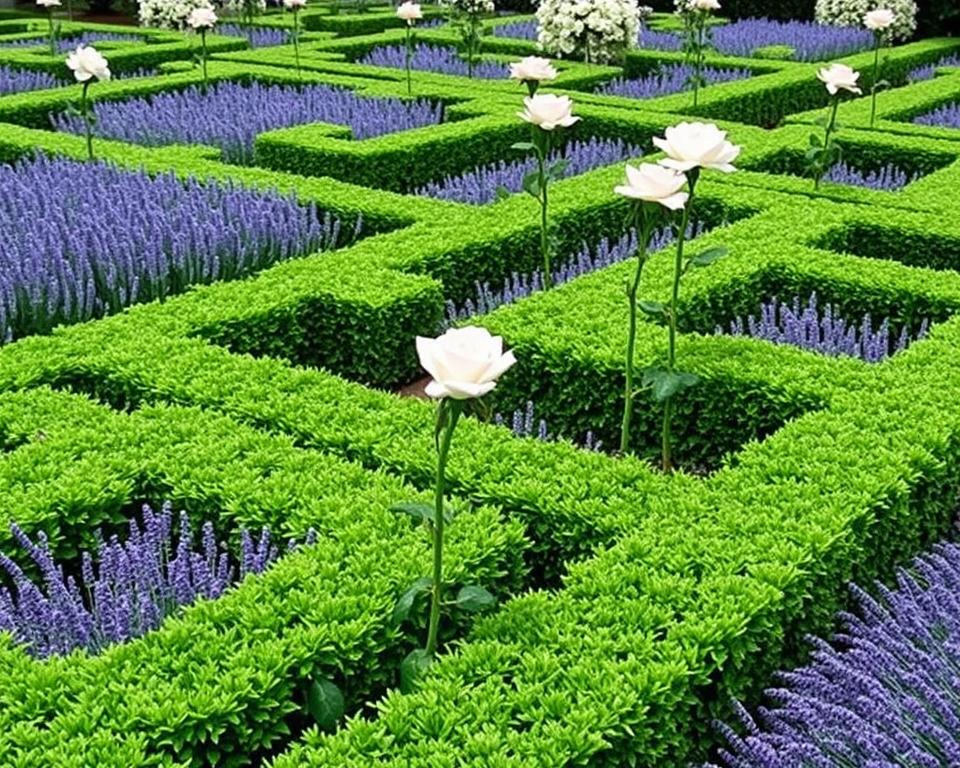
Evergreen plants form the backbone of formal gardens, providing year-round structure and a canvas against which seasonal plants can shine. These are the workhorses of formal design:
- Box (Buxus sempervirens) – The classic choice for low hedging and topiary, with small, dense foliage that clips beautifully. Space plants 15-30cm apart for hedging.
- Yew (Taxus baccata) – Excellent for taller hedges and larger topiary forms, with dark green needles that create a dramatic backdrop. Plant 45-60cm apart.
- Holly (Ilex) – Provides glossy structure with the bonus of berries in winter. ‘J.C. van Tol’ is a good self-fertile variety.
- Portuguese Laurel (Prunus lusitanica) – A robust alternative to box with glossy leaves and red stems.
Classical Planting Schemes
Within the evergreen framework, classical planting adds seasonal color and interest. Traditional formal gardens often feature:
- Lavender (Lavandula angustifolia) – Perfect for edging paths and beds, providing structure, fragrance, and purple blooms in summer.
- Roses – Especially standard (tree) roses and those with a formal character. ‘Graham Thomas’ and ‘Winchester Cathedral’ work well in formal settings.
- Hydrangeas – Particularly ‘Annabelle’ with its large white blooms that add formality and presence.
- Tulips – Plant in blocks of single colors for spring impact within formal beds.
- Alliums – Their perfect spherical flower heads echo topiary forms and provide architectural interest.
- Santolina – Silver-leaved evergreen that makes excellent low hedging with yellow button flowers in summer.
- Nepeta (Catmint) – Soft lavender-blue flowers that spill over the edges of formal beds, softening hard lines.
- Viburnum tinus – Evergreen shrub with winter flowers and blue-black berries.
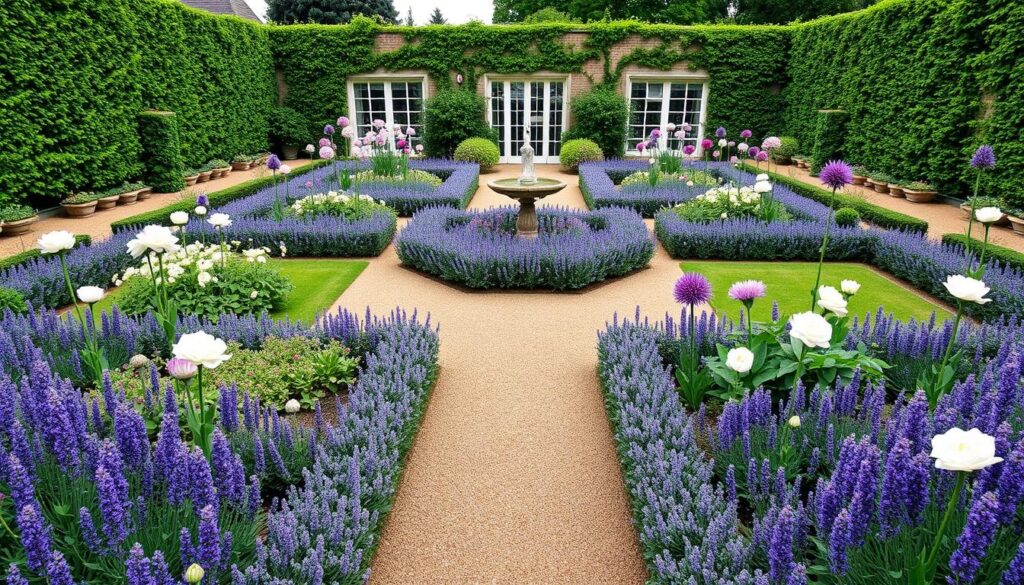
When selecting plants, aim for a restrained palette that creates harmony rather than chaos. Formal gardens traditionally use fewer plant varieties repeated throughout the design rather than the diverse mixtures found in cottage or naturalistic gardens.
Layout Principles for Formal Gardens
Creating a successful formal garden requires careful planning and attention to proportion. Whether working with a large or small space, these principles will help you achieve a balanced and harmonious design.
Creating a Central Axis
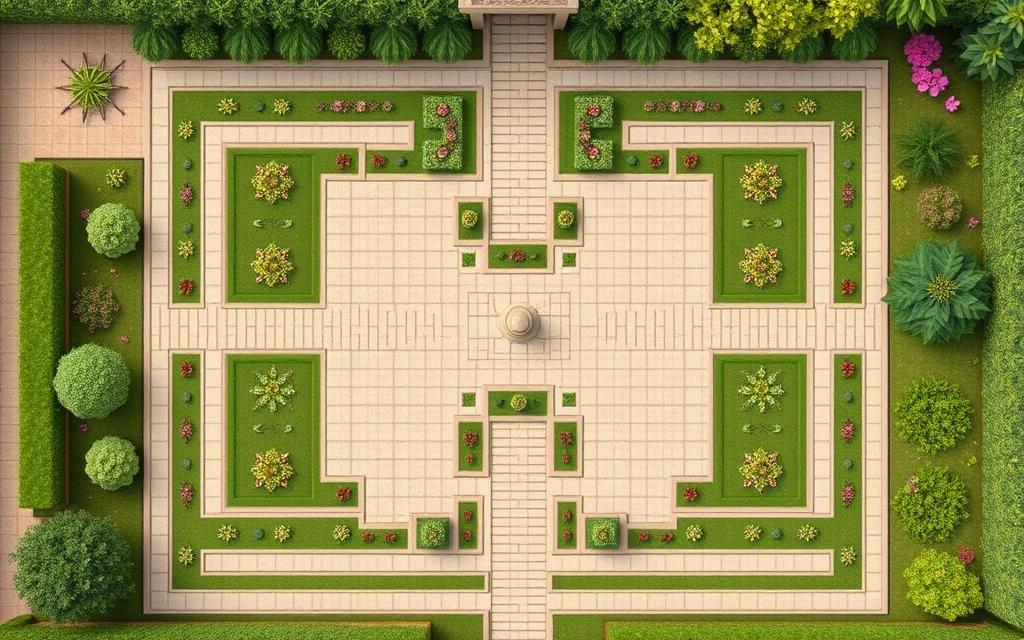
Begin your design by establishing a strong central axis, typically extending from the house into the garden. This main line should lead to a significant focal point such as a statue, fountain, or specimen tree. In smaller gardens, even a decorative pot or bench can serve as an effective terminus.
The central axis forms the spine of your design, with other elements arranged symmetrically on either side. For maximum impact, align this axis with a major architectural feature of the house, such as a central door or window.
Establishing Focal Points
Focal points draw the eye and create destinations within the garden. In formal design, these should be placed at strategic locations—at the end of pathways, at the intersection of axes, or at the center of geometric shapes.
Traditional focal elements include:
- Fountains and water features
- Classical statuary
- Ornamental urns and containers
- Specimen topiary
- Architectural features like pergolas or pavilions
Proportional Spacing
Formal gardens rely on mathematical relationships to create harmony. The golden ratio (approximately 1:1.618) has traditionally been used to determine pleasing proportions for garden rooms, beds, and pathways.
When laying out your garden, consider these guidelines:
- Pathways should be wide enough for comfortable passage—at least 1.2m for main paths
- Maintain consistent spacing between repeated elements
- Scale features appropriately to the size of your garden
- Use grid paper to plan your layout, ensuring geometric shapes are precise
Creating Garden Rooms
Dividing a larger garden into distinct “rooms” creates a sense of journey and discovery. Each room can have its own character while maintaining the formal framework of the overall design.
Rooms can be defined by:
- Clipped hedges (traditional)
- Walls or trellis work
- Changes in level
- Arches or gateways
Adapting to Small Spaces
Formal design principles can be successfully applied to gardens of any size. In smaller spaces:
- Focus on a single, strong geometric shape rather than complex patterns
- Use miniature box hedging (15cm high) to define beds
- Incorporate vertical elements like slim cypress trees or obelisks
- Choose appropriately scaled focal points
- Consider a simple knot garden or parterre as the central feature
Even a small courtyard or balcony can embrace formal design through symmetrical container arrangements and geometric paving patterns.
Maintaining Your Formal Garden
The pristine appearance of formal gardens requires regular maintenance. Understanding the seasonal tasks involved will help you keep your garden looking its best throughout the year.
Pruning and Clipping
Regular pruning is essential to maintain the crisp lines that define formal gardens:
- Box hedging and topiary – Clip once in late May/early June and again in September. Use sharp shears or battery-powered trimmers for larger areas.
- Yew hedges – Trim once in late August/early September when growth has slowed.
- Lavender – Cut back after flowering, but not into old wood.
- Roses – Prune in February/March, removing dead or crossing branches and shaping as needed.
When clipping hedges, slightly taper the sides so they’re wider at the base than the top. This allows light to reach the lower branches, preventing bare patches.
Seasonal Care Calendar
| Season | Key Tasks |
| Spring | Apply slow-release fertilizer to hedges and topiary; plant summer-flowering bulbs; edge beds; apply mulch to suppress weeds |
| Summer | First clip of box and other hedging plants; deadhead roses and other flowering plants; water during dry periods; weed regularly |
| Autumn | Second clip of box hedging; plant spring bulbs; rake leaves from lawns and paths; protect tender plants |
| Winter | Prune roses and other deciduous shrubs; clean and sharpen tools; plan for spring; protect terracotta pots from frost |
Soil Health and Feeding
Healthy soil is the foundation of a thriving formal garden:
- Apply a balanced, slow-release fertilizer to hedges and topiary in spring
- Mulch beds with well-rotted compost or manure in spring, keeping away from the stems of woody plants
- Test soil pH every few years and amend as needed—most formal garden plants prefer neutral to slightly alkaline conditions
- Consider foliar feeds for box and yew if they show signs of yellowing
Winter Protection
Formal gardens often include elements that require winter protection:
- Wrap terracotta pots in bubble wrap or hessian to prevent frost damage
- Protect tender plants like standard bay trees with horticultural fleece
- Ensure good drainage to prevent waterlogging, which can damage box and yew
- Check topiary after heavy snow and gently brush off to prevent branches splaying
Modern Adaptations of Formal Garden Design
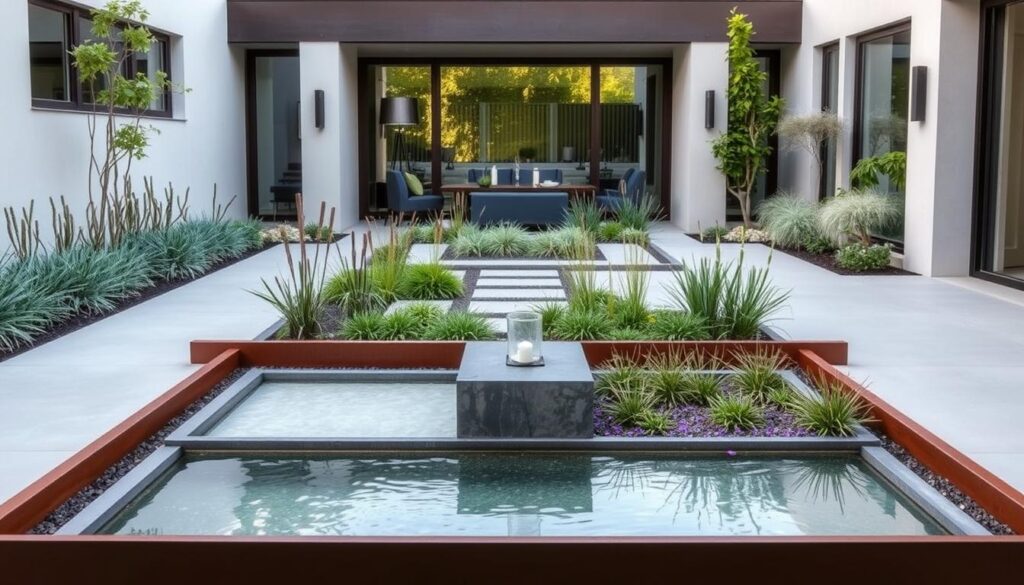
While formal gardens have traditional roots, contemporary interpretations can bring fresh relevance to this classic style. Modern adaptations often maintain the geometric structure while introducing sustainable practices and contemporary materials.
Sustainable Practices
Modern formal gardens can embrace sustainability while maintaining their structured character:
- Incorporate drought-tolerant plants like lavender, santolina, and cistus
- Install rainwater harvesting systems for irrigation
- Use organic mulches to conserve water and suppress weeds
- Choose disease-resistant varieties to reduce the need for chemical treatments
- Include pollinator-friendly plants within the formal framework
Contemporary Materials
Modern materials can complement traditional formal design:
- Corten steel for edging and water features
- Polished concrete for paths and terraces
- Minimalist sculpture as focal points
- LED lighting to highlight structural elements at night
- Composite materials for decking and furniture
Relaxed Formality
Contemporary formal gardens often soften rigid symmetry with more naturalistic planting:
- Allow some plants to spill over edges, softening hard lines
- Incorporate ornamental grasses for movement and texture
- Use perennials with longer seasons of interest
- Embrace asymmetrical balance rather than perfect symmetry
- Mix formal elements with more relaxed, prairie-style planting
This “relaxed formality” maintains the structured framework while allowing for more ecological diversity and seasonal change.
Conclusion: The Timeless Appeal of Formal Gardens
Formal garden design endures because it satisfies our desire for order and beauty in an often chaotic world. The clean lines, geometric patterns, and year-round structure create spaces that feel both serene and sophisticated, providing a perfect counterpoint to the unpredictability of nature.
Whether you embrace traditional formality or a more contemporary interpretation, the principles of symmetry, proportion, and careful plant selection will help you create a garden of lasting elegance. While formal gardens require commitment to maintenance, the rewards are substantial—a living outdoor space that reflects human creativity while celebrating the natural world in its most refined form.
As you begin your formal garden journey, remember that even the grandest designs started with a simple plan. Start small, perhaps with a symmetrical arrangement near your house, and expand as your confidence grows. With patience and attention to detail, you can create a formal garden that brings joy and beauty through every season.
In a formal garden design, the use of symmetry and precise layout is essential.