Understanding Coastal Gardening Challanges
Coastal gardens face three primary challenges: persistent winds, salt exposure, and often poor, sandy soil. The winds can physically damage plants and dry them out, while salt spray can dehydrate foliage and disrupt plants’ ability to take up water. Meanwhile, fast-draining sandy soils can make it difficult for plants to access nutrients and moisture.
However, these challenges have natural solutions. Many plants have evolved specifically to thrive in these conditions, developing flexible stems, waxy or hairy leaves to protect against salt, and deep root systems to anchor in sandy soil. By selecting these naturally adapted species, you can create a garden that not only survives but flourishes in coastal conditions.
Creating Effective Windbreaks
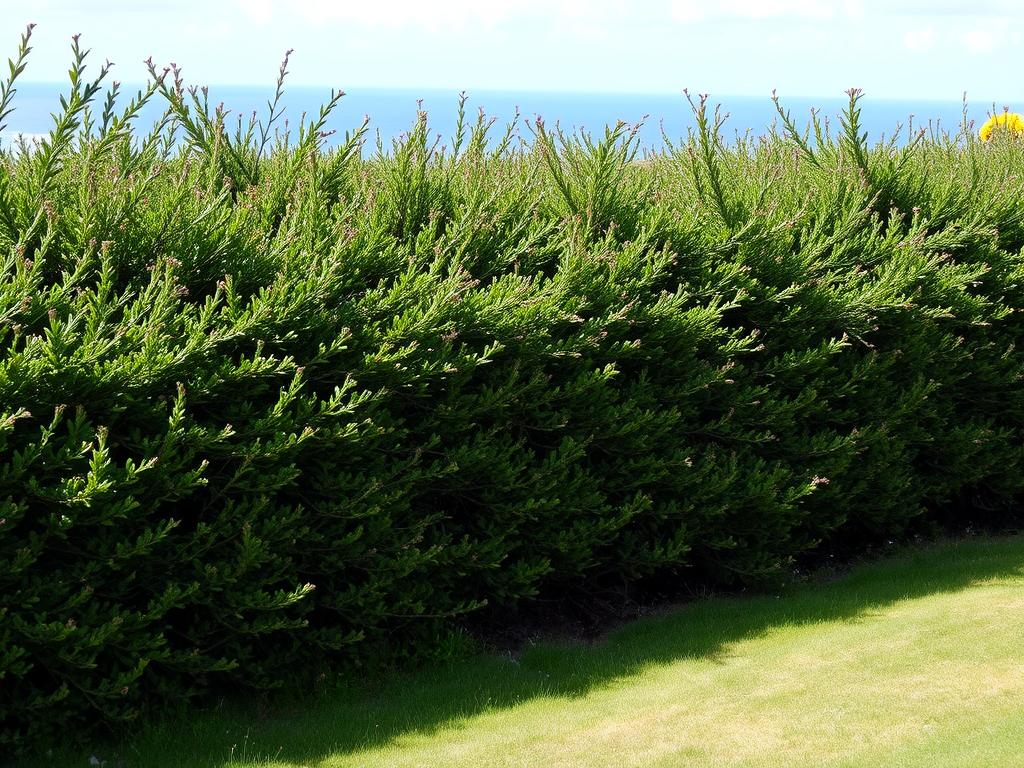
Before introducing more delicate plants, establishing windbreaks is essential for coastal gardening success. Unlike solid barriers like walls or fences, which can create damaging turbulence, natural windbreaks filter and slow the wind, creating sheltered microclimates throughout your garden.
Hedges for Coastal Protection
Hardy native hedging plants make excellent windbreaks in coastal settings. These species have evolved to withstand UK coastal conditions and provide year-round protection:
- Hawthorn (Crataegus monogyna) – Extremely tough with thorny branches that create dense protection
- Sea Buckthorn (Hippophae rhamnoides) – Silver-leaved native with bright orange berries
- Holly (Ilex aquifolium) – Evergreen protection with glossy leaves
- Blackthorn (Prunus spinosa) – Forms an impenetrable barrier with spring blossom
- Escallonia – Fast-growing evergreen with glossy leaves and pink flowers
Plant hedges in a staggered double row for maximum effectiveness, and consider creating several windbreak layers throughout larger gardens to create multiple sheltered planting zones.
Best Plants for UK Coastal Gardens
Structural Perennials
These plants form the backbone of a coastal garden, providing year-round interest and structure:
- Sea Holly (Eryngium maritimum) – Spiky blue flowers and silvery foliage
- Sea Kale (Crambe maritima) – Dramatic wavy blue-grey leaves with white flowers
- Kniphofia (Red Hot Poker) – Architectural flower spikes in vibrant colours
- Phormium (New Zealand Flax) – Dramatic sword-like leaves in various colours
- Cordyline australis – Palm-like appearance with striking architectural form
- Euphorbia – Architectural stems with distinctive lime-green flowers
- Sedum – Succulent foliage with late-season flower heads
- Yucca – Dramatic spiky form with tall white flower spikes

Ornamental Grasses
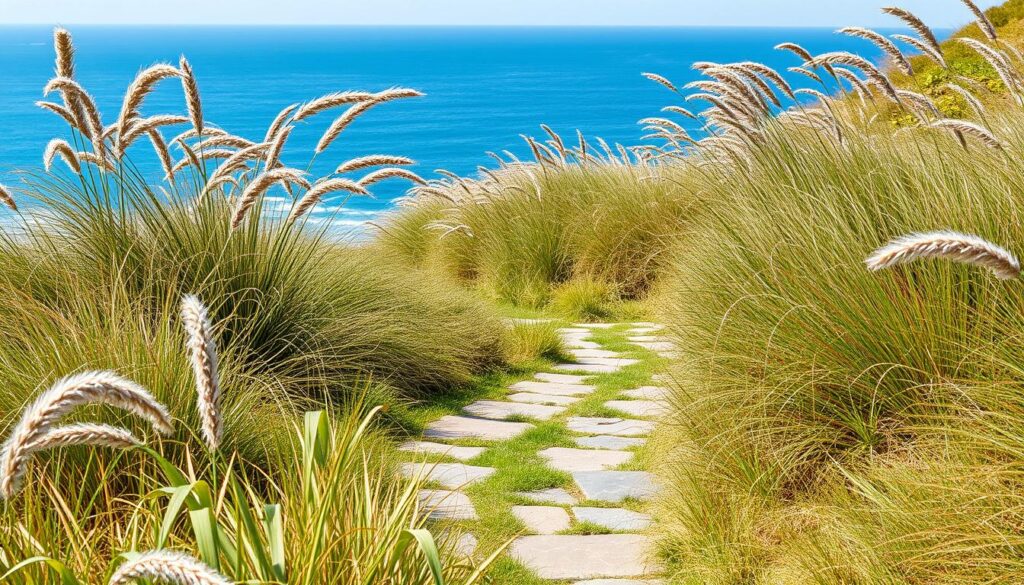
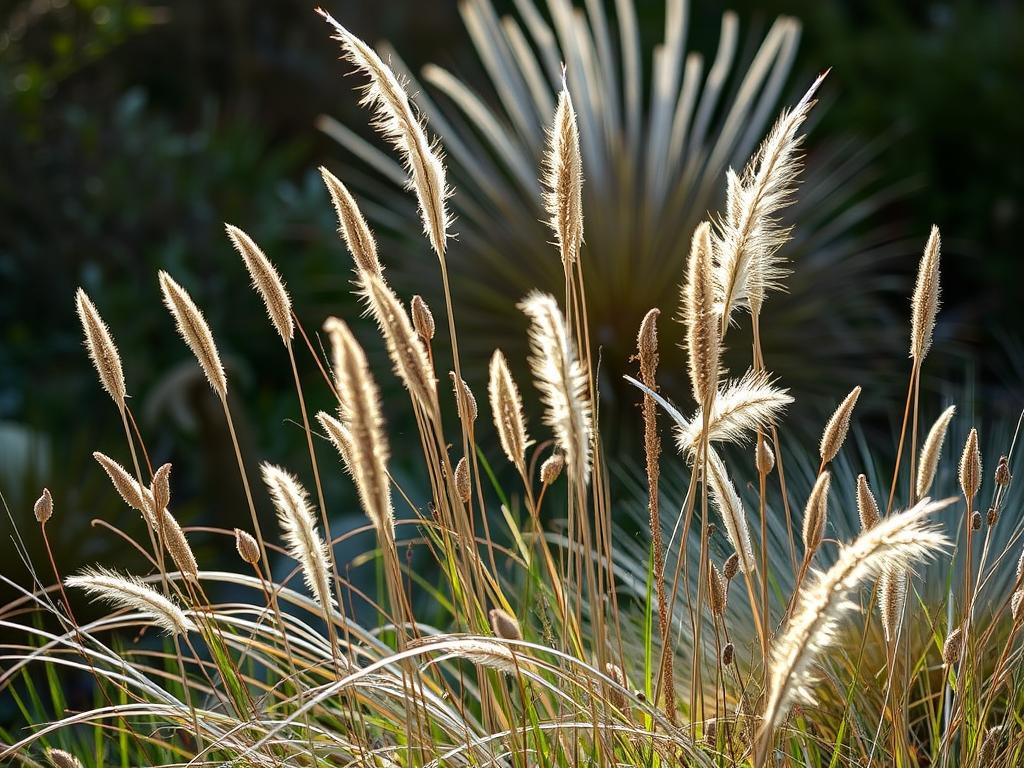
Grasses are perfect for coastal gardens, with flexible stems that bend rather than break in strong winds:
- Ammophila arenaria (Marram Grass) – UK native dune grass with blue-grey foliage
- Stipa tenuissima (Mexican Feather Grass) – Creates a soft, flowing effect
- Festuca glauca (Blue Fescue) – Compact blue-grey mounds
- Calamagrostis x acutiflora ‘Karl Foerster’ – Upright habit with golden seedheads
- Pennisetum alopecuroides (Fountain Grass) – Soft, feathery flower heads
Flowering Coastal Favourites
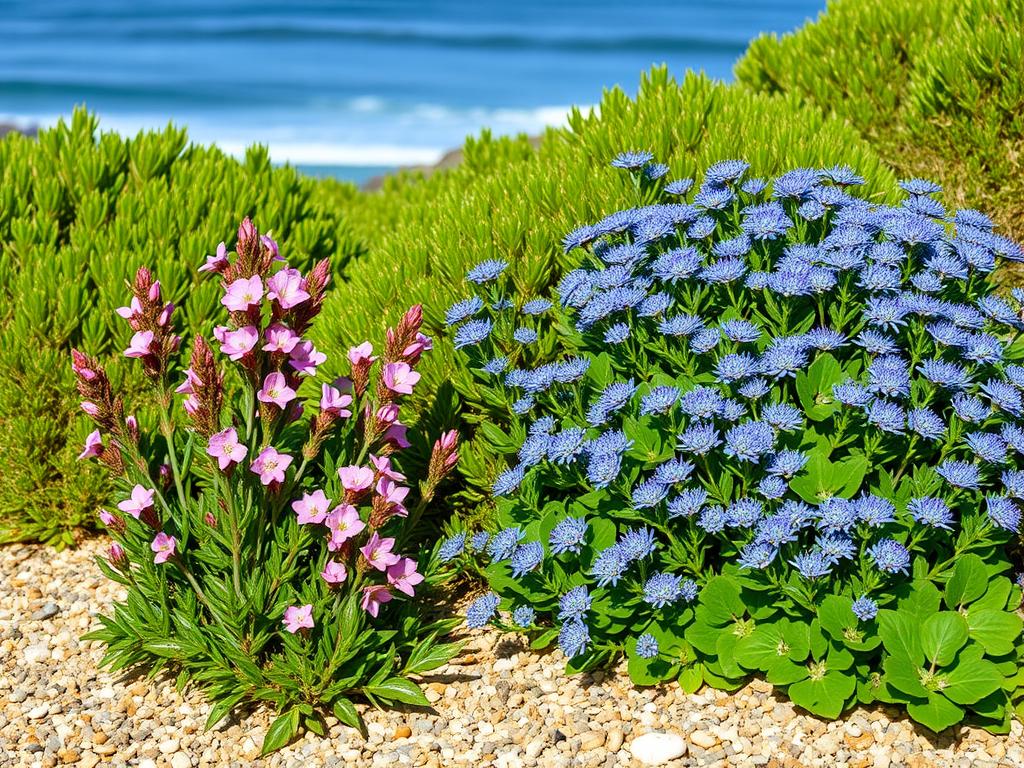
These flowering plants bring colour and attract pollinators to your coastal garden:
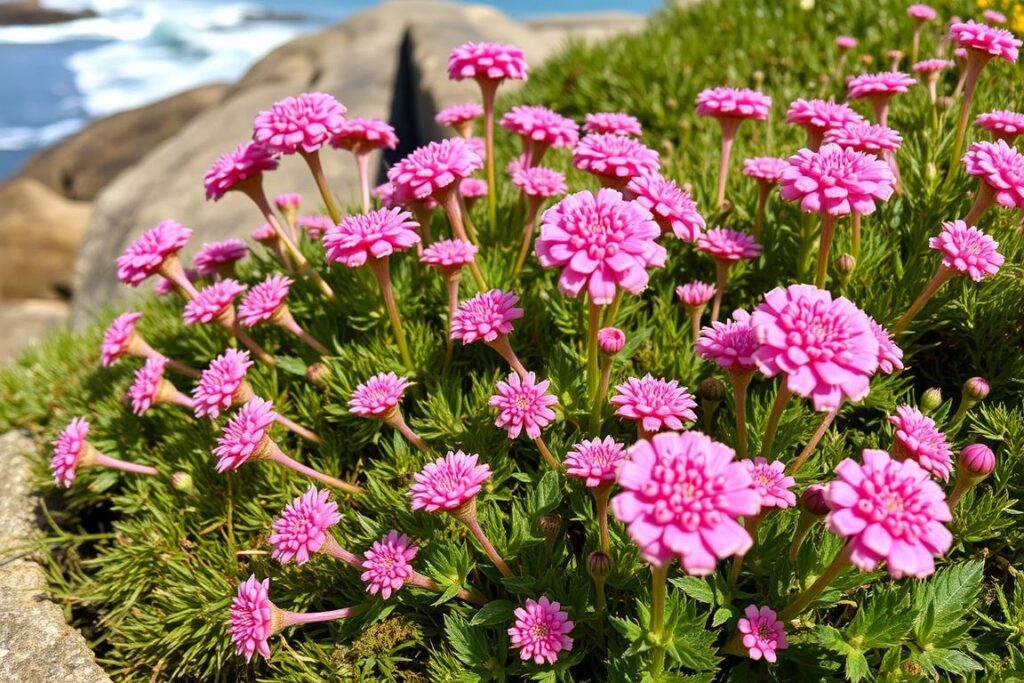
- Thrift (Armeria maritima) – Pink pompom flowers on short stems
- Sea Campion (Silene uniflora) – Low-growing with white flowers
- Verbena bonariensis – Tall, airy purple flowers
- Erigeron (Seaside Daisy) – Masses of small daisy flowers
- Limonium (Sea Lavender) – Hazy purple flower clouds
- Valerian (Centranthus ruber) – Red or white flowers on tall stems
- Agapanthus – Striking blue or white flower heads
- Lavender – Aromatic foliage with purple flower spikes
Working with Coastal Soils

Coastal soils are typically sandy, free-draining, and low in nutrients. While this presents challenges, it also creates perfect conditions for many drought-tolerant plants that would struggle in heavier soils.
Improving Sandy Soil
To expand your planting options, you can improve sandy soil with these techniques:
- Add organic matter like compost or well-rotted manure to improve moisture retention
- Use a thick mulch layer (5-7cm) of gravel, pebbles, or bark to reduce evaporation
- Consider raised beds filled with improved soil for growing more demanding plants
- Use drought-resistant ground cover plants to protect soil from wind erosion
- Apply seaweed-based fertilisers which provide trace elements often lacking in sandy soils
Quick Tip: Don’t fight your soil type too much. Work with it by choosing plants that naturally thrive in sandy, free-draining conditions rather than trying to completely transform your soil.
Natural Materials for Coastal Gardens
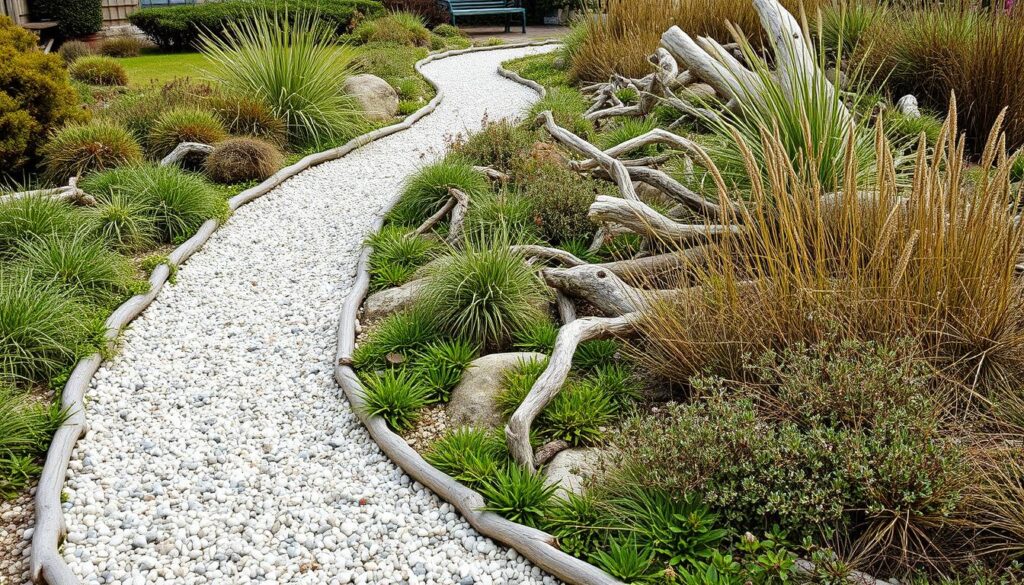
Enhance your coastal garden’s natural character by incorporating materials that echo the seaside environment:
Beach-Inspired Hard Landscaping
- Gravel paths and areas that mimic shingle beaches
- Weathered timber for raised beds and edging
- Natural stone walls built without mortar to allow wind to filter through
- Driftwood as garden art or edging material
- Shell mulch for decorative areas (collected responsibly or purchased)
- Rope details for an authentic maritime feel
These materials not only look appropriate in a coastal setting but are also practical choices that withstand the harsh conditions. Avoid materials that will deteriorate quickly in salt air, such as certain metals that rust easily.
Planting Plans for Different Coastal Situations
For Exposed, Windswept Sites
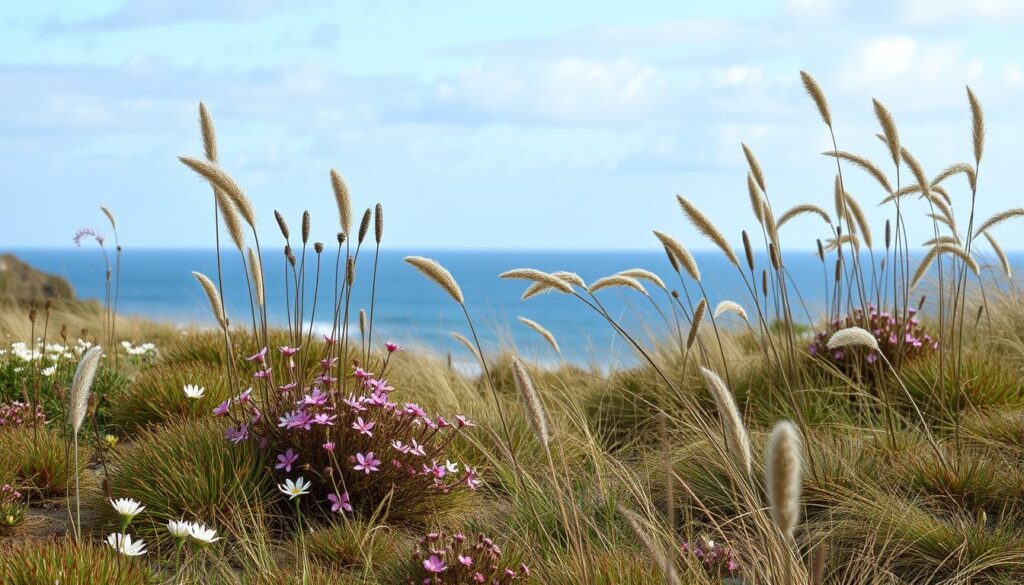
When gardening in the most exposed coastal locations, work with these tough plants in layers:
Exposed Site Planting Plan
Outer Layer (Windbreak): Plant a staggered double row of Hawthorn or Sea Buckthorn to create your primary wind filter.
Middle Layer: Add structural plants like Euonymus japonicus, compact Pittosporum, and Olearia traversii (Daisy Bush) to create further wind protection.
Inner Layer: In the more sheltered areas, introduce flowering plants like Armeria maritima (Thrift), Eryngium maritimum (Sea Holly), and Crambe maritima (Sea Kale).
Ground Cover: Fill gaps with low-growing plants like Sedum, Erigeron, and creeping Thymes to protect soil from erosion.
For More Sheltered Coastal Gardens
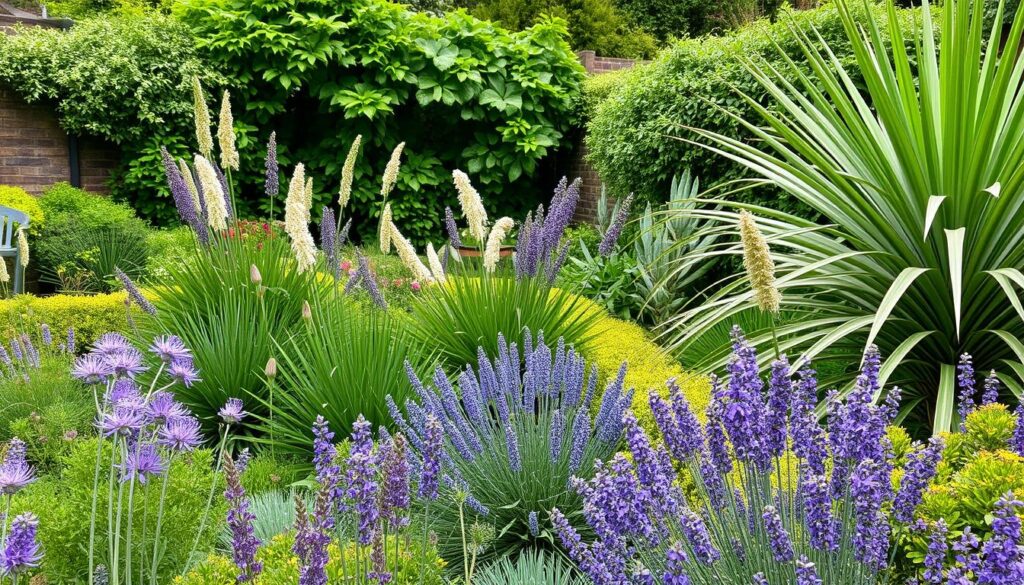
If your garden is set back from the seafront or has natural shelter, you can introduce a wider range of plants:
Sheltered Site Planting Plan
Structural Elements: Use Cordyline australis, Phormium, and Pittosporum as architectural focal points.
Mid-Height Plants: Fill the middle layer with Lavender, Rosemary, Perovskia (Russian Sage), and Cistus (Rock Rose).
Flowering Perennials: Add colour with Agapanthus, Kniphofia, Verbena bonariensis, and Gaura lindheimeri.
Grasses: Weave through ornamental grasses like Stipa tenuissima and Calamagrostis for movement and texture.
Seasonal Tip: In more sheltered coastal gardens, you can often grow tender plants that benefit from the milder winter temperatures typically found near the sea. Plants like Melianthus major, Beschorneria, and even some palms can thrive in these conditions.
Seasonal Care for Coastal Gardens
Coastal gardens require specific seasonal maintenance to keep them looking their best:
Spring
- Cut back dead growth from grasses and perennials as new growth appears
- Apply slow-release fertiliser designed for coastal or drought-tolerant plants
- Top up mulch layers to prepare for drier summer months
- Check and repair windbreaks before summer growth begins
Summer
- Water new plants deeply but infrequently to encourage deep root growth
- Deadhead flowering plants to encourage continued blooming
- Trim hedges lightly to maintain density without removing too much protective growth
- Rinse salt spray from more sensitive plants after stormy periods
Autumn & Winter
- Leave ornamental grasses and seedheads standing for winter structure and wildlife
- Avoid heavy pruning of shrubs before winter as this can make them vulnerable to cold damage
- Apply mulch around the base of less hardy plants for root protection
- Check stakes and supports before winter storms
Common Questions About Coastal Gardening
Can I grow vegetables in a coastal garden?
Yes, many vegetables can thrive in coastal gardens, particularly in sheltered areas. Root vegetables like carrots and potatoes do well in sandy soil, while brassicas (cabbage family) often perform better in coastal areas as they enjoy the cooler summers. Create windbreaks with structures or companion plants, improve soil with compost, and consider raised beds for better control over growing conditions.
How do I protect my garden from salt spray?
Establish windbreaks as your first line of defence. After particularly stormy weather, gently hose down plants to rinse off salt deposits. Choose naturally salt-tolerant plants for areas most exposed to spray. In very exposed positions, consider temporary screens during the worst winter storms to protect special plants.
When is the best time to plant in a coastal garden?
Autumn is often ideal for planting in coastal gardens. The soil is still warm from summer but moisture levels are increasing, helping plants establish roots before winter. Spring planting is also good, but be prepared to provide more water support if the weather turns dry. Avoid planting during the height of summer unless you can commit to regular watering.
Embracing Your Coastal Garden
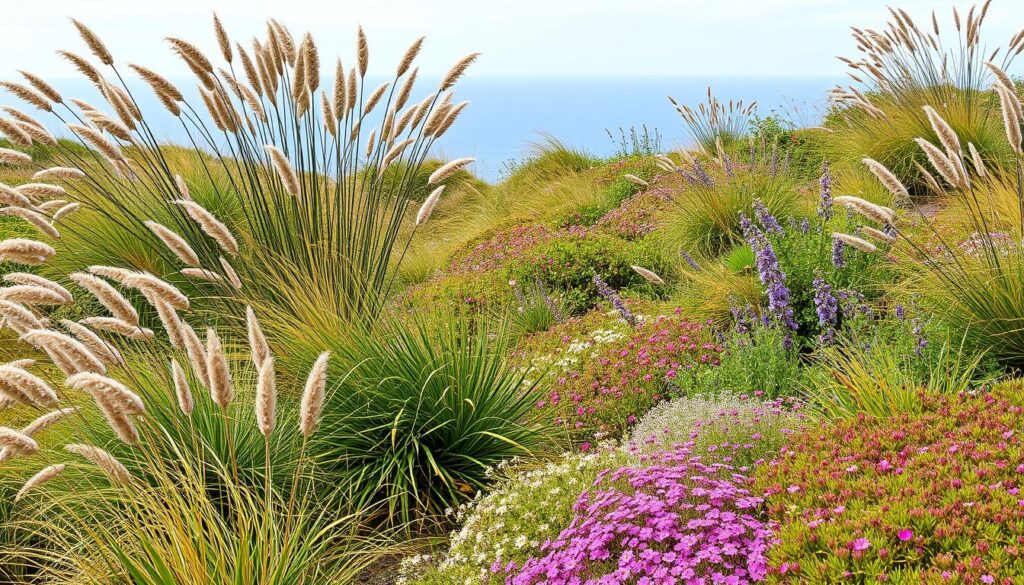
Coastal gardening in the UK offers unique challenges, but the rewards are equally special. By working with nature rather than against it, you can create a garden that not only survives but thrives in its maritime setting. The key is to embrace the coastal character – the windswept grasses, the sculptural salt-pruned shrubs, and the tough, floriferous perennials that bring colour and life to the shoreline.
Remember that a successful coastal garden evolves over time. Start with establishing windbreaks and structural plants, then gradually introduce more variety as sheltered microclimates develop. Before long, you’ll have created a resilient, beautiful garden that celebrates its seaside location – a true coastal haven that connects your home to the wild beauty of the UK shoreline.