Ever thought about how garden colours can change its look all year? By knowing colour theory and bloom timing, you can make your garden stunning. We’ll show how picking colours wisely and planning your garden can make it beautiful. You’ll learn to use colour to make your garden look amazing all year.
Key Takeaways
- Understanding colour theory is essential for effective garden planning.
- Seasonal blooms can greatly influence the overall colour scheme of your garden.
- Combining textures with colour enhances the visual appeal of your outdoor space.
- Focal points using contrasting colours can create stunning visual interest.
- Maintaining your garden’s colour scheme requires regular seasonal adjustments.
Understanding Colour Theory and Its Importance in Gardens
In any landscape design, colour theory is key to making gardens look good. It uses the colour wheel to sort colours. Knowing this can make your garden look amazing by using colours right.
The Basics of Colour Wheel
The colour wheel starts with primary colours: red, yellow, and blue. These colours mix to make secondary ones: orange, green, and purple. Tertiary colours come from mixing a primary with a secondary, like blue-green.
Neutral colours like black, white, and grey add depth and balance. They help the colours work well together.
How to Use Colour in Garden Design
Think about how colours make you feel when designing your garden. Warm colours like reds and yellows are lively. Cool colours like blues and greens are calming.
Monochromatic schemes use one colour in different ways for a unified look. Analogous schemes use colours next to each other for harmony. Complementary colours, on the other hand, are opposite each other for a bold contrast.
For more on colour, check out this colour theory guide. It’s great for garden design.
The Role of Bloom Timing in Your Garden
Understanding bloom timing is key in garden planning. It affects your garden’s look and vibrancy across seasons. Choosing plants that bloom at the right times creates a lively garden all year.
Seasonal Blooms and Their Influence
Seasonal blooms change your garden’s colours. Spring flowers like tulips and daffodils welcome the season. Summer brings roses and sunflowers, adding to the lush feel.
Autumn’s chrysanthemums and asters add warm colours. Winter’s evergreen shrubs keep the garden colourful even in cold months.
Creating Year-Round Interest
To keep your garden colourful, mix plants that bloom at different times. Perennials and annuals ensure your garden is always in bloom. Hellebores for spring, daylilies in summer, and sedums in fall keep the garden vibrant.
Designing your garden with these plants in mind makes it welcoming. It’s perfect for enjoying nature all year.
Choosing the Right Plants for Your Colour Palette
When renovating your garden, picking plants that match your colour scheme is key. Knowing the difference between perennials and annuals is important. Also, using native plants and mixing textures can make your garden pop. Let’s dive into these points.
Perennials vs. Annuals
Perennials come back every year, adding colour to your garden. They need less care once they’re settled. Annuals, though, let you change up your garden’s look with each season. This keeps your garden lively and new.
Native Plants and Their Colour
Native plants fit well with the local area. They use less water and fight off pests naturally. Adding plants like bluebells and foxgloves not only brings colour but also helps local wildlife. This makes your garden beautiful and useful.
Combining Textures with Colour
Think about how texture and colour work together in your garden. Different leaves add depth and interest. For example, ferns and hostas look amazing together. This mix makes your garden a colourful masterpiece.
Designing with Foliage as a Colour Element
Foliage is key in landscape design, adding calm and letting flowers pop. Different greens can make your garden look amazing. They bring depth and contrast to any garden.
The Beauty of Greenery
Greenery stands for life and growth, and it’s a neutral base for your garden. It can make flower colours stand out. Choose from emerald, lime, or forest greens to set the mood.
This makes your garden a peaceful place. It’s perfect for relaxing and thinking.
Variegated Leaves for Visual Interest
Variegated leaves add exciting colours to your garden. They have leaves in two or more colours, adding depth. Mixing them with solid green creates a stunning look.
Try plants like Euonymus fortunei for striking patterns or Hostas for elegance. Your garden will be full of surprises and beauty.
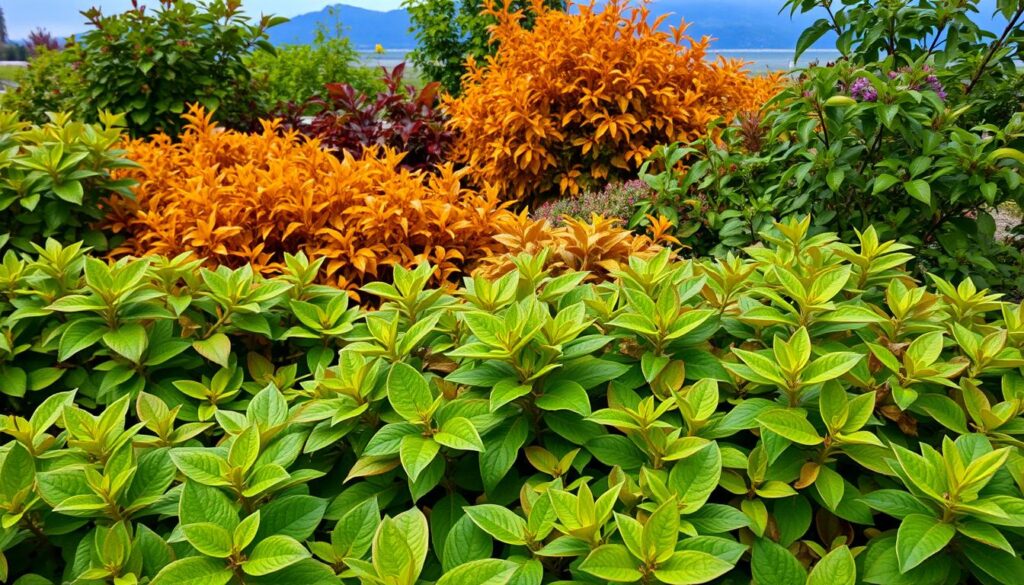
| Plant Type | Leaf Colour | Impact on Garden Design |
|---|---|---|
| Euonymus fortunei | Green and Cream | Brightens shaded areas |
| Hostas | Blue-Green and White | Adds texture and contrast |
| Caladium | Red, Pink and Green | Provides bursts of colour |
| Heuchera | Bronze and Burgundy | Offers seasonal interest |
Using foliage as a colour element makes your garden richer. With the right choices, your garden will change with the seasons. It will be a place of wonder and beauty.
Creating Focal Points in Your Garden
Creating focal points is key to adding interest to your garden. Using contrasting colours can draw attention to certain areas or plants. This makes your garden arrangements pop and creates stunning visuals.
Using Contrasting Colours
Contrasting colours bring energy to your garden, making some elements stand out. For example, pairing bright reds with cool blues creates a striking effect. This not only highlights plants but also adds a playful vibe. Here are some tips for using contrasting colours:
- Identify your dominant colour scheme.
- Choose contrasting colours that complement each other.
- Place brighter colours at key points to increase visibility.
Incorporating Sculptural Plants
Sculptural plants add depth and texture to your garden. They serve as structural highlights that blend well with different plants and colours. Adding these plants to your garden design creates a sophisticated look. Consider these options:
- Ornamental grasses for movement and texture.
- Architectural succulents as eye-catching statement pieces.
- Distinctive trees that mark the landscape.
Planting Techniques for Colour Harmony
To make your garden look stunning, you need to know about colour harmony. Good garden planning makes your outdoor space lively all year. Group planting and layering are key to achieving this.
Group Planting for Impact
Group planting means putting plants of the same colour together. It makes a big visual impact. Here are some tips for group planting:
- Choose a main colour for your group.
- Add different shades of the same colour for depth.
- Use plants with different textures for more interest.
This method works for any garden size. It can make a big statement and change with the seasons.
Layering Plants for Continuous Colour
Layering plants means placing them at different heights. It adds colour and interest all over your garden. To layer well:
- Put taller plants at the back or centre.
- Medium-sized plants go in front of them.
- Low-growing plants or ground covers fill the front.
Layering keeps your garden interesting all year. Good planning makes your garden more charming and welcoming.
The Emotional Impact of Colours in Your Garden
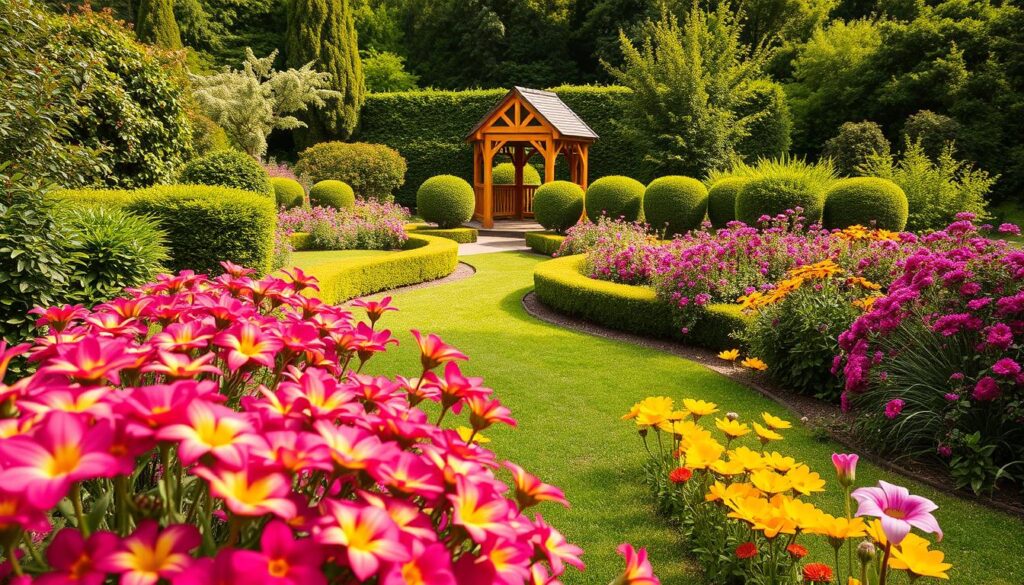
Colours deeply affect our feelings, making them key in garden design. By knowing how colours shape mood, you can craft a garden that matches your desired vibe. This part looks at how warm and cool colours change your outdoor areas.
Warm vs. Cool Colours
Warm colours like reds, oranges, and yellows energise and excite us. Adding these to your garden makes lively spots for fun and action. On the other hand, cool colours like blues and greens calm us down. They turn your garden into a quiet haven.
Calming Effects of Blues and Greens
Blues and greens in your garden create peaceful spots. They bring calm and help lower stress, perfect for quiet moments. Use soft blues in flowers or lush greens in plants to add to this calm. These colours also blend well with other garden features, making your space welcoming.
Seasonal Planning for Blooms
To have a lively garden, you need to plan for each season. Pick flowers that bloom at different times to keep your garden looking great all year. This way, you get to enjoy different colours and styles.
Here, we’ll talk about plants for each season. This will give you lots of ideas for your garden.
Spring Blossoms to Brighten Up Your Garden
Spring brings colour back after winter’s cold. Plant daisies, tulips, and hyacinths for a lively start. These flowers add bright colours to your garden.
Spring flowers help bridge the gap between winter and summer. They’re key to your garden’s look.
Summer Spectacles
Summer gardens are full of colour and scent. Choose sunflowers, dahlias, and zinnias for a stunning display. These flowers are not just beautiful but also attract bees and butterflies.
Adding these blooms keeps your garden exciting during summer.
Autumn Hues and Winter Interest
Autumn brings warm colours as days get shorter. Plant chrysanthemums and ornamental cabbages for depth. Even in winter, use evergreens or heathers to keep your garden interesting.
Planning for all seasons makes your garden change and stay beautiful all year.
Innovative Colour Combinations
Exploring new colour combinations can make your outdoor space lively and welcoming. The colours you choose greatly affect the mood and look of your garden. This part will look at various colour schemes and offer tips for mixing colours to improve your home’s exterior.
Monochrome Schemes
Monochromatic schemes offer a sleek look by using different shades of one colour. This method adds depth and harmony to your garden. For example, different blues can create a calming atmosphere, perfect for a peaceful outdoor area.
Use various textures in foliage and flowers to keep your garden interesting. Stick to your chosen colour to maintain a cohesive look.
Complimentary and Contrasting Ideas
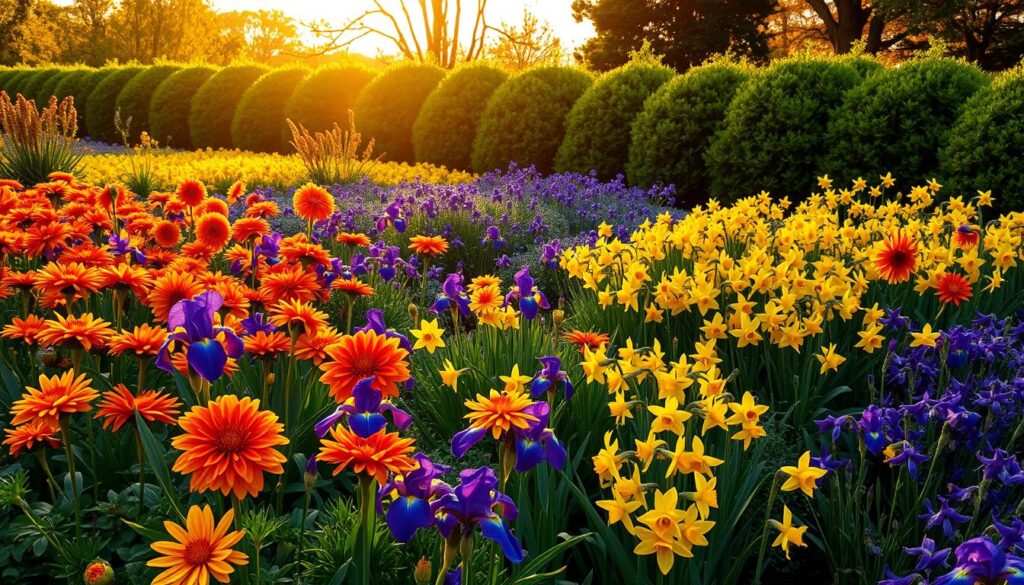
Using complementary colours can create eye-catching designs. Pairing colours like orange and blue on the colour wheel adds vibrant contrast. This contrast grabs attention and makes your garden stand out.
Think about how flowers and plants interact with each other. This interaction can enhance your garden’s beauty, making it a highlight throughout the year.
Bold and Bright Juxtapositions
For a bold look, try mixing bright colours. Combining yellow with deep purple creates a lively contrast. To balance these colours, add softer shades like pastels or neutrals.
This approach can make your garden more inviting. It encourages people to explore and enjoy the space.
| Colour Scheme Type | Characteristics | Best Plants to Use |
|---|---|---|
| Monochrome | Single hue variations | Hydrangeas, Agapanthys |
| Complementary | Opposite colours on the wheel | Marigolds, Bluebells |
| Contrasting | Dynamic interplay of colours | Cannas, Purple Salvia |
| Bold Juxtaposition | Vibrant, energetic combinations | Sunflowers, Zinnias |
Maintaining Your Garden’s Colour Scheme
Keeping your garden colourful is a long-term job. Plants change with the seasons, affecting your garden’s look. Learning to care for your plants keeps your garden welcoming.
Seasonal Maintenance Tips
Seasonal care is key for a year-round garden. Check what your plants need in each season. Deadheading and mulching help keep things looking good.
Regular fertilising keeps plants healthy and bright. These steps also prepare your garden for future changes.
Adjusting to Weather Changes
Your garden talks to the weather all the time. Quick changes in care are needed for frost or heat. In hot weather, shade and smart watering protect plants.
Be flexible with your garden’s colours. Mix tough plants with seasonal flowers. This way, your garden stays beautiful, no matter the weather.