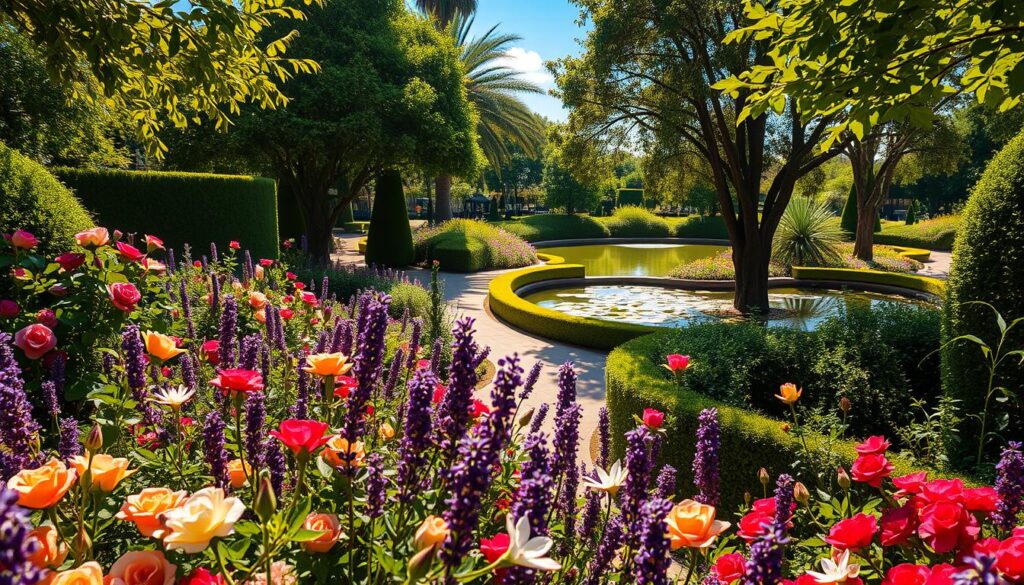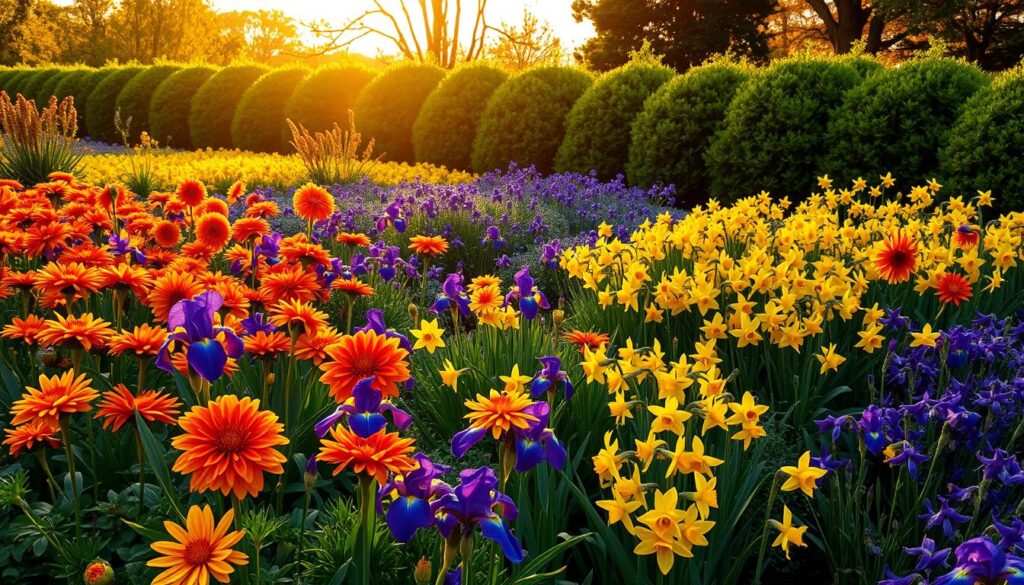
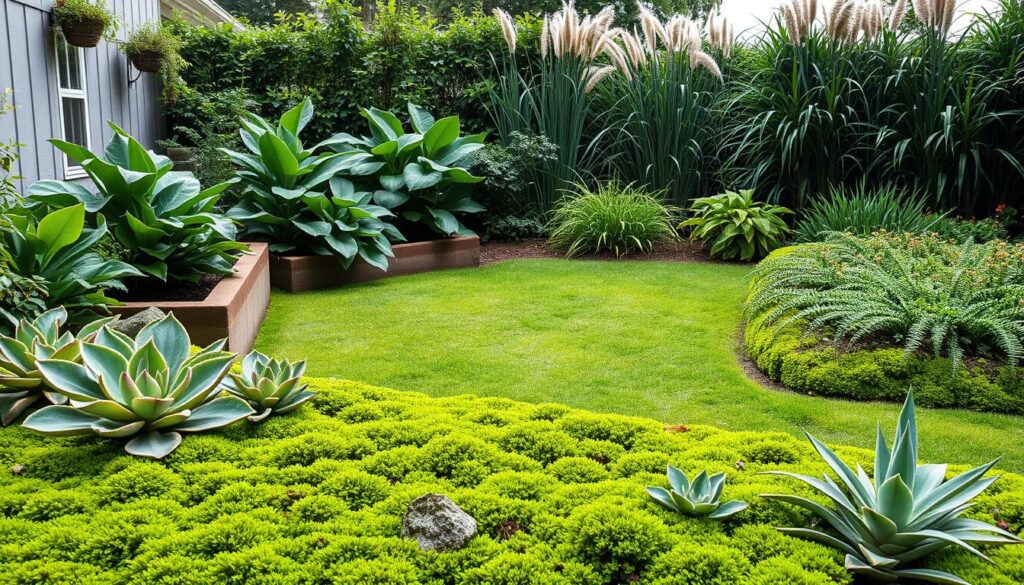
Ever looked at your flat backyard and thought it needed a makeover? The secret to making it look amazing isn’t about changing the structure or the ground. It’s all about choosing the right plants. By picking plants of different heights, textures, and colours, you can make your garden look deep and interesting.
This article will show you how to use plants to make your backyard lively and welcoming. You’ll learn how to turn a dull space into a vibrant and engaging area.
Key Takeaways
- Visual depth can be achieved with strategic plant selection.
- Layered planting creates dimension without altering the land.
- Consider textures and colours to enhance your garden’s aesthetics.
- Effective use of focal points can draw attention and create focal areas.
- Containers can add variety and interest to your flat backyard.
Understanding Visual Depth in Garden Design
Visual depth in garden design makes us see three-dimensional space. It creates an illusion of depth and height. This turns a flat backyard into a lively and welcoming area.
By using small garden ideas with tiered plantings and different heights, you can avoid the dullness of flat landscapes.
What Is Visual Depth?
Visual depth is about making an area look deeper. It uses slopes, raised beds, and features like climbing vines or arbors. These elements make your outdoor space feel bigger and more open.
Importance of Visual Depth in Your Backyard
Adding visual depth to your backyard is key to its beauty. It adds interest and makes the space feel bigger and more balanced. When you use plants of different heights and textures, your garden becomes a stunning focal point.
Using effective design moves can turn your flat yard into a beautiful retreat. It becomes a place where you and your guests can enjoy nature’s beauty. Adopting these strategies makes your outdoor space a wonderful place to relax and have fun.
Assessing Your Flat Backyard Space
Starting urban gardening means first checking your backyard space. It’s key to plan well, picking the right plants for your spot. This helps your garden grow well.
Measuring Your Area
Begin by measuring your backyard. Note down its length and width to find the square footage. This helps plan where to put plants.
A good measurement lets you use space well. Your garden will look good and work well.
Identifying Existing Features
Every garden has its own special things. Look at trees, paths, or buildings in your backyard. They shape your garden’s look and affect sunlight and water.
Using these features in your design makes your garden better. It brings out the beauty of your backyard.
Considering Sunlight and Shade
Sunlight is vital for plants. Watch how light changes in your garden during the day. This helps pick the right plants for your space.
Knowing light patterns helps avoid mistakes. Your plants will grow well in the right light.
Choosing the Right Plants for Depth
Creating a lively space in your flat backyard starts with the right plants. Layered planting adds depth by placing plants at different heights. This method prevents a flat look, adding interest and depth to your garden.
Choosing plants for each height keeps your garden engaging all year. It ensures your garden looks good at every season.
Layered Planting: What It Means
Layered planting makes your garden look three-dimensional. It guides the eye through the space, not just across it. This way, you can show off different plant features, like leaf shapes and colours.
Best Plants for Different Heights
When picking plants for your layered garden, think about these height groups:
| Height Category | Plant Suggestions | Features |
|---|---|---|
| Tall Plants | Miscanthus sinensis, Japanese Silver Grass | Creates vertical interest with feathery plumes. |
| Medium Plants | Rudbeckia, Echinacea | Bright blooms that add colour and attract pollinators. |
| Low-Growing Plants | Heuchera, Creeping Thyme | Softens the edges while providing ground cover. |
Seasonal Considerations
For a garden that changes with the seasons, pick plants that do well at different times. This keeps your backyard lively and colourful all year. Mix spring bulbs, summer flowers, autumn leaves, and winter plants for a garden that changes beautifully.
Think about the colours of each season to keep your garden looking good all year.
Layering Techniques for Visual Depth
To add depth to your garden, use layering techniques. This makes your plants stand out. By mixing different heights and textures, your backyard will look better. This guide shows how to use tall plants, mid-level ones, and ground cover to fill gaps.
Adding Vertical Interest with Taller Plants
Taller plants make your garden feel bigger. Sunflowers, foxgloves, or delphiniums pull your eye up. They add height and create a focal point, making you want to explore more.
Choose low-maintenance plants with your tall ones. This makes caring for your garden easier.
Mid-Level Plants for Balance
Mid-level plants balance your garden’s look. Lavenders or ornamental grasses work well here. They connect the tall plants and ground cover, making a smooth transition.
Using different textures at this level adds interest. It also matches the taller plants above.
Ground Cover: Filling in the Gaps
Ground cover plants fill gaps left by taller and mid-level plants. They make your garden look complete. Creeping thyme or sedum are good choices because they look good and need little care.
They make your garden full without the upkeep of lawns. Using these plants keeps your garden lively with less work.
Incorporating Focal Points in Your Garden
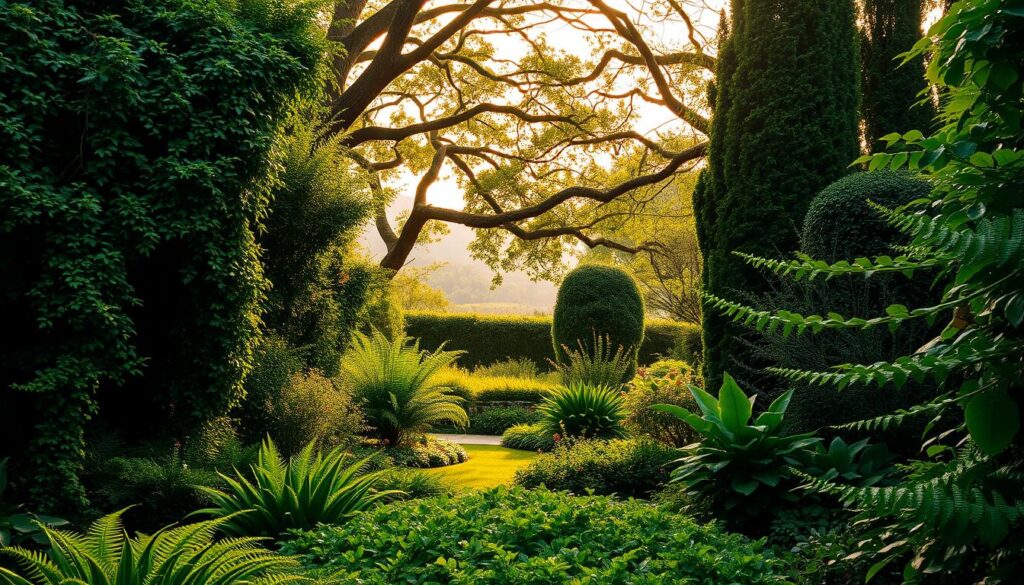
Creating focal points is key in any garden makeover. They draw the eye and guide it through your garden. Highlight plants can be stunning, adding structure and intrigue. Plant groupings also boost the visual appeal, showing off your creativity while keeping the space harmonious.
Choosing Highlight Plants
Choosing the right plants can really make your garden stand out. Look for plants with unique colours, textures, or shapes. Some great choices include:
- Japanese Maple: Its changing colours with the seasons are stunning.
- Hydrangeas: These flowers add a burst of colour in summer.
- Ornamental Grasses: Their movement adds a lively touch to the garden.
Using Plant Groupings Effectively
Grouping plants well can add interest and balance. Here are some tips for arranging them:
- Vary Heights: Place taller plants at the back and shorter ones in front for depth.
- Colour Coordination: Use colours that complement each other for a better look.
- Textural Contrast: Mix plants with different textures for more intrigue.
By using these techniques, your garden becomes more welcoming and a beautifully designed sanctuary.
Creating Pathways and Borders with Plants
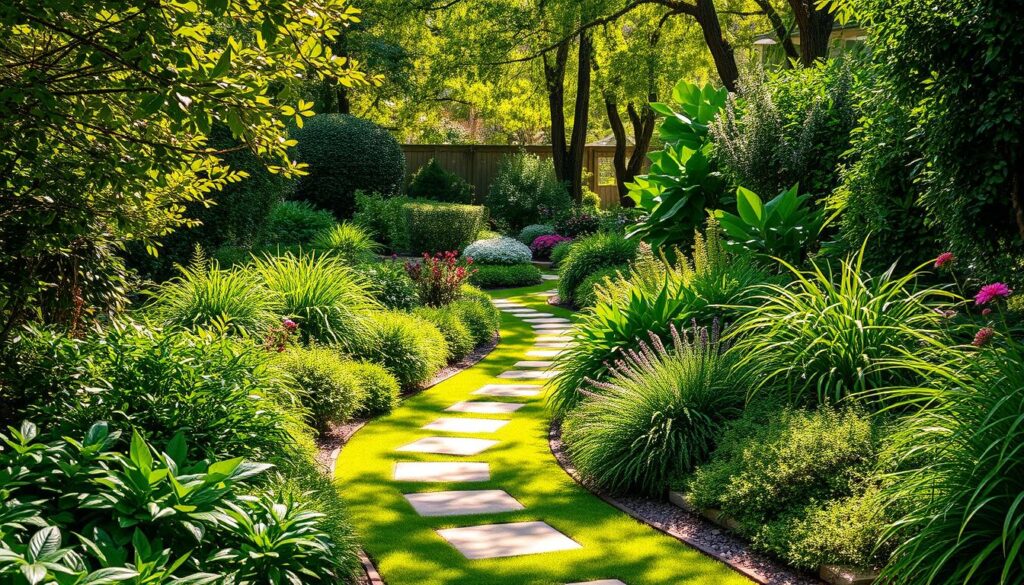
In outdoor landscaping, pathways and borders are key. They help shape your garden’s layout and flow. By adding these elements, you make your garden look better and more organised.
Defining Spaces with Borders
Borders mark out different areas in your garden. They add structure and make things clear. Use different plants to create borders for texture and depth.
Choose low-growing flowers or tough shrubs for walkways or beds. This makes your garden look good and keeps things in order.
Pathways That Lead the Eye
Pathways guide visitors through your garden. You can use gravel, paving stones, or plants for paths. Make sure they lead the eye to explore more.
Use curves or bends to make paths more welcoming. This boosts your garden’s beauty and appeal.
Enhancing Depth with Textures and Colours
Adding life to a flat backyard is all about textures and colours. Mixing different textures grabs your attention and adds depth. This makes your outdoor space more interesting.
By using varied textures, you create a space that’s fun to explore. This is thanks to foliage and materials that add layers of interest.
Mixing Textures for Interest
Textures are key in garden design, making your space feel rich and welcoming. Try combining smooth leaves of ornamental grasses with the rough textures of evergreens. This contrast adds depth and makes your garden lively.
Adding hardscape elements like stone paths or wooden trellises also adds a tactile quality. It complements your plants and makes your garden more engaging.
Colour Schemes That Add Depth
Using colours wisely can change how we see depth in your garden. Bold colours draw the eye to certain spots. Pairing contrasting colours makes your garden pop.
For example, deep purple flowers against bright green foliage look stunning. This not only makes your garden look good but also helps define different areas. It ensures your garden is both cohesive and diverse.
Using Containers for Visual Variety
Container gardening is a great way to add variety to a small backyard. You can choose from many types of containers to make your outdoor space look better. Traditional pots, hanging baskets, and wall-mounted planters are all good options. They help show off your plants in creative ways, keeping your garden interesting all year.
Types of Containers to Use
- Terracotta Pots: Classic and breathable, ideal for herbs and flowering plants.
- Plastic Baskets: Lightweight and reusable, perfect for hanging displays.
- Wooden Planters: Provide rustic charm, suitable for larger plants.
- Metal Containers: Add a contemporary feel, can withstand harsh weather conditions.
- Vertical Planters: Space-saving options that allow for a variety of plants in a small area.
Arranging Containers for Maximum Impact
Arranging containers in a smart way can make your backyard stand out. Use tall containers with mid-level and low plants to add depth. Group plants in odd numbers for a natural look. Choose plants that match in colour to create unity, or use contrasting colours to highlight certain spots.
Change up your plants with the seasons to keep your garden fresh. This way, you can enjoy a new look without much work.
Seasonal Changes: Planning for Year-Round Depth
To keep your garden interesting all year, you need to plan carefully. Choosing plants for every season is key. This makes your garden look good all the time and helps it change smoothly with the seasons.
Plants for Every Season
Start by picking plants that do well in different times of the year. In early spring, daffodils and tulips are great for bright colours. As summer comes, add daylilies and geraniums for more colour and texture.
In autumn, use asters and sedums. For winter, evergreen plants and interesting bark can brighten things up. This mix of plants for every season keeps your garden lively all year.
Planning for Seasonal Transitions
Good seasonal planning means planting at the right times. For example, have summer flowers ready when spring ones fade. Use different layers of plants to keep your garden interesting as the seasons change.
Adding plants that grow back on their own, like golden feverfew, adds a special touch. By planning well, you can make a garden that’s always changing and beautiful. Learn more about adding depth to your garden here.
Maintenance Tips for Your Plant Choices
Keeping a garden healthy needs regular work. This makes sure your plants grow well and look good. It’s important to water them right, prune them, and use mulch to keep the soil moist.
By doing these things, your backyard will stay beautiful. It will be a welcoming place that looks great all year round.
Essential Maintenance Practices
Knowing what your plants need is key. Choose plants that are easy to care for but look great. Check the soil often to water just right.
Pruning seasonally helps get rid of dead leaves. It also encourages new growth and keeps your garden neat.
Troubleshooting Common Plant Issues
Even with good care, plants can face problems like pests or diseases. Look for signs of trouble like colour changes or wilting. Catching issues early helps solve them before they get worse.
Deal with pests quickly using safe methods. If you’re unsure, ask gardening experts for advice. Taking care of your garden keeps it lively and green all year.