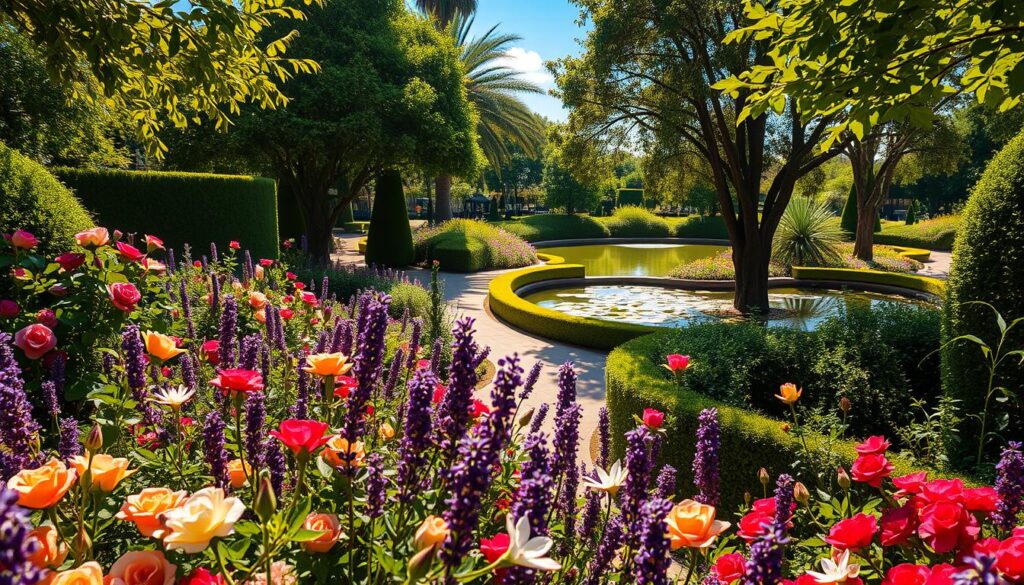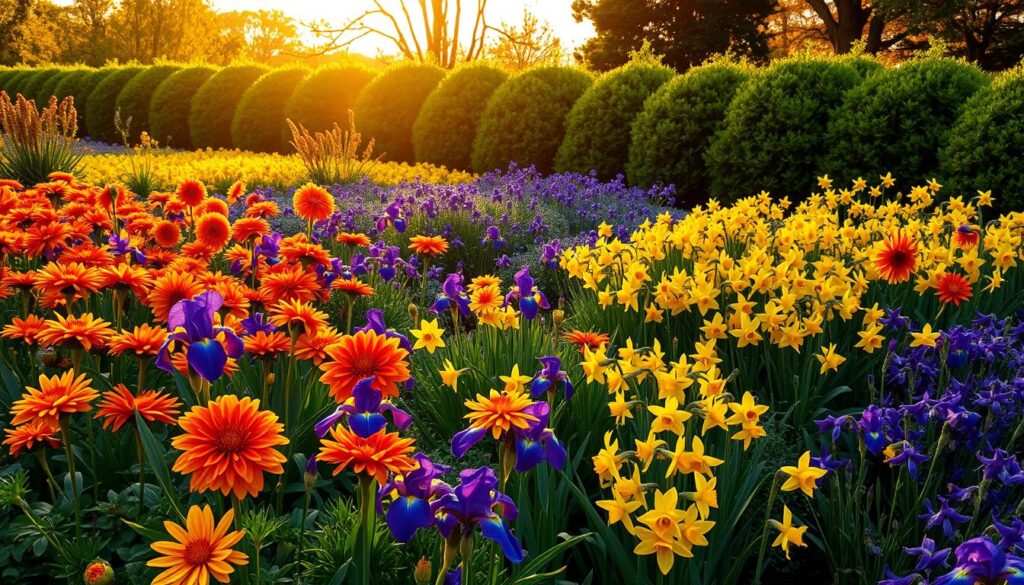
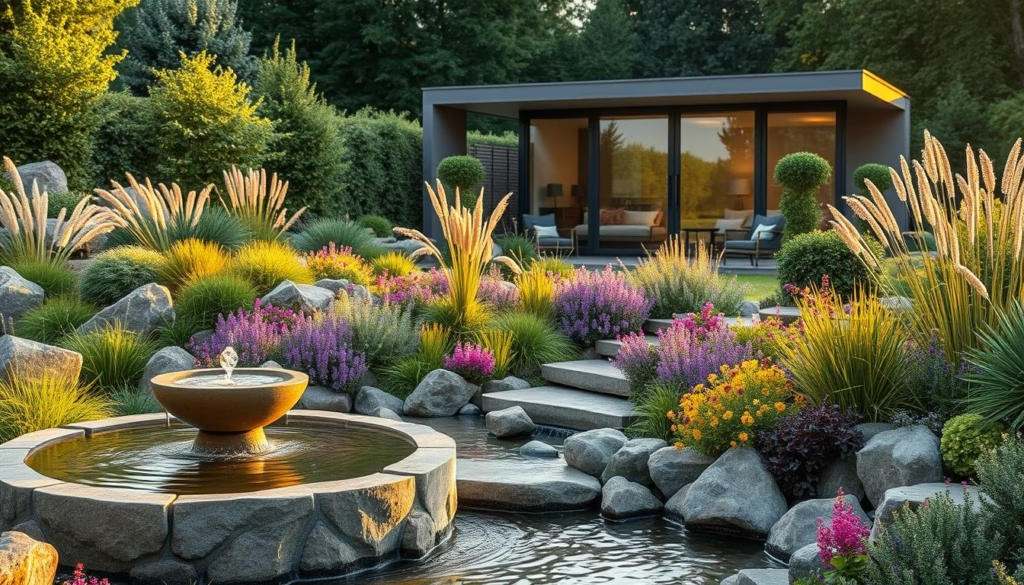
Are you ready to turn your outdoor space into a haven? A place that boosts your well-being and connects you with nature? As we enter 2025, garden design in the UK is changing. It’s moving towards trends that focus on being green and welcoming wildlife.
This year, gardens are becoming more natural and beautiful. They’re not just pretty; they’re also good for the planet. You can expect to see more wild plants and designs that bring the outdoors in. These changes are set to make your garden design journey in 2025 truly exciting!
Key Takeaways
- Discover the latest trends in garden design UK for 2025.
- Embrace sustainability with native plants that promote ecological balance.
- Explore wild planting schemes for a natural aesthetic.
- Learn how biophilic design can enhance your outdoor living experience.
- Find out how to transform your garden into a space of well-being.
Understanding the Essentials of Garden Design
To create a beautiful and useful garden, you need to know the basics of garden design. These principles help you plan your outdoor space. They make sure your garden looks good and is good for the environment. A great garden starts with understanding your landscape and what you need, preparing for a big change.
Key Principles of Successful Garden Design
Knowing the key principles is key to a great garden. Here are some important factors:
- Balance – Symmetry and size create a nice look.
- Unity – A single theme keeps the garden together.
- Scale – Plants and features should be the right size for the space.
- Focal Points – Highlight special areas to catch the eye.
Assessing Your Space and Needs
Before starting a garden makeover, look at your outdoor area. Think about how it looks, works, and feels. Ask yourself:
- What do you like to do in your garden?
- What plants do you like?
- How much sun does your garden get?
Thinking about these things helps make your garden fit your life and follow British garden planning rules.
The Importance of Sustainability
Adding green practices to your garden design is good for your space and the planet. Choose native plants to help local wildlife and cut down on pesticides. Use eco-friendly materials and methods to keep your garden beautiful and full of life. Choosing sustainability means your garden will flourish for many years.
Trending Plants for UK Gardens in 2025
Starting your UK garden maintenance? Think about adding the latest garden trends for 2025. It’s key to pick plants that can handle different weather. This way, your garden will look great and be eco-friendly.
Climate-Adaptable Choices
Choosing plants that can handle the weather is smart. Go for tough perennials like salvia, yarrow, and catmint. They’re good for many places, need less water, and are easy to care for. They’re great for those who want a green garden without much work.
Perennials vs. Annuals: What to Choose?
Deciding between perennials and annuals is a big choice. Perennials come back every year, saving you time. Annuals add colour and change with the seasons. Mix both for a garden that’s easy to care for and always looks good.
Creating a Colour Palette with Flowers
Creating a colour scheme in your garden is fun. Pick flowers that go well together. Use bright ones like lavender, petunias, and peonies with green plants for contrast. This makes your garden look good and helps local wildlife.
Incorporating Hard Landscaping Elements
Hard landscaping elements are key for a great outdoor space makeover. They make your garden look better and work better too. Choosing the right materials can make your garden look fancy and last a long time.
Popular Materials for Paving and Paths
When picking paving and path materials, think about these:
- Permeable paving – helps manage rainwater and stops flooding.
- Natural stone – is tough and looks good forever.
- Porcelain tiles – give a modern feel and are easy to keep clean.
- Block paving – is flexible and comes in many styles and colours.
These materials are key for a good landscaping plan. They make paths that lead you through your garden and keep it dry.
Enhancing Your Space with Decking
Decking is great for making seating areas. It can make your garden feel like an extra room. Make sure your decking is:
- Made from top-quality timber or composite for lasting well.
- Designed to match your garden’s look.
- Set up with built-in seats or planters to use every inch.
This adds to your garden’s charm, making it perfect for parties and chill times.
Using Stone Features for Visual Interest
Stone features add interest and texture to your garden. You can use:
- Stone walls – give shape and can split your garden into areas.
- Rock gardens – let you get creative with plants and rocks.
- Decorative boulders – make eye-catching spots.
Using these elements smartly makes your garden look elegant and work well. It shows off nature’s beauty.
Outdoor Living Spaces: Making the Most of Your Garden
Turning your garden into a welcoming space is key. Professional garden designers in the UK recommend creating areas for both relaxation and socialising. This approach boosts your garden’s beauty and function.
Designing Functional Seating Areas
Seating areas should be inviting for both rest and chat. Think about adding benches, loungers, or hammocks for a laid-back feel. Choose materials like teak or powder-coated metal to stand up to the British weather.
Adding cushions to your seating makes it more comfortable. Rugs can also help make the area feel warmer and more inviting.
Ideas for Outdoor Dining Spaces
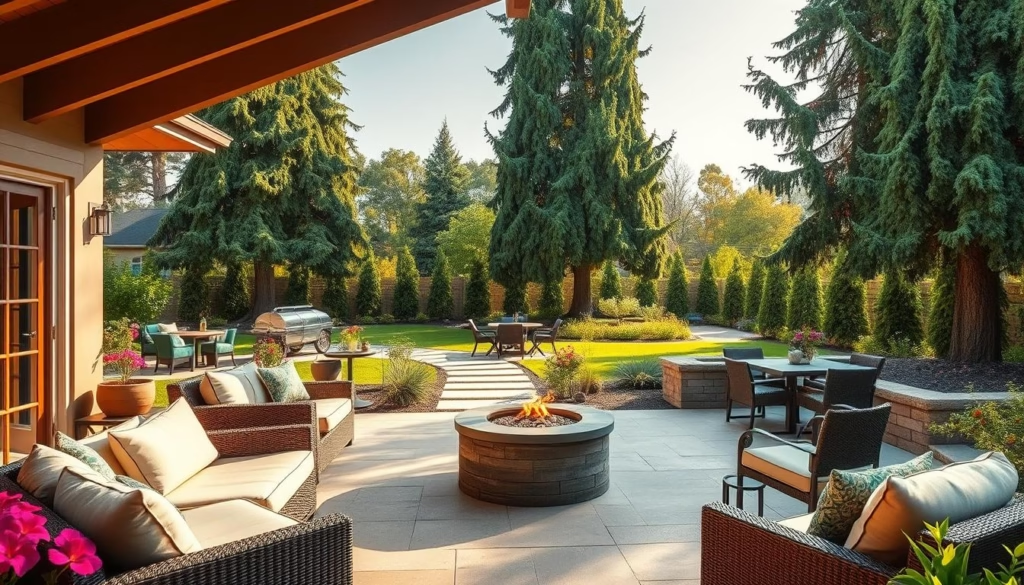
Outdoor dining can turn meals into special moments. You might prefer a rustic wooden table with mismatched chairs for a casual feel. Or, go for a sleek, modern setup for something more contemporary.
Adding a barbecue or fire pit can make your dining area even more appealing. It’s perfect for meals and gatherings. Umbrellas or pergolas can also offer shade, making dining enjoyable, no matter the sun.
The Rise of Garden Rooms
Garden rooms are gaining popularity as flexible spaces. They can be used as home offices, studios, or recreational areas. Designed well, they blend indoor and outdoor spaces beautifully, adding to your garden’s charm.
Large windows or bi-fold doors help merge nature with your home. This creates a peaceful, relaxed lifestyle while providing a serene retreat.
Eco-Friendly Practices in Garden Design
Today, making your garden eco-friendly makes it more beautiful and sustainable. Using native plants, composting, and smart water use helps local ecosystems. It also makes your garden thrive with less water and resources.
Native Plants and Their Benefits
Choosing native plants is a smart move for your garden. They fit well with the local climate and soil. This means they need less water and care than other plants.
Native plants attract bees and butterflies, boosting biodiversity. By picking native plants, you help protect the natural world.
Composting and Soil Health
Composting is key for better soil. It turns kitchen and garden waste into a nutrient-rich soil food. This practice supports plant growth and cuts down on chemical fertilizers.
Strong soil leads to a vibrant garden. So, composting is a great part of your garden care.
Water Management Solutions
Good water management is essential for an eco-friendly garden. Rainwater harvesting systems collect and use rainwater, cutting down on tap water use.
Using sponge city concepts can make your garden handle rain better. It prevents flooding and keeps your garden healthy and green for years.
Garden Lighting: Shedding Light on Design
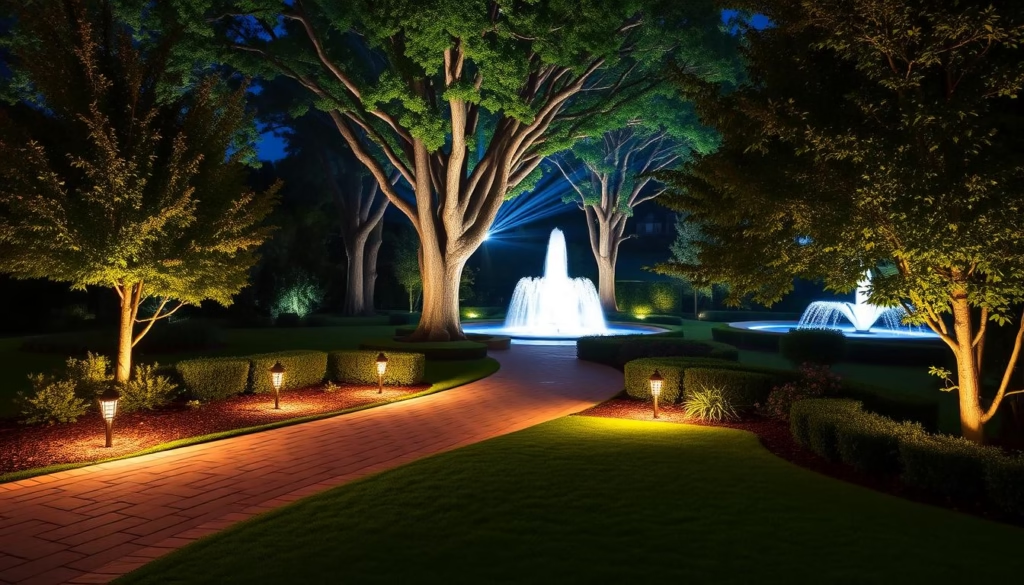
Outdoor lighting is key to making outdoor spaces better. It adds safety to paths and boosts your garden’s look. It also makes your garden a great spot for evening gatherings, even after dark.
Types of Lighting for Your Outdoor Space
Think about the different lights you can use in your garden:
- Path lighting helps guide people safely along paths.
- Spotlights focus on special features like trees or buildings.
- Lanterns bring a cozy feel and warm light to seating areas.
- String lights add a magical touch to patios and trellises.
Creating Ambiance with Strategic Placement
Where you place your lights really matters. Use lights at different heights to add depth. Lights on trees or walls can highlight your garden’s textures. For more ideas, check out this resource.
Solar vs. Electrical Options
When choosing lights, consider solar versus electrical options. Solar lights are eco-friendly and save on energy costs. But, electrical lights offer steady brightness and are better for brighter areas.
Vertical Gardening: Maximising Small Spaces
Vertical gardening is a great way to make the most of small outdoor areas. It not only beautifies your space but also improves air quality. With the right plants and creative ideas, you can turn a small area into a lush oasis.
What is Vertical Gardening?
Vertical gardening means growing plants on walls, trellises, or special structures. It uses the vertical space in your garden, making it look bigger and more welcoming. This method is perfect for those with limited ground space.
Best Plants for Vertical Gardens
Choosing the right plants is key for a successful vertical garden. Here are some top picks:
- Climbing roses – Add colour and fragrance.
- Sweet peas – Great for seasonal blooms.
- Ferns – Perfect for shaded areas.
- Herbs – Compact varieties like basil and oregano are ideal for cooking.
DIY Vertical Garden Ideas
Building your own vertical garden is rewarding and fun. Here are some DIY ideas to get you started:
- Living walls – Use a trellis for climbing plants or arrange small pots for variety.
- Pallet gardens – Turn wooden pallets into vertical beds for herbs and flowers.
- Hanging planters – Hang pots or shelves for small plants or succulents.
Vertical gardening maximises small spaces and turns your garden into a green oasis. Use innovative ideas and the right plants to enhance your urban garden.
| Plant Type | Light Requirements | Growth Habit | Maintenance Level |
|---|---|---|---|
| Climbing Roses | Full Sun | Climber | Moderate |
| Sweet Peas | Full Sun | Climber | Low |
| Ferns | Partial Shade | Non-Climbing | Low |
| Herbs | Full Sun | Non-Climbing | Low |
Seasonal Considerations in Garden Design
Changing your garden design with the seasons makes it look better and stay healthy. The UK’s weather changes mean we need to think carefully about our gardens. Good garden care tips help your outdoor space stay great all year.
Planning for Spring Blooms
Spring is when we want our gardens to come alive. Choose bulbs like crocuses and daffodils for colour. Perennials like primroses and forget-me-nots also do well in our climate.
These plants make your garden bright and inviting. They welcome you and help pollinators too.
Maintaining Your Garden in Autumn
Autumn is key for keeping your garden healthy. Clear leaves and debris to stop diseases. This is also when to add compost and mulch to protect plants.
These steps help your garden get ready for winter. It stays healthy and ready for spring.
Preparing for Winter
Winter means protecting plants from cold. Use fleece or move pots to a safe spot. It’s also a good time to plan for next year.
Take notes on which plants did well. This helps make your garden even better next spring.
Tips for DIY Garden Design in the UK
Starting a DIY garden design project is both thrilling and challenging. It’s key to avoid common mistakes that can ruin your garden’s look. Overplanting makes spaces cluttered, while bad layout planning can make areas look disjointed. Remember these tips to create a beautiful and unified outdoor area.
Having the right garden planning resources is vital. Join local gardening clubs and online forums to share ideas and learn from experts. These connections can boost your creativity and give you valuable knowledge.
Visiting local gardens is a great way to get inspired. Seeing different designs, plants, and layouts can spark your creativity. It helps you understand local styles and connects you to your surroundings, making your garden design journey more rewarding.