
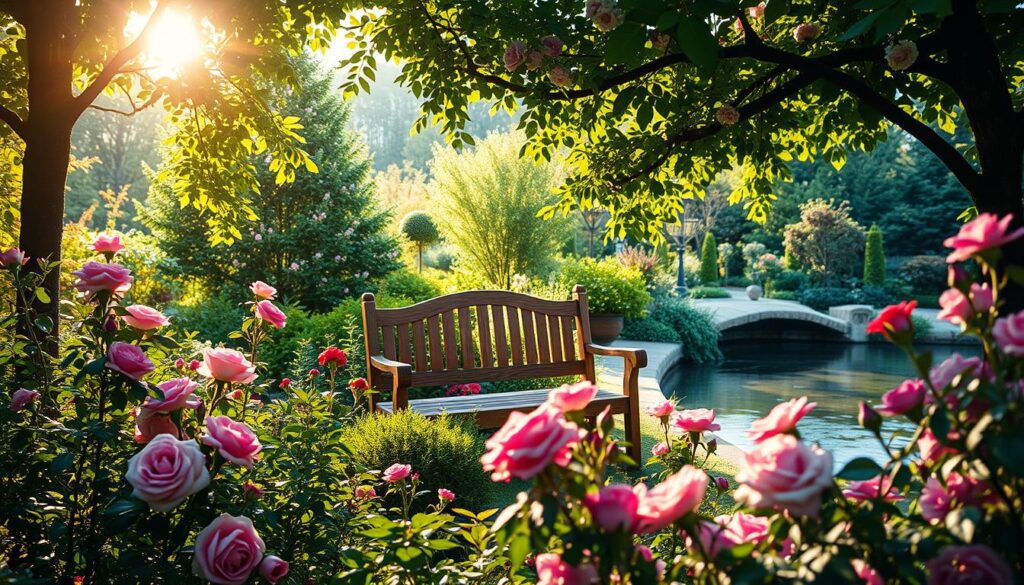
Ever thought how a simple bench can turn your garden into a peaceful haven? Adding a bench to your garden is more than just making it look good. It has deep psychological benefits. Studies show that having a quiet spot to sit helps you relax and feel better mentally.
Being surrounded by nature’s beauty, with plants and flowers, boosts your mood. It can even lower depression rates. A garden bench is not just for sitting alone. It also helps bring people together, making your garden a special place for everyone.
Key Takeaways
- Incorporating a bench enhances the psychological benefits of a garden.
- A garden rest area promotes relaxation and mental well-being.
- Benches facilitate social interactions in a tranquil setting.
- Experiencing nature can significantly improve emotional health.
- Creating a peaceful seating spot contributes to a serene outdoor atmosphere.
The Importance of Garden Rest Areas
Creating a garden rest area is key to improving your outdoor time. These calm spots let you slow down and enjoy the beauty around you. They offer a place for relaxation, helping you focus on the moment and connect with nature.
Enhancing Outdoor Experience
Garden rest areas turn your outdoor space into a peaceful retreat. Benches and seating make these spots perfect for taking a break. Adding soft plants and calming water features can make your experience even better.
Encouraging Mindfulness
A well-thought-out rest area helps you be more mindful. Imagine sitting quietly, listening to leaves or a fountain. These moments help you notice your surroundings more, bringing peace in a busy world.
Connecting with Nature
Having a space to connect with nature boosts your well-being. Features like shade, fragrant flowers, and comfy seating help you feel part of the outdoors. These elements create a calm atmosphere, essential for relaxation and clear thinking. For more tips on creating a peaceful garden, check out this resource.
Benefits of Having a Bench in Your Garden
Adding a bench to your garden brings many benefits. It makes your outdoor space look better and work better too. It’s a quiet spot to relax and enjoy nature’s beauty. It also makes your garden welcoming, helping you feel closer to nature and calm.
A Place to Relax
A bench turns your garden into a perfect place to rest. It’s where you can sit, think, and feel refreshed. Whether you’re having tea or reading a book, it helps you relax and feel better.
Promoting Outdoor Activity
Garden benches help you enjoy the outdoors more. They make it fun to garden, read, or chat with family. They support a healthy lifestyle and bring joy from nature.
Social Interaction Opportunities
A bench in your garden is great for meeting up with friends and family. It’s a place for laughter, stories, and making memories. It helps you connect with nature and the people you love.
Choosing the Right Location for Your Bench
Creating a peaceful garden rest area starts with picking the perfect spot for your bench. It’s important to consider several factors to get the most out of your garden addition. Begin by looking at how sunlight changes in your garden during the day.
This helps you find a spot that’s just right for you. You’ll want to balance sunlight and shade to ensure comfort.
Assessing Sunlight and Shade
Knowing where sunlight and shade fall in your garden is key. Watch how light moves to find sunny and shaded areas. A sunny bench is great for cool evenings, while a shaded one is perfect for hot days.
By mixing these, you make your garden a welcoming place all year.
Consideration of Garden Layout
The garden’s layout is also important. Choose a spot that’s easy to get to and fits well with your garden’s design. Add plants or paths to highlight the bench, making it a special spot to relax.
A well-planned layout makes your garden rest area even more inviting, perfect for peaceful moments.
Views That Enhance Relaxation
Choosing a spot with nice views can make your garden even better. Look for a bench with a view of flowers, water, or greenery. These sights add to the joy and help you relax.
Looking at nature’s beauty encourages you to be present and connect with your surroundings.
Material Choices for Garden Benches
Choosing the right material for your garden bench is key. It affects both how it looks and how long it lasts. You might wonder if traditional wood or metal is better, each with its own benefits.
Traditional Wood vs. Metal
Wood benches add a warm touch to your garden. They fit well with nature and are very comfortable. Cedar or teak wood looks great and feels cozy.
Metal benches, on the other hand, bring a modern look and last a long time. Powder-coated or galvanised metal resists rust and corrosion. This makes them perfect for all kinds of weather.
Weatherproofing and Durability
In the UK’s changing weather, durability is important. Timber benches treated for moisture and UV rays last longer. Metal benches, too, can be durable and long-lasting.
Eco-Friendly Options
For those who care about the planet, eco-friendly options are available. Recycled plastic benches look like wood but need no upkeep. Sustainably sourced wood is also a good choice, blending beauty with environmental care.
| Material | Durability | Aesthetic Appeal | Eco-Friendly Options |
|---|---|---|---|
| Traditional Wood | Moderate (requires maintenance) | Warm and inviting | Possible (if sourced sustainably) |
| Metal | High (weather-resistant) | Modern and sleek | Limited (but options exist) |
| Recycled Plastic | High (weather-resistant) | Varied designs available | Yes |
Designing a Rest Area That Reflects You
Creating a garden rest area that shows your personal style can make your outdoor time better. The look of your space should match your tastes, creating a welcoming atmosphere. Design choices can link different parts of your garden, making it a true reflection of you.
Personal Style and Aesthetics
Your garden rest area is a part of your personal style. It could be modern and simple or classic and elegant. Every detail counts, from furniture to colours and materials. For example, sleek metal benches and simple colours work well for modern looks. Natural wood and old flower pots are perfect for rustic themes.
Adding your favourite colours to cushions or planters makes it even more personal.
Incorporating Garden Themes
Adding garden themes can make your space feel more complete. A cottage garden theme might use rustic materials and bright flowers for a quaint feel. A Mediterranean theme could include terracotta pots and plants that don’t need much water. Each theme gives your garden rest area a unique character, making it feel welcoming.
Focal Points and Features
To catch the eye, add focal points and features. Arched trellises with climbing plants add height, while sculptures or water features spark conversations. These elements add depth to your design, making it interesting for visitors. They also make your outdoor space feel like a special place.
The Role of Plants in a Rest Area
Plants are key to making your garden rest area welcoming and refreshing. They not only make the space look good but also help you relax. Here are three main ways plants make your rest area peaceful.
Creating Natural Privacy
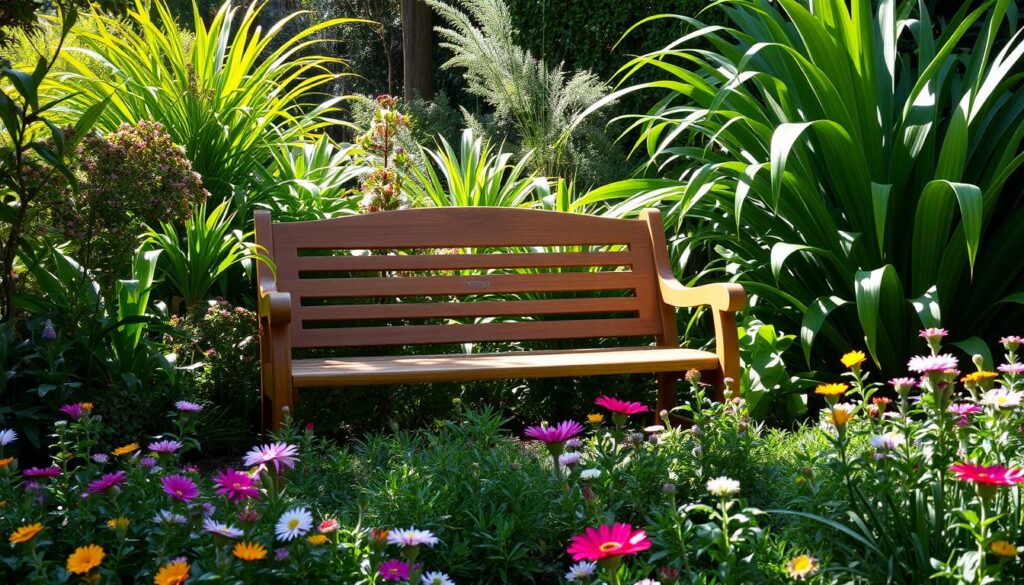
Plants help create privacy in your garden rest area. Tall hedges or dense shrubs block out the outside world. This makes a quiet spot for you to relax and enjoy the peace.
Adding Visual Interest
Using different plants can make your garden rest area more interesting. Choose plants with various colours, shapes, and textures. This mix not only looks good but also makes you want to explore and enjoy the area.
Enhancing Comfort with Soft Textures
Soft-textured plants make your garden rest area more comfortable. Adding plants like ferns or ornamental grasses makes you want to stay longer. These plants create a cozy spot where you can relax and enjoy nature.
| Role of Plants | Benefits |
|---|---|
| Creating Natural Privacy | Offers seclusion and protectiveness |
| Adding Visual Interest | Promotes exploration and emotional connection |
| Enhancing Comfort | Invites prolonged relaxation and enjoyment |
Incorporating Accessories and Comfort Items
Adding accessories to your garden rest area makes it more inviting. Cushions and throws turn a simple bench into a cozy spot. They add style and make your garden time more enjoyable.
Cushions and Throws
Cushions bring both comfort and personality to your space. Choose ones that are weather-resistant for lasting use. Throws add warmth and flexibility, perfect for cooler evenings.
Small Tables for Refreshments
Small tables are great for enjoying drinks outside. They’re perfect for tea in the sun or evening cocktails. Look for outdoor tables that are both functional and stylish.
Decorative Elements
Decorative elements like lanterns and art pieces can really enhance your garden. They show off your personality and set the mood. A well-chosen piece can make your garden stand out.
Using these elements shows you care about your garden’s design. For more ideas, check out ways to improve your garden rest with thoughtful accessories.
Lighting Options for Rest Areas
Good lighting is key for a welcoming garden rest area. It lets you enjoy your space day or night. Think about natural light, ambient, and task lighting, and eco-friendly solar options.
Natural Lighting Considerations
Use natural light to your advantage. Place seating where it gets morning sun for warmth. Make sure there’s shade for comfort in the heat.
Plants can also help reduce glare. This makes your garden rest area more pleasant.
Ambient and Task Lighting
A mix of ambient and task lighting makes your garden rest area usable at night. Soft ambient light creates a cozy feel. Task lighting, like string lights, is great for reading or dining.
Solar-Powered Solutions
Solar lighting is a green and easy choice. It’s simple to set up and saves money on electricity. It lights up your garden at night, using the sun’s energy.
| Type of Lighting | Advantages | Considerations |
|---|---|---|
| Natural Lighting | Cost-effective, enhances mood | Dependent on weather conditions |
| Ambient Lighting | Creates atmosphere, suitable for relaxation | Requires electricity or batteries |
| Task Lighting | Focused illumination for specific activities | May need wiring and installation |
| Solar-Powered Solutions | Eco-friendly, no ongoing costs | Less effective in shady areas |
Safety and Accessibility in Garden Design
When designing a garden rest area, safety is key. It should be welcoming and safe for everyone. Making sure the ground is stable is critical to avoid accidents.
Regular upkeep and the right materials help prevent slipping. This makes the area safer for all visitors.
Ensuring Stable Ground Conditions
Checking the ground in your garden rest area is essential. Uneven surfaces can lead to falls, which is a big risk for those with mobility issues. Using materials like paving stones or rubber mats can improve grip.
Regular checks help keep the area safe. This makes your garden a more enjoyable place for everyone.
Accessible Paths and Entry Points
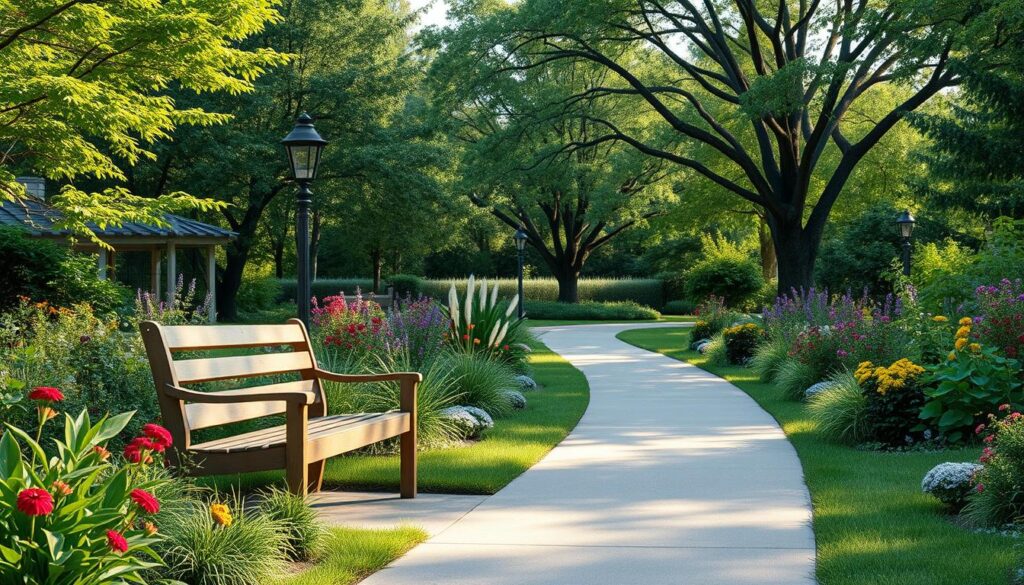
Accessible paths are vital for enjoying your garden. They should be wide, even, and free from obstacles. This ensures everyone, including those with mobility aids, can move around easily.
Using gentle slopes instead of steep steps makes access better. Thoughtful paths make your garden a welcoming space for all.
The Psychological Effects of Rest Areas
Garden rest areas are great for your mental health. They offer a peaceful place to relax and think. Being in nature helps you feel better and live a more balanced life.
These spots encourage you to unwind and reflect. They also help you meet new people. This makes them perfect for both solo time and socialising.
Stress Reduction and Relaxation
One key benefit of garden rest areas is stress reduction. Being surrounded by plants can lower your anxiety. Nature creates a calm space, ideal for relaxing after a busy day.
Even simple actions like sitting or reading can lift your mood. It helps clear your mind and improves your focus.
Boosting Creativity and Productivity
Garden rest areas are also great for boosting your creativity. The quiet setting sparks your imagination. It lets your thoughts flow freely.
Time in nature can reveal new ideas and solutions. These areas are perfect for artists, writers, and anyone looking for inspiration. They help you think outside the box.
Fostering Social Connections
Garden rest areas are also great for making friends. Hosting gatherings in these peaceful spots encourages deep conversations. It strengthens relationships in a calm setting.
Whether it’s sharing meals or just chatting, your garden’s beauty enhances social bonds. It leads to greater happiness and connection.
Maintenance Tips for Your Rest Area
Keeping your garden rest area in top shape is key to its appeal. Simple maintenance tips can ensure it stays inviting all year round.
Regular Cleaning and Upkeep
Regular cleaning is vital for your garden’s look. Remove leaves and dirt from furniture and paths. Clean surfaces to avoid mildew and stains.
Set a cleaning schedule that fits your space’s size and use. This keeps your area welcoming for everyone.
Seasonal Adjustments
Seasonal changes require adjustments to your outdoor space. Prune plants, refresh cushions, and check furniture for wear. These steps keep your area looking great and comfortable through the seasons.
Repairing Weather Damage
Weather can damage your garden rest area. Look for damage from storms, moisture, or extreme temperatures. Fixing chipped paint or reinforcing structures is important.
These repairs help your space last longer and stay safe. Enjoy your garden retreat fully by taking care of it.
| Maintenance Task | Frequency | Notes |
|---|---|---|
| Surface Cleaning | Weekly | Utilise mild soap and water |
| Plant Pruning | Monthly | Focus on flowering and overgrown plants |
| Furniture Inspection | Seasonally | Check for damage and wear |
| Seasonal Cushion Refresh | At the start of each season | Replace or clean cushions as needed |
Inspiration for Personalising Your Garden Rest Area
Turning your garden into a personal retreat is a thrilling adventure. You can find inspiration in many places. Public gardens, for example, show creative ways to use space.
At the Royal Botanic Gardens in Kew, you’ll find benches surrounded by colourful flowers. This shows how well-placed seating can make your garden more enjoyable. Seeing these designs can spark your own ideas for a peaceful spot.
Local gardens also offer unique ideas suited to your area’s climate and culture. Visiting these places lets you see how plants and designs work together. You might even pick up tips from local gardeners that match your style.
Online resources and communities are also great for finding inspiration. Gardening forums and design blogs are full of ideas for all tastes. By exploring these digital spaces, you can create a garden that truly reflects you.