Essential Mediterranean Plants for UK Gardens
Aromatic Herbs
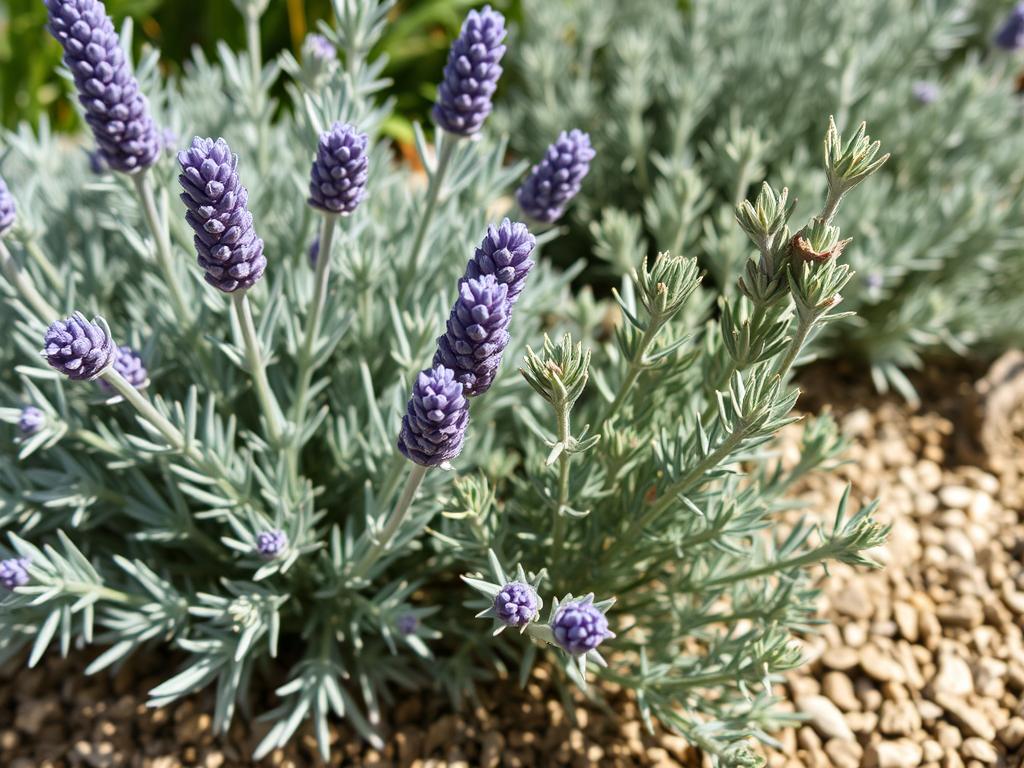
- Lavender (Lavandula angustifolia) – Perfect for borders, its silver foliage and purple blooms attract pollinators while providing heavenly scent.
- Rosemary (Rosmarinus officinalis) – An evergreen shrub that offers year-round structure, aromatic foliage, and delicate blue flowers.
- Thyme (Thymus vulgaris) – Excellent ground cover that releases its scent when brushed against, ideal between stepping stones.
Structural Elements
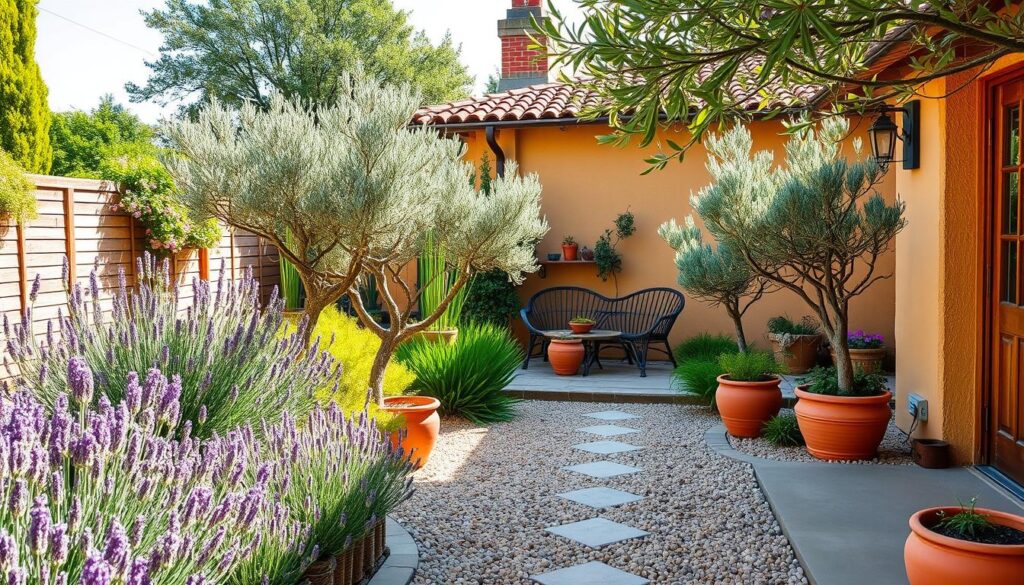
- Olive trees (Olea europaea) – The quintessential Mediterranean plant with silvery foliage; choose hardy varieties for UK conditions.
- Cypress (Cupressus sempervirens) – Adds vertical interest and creates that classic Italian landscape feel.
- Santolina (Cotton lavender) – Forms neat, silver mounds with yellow button flowers in summer.
Winning Plant Combinations
Silver & Purple Harmony
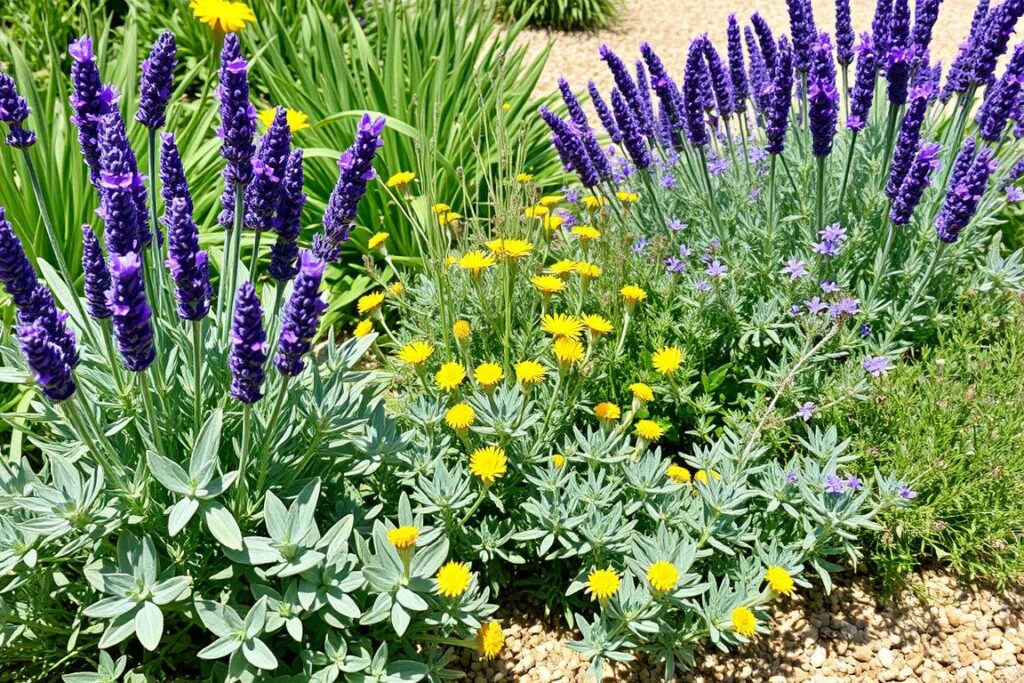
Combine lavender, santolina, and artemisia for a stunning silver-foliage display with contrasting purple blooms. This drought-resistant trio thrives in poor soil and full sun, creating a cohesive Mediterranean look.
Textural Contrast

Plant ornamental grasses (like Stipa tenuissima) with euphorbias and sedums for a textural feast. This combination offers year-round interest with minimal water requirements.
Fragrant Corner
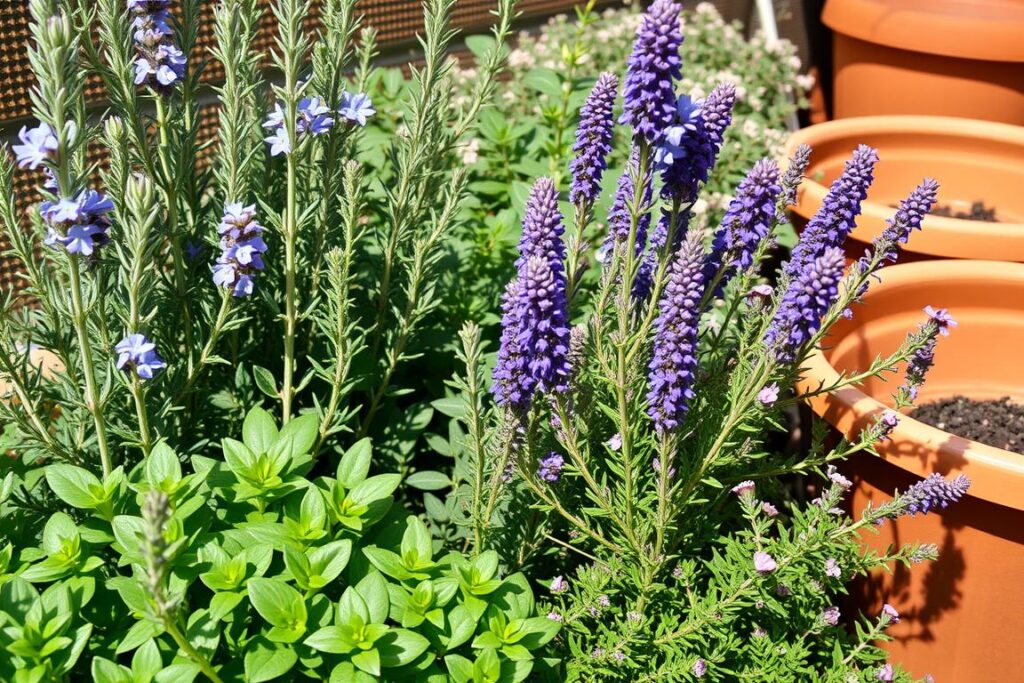
Group rosemary, sage, and thyme near seating areas for an aromatic experience. This herb trio not only looks beautiful but provides culinary ingredients and attracts beneficial insects.
“Mediterranean plants aren’t just beautiful—they’re practical choices for UK gardens facing increasingly hot, dry summers. Their water-wise nature makes them environmentally responsible options.”
Natural Materials: Creating Authentic Mediterranean Charm
The materials you choose play a crucial role in achieving that sun-baked Mediterranean feel. Natural, weathered elements that reflect heat and complement the planting scheme will transform your garden into an authentic southern European retreat.
Essential Mediterranean Materials
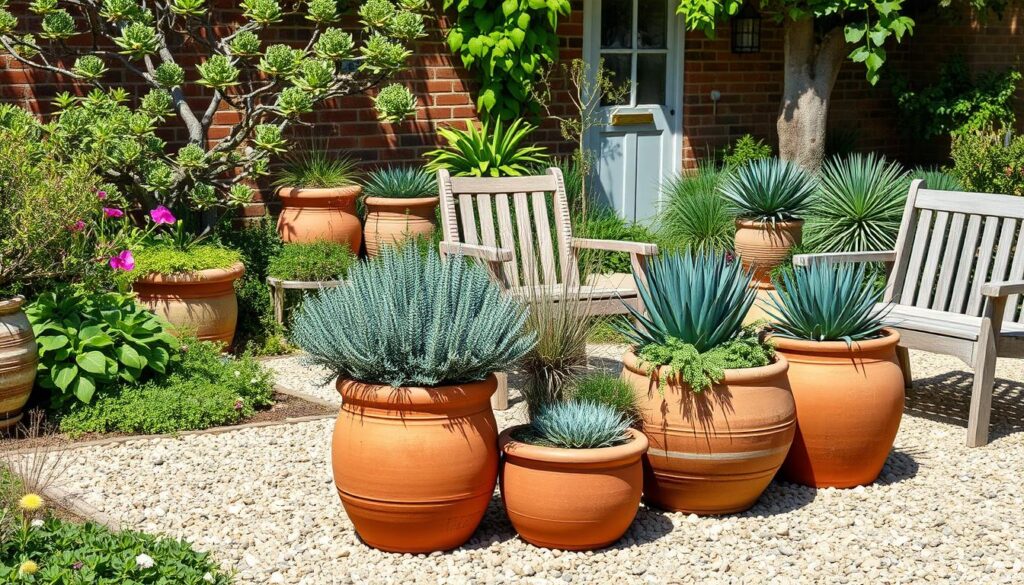
- Terracotta pots – The warm orange-red tones instantly evoke Mediterranean landscapes. Choose frost-resistant varieties for UK winters or bring vulnerable pots under cover.
- Gravel and pebbles – Perfect for pathways and as a decorative mulch that improves drainage while reducing water evaporation.
- Weathered wood – For pergolas, benches, and tables that develop a silvery patina over time, mirroring the aged look of Mediterranean gardens.
- Natural stone – Particularly limestone and sandstone in warm hues for walls, steps, and paving.
Sourcing in the UK
- Visit reclamation yards for authentic weathered materials with character and history.
- Check garden centres for frost-resistant terracotta alternatives that mimic the Mediterranean look.
- Source local stone where possible to reduce carbon footprint and ensure materials suit your regional climate.
- Consider online specialists for specific Mediterranean items like decorative tiles or authentic olive jars.
Material Tip: Frost Protection
UK winters can be harsh on Mediterranean materials. Protect terracotta pots by raising them off the ground on feet during winter months to prevent cracking. For particularly precious items, consider moving them to a sheltered spot or greenhouse during the coldest periods.
Colour Palette: The Mediterranean Spectrum
The distinctive colour palette of a Mediterranean-inspired UK garden draws directly from the landscape: sun-baked earth tones, sea-inspired blues, and the silvery greens of drought-adapted foliage. These colours not only create visual harmony but also reflect heat and light, enhancing the sun-drenched atmosphere.
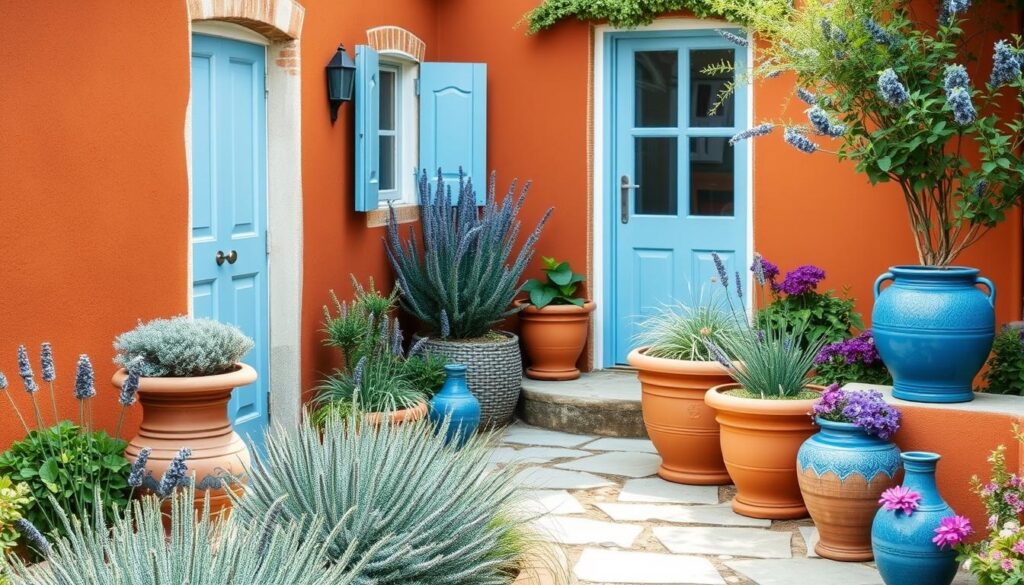
Key Colour Elements
Earth Tones
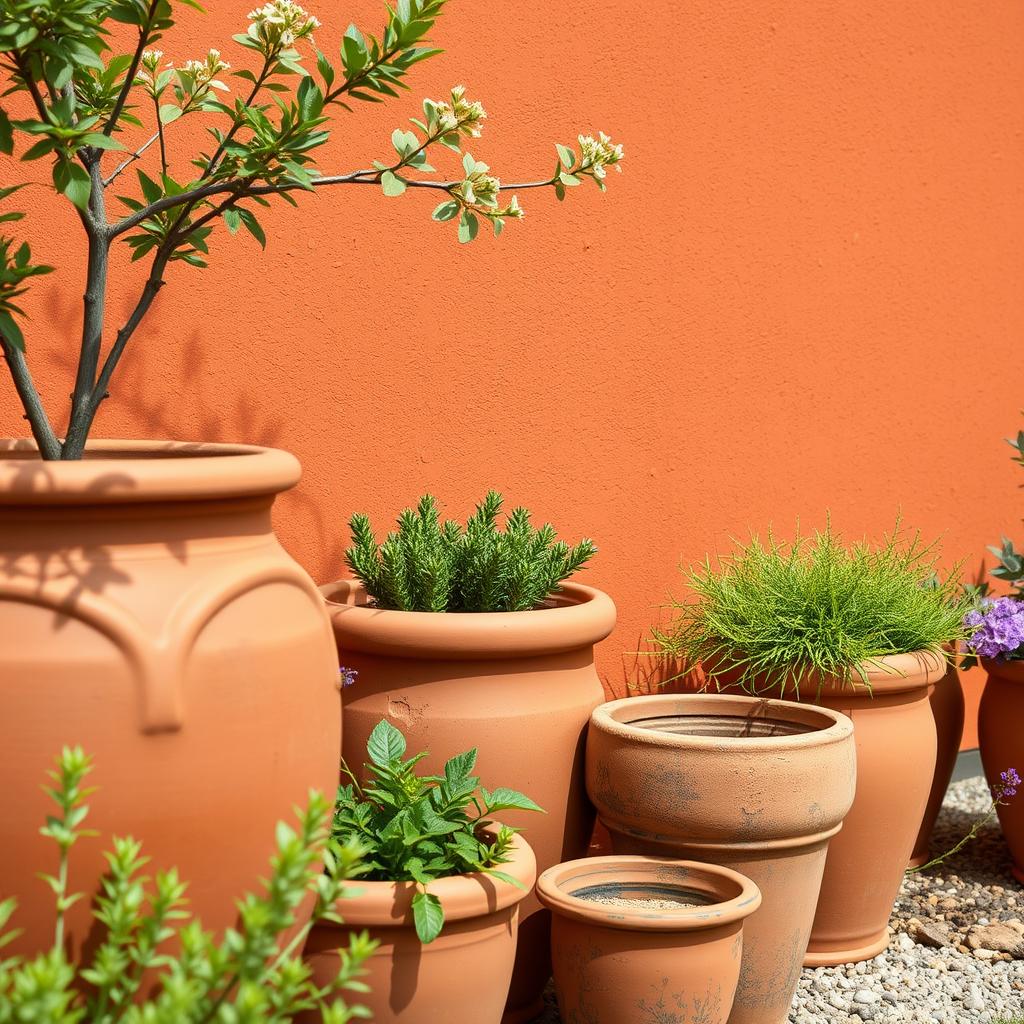
Terracotta, ochre, and rusty reds form the backbone of the Mediterranean palette. Incorporate these through pots, walls, and paving to create that sun-baked feel even on cloudy UK days.
Silver Foliage
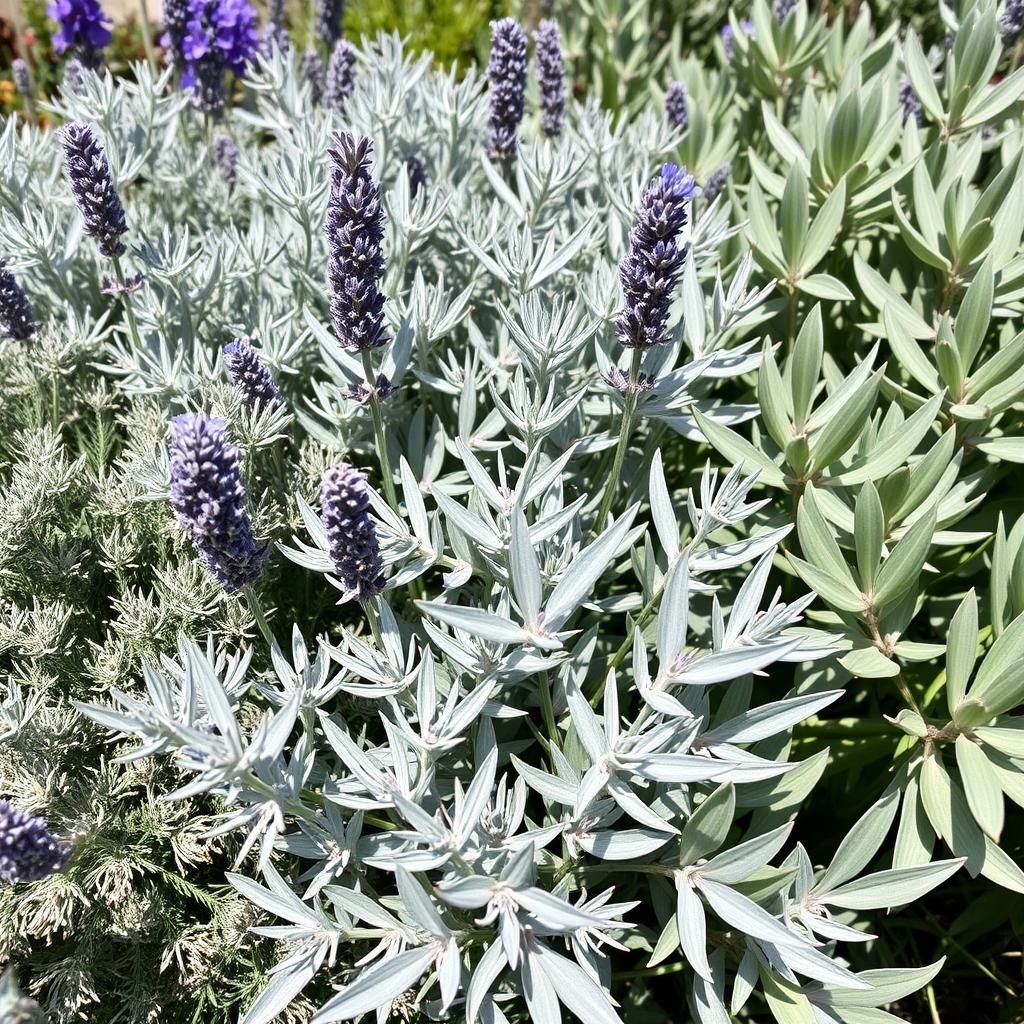
Silver-leaved plants like artemisia, lavender, and olive reflect sunlight and reduce water loss—a practical and beautiful adaptation perfect for UK Mediterranean gardens.
Sea-Inspired Blues
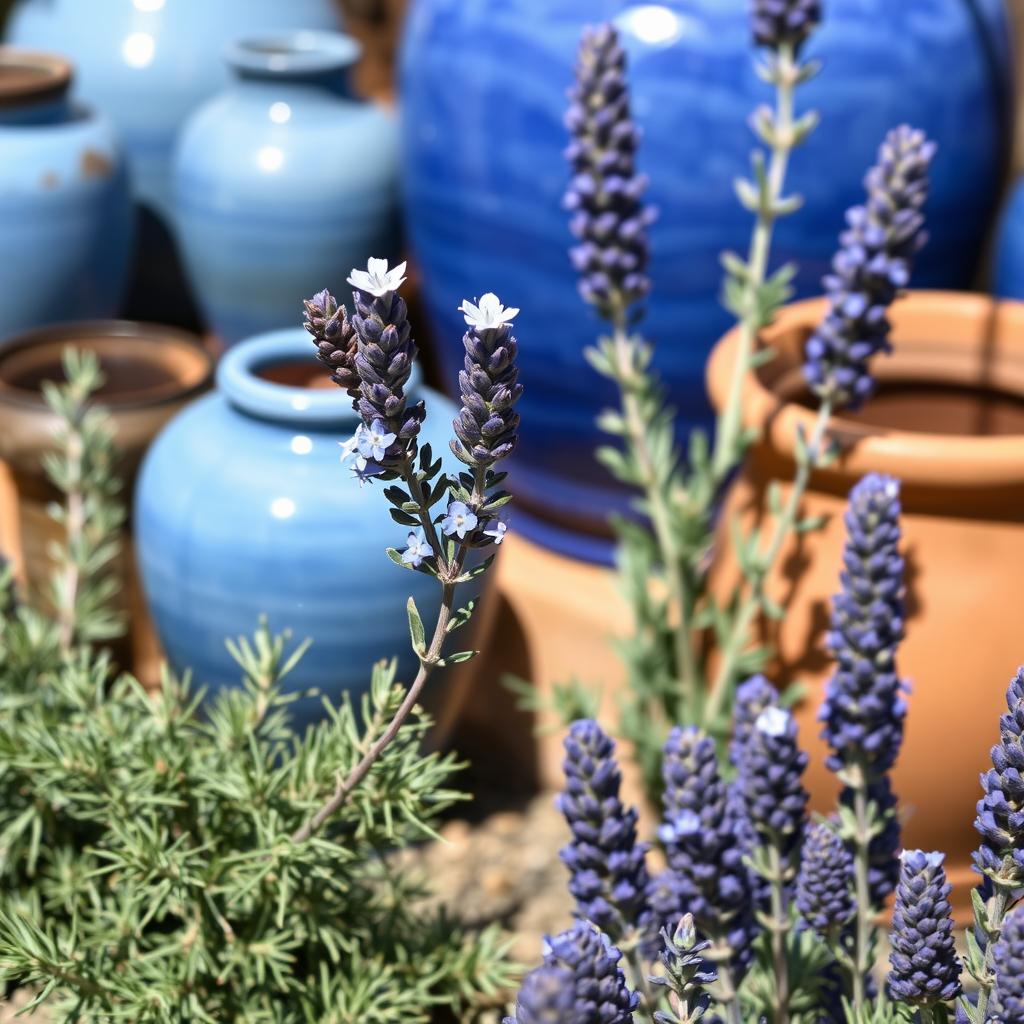
Cobalt blue, azure, and lavender provide cooling contrast to warm earth tones. Introduce these through painted furniture, decorative tiles, or blue-flowering plants like rosemary and lavender.
Colour Combinations That Work
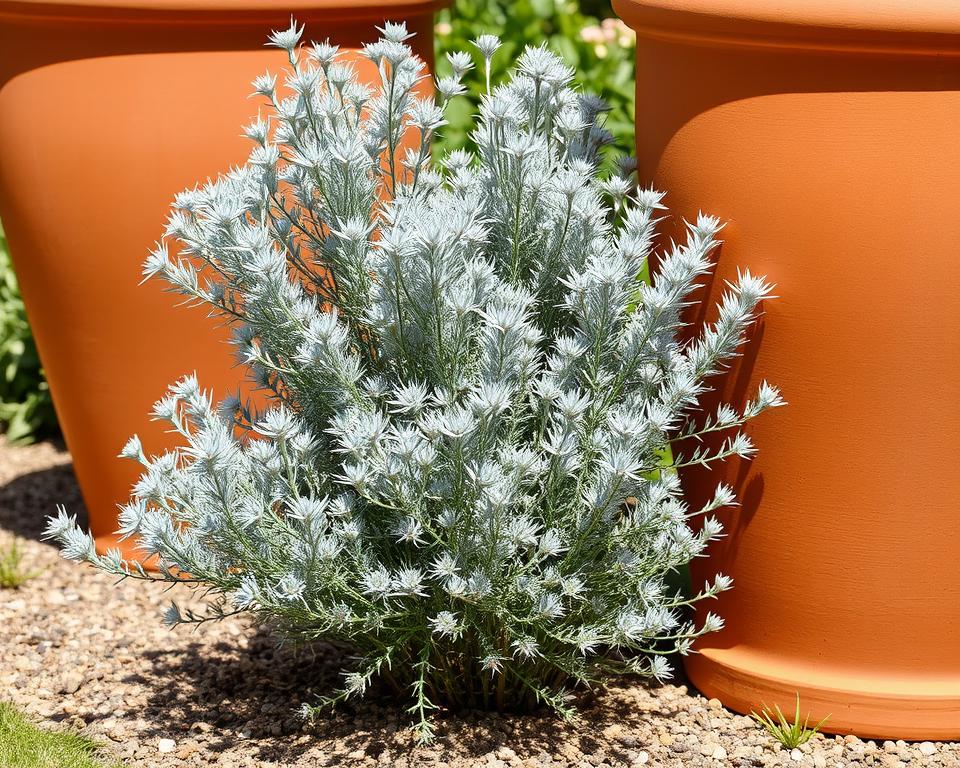
For maximum impact, pair silver foliage plants like artemisia against terracotta walls or containers. This classic Mediterranean combination creates striking contrast while remaining harmonious. Add touches of blue through pottery or flowering plants to complete the Mediterranean colour story and provide visual cooling in hot weather.
Relaxed Layout: Creating Mediterranean Zones
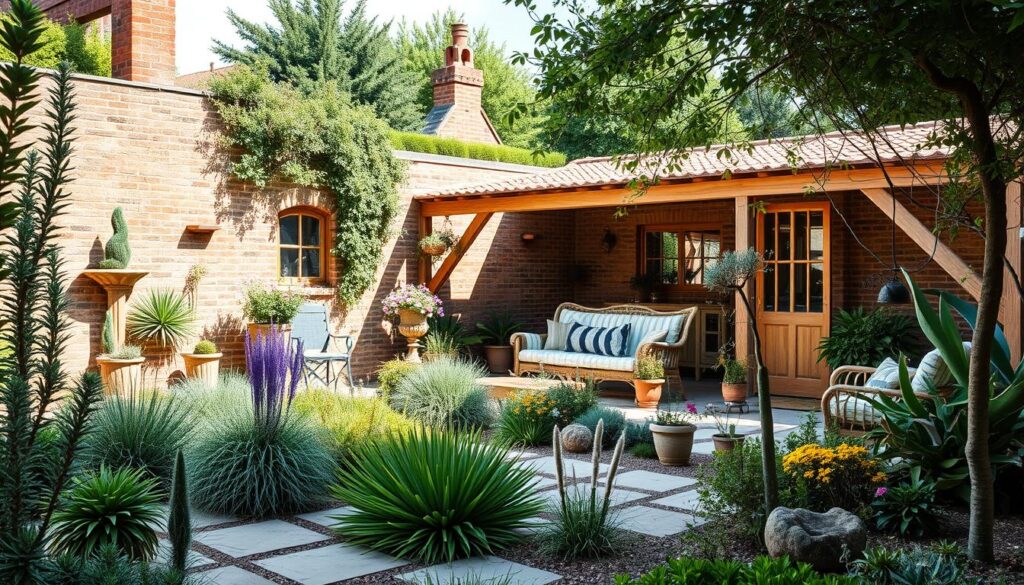
The Mediterranean lifestyle celebrates outdoor living, with gardens designed as extensions of the home. A well-planned layout creates distinct zones for different activities while maintaining a relaxed, informal feel that encourages lingering outdoors.
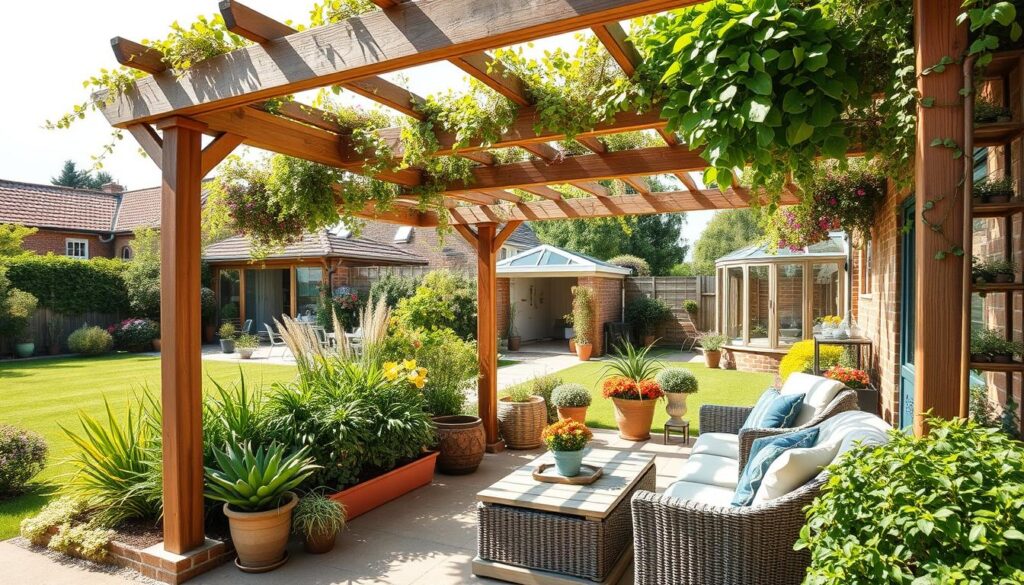
Essential Garden Zones
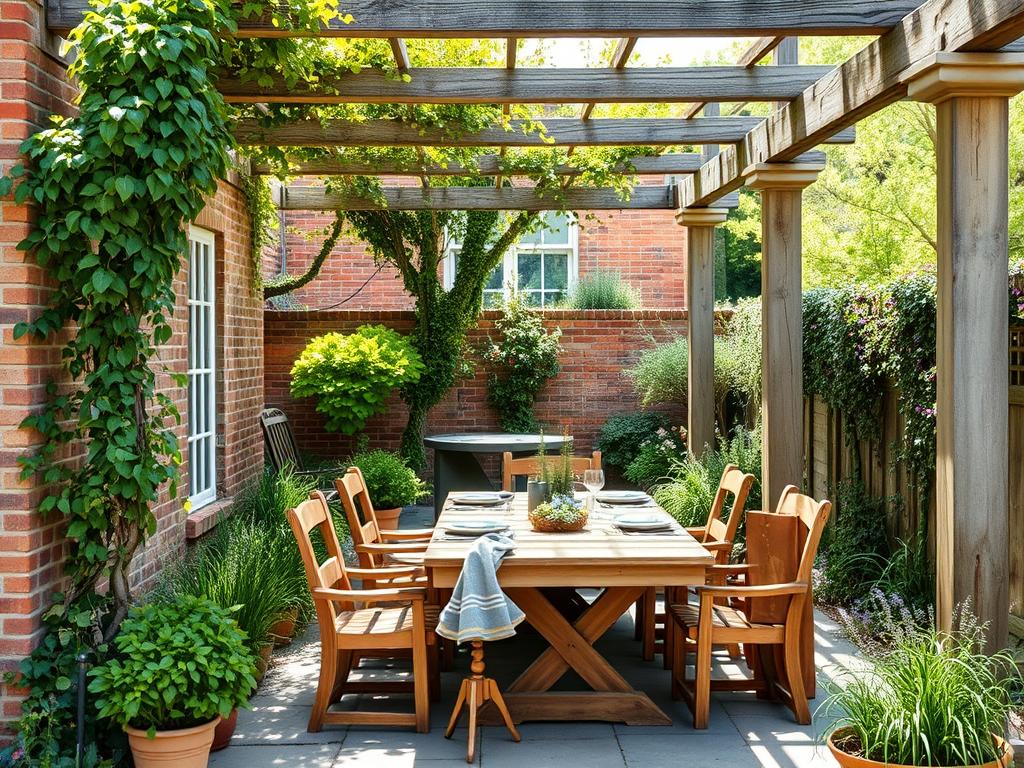
Dining Area
Create a dedicated space for al fresco meals, ideally with some shade for hot days. Position near the house for convenience or under a pergola draped with scented climbers like jasmine or grapevine for that authentic Mediterranean feel.
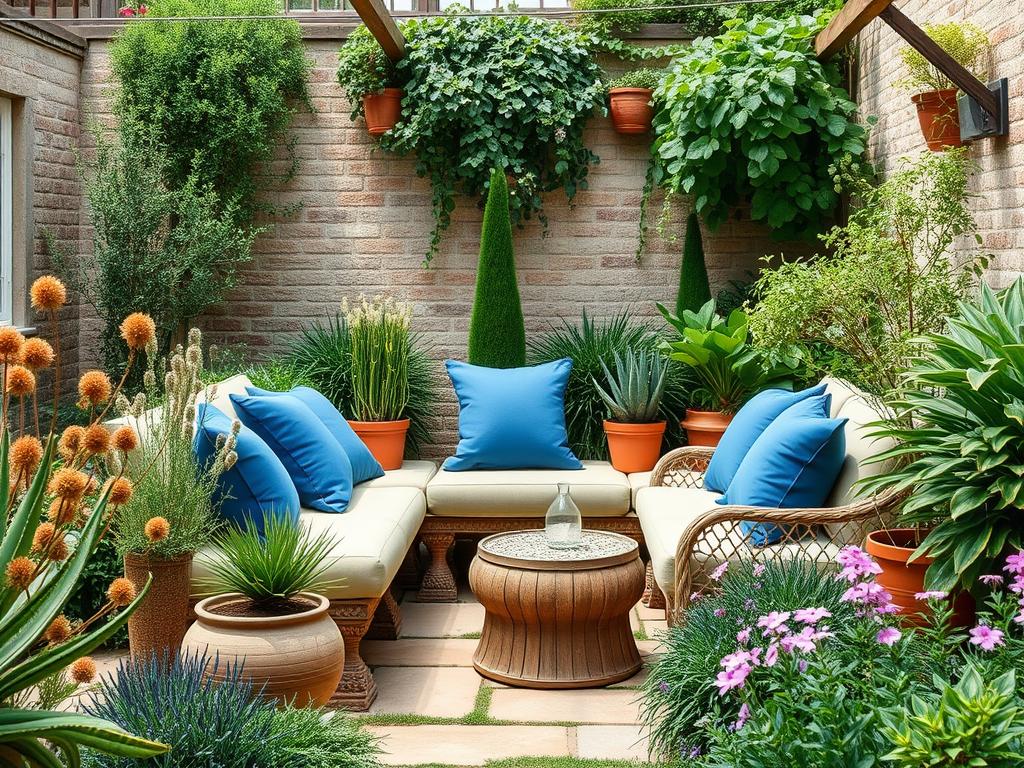
Relaxation Corner
Designate a quiet spot for reading or afternoon siestas. A simple bench among fragrant herbs, a hammock under an olive tree, or comfortable loungers on a gravel terrace all capture the unhurried Mediterranean spirit.
Furniture and Structures
Choose furniture that complements the Mediterranean aesthetic while standing up to UK weather conditions. Look for:
- Rustic wooden tables and benches that develop character as they weather
- Wrought iron furniture with simple, elegant lines
- Pergolas to create shade and support climbing plants
- Stone walls for structure, wind protection, and heat retention

“The true Mediterranean garden is an extension of the home—a series of outdoor rooms where life unfolds from morning coffee to evening gatherings.”
Holiday-at-Home Feel: Sensory Mediterranean Magic
What makes Mediterranean gardens so captivating is their ability to engage all the senses. By incorporating specific sensory elements, you can create that holiday feeling in your UK garden, transporting yourself to sunnier climes even on overcast days.
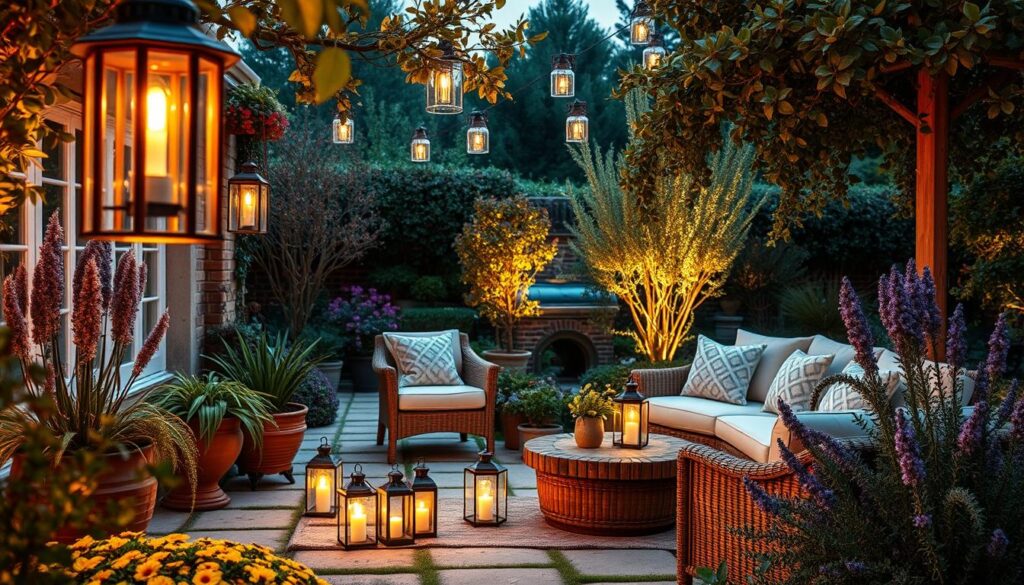
Engaging the Senses
Scent
Position aromatic plants where their fragrance will be released by the sun or when brushed against. Lavender, rosemary, thyme, and jasmine create that distinctive Mediterranean perfume that instantly transports you to holiday memories.
Sound
Incorporate the gentle trickle of water through a small fountain or the soothing rustle of ornamental grasses and olive leaves in the breeze. Wind chimes can add another layer of gentle Mediterranean melody.
Texture
Contrast rough stone walls with smooth terracotta, soft cushions with spiky agaves, and fine gravel with lush foliage. These textural juxtapositions are hallmarks of Mediterranean gardens.
Evening Ambiance
Mediterranean gardens truly come alive in the evening when the heat of the day subsides. Create magical nights with:
- Solar lanterns placed along pathways or hanging from trees
- Fairy lights draped through pergolas or olive trees
- Candles in hurricane lamps to prevent them being extinguished by British breezes
- Fire pits for extending outdoor evenings into cooler months

Textile Touches
Complete the holiday feel with textiles that add comfort and color:
- Outdoor cushions in Mediterranean blues, terracottas, and sun-bleached whites
- Simple cotton or linen tablecloths for al fresco dining
- Outdoor rugs to define seating areas and add comfort underfoot
Practical UK Tips: Making Mediterranean Gardens Work in Britain
While Mediterranean plants thrive in hot, dry conditions, the UK climate presents unique challenges. With some adaptations, you can create a thriving Mediterranean-inspired UK garden that withstands British weather while maintaining authentic southern European charm.
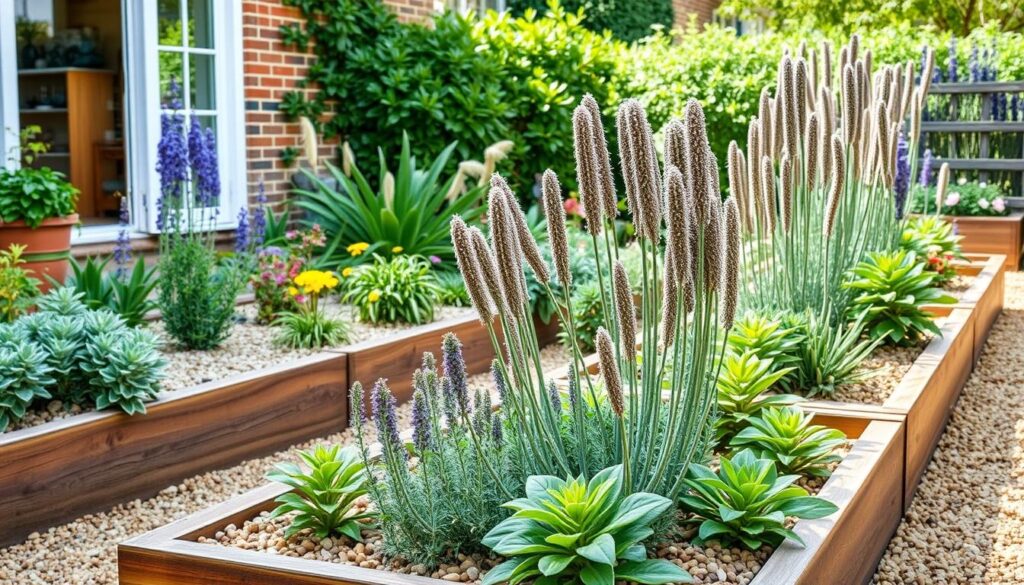
Soil Preparation
Mediterranean plants hate sitting in wet soil, which is often unavoidable during British winters. Improve drainage by:
- Adding grit, sand, or gravel to heavy clay soils
- Creating raised beds filled with free-draining soil mix
- Using gravel mulch around plants to prevent root rot and reduce water evaporation
- Avoiding excessive organic matter which can hold too much moisture
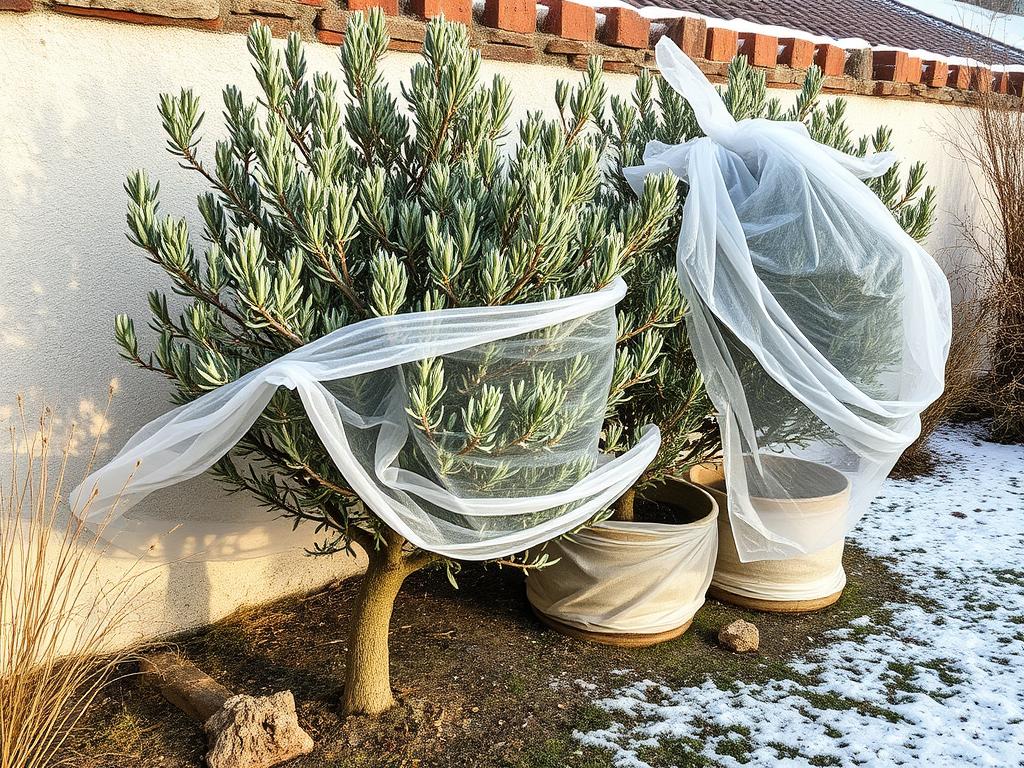
Winter Protection
Some Mediterranean plants need extra care during UK winters:
- Plant tender species like olive trees in sheltered spots against south-facing walls
- Consider fleece covers for vulnerable plants during cold snaps
- Choose hardier varieties of Mediterranean favorites (e.g., English lavender rather than French)
- Grow borderline-hardy plants in containers that can be moved to protected areas in winter
Water-Saving Techniques
Even in the UK, conserving water is environmentally responsible and helps create authentic Mediterranean growing conditions:
- Install water butts to collect rainwater for use during dry spells
- Use drip irrigation systems that deliver water directly to plant roots
- Water deeply but infrequently to encourage deep root growth
- Group plants with similar water needs together
Mediterranean Plant Hardiness
Many Mediterranean plants are hardier than you might expect. Lavender, rosemary, sage, and thyme will survive most UK winters with good drainage. More tender species like olive trees and citrus should be selected carefully for hardiness or given winter protection.
Embrace Your Mediterranean-Inspired UK Garden
Creating a Mediterranean-inspired UK garden offers the perfect blend of beauty, practicality, and environmental responsibility. By selecting drought-tolerant plants, incorporating authentic materials, and designing relaxed outdoor living spaces, you can enjoy a sun-drenched sanctuary that thrives in British conditions while evoking holiday memories.
Remember that a true Mediterranean garden evolves over time, developing character and patina as plants mature and materials weather. Embrace this natural aging process as part of the authentic Mediterranean charm.