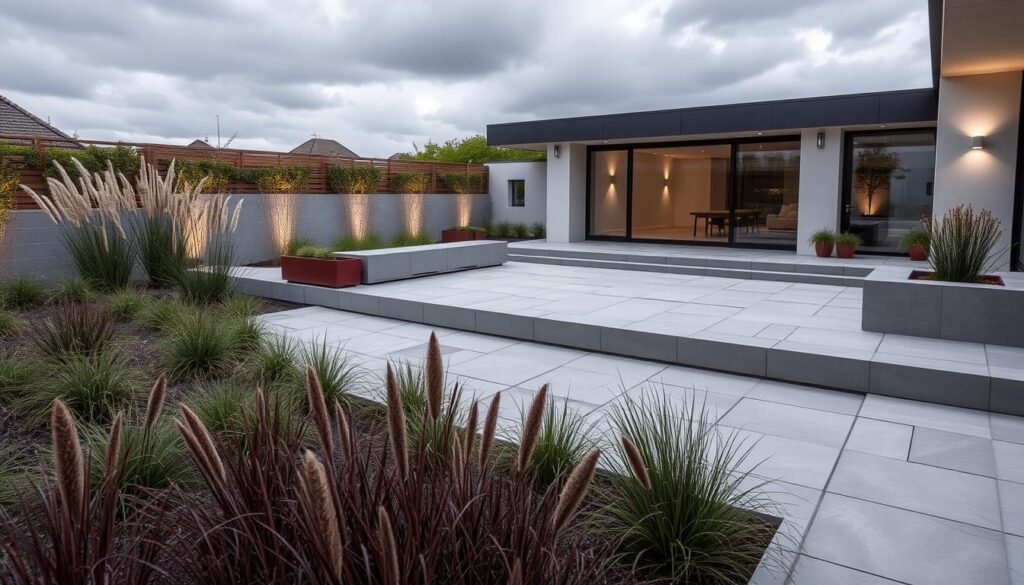
The modern garden represents a perfect marriage of form and function—where clean architectural lines meet practical outdoor living. For UK homeowners, creating a contemporary outdoor space means balancing aesthetic minimalism with solutions that withstand our variable climate. This guide explores how to transform your garden into a sleek, low-maintenance sanctuary that extends your living space and provides year-round visual appeal, regardless of size or location.
Core Principles of Modern Garden Design
Modern garden design revolves around several key principles that create its distinctive aesthetic. Understanding these fundamentals will help you make informed decisions when planning your own contemporary outdoor space.
Clean Lines & Geometry
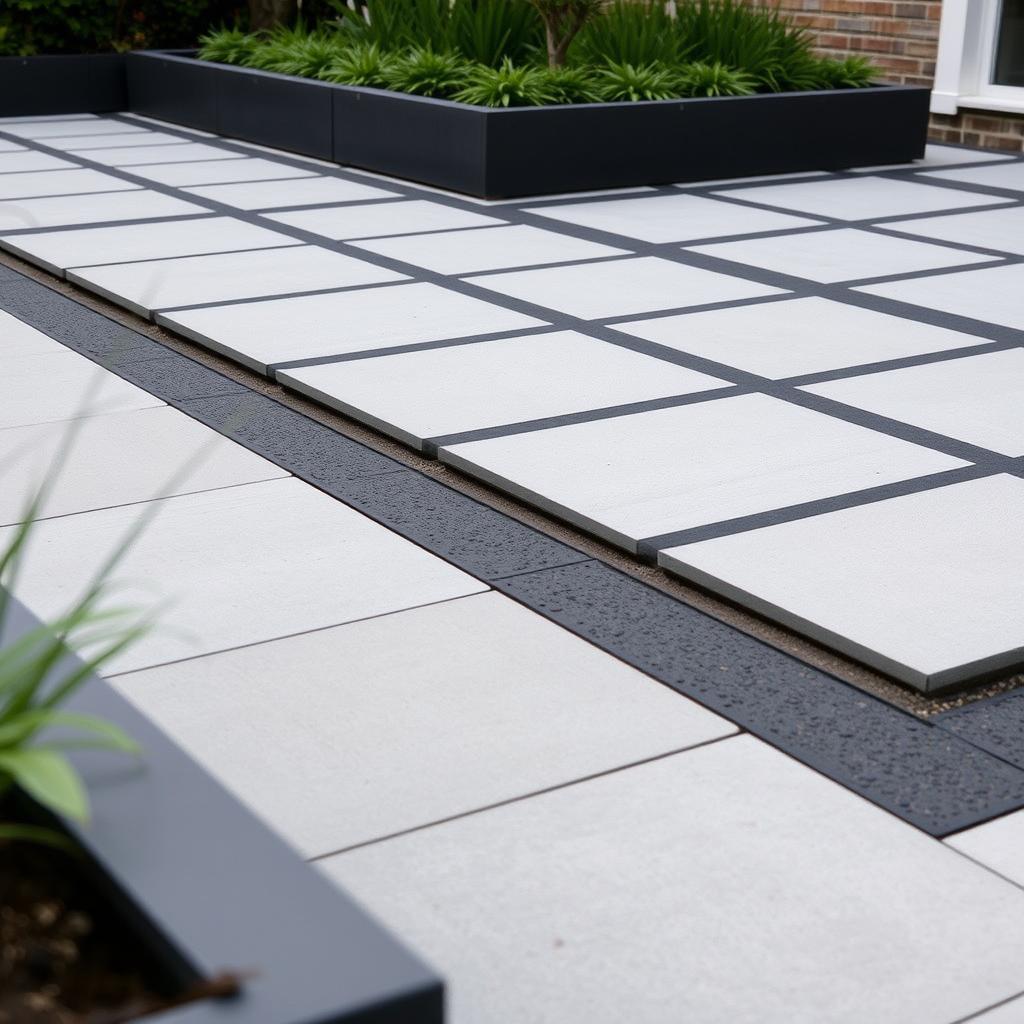
Modern gardens embrace geometric precision with straight lines, right angles, and clearly defined spaces. This structured approach creates a sense of order and intentionality that forms the backbone of contemporary design.
Material Consistency
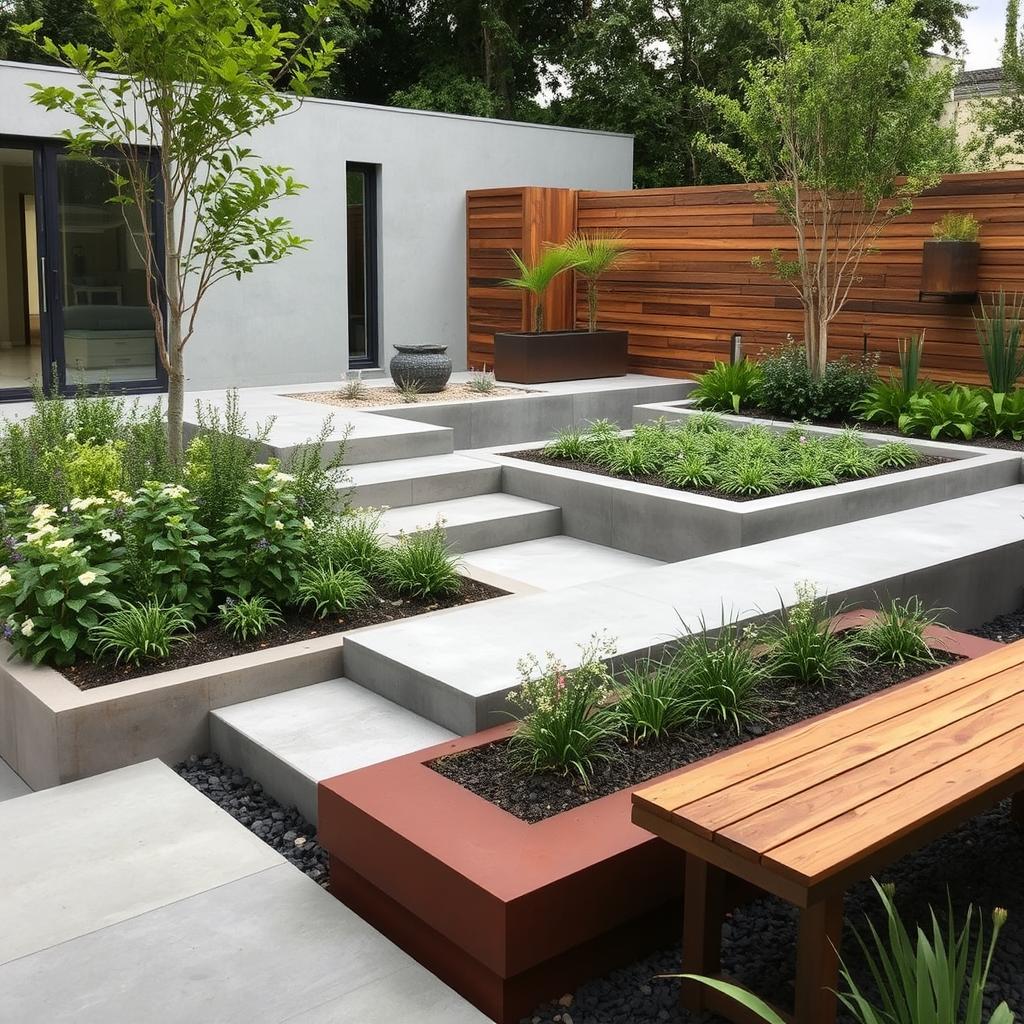
Successful modern gardens limit their material palette, using repetition of key elements like concrete, timber, and metal throughout the space to create visual harmony and a sense of cohesion.
Controlled Planting

Rather than abundant cottage-style planting, modern gardens feature carefully selected specimens with architectural qualities, often arranged in blocks or rhythmic patterns for maximum impact.
Hard Landscaping: The Modern Garden Framework
The backbone of any modern garden is its hard landscaping—the structural elements that define spaces and create the architectural framework. For UK gardens, these materials need to balance aesthetic appeal with practical considerations like drainage and frost resistance.
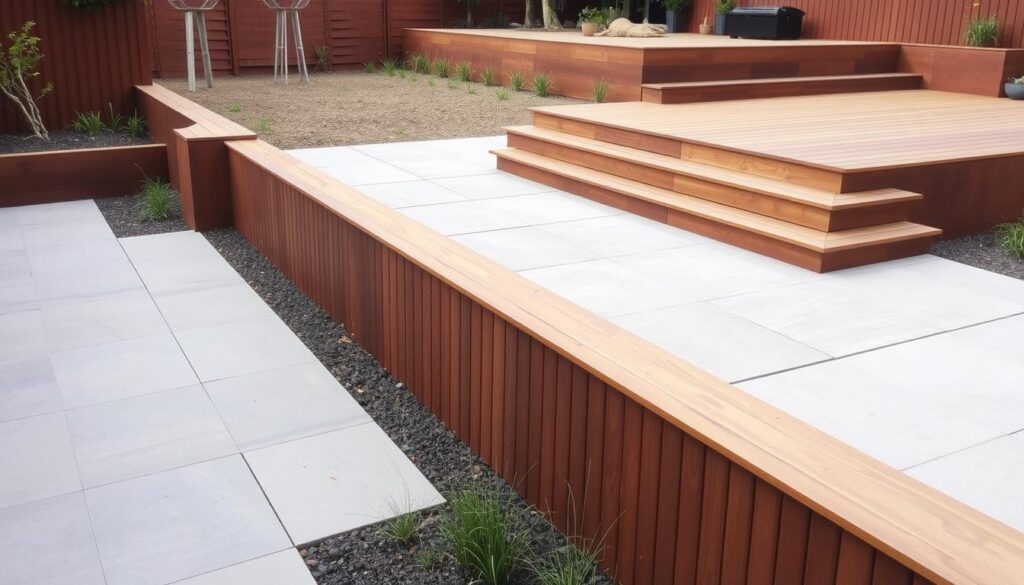
5 Essential Materials for Modern UK Gardens
“The most successful modern gardens use a maximum of three hard landscaping materials, repeated throughout the space to create cohesion and visual calm.”
UK-Specific Installation Considerations
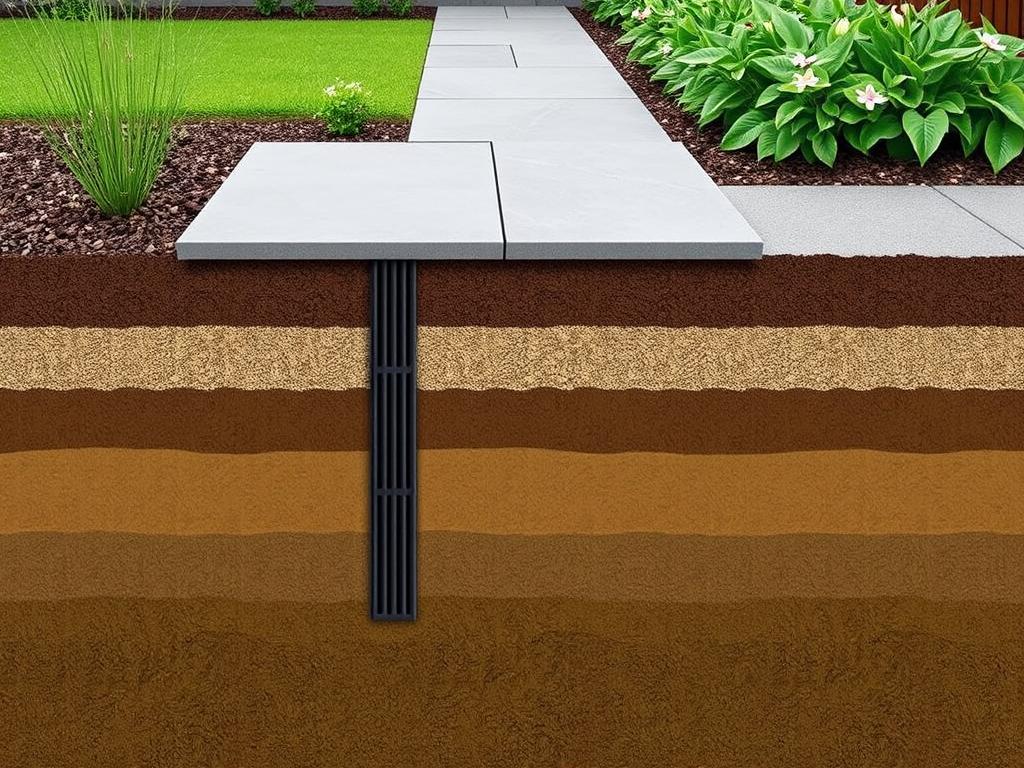
Our British climate demands careful attention to drainage and frost protection when installing hard landscaping:
- Ensure adequate sub-base depth (minimum 100mm for pedestrian areas) with proper compaction
- Incorporate linear drainage channels that double as design features
- Use full mortar beds for paving rather than spot-bedding to prevent frost damage
- Consider permeable solutions in areas prone to waterlogging
- Allow for expansion joints in large concrete areas to prevent cracking in freeze-thaw cycles
Low-Maintenance Planting for Modern UK Gardens
The right plant selection is crucial for achieving that distinctive modern garden aesthetic while ensuring your garden thrives in British conditions. Modern planting design focuses on architectural form, textural contrast, and year-round structure rather than fleeting seasonal colour.
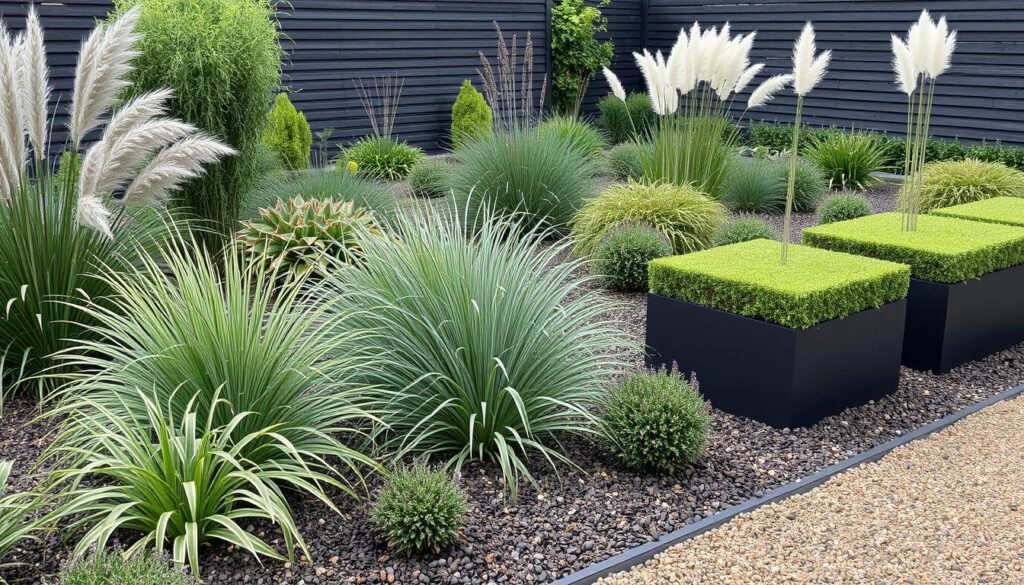
UK-Friendly Modern Garden Plants
Architectural Evergreens

- Phormium tenax (New Zealand Flax)
- Buxus sempervirens (Box) for geometric forms
- Pittosporum tobira ‘Nanum’
- Fatsia japonica
- Euphorbia characias wulfenii
Ornamental Grasses
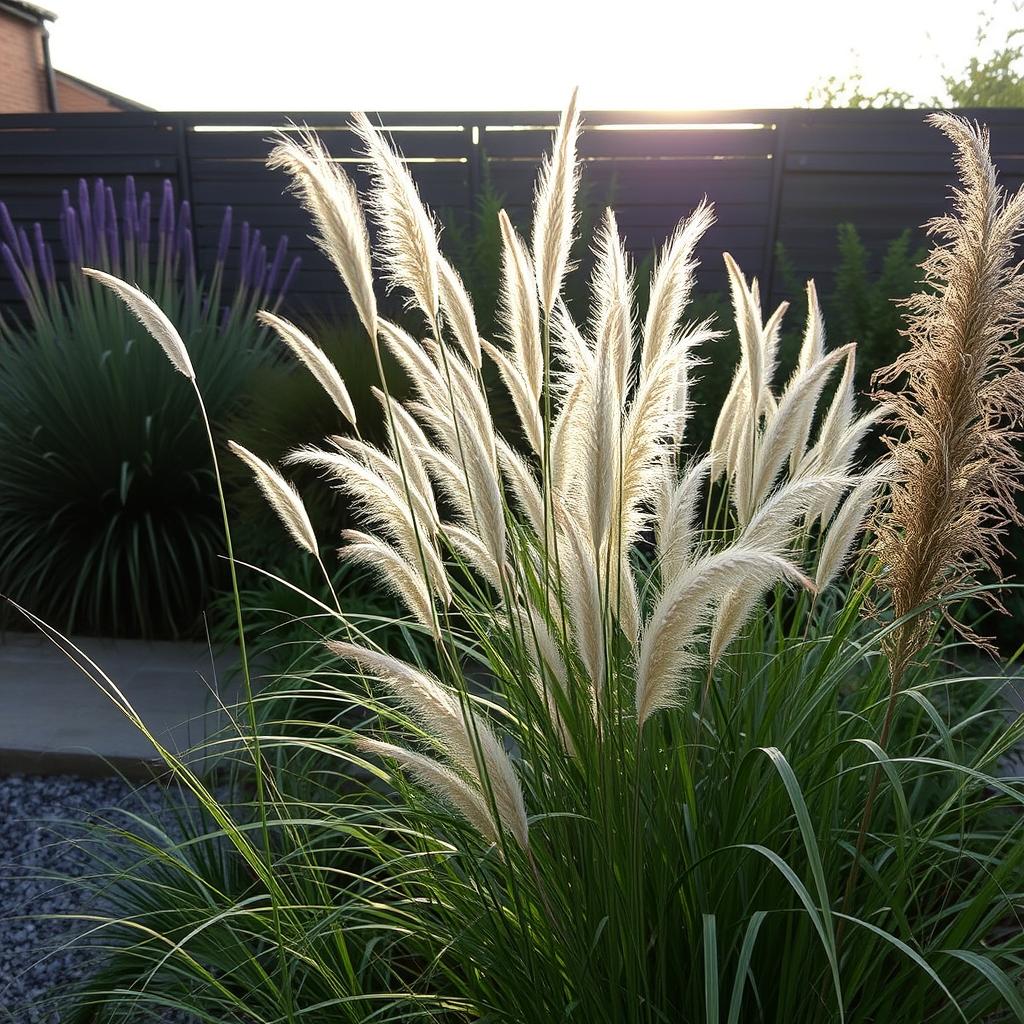
- Stipa tenuissima (Mexican Feather Grass)
- Calamagrostis x acutiflora ‘Karl Foerster’
- Miscanthus sinensis ‘Morning Light’
- Hakonechloa macra (Japanese Forest Grass)
- Sesleria autumnalis (Autumn Moor Grass)
Drought-Tolerant Perennials

- Salvia nemorosa ‘Caradonna’
- Verbena bonariensis
- Echinacea purpurea
- Eryngium planum (Sea Holly)
- Achillea ‘Moonshine’
Modern Planting Techniques for UK Gardens
Contemporary planting design relies on specific techniques to achieve that distinctive modern look:
- Block Planting: Use single species in generous groups rather than mixed borders
- Repetition: Repeat key plants throughout the garden for rhythm and cohesion
- Limited Palette: Restrict your selection to 5-7 plant varieties for maximum impact
- Negative Space: Allow breathing room between plants to highlight their forms
- Mulching: Use decorative gravel or slate chippings to suppress weeds and add texture
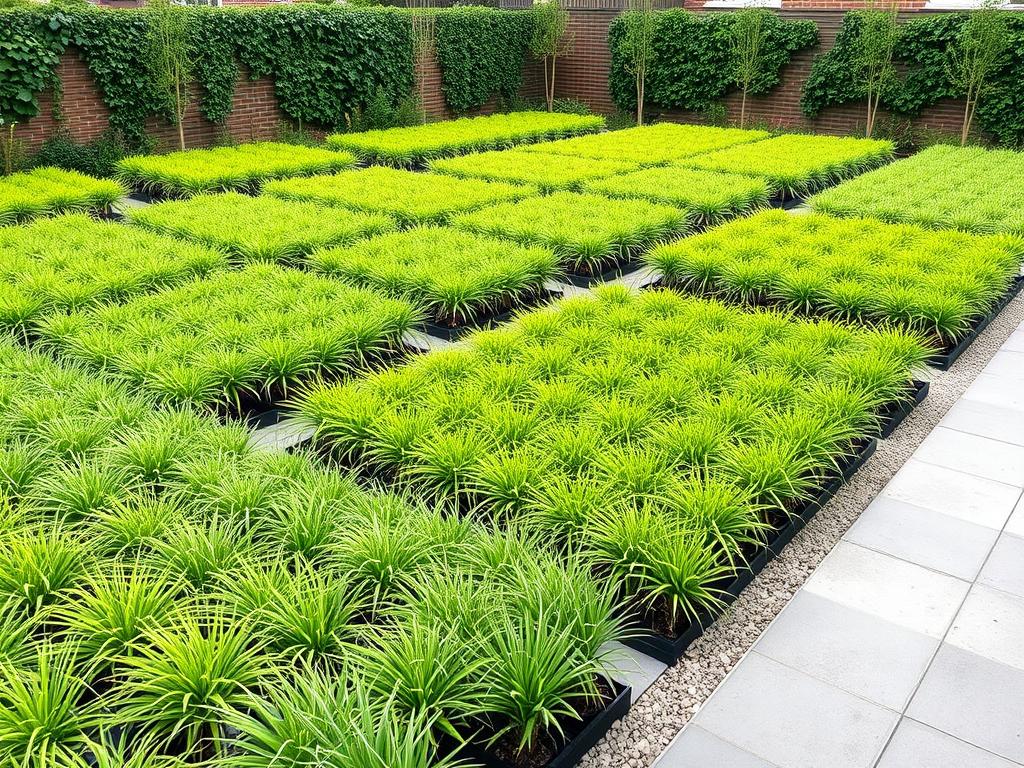
UK Climate Tip: Even drought-tolerant plants need establishment watering in their first year. Install a discreet irrigation system with smart controls to ensure your modern planting thrives through unpredictable British summers.
Integrated Living Areas: Extending Your Home Outdoors
Modern gardens excel at creating functional outdoor rooms that extend your living space. For UK homes, these areas need to balance contemporary aesthetics with practical considerations for our variable climate.
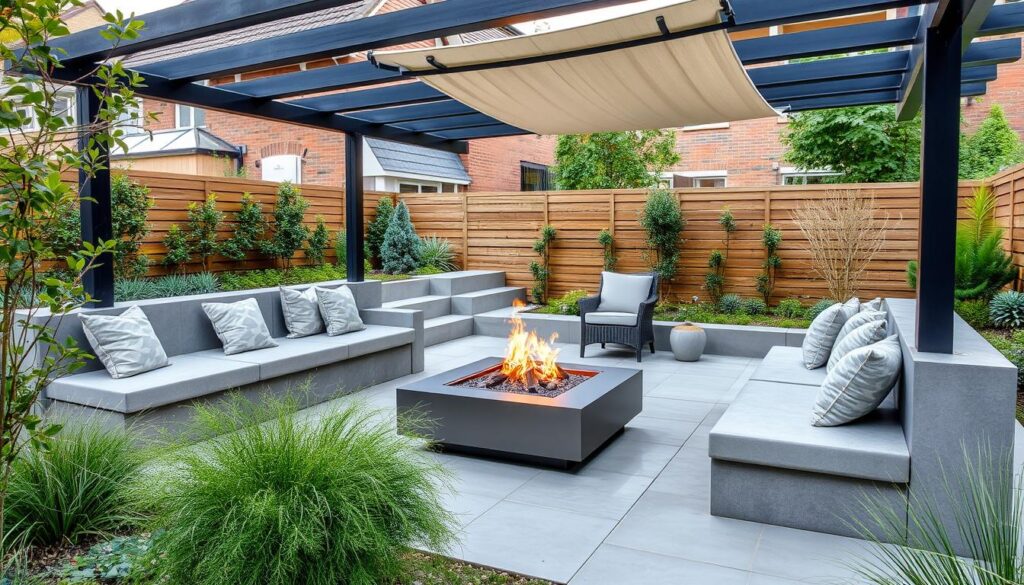
Key Elements for Modern Outdoor Living
Built-In Seating
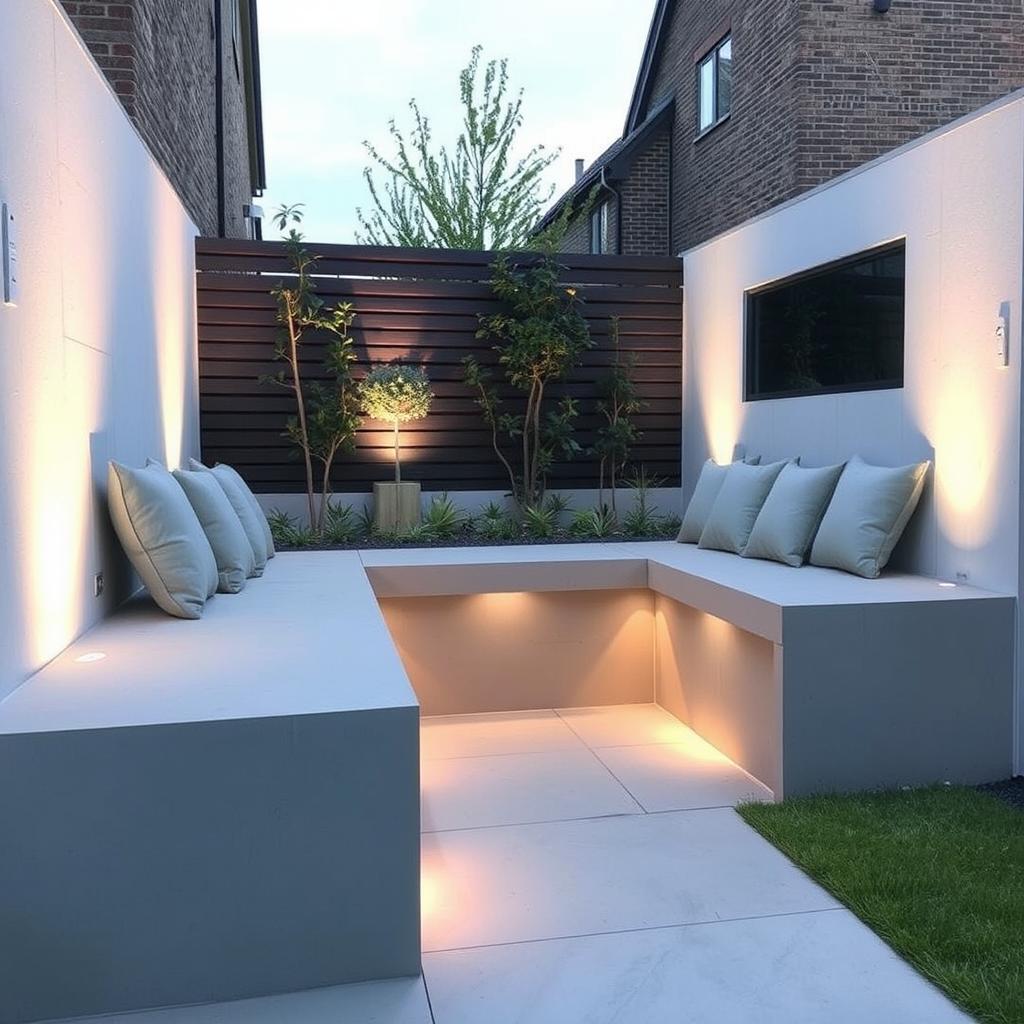
Constructed seating creates permanent architecture in the garden while maximizing space. Use concrete or rendered blockwork with drainage channels and add removable cushions in weather-resistant fabrics.
Contemporary Fire Features
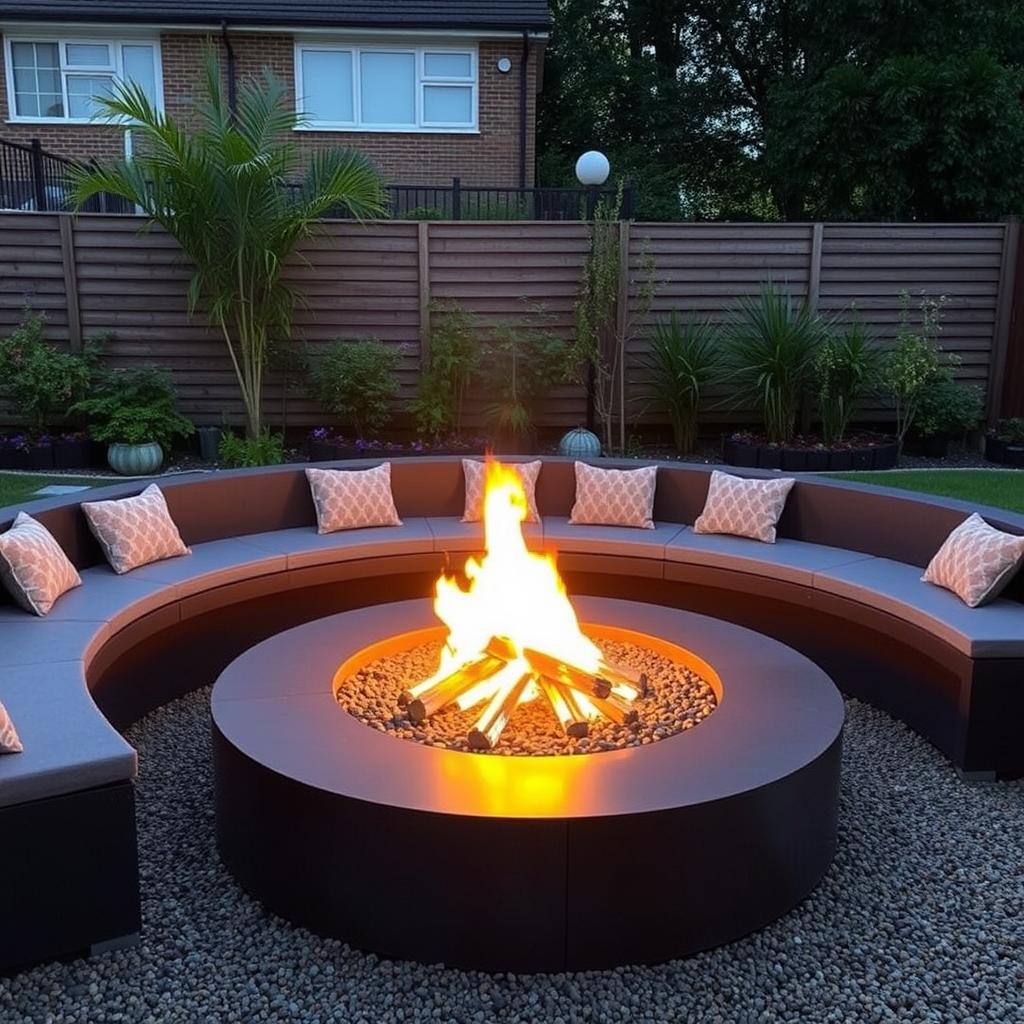
Extend the usability of your garden into cooler evenings with a modern fire pit or bioethanol fireplace. Corten steel surrounds and clean-burning fuel options offer both style and practicality.
Overhead Structures
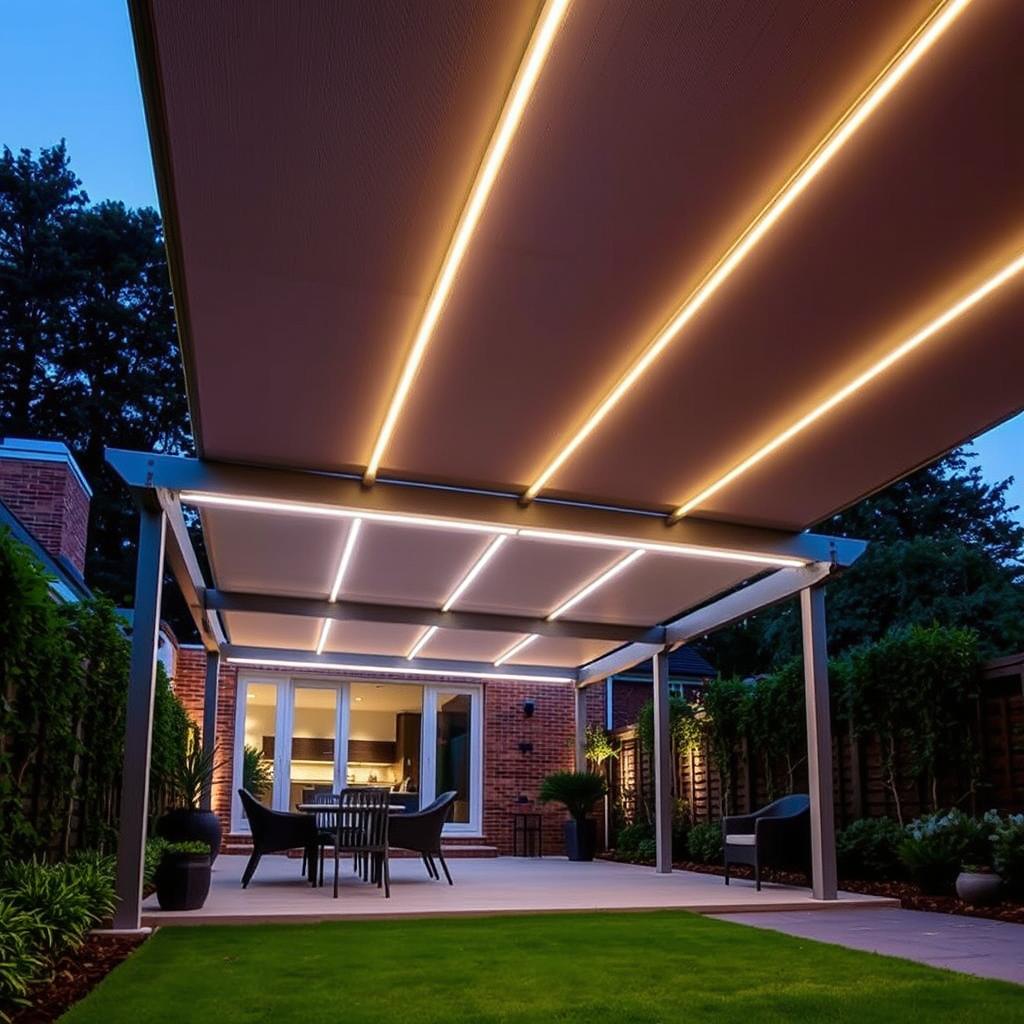
Contemporary pergolas with retractable canopies or louvered roofs provide flexible protection from both sun and rain—essential for unpredictable UK weather. Choose slim-profile aluminum frames for the most modern aesthetic.
Creating Indoor-Outdoor Connections

The most successful modern gardens create a seamless flow between interior and exterior spaces:
- Match indoor and outdoor flooring materials or use complementary options
- Align paving joints with interior tile grids for visual continuity
- Consider flush thresholds with adequate drainage channels
- Echo interior colour schemes in outdoor furniture and accessories
- Position key garden features to be visible from inside the home
Modern Garden Layout Strategies
The layout of a modern garden is crucial to its success. Unlike more traditional styles, contemporary gardens rely on strong spatial organization and careful zoning to create a cohesive experience.
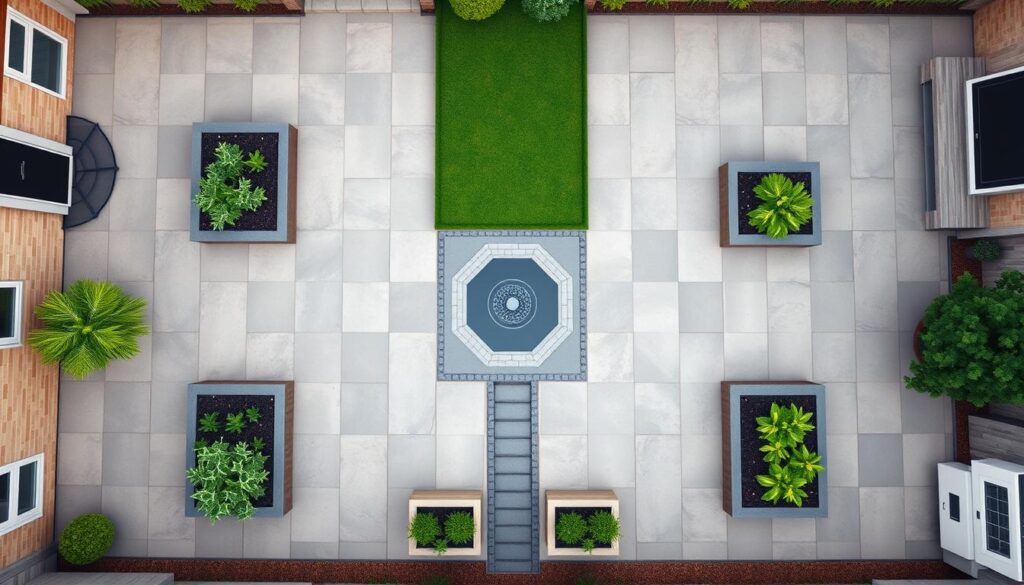
5 Rules for Modern Garden Layouts
Small Space Solutions for UK Gardens
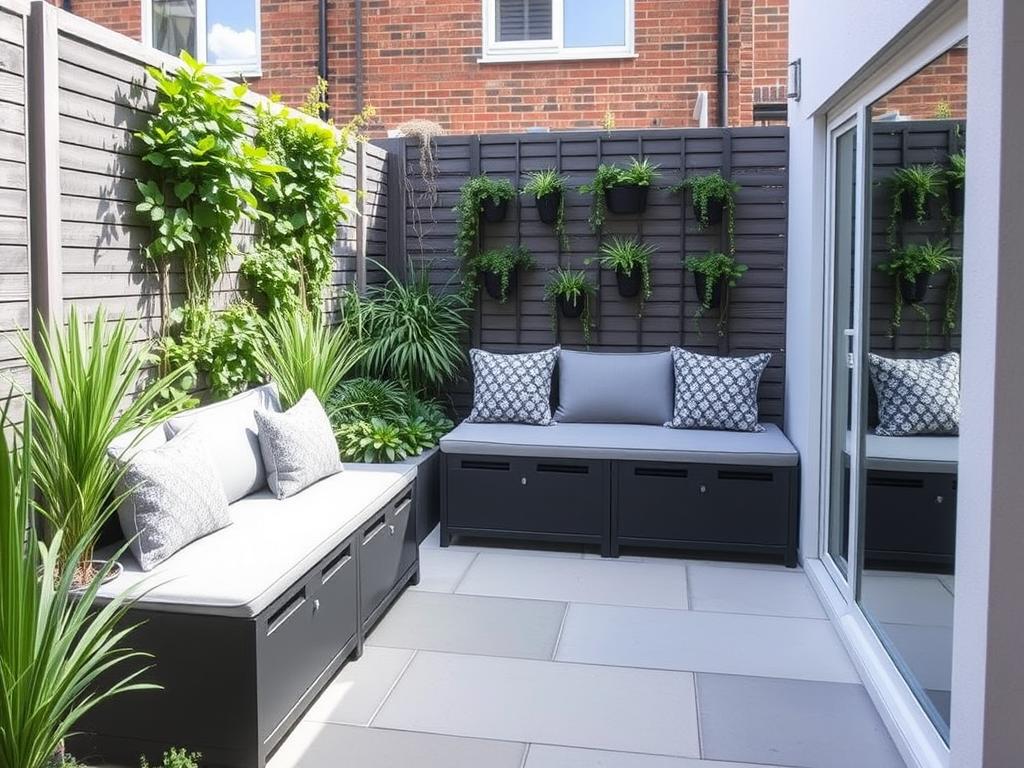
Many UK homes have limited outdoor space, but modern design principles work exceptionally well in compact gardens:
- Use large-format paving to create an illusion of greater space
- Incorporate vertical elements like green walls or tall, narrow planters
- Install mirrors strategically to double perceived space
- Choose multi-functional elements (seating with storage, for example)
- Limit material and plant varieties to avoid visual clutter
Modern Garden Lighting
Thoughtful lighting transforms a modern garden into a 24-hour space and is particularly important in the UK where daylight hours are limited during winter months. Contemporary lighting should be subtle yet effective, highlighting architectural elements rather than flooding the space.
Contemporary Lighting Techniques
Recessed Lighting
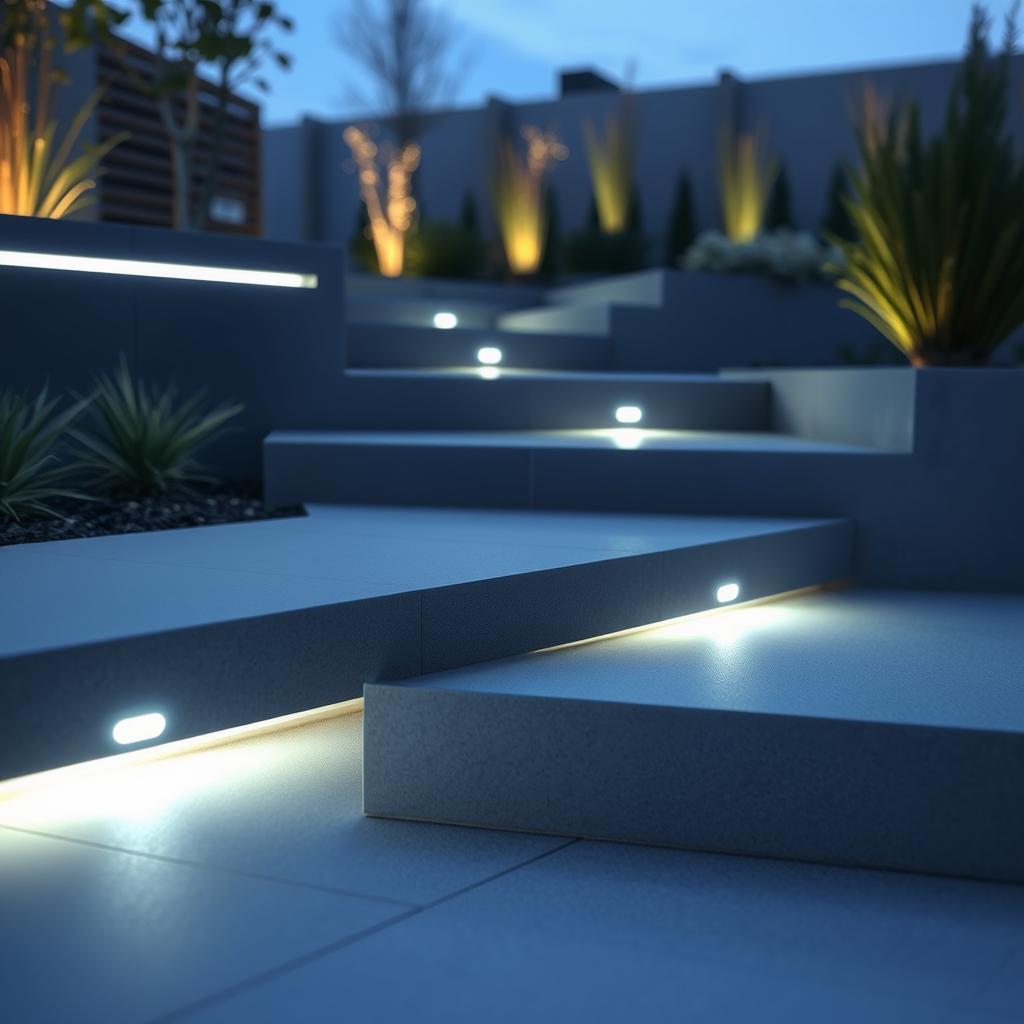
Integrate LED strips into steps, seating edges, and under raised planters to create floating effects and highlight architectural lines without visible fixtures.
Uplighting
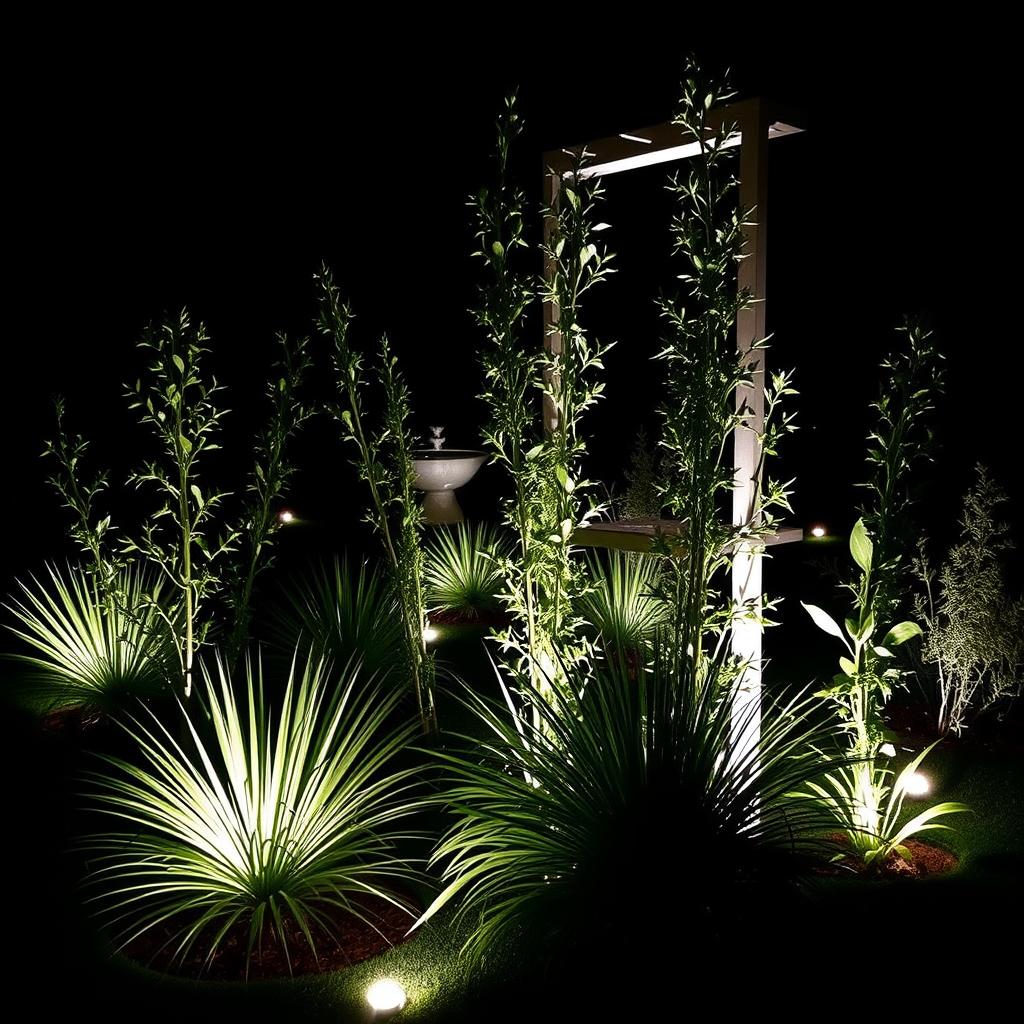
Position in-ground spotlights to illuminate specimen plants, textured walls, or water features from below, creating dramatic shadows and emphasizing form.
Path Lighting
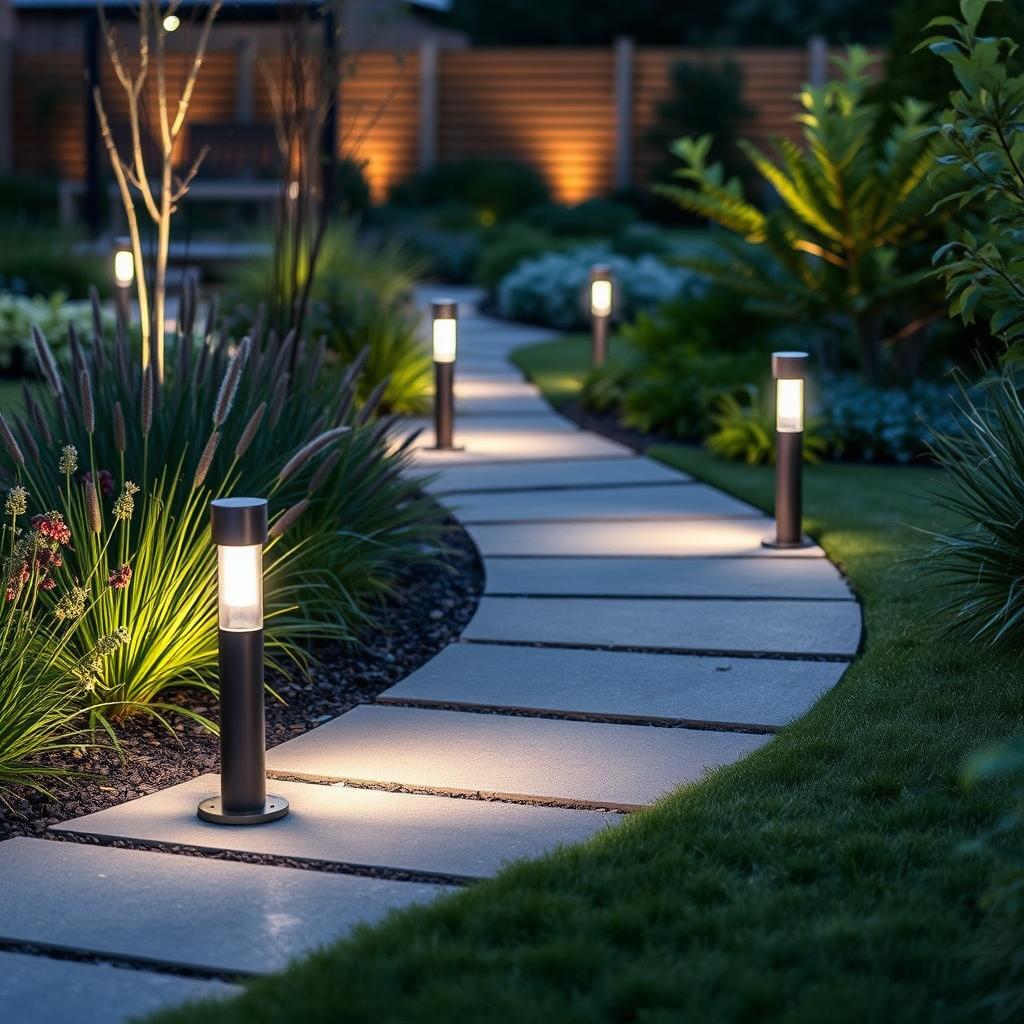
Choose minimalist bollard lights or flush path markers that provide necessary illumination without becoming daytime eyesores. Look for dark-sky compliant fixtures that direct light downward.
UK Lighting Tip: Install lighting on separate circuits with dimmers to create different moods and zones. Consider smart lighting systems that can be programmed seasonally to adjust for the UK’s varying daylight hours throughout the year.
Case Study: London Terrace Transformation
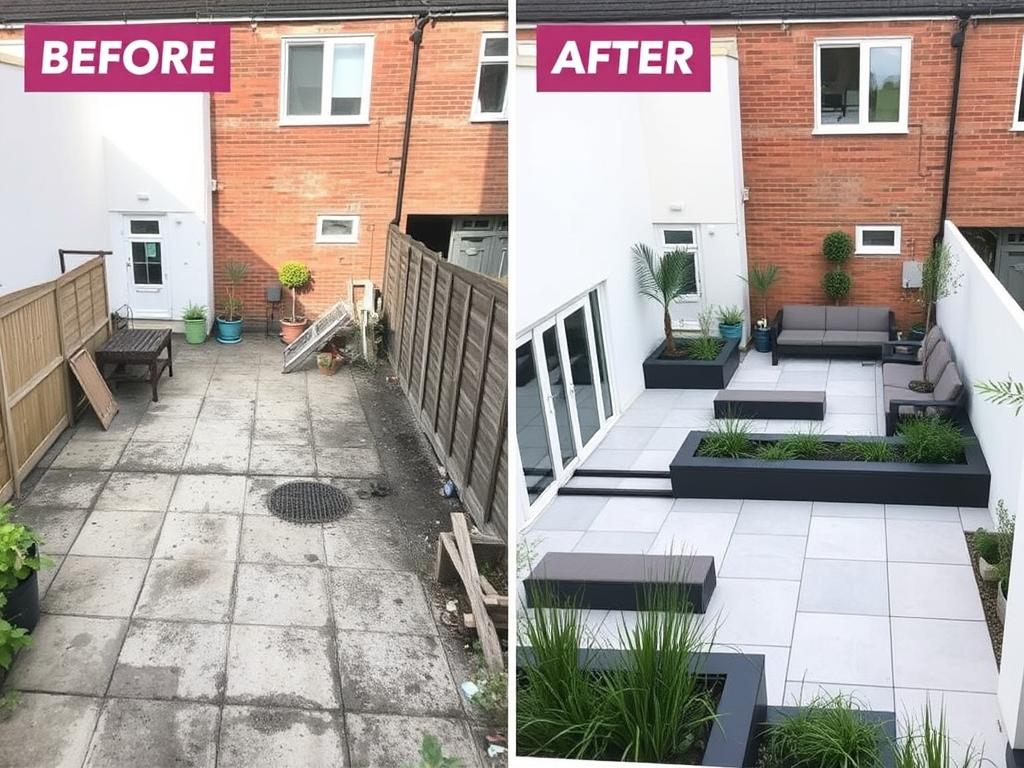
This small urban garden in North London demonstrates how modern design principles can transform even the most challenging spaces into functional, elegant outdoor rooms.
The Challenge
A typical 5m x 8m London terrace garden with poor drainage, overlooking issues, and north-facing aspect limiting plant choices. The homeowners wanted a low-maintenance space that could be used year-round for entertaining.
The Solution
- Large-format porcelain paving in pale grey to maximize light reflection
- Built-in L-shaped seating with hidden storage for cushions
- Vertical garden on boundary walls to maximize planting space
- Slim-profile pergola with integrated heating and lighting
- Shade-tolerant architectural planting scheme
“The transformation has completely changed how we use our home. What was once a neglected yard is now essentially another room that we use nearly every day, even in winter.”
Creating Your Modern Garden: Next Steps
Designing a modern garden for UK conditions requires balancing aesthetic principles with practical considerations. By focusing on clean lines, quality materials, and thoughtful plant selection, you can create an outdoor space that’s both visually striking and functional year-round.
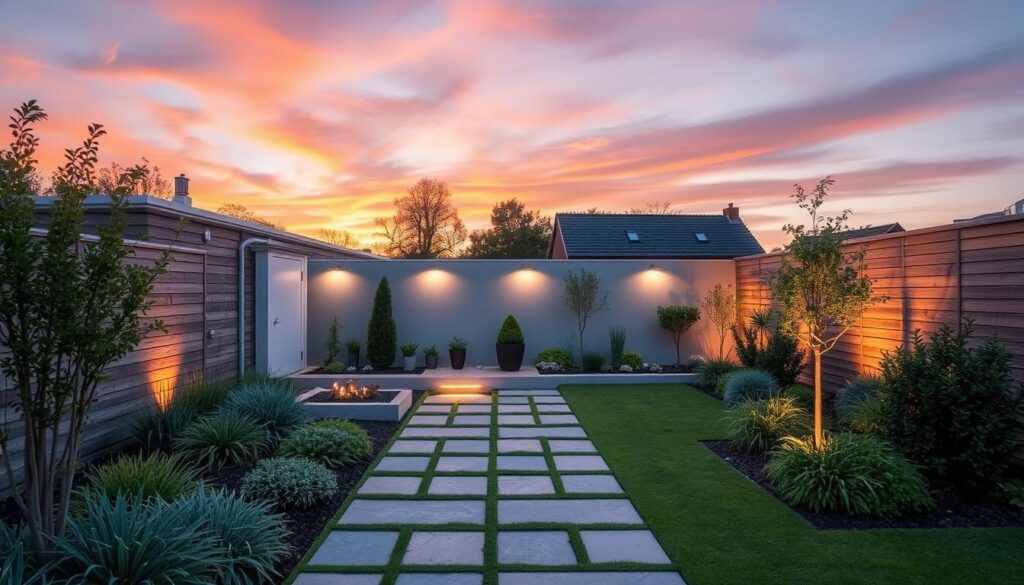
Remember that successful modern gardens evolve over time. Start with the hard landscaping framework, add key structural plants, and then gradually introduce seasonal elements as you observe how you naturally use the space. The best contemporary gardens reflect both design principles and the unique personality of their owners.