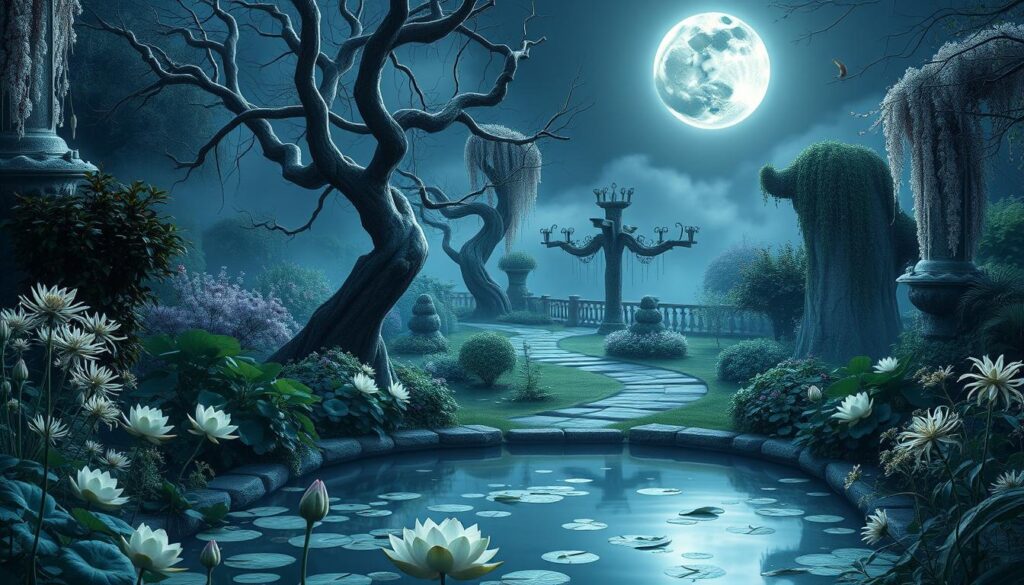
Ever felt drawn to certain outdoor spaces at night? They seem to capture our senses and fill us with joy. A moon garden is like that, with its magical charm and beauty under the stars. It’s designed for those special nights, with plants that shine in the dark and add beauty with their white or silver flowers.
These gardens are more than just pretty. They bring peace, romance, and a chance to think deeply under the stars. They offer a break from our busy lives.
Moon gardens have a deep history across cultures, adding to their mystique. When you enter one, you use all your senses, making the night unforgettable. Are you ready to make your own magical garden?
Key Takeaways
- A moon garden is uniquely designed for nocturnal enjoyment.
- It features plants that flourish in low light, with white or silver blooms.
- Creating such a garden evokes serenity, romance, and contemplation.
- Moon gardens hold historical significance in various ancient cultures.
- They transform ordinary nights into extraordinary experiences under the stars.
What Is a Moon Garden and Its Purpose?
A moon garden is a special place that shines under the moon’s light. It’s filled with night-blooming flowers and herbs that smell amazing in the evening. This garden lets you enjoy the outdoors even when it’s dark.
Defining the Concept of a Moon Garden
Moon gardens celebrate nature’s beauty at night. They have white or pale flowers that glow in the moonlight. These plants are chosen for their beauty and scent, making the garden a magical place to explore.
It’s not just a pretty sight. A moon garden is also a peaceful spot for relaxation and thinking. It helps you connect more with nature.
Historical Significance of Moon Gardens
By creating a moon garden, you join a long tradition. You make a peaceful spot in your yard. It’s a way to connect with nature and find calm.
Choosing the Right Location for Your Moon Garden
Starting a moon garden means picking the right spot. It should be easy to get to and visible at night. Look for places that catch the moon’s soft glow, like during the full moon.
It’s also key to keep the area calm. Choose spots away from bright lights to keep the peace.
Factors to Consider
When picking a spot for your moon garden, think about a few things:
- Visibility: Find a place that shines under the moonlight, making it a highlight of your evening view.
- Accessibility: Pick a spot that’s easy to walk to at night. This lets you enjoy your garden fully.
- Light Pollution: Choose a quiet spot away from harsh artificial lights. This keeps the mood calm.
- Moonlight Exposure: Look for areas that get lots of moonlight, even on full moon nights. This makes your plants stand out.
Ideal Lighting for Moon Gardens
Good lighting is key for a magical moon garden. Mix natural moonlight with reflective surfaces to light up your plants. This makes them look stunning and adds to the garden’s charm.
Use white stones or silver ornaments to reflect moonlight. Watching your garden at different moon times helps you find the best spot for your plants. This way, they’ll look their best at night.
Best Plant Options for Your Moon Garden
Creating a moon garden is all about picking the right plants. You’ll want a mix of night bloomers and fragrant plants. This will make your garden magical after dark.
Flowers That Bloom at Night
Night bloomers are key for a moon garden. White Mandevilla and moonflowers look amazing against the dark sky. They bloom as the sun goes down.
Night-blooming Jasmine fills the air with sweet smells at night. Datura has big, trumpet-shaped flowers that catch the eye. Adding Woodland Tobacco brings a unique look and smell to your garden.
Fragrant Plants for Added Aroma
Fragrant plants make your garden even more special. Gardenias and Jasmine are great choices. They give off lovely scents that stay in the air.
These plants create a calming atmosphere perfect for moonlit nights. Mixing their scents makes your garden a treat for the senses. It also attracts pollinators at night.
Designing Your Moon Garden Layout
Creating a moon garden is more than picking plants. It’s about planning pathways and seating areas too. These elements make your garden both useful and magical. Pathways should lead you through the garden smoothly, under the moonlight, safely and easily.
Creating Pathways and Seating Areas
Begin by designing pathways that flow naturally. Use light-coloured stones or gravel to reflect the moon’s light. This makes the garden visible at night. Here are some tips for your pathways:
- Choose materials that match your garden’s design.
- Make curves and gentle turns to look inviting.
- Plant soft, low-growing plants along the paths to soften them.
Also, add seating areas for rest and thought. Pick comfy, weather-proof furniture that fits your colour scheme. Seating near fragrant plants makes the garden even more special.
Using Colour Schemes and Textures
Colour schemes are key to a great moon garden. Use whites, silvers, and pale pastels to reflect the moon’s light. This creates a calm mood. For a lively look, mix different textures in your plants. Here are some ideas:
- Combine smooth-leaved plants with textured flowers for interest.
- Try plants with different leaf textures, like matte and glossy.
- Use silver plants to add a subtle sparkle to your garden.
By planning pathways, seating, and colour schemes well, you’ll make a moon garden that’s beautiful and welcoming. Your guests will love the peaceful vibe, perfect for enjoying moonlit nights.

Enhancing the Atmosphere with Accessories
Creating a captivating moon garden is more than just planting flowers. Thoughtful accessories can make a big difference. Choose lighting elements and calming water features to enhance your outdoor space.
Selecting Lighting Elements
Soft, ambient lighting is key for a magical night. Solar lanterns or fairy lights in white are perfect. They add warmth and light without overpowering your plants.
The gentle glow guides you through the garden. It creates a serene setting for relaxation and enjoyment.
Incorporating Water Features
Water features add charm to your moon garden. Small ponds, bubbling fountains, or bird baths are great. They introduce soothing sounds that help you relax.
The sound of water creates a peaceful environment. With the right accessories, your garden becomes a haven for reflection and leisure.
Maintenance Tips for a Thriving Moon Garden
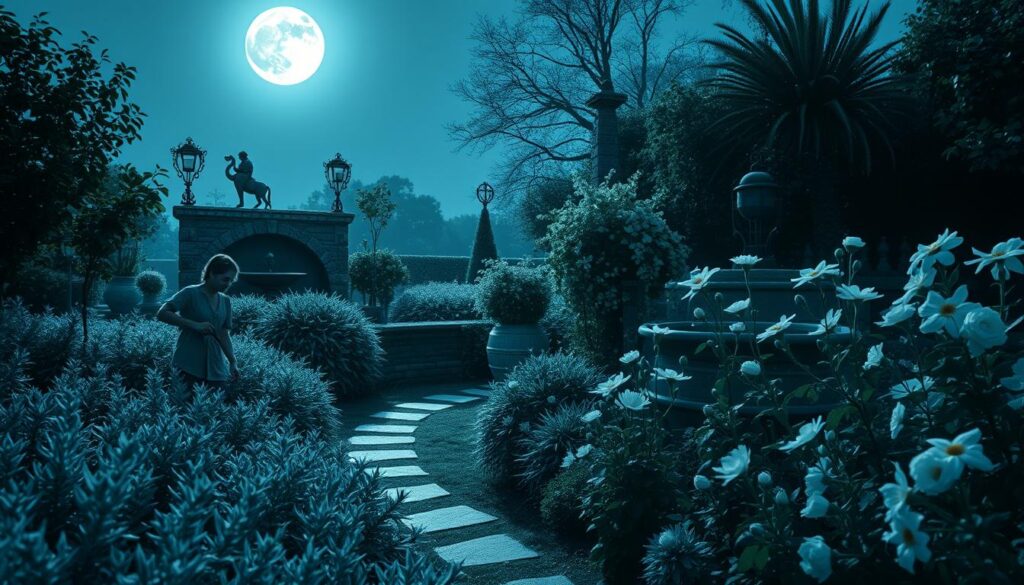
Moon garden maintenance is all about regular care to keep your space beautiful. Planting at the right time, based on the lunar cycle, can really help. Seasonal planting makes sure your plants bloom and smell great when they should.
Knowing the difference between annuals and perennials is key. Annuals need replanting every year, but they add colour and life. Perennials come back year after year, getting stronger as they grow.
Seasonal Care and Planting
Annuals give you bright flowers but need to be replanted every season. This makes gardening more fun. Perennials, on the other hand, come back year after year, getting better with age.
Deadheading spent flowers helps them bloom again. It also keeps your garden looking neat.
Pest Control Solutions
Keeping pests away is important in moon garden care. These plants can attract insects, which can harm them. Using organic pest control keeps your garden balanced.
Try companion planting or natural repellents. They protect your plants without harming the garden’s ecosystem.
The Best Time to Enjoy Your Moon Garden
The magic of your moon garden comes alive after sunset, even more so during full moons. This is the perfect time to enjoy your garden like never before. There are many nighttime activities that can make your experience even more special. They let you enjoy the beauty and calm of your garden under the moon’s light.
Nighttime Activities to Consider
There are many ways to enjoy the peace of your garden. You can:
- Star-gazing: Lay back and watch the cosmos; the vastness of the night sky can be awe-inspiring.
- Quiet Contemplation: Use the serene setting for reflection and mindfulness, letting nature inspire peace within you.
- Reading: Immerse yourself in a good book as you bask in the gentle glow of moonlight, creating a calming escape.
Hosting Full Moon Gatherings
Sharing your moon garden with loved ones is truly special. Hosting full moon gatherings can bring friends and family closer. These events can spark creativity, encourage storytelling, and strengthen bonds as you enjoy the night sky together. To make your guests feel welcome, consider:
- Providing Light Refreshments: Offer some delightful snacks and beverages, making the occasion feel special.
- Setting Up Comfortable Seating: Arrange cosy seating areas that invite guests to linger comfortably.
- Candles or Soft Lighting: Add subtle lighting to create ambience without overshadowing the natural beauty of the moon.
Attracting Wildlife to Your Moon Garden
Creating a moon garden that attracts wildlife makes it more special. It’s important to choose the right plants to support night creatures. By picking different species, you help your garden thrive.
Creating a Habitat for Night Creatures
To welcome bats and owls, add dense shrubs and trees. They offer shelter and places to hunt. Choosing native plants is also key. It makes sure your garden fits the local wildlife’s needs.
Encouraging Pollinators with Night-Blooming Flowers
Night-blooming flowers like Evening Scented Stock and Jasmine draw moths and other pollinators. These plants make your garden beautiful and help the environment. Make sure to add water sources and different plants to attract more wildlife and create a lively night atmosphere.
Common Challenges When Creating a Moon Garden
Starting a moon garden can come with its own set of challenges. Two big ones are dealing with small spaces and poor soil. Knowing about these issues can help you prepare for a great moon garden.
Dealing with Limited Space
If you have a small area for your moon garden, don’t worry. Container gardening is a great way to make the most of your space. You can use small pots or vertical planters to fit more plants in.
This approach creates a magical atmosphere without needing a lot of room. Just pick plants that do well in tight spots to make your garden even more special.
Overcoming Poor Soil Conditions
Poor soil can also be a hurdle. If your soil is dry or drains badly, adding compost or organic matter can help. This improves the soil’s health and keeps it moist.
Choosing plants that are native or drought-resistant is also key. These plants are more likely to thrive in your local soil. With these tips, you can create a beautiful moon garden that’s perfect for enjoying at night.
Embracing the Spiritual Benefits of a Moon Garden
Your moon garden is a special place to connect with nature’s spirit. Walking through it at night, you feel a deep calm. The sweet smells of flowers and the quiet of leaves help you focus and understand your world better.
Connection to Nature and Serenity
Your moon garden is a peaceful haven for the evening. It makes you feel connected to nature and boosts your mood. The beauty of your garden brings clarity and peace, filling you with calm.
Using Your Moon Garden for Reflection and Meditation
At night, your garden is ideal for meditation. Sit among the quiet and let go of stress. It’s a space for growth and renewal, where you can explore your inner self.