Ever thought about turning your garden into a bee paradise? With bee numbers dropping, creating a pollinator highway is a smart move. This guide will show you how to make your garden a bee haven. It’s all about supporting these vital pollinators and boosting your garden’s biodiversity.
Key Takeaways
- Understanding the role of bees in both ecosystems and your garden
- Identifying local pollinator species relevant to your area
- Learning design principles that attract and sustain bee populations
- Choosing the right plants to ensure continuous bloom and support
- Engaging with the community to enhance local biodiversity efforts
Understanding the Importance of Pollinator Bees in Your Garden
Pollinator bees are key to a healthy garden. They do more than add beauty; they help grow food and keep the environment balanced. Knowing how bees work can make your garden bloom.
What are Pollinator Bees?
Pollinator bees move pollen between flowers, helping plants make seeds. This is essential for many plants to reproduce. Without them, our food crops and wild plants would struggle, showing bees’ vital role in nature.
The Role of Bees in Ecosystems
Bees are vital to ecosystems, boosting biodiversity and landscape health. They help plants vary their genes, making them stronger against pests and diseases. This relationship between bees and plants not only helps plants but also supports other wildlife, providing food and shelter.
Benefits of Bees for Your Garden
Bees bring many benefits to gardens. They help grow more and better fruits and veggies. A healthy bee population means stronger, more vibrant plants all season. Plus, bee-friendly gardens attract many other animals, making your garden lively and full of life.
Identifying Local Pollinator Species
To make your garden welcoming to local pollinators, knowing your area is key. Learning about the bees in the UK can make gardening more fun and help pollination. By knowing where bees live and what they do at different times, you can design a better garden for them.
Common Bees Found in the UK
In the UK, you’ll often see bumblebees and honeybees. Bumblebees are great for pollinating crops and flowers because they can work in cooler weather. Honeybees are important for making honey and pollinating many plants in your garden. Here are some notable bees you might find:
- Bumblebee (Bombus spp.)
- Honeybee (Apis mellifera)
- Mason Bee (Osmia spp.)
- Leafcutter Bee (Megachile spp.)
Recognising Bee Habitats
Knowing where bees like to nest and find food can help attract them to your garden. They often prefer:
- Gardens with lots of different plants
- Wild meadows with lots of flowers
- Woodlands with native plants
These places give bees the food and shelter they need at every stage of their lives.
Seasonal Bee Activity
Knowing when bees are most active helps you keep them fed all year. In spring, early flowers like crocuses and snowdrops are vital. Summer brings a variety of flowers for bees to visit. Autumn’s flowers, like asters and sedums, help them get ready for winter. By planning your garden with these seasons in mind, you can help bees all year.
Creating a Bee-Friendly Garden Design
Turning your outdoor area into a haven for bees requires careful planning. A well-designed garden not only attracts pollinators but also makes your home look better. Here are key points to consider when designing your garden:
Basic Layout Principles
Good garden design is key to attracting bees. Make sure your garden has a mix of flowers all year round. Use different heights, textures, and colours to attract bees and impress your neighbours.
Grouping plants together is better than having them alone. This makes bees visit more often.
Choosing the Right Plant Combinations
Picking the right plants is vital for a lively bee garden. Choose plants that are native to your area. This helps local bees thrive.
Make sure to have a variety of flowers that bloom at different times. This gives bees a steady supply of nectar and pollen.
Incorporating Water Features
Water is essential for bees. Adding shallow dishes or a small fountain can provide the water they need. Make sure bees can safely get to the water without drowning.
| Garden Element | Benefits for Bees |
|---|---|
| Floral Diversity | Attracts a variety of species |
| Native Plants | Preferred by local bees |
| Continuous Bloom | Provides food throughout the season |
| Water Features | Offers hydration sources |
By following these tips, you can make a garden that welcomes bees. You’ll also enjoy the beauty of your garden.
Selecting the Best Plants for Pollinators
Creating a pollinator garden is about choosing plants that look good and help bees. Native plants are best for local bees because they match the climate and soil. This makes your garden healthier and more productive.
Native versus Non-Native Plants
Native plants fit your local climate and soil perfectly, attracting more bees. Non-native plants might not feed bees as well. So, picking native plants is key for a thriving garden.
Flowering Times for Continuous Bloom
Having plants that bloom at different times makes your garden more appealing to bees. This way, bees always have nectar and pollen. Choose plants that bloom in spring, summer, and autumn for a lively garden.
Avoiding Bee-Harmful Plants
It’s important to avoid plants treated with harmful chemicals. These can harm bees. Make sure your garden is free from such chemicals. For tips on creating a safe garden for bees, learn more here.
Enhancing Your Garden’s Appeal to Bees
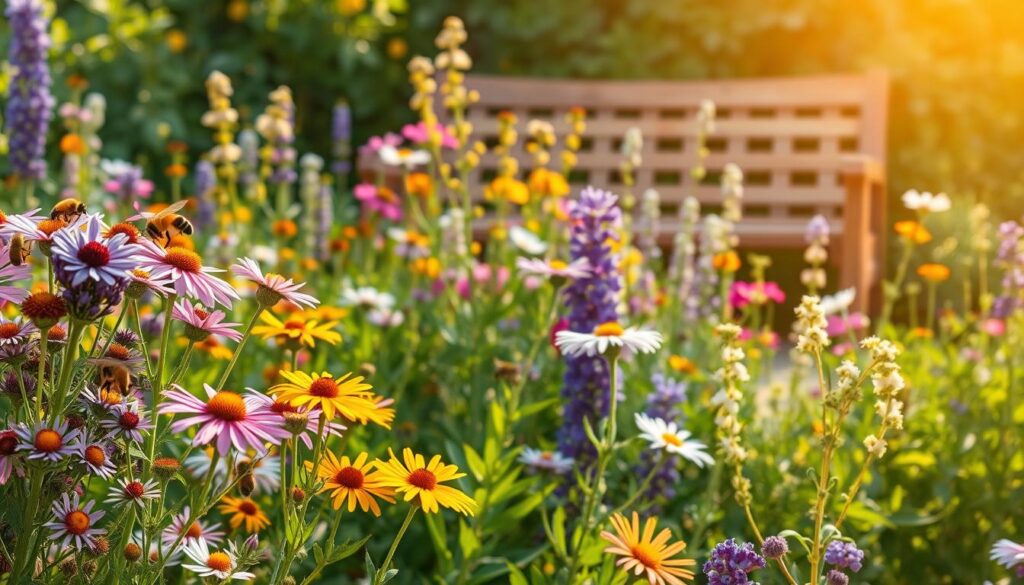
Making your garden bee-friendly can really boost its appeal. By adding bee hotels and shelter, you help these important pollinators. Also, using fewer pesticides protects your plants and the environment.
Building Bee Hotels and Nesting Sites
Bee hotels are great for solitary bees. You can make them from bamboo or wooden blocks. Place them in a sunny, safe spot to attract different bees.
Having bee hotels makes your garden lively. It supports bee populations and adds to the garden’s buzz.
Providing Shelter and Shade
Bees need shelter and shade to survive. Use plants, trees, or structures to create shaded areas. This helps them escape the heat.
Dead trees and branches are also great for bees. They provide natural homes for pollinators, keeping them safe.
Minimising Pesticide Use
It’s important to use fewer pesticides to protect bees. Chemicals can harm bee colonies and stop them from pollinating. Instead, try natural pest control or companion planting.
For more tips on creating a pollinator garden, check out this essential guide.
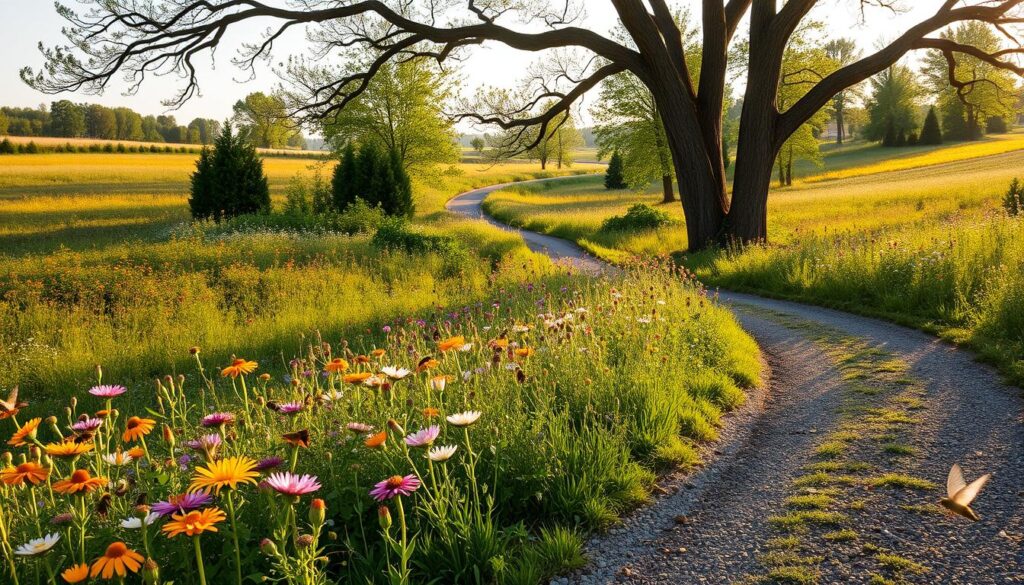
Designing a Pollinator Highway
A pollinator highway is a key link between green spaces. It offers a safe path for vital pollinators. This idea boosts biodiversity and makes ecosystems stronger. A good plan for a pollinator highway greatly helps bees and other pollinators.
What is a Pollinator Highway?
A pollinator highway is a network of green areas. It lets pollinators move easily between habitats. By adding different plants and creating green paths, you create a great home for bees.
This design helps pollinators find food and places to nest. It makes sure they have everything they need.
Key Features of a Successful Highway
Good highways have many native plants that bloom all year. This variety is key for attracting pollinators. Keeping habitats natural and safe from chemicals is also important.
It’s vital to make sure the area is easy for bees to get to. Adding water sources is a big plus, as bees need water as well as food.
Connecting Green Spaces
It’s important to connect green areas for pollinators. These links help bees move between habitats, which is good for their survival. Gardeners and planners should try to join parks, gardens, and wild areas together.
By doing this, you help support and grow pollinator communities. It’s a big step towards a healthier environment.
Encouraging Bee Activity
To make your garden a bee-friendly place, you need to understand their habits. Knowing when and how bees are most active helps you garden better for them. A few simple changes can make a big difference, helping your garden become a haven for pollinators.
Understanding Bee Behaviour
Bees are most active when it’s warm and sunny. They love visiting flowers in the morning or late afternoon to collect nectar and pollen. By planning your gardening around these times, you can avoid disturbing them.
Timing Your Gardening Activities
Timing is key to not interrupting bees when they’re busy. Try to avoid mowing or pruning during their peak hours. Instead, do these tasks later in the day. This way, you protect the bees and help your plants grow better.
Regular Maintenance Tips
Regular care is essential for bees to thrive. Deadheading flowers and watering plants help them grow and look great. A tidy garden is more appealing to bees. When your plants are healthy, they bloom more, attracting more bees.
| Gardening Activity | Optimal Timing | Benefits for Bees |
|---|---|---|
| Mowing Lawns | Late Afternoon | Reduces disruption during peak activity |
| Watering Plants | Early Morning | Ensures plants are hydrated without disturbing bees |
| Deadheading Flowers | Anytime | Supports continual blooming, attracting more bees |
| Weeding | Mid-Morning | Helps maintain a healthy ecosystem |
Involving the Community
Creating a thriving environment for bees is not just about individual effort. It also needs collective action from the community. By working together, we can raise awareness and support local efforts to save bees. You can help by engaging with neighbours and local groups, and by teaching others about bees.
How to Engage Neighbours and Local Groups
Begin by hosting informal meetings to share your love for bee-friendly gardening. Reach out to community centres or local gardening clubs to help set these up. This way, you can exchange ideas and learn about the best plants for bees.
Organising Community Planting Days
Organise community planting days to get everyone involved. These events help build stronger relationships and make our green spaces better. Work with local authorities to find the best places for bee-friendly plants, making a real difference for bees.
Educating Others About Bees
Teaching others about bees is key to saving them. Host workshops or talks with local bee experts. They can share the challenges bees face and how we can help. This knowledge lets others support these vital pollinators in their own gardens and neighbourhoods.
Monitoring and Maintaining Your Pollinator Garden
Creating a space for bees needs regular effort and watching closely. By checking your garden often, you can see how well it supports bees. This helps you make your garden even better for these important creatures.
Observational Techniques for Bee Populations
Begin by watching different bee types in your garden. Use time-lapse photos or notes during your gardening. These help you see which flowers bees like most and when they visit.
This info is key to keeping your garden great for bees. It helps you make smart choices to improve your garden.
Adjusting Your Garden Over Time
Changing your garden based on what you see can really help bees. If some flowers are big hits, add more of those. If others don’t attract bees, swap them out for better ones.
Checking your garden often lets you make it better. This way, your garden grows with the needs of local bees.
Documenting Your Garden’s Progress
Writing down your garden’s journey is motivating. Keep a journal of what you see, changes you make, and how bees react. This shows how well your garden is doing and gives tips to others.
By keeping up with your journal, you stay committed to your bee-friendly garden.
Resources and Further Reading
Starting a pollinator garden is exciting. There are many resources to help you. Guides can teach you about creating bee-friendly spaces. They offer tips to make your garden a success.
Recommended Books and Guides
Books on pollinator gardening are a good place to start. “The Pollinator Victory Garden” by Kim Eierman is full of useful advice. It helps you choose the right plants and create a welcoming space for bees.
Useful Websites and Organisations
Online, you can find lots of info on pollinators. Sites like the Pollinator Partnership have great tips. They remind us of bees’ importance in our world.
Local Workshops and Events
Local workshops and events are great for learning. They offer hands-on experience and a chance to meet others. These events are a good way to share ideas and support pollinators.