
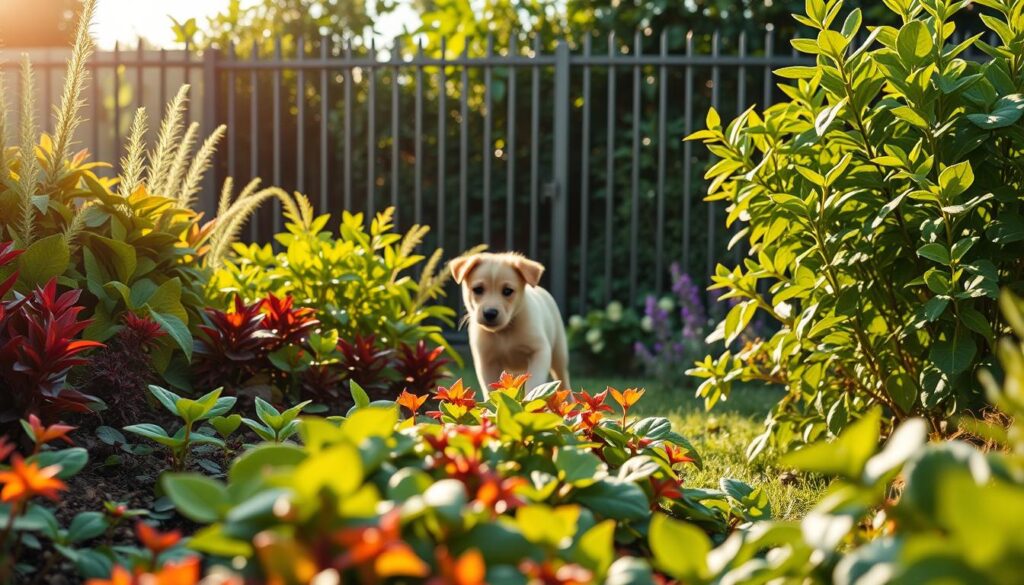
Ever thought about using plants to keep pets away? It’s a clever way to protect your plants from curious pets. By choosing the right plants and where to put them, you can keep pets out. This makes your home a safe and beautiful place for both pets and plants.
We’ll show you how to set up barriers and safe zones. These not only protect your plants but also make your home look great.
Key Takeaways
- Utilising plant placement as an invisible fence can protect your plants effectively.
- Understanding common pet behaviours helps in identifying vulnerable plants.
- Pet-friendly gardening promotes a safe space for both plants and pets.
- Creating defined areas and barriers can dramatically save plants from pets.
- Strategic arrangement of plants can prevent damage from curious paws.
Understanding the Relationship Between Pets and Plants
Many pet owners struggle to keep plants safe while also caring for their pets. Knowing how pets and plants interact can make your home safer for both. This part talks about how pets can harm plants, which plants are most at risk, and how to find safe spots for plants in your home.
Common Pet Behaviours That Harm Plants
Pets can harm plants in many ways. Digging, chewing, and rolling in soil can damage plants. Even just playing can break stems and upset roots. Knowing these habits helps you protect your plants better.
Why Some Plants are More at Risk
Not all plants can withstand pet damage. Some plants smell or feel good to pets, making them more tempting. Plants near where pets play are also at higher risk. Knowing which plants are more vulnerable helps you protect them.
Recognising Safe Zones in Your Home
Setting up safe areas for pets can help both them and your plants. Less visited spots are perfect for plants. Try placing plants in high places or rooms pets can’t enter. This way, you create a safe space for plants and pets alike.
Identifying Pet-Safe Plants for Your Space
Choosing the right plants for your home is key to a safe and lively space for you and your pets. Adding plants that are safe for pets makes your home look better and feel healthier. This section shows you safe plants that are also pretty pet-friendly houseplants.
List of Non-Toxic Plants for Pets
Many plants are safe for pets and can make your home beautiful. Here are some good choices:
| Plant Name | Sunlight Preference | Watering Needs | Soil Type |
|---|---|---|---|
| Boston Fern (Nephrolepis) | Partial sun | Lightly moist, weekly watering | Moist, well-drained, acidic |
| African Violet (Saintpaulia) | Low light | Water from the bottom | Well-drained, moist, neutral |
| Baby Tears Plant (Soleirolia soleirolii) | Partial sun to shade | Consistently moist | Rich, moist loam, slightly acidic |
| Peperomia | Indirect light | Keep slightly moist | Well-drained soil |
| Spider Plant | Partial shade | Moist but not soggy | Loamy, well-drained, neutral |
| Venus Fly Trap (Dionaea muscipula) | Bright light | Water from the bottom | Sandy, moist, acidic |
| Areca Palm (Dypsis lutescens) | Bright light | Keep moist | Moist but well-drained, acidic |
| Prayer Plant | Variety of light conditions | Frequent watering, avoid sogginess | Moist but well-drained, neutral |
Benefits of Having Pet-Safe Options
Choosing pet-safe options has many advantages. These plants improve the air quality and make your home look great. They can also help calm your pets and you. A good mix of pet-friendly houseplants makes your home safer and more beautiful.
Tips for Choosing the Right Plants
When picking plants, keep these tips in mind:
- Check if the plant is safe for pets before buying.
- Choose plants that match your home’s light conditions.
- Learn about the plant’s watering and soil needs.
- Keep plants out of your pets’ reach to avoid any problems.
- Use resources like the ASPCA for more info on plant safety.
Strategic Plant Placement to Deter Pets
To keep your garden safe from pets, think about using plants to block their way. Certain plants can act as barriers, protecting your favourite plants. Here are some tips to make your garden safe for pets and beautiful too.
Creating Barriers with Plant Placement
Strong plants can stop pets from getting to the weak ones. Use tall plants or thorny bushes like hawthorn or blackberry. Place these around your favourite plants to keep pets out.
How to Use Height to Your Advantage
Use the vertical space to keep plants safe from pets. Hang baskets and planters high up. You can also use shelves or hooks to hang plants out of reach.
Grouping Plants to Protect Vulnerable Species
Grouping weak plants together can make a safe area. Mix them with strong, smelly, or prickly plants. This not only keeps pets away but also makes your garden look better.
Using Containers to Keep Pets at Bay
Containers are a great way to keep your plants safe from pets. They house your plants and protect them from curious paws. Choosing the right container is key to keeping your plants safe and making your garden look good.
Types of Containers That Work Best
There are many types of containers to choose from. They come in different styles and are good for both looks and function:
- Heavy-duty pots: Made from materials like ceramic or stone, these provide stability against tipping.
- Hanging planters: Elevating plants out of reach ensures your pets won’t disturb them.
- Raised beds: Perfect for larger plants, raised beds can create a designated area away from pets.
- Self-watering containers: Help maintain soil moisture and often come with built-in support.
Ways to Secure Containers from Pets
Here are some ways to keep your containers safe from pets:
- Use weights: Place stones or bricks in the bottom of pots to prevent tipping.
- Install barriers: Surround containers with fencing or plant protective mesh.
- Position strategically: Place containers on high surfaces or shelves that pets cannot access.
- Choose non-slip saucers: Ensure pots have sturdy bases to reduce the risk of sliding.
Thriving Plants in Elevated Planters
Elevated planters add style to your garden and help plants grow better. They improve drainage and air flow. Plus, they keep plants safe from pets. Pick pet-safe plants to fill these containers and make your garden lively and safe for pets.
Aromatic Plants: Natural Deterrents for Pets
Aromatic plants make your home and garden look great. They also keep pets away. By choosing the right plants, you can keep your pets safe and your plants healthy.
Scents That Pets Tend to Avoid
Pets, like cats and dogs, have a strong sense of smell. Some smells they don’t like can help protect your plants. Here are some scents pets often avoid:
- Citrus (lemons, oranges)
- Lavender
- Peppermint
- Rosemary
- Eucalyptus
Using these smells can make your home safer for pets.
Best Aromatic Plants for Indoor and Outdoor Spaces
Adding aromatic plants to your home and garden is smart. They look good and keep pets away. Here are some safe options:
- Lavender: It calms you down and keeps bugs and pets away.
- Peppermint: Its strong smell keeps many animals from coming near.
- Rosemary: It tastes great in food and keeps pets out.
- Thyme: It smells nice and keeps pets from getting too close.
- Lemon Balm: Pets usually don’t like its scent.
These plants are both good-looking and effective at keeping pets away.
Incorporating Aromatic Plants into Your Garden
Adding aromatic plants to your garden makes it prettier and safer for pets. Place them in a way that creates boundaries. Mix them with other safe plants to keep pets out.
With the right plants, your garden will be a peaceful place for you and your pets.
Training Your Pets to Avoid Plants
Creating a harmonious environment between your pets and plants involves teaching your furry friends to respect boundaries. Behavioural training can significantly contribute to pet-friendly gardening. It enables you to implement effective tips to protect plants from pets.
Establishing Boundaries Around Plants
Setting clear boundaries is essential in your pet training efforts. Designate certain areas where plants are located as off-limits for your pets. Use physical barriers like decorative fencing or plant pots that are difficult for pets to access.
Reinforce these limits with consistent commands and a firm tone. Establishing this understanding will help your pets realise which areas they should avoid.
Positive Reinforcement Techniques
Utilise positive reinforcement to encourage desired behaviours. Whenever your pet stays away from the plants, reward them with a treat or praise. This method helps strengthen the association between good behaviour and positive outcomes.
Consistency is key, so make sure to repeat this process regularly. Your effort in training will foster an environment that blends both your pets and your beautiful plants.
Using Distractions Effectively
Sometimes, pets simply need a bit of redirection. Provide engaging toys, puzzle feeders, or even a designated play area nearby to distract them from the plants. Make use of scents that attract them, like catnip for cats or specific toys for dogs, in place of the plants.
This strategy not only diverts their attention but also enhances their overall well-being.
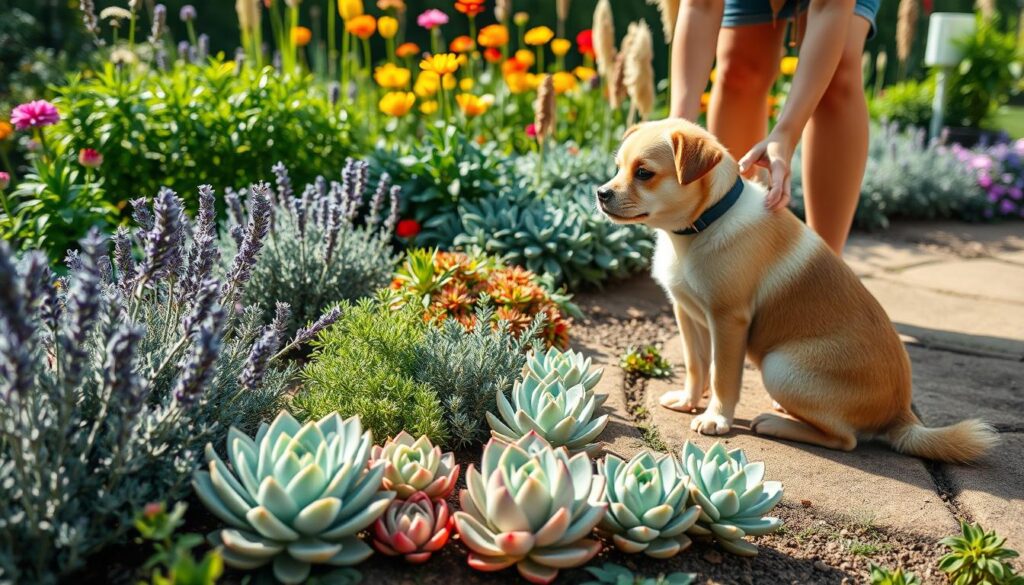
Creating a Separate Pet-Friendly Area
Setting up a special area for pets helps keep your plants safe. It gives pets a place to relax and keeps them away from your garden. Designing this area thoughtfully makes it a welcoming spot for your pets.
Designing a Specific Space for Pets
Think about what’s best for your pets when setting up their area. Choose a spot in your garden or a room in your home. Make sure it has lots of natural light and shade for all seasons.
What to Include in a Pet-Friendly Area
Key features make a pet area inviting. Include:
- Soft bedding and comfy seating for pets to relax.
- Pet-safe toys to keep them entertained.
- Shaded spots for protection from the sun.
- Pet-friendly plants to add beauty and safety.
Encouraging Pets to Use Their Space
Positive reinforcement helps pets enjoy their new area. Reward them for using it. Use familiar scents or toys to make them feel at home. Playing with them there helps them bond and visit more often.
Monitoring and Adjusting Your Plant Placement
To keep plants safe from pets, watch them closely. Check how well plants do in their spots. Also, watch how pets act around them. This way, you can move plants to safer places if needed.
Regularly Assessing Plant Health
Watch your plants for signs of trouble. Look for yellow leaves or wilting. These could mean pets are bothering them. If you see problems, move plants or use Shields® Units to protect them.
Observing Pet Behaviour Over Time
Learn what your pets like to do with plants. Notice if they dig or chew leaves. Knowing this helps you find ways to keep plants safe, like moving them or giving pets other things to do.
Making Adjustments as Needed
Being flexible with where you put plants is key. If some plants are always in danger, move them or use barriers. Try using plants that keep pests away, like Aloe Vera or Lavender. Find easy plants to grow with this guide.

Final Tips for Protecting Plants from Pets
To live in harmony with plants and pets, you need to pay attention and care for both. Regular checks on your plants and pets are vital. This ensures they live together peacefully.
Watch for any damage on your plants and move them if needed. Small changes in where you place them can make a big difference. This helps in keeping your garden safe for pets.
Routine Maintenance for Plant and Pet Harmony
Having a routine for both plants and pets is important. Set up watering schedules for your plants and keep pets busy with their own activities. Supervising playtime and checking plants regularly helps save them from pets.
This approach creates a more balanced home environment. It ensures both plants and pets are happy and safe.
Engaging Pets with Alternative Activities
Keep pets away from plants by giving them other things to do. Toys, games, or special play areas can distract them. This keeps your plants safe and keeps pets mentally active.
Fostering a Balanced Environment for Both
Creating a balanced home is key to harmony. Make safe areas for plants and places for pets to relax. This protects your plants and makes pets feel secure and content.
By following these tips, you’ll have a welcoming home. Here, pets have freedom, and plants can grow well.