Ever thought about which herb could change the taste of your home-grown food? The answer might surprise you! The best herb to grow not only makes your favourite dishes taste better. It also adds a vibrant touch to your cooking without costing much.
By growing herbs, you can make your food taste better and eat healthier. Imagine using fresh herbs from your garden to make every meal special. You might discover they’re the secret ingredient you’ve been missing!
Key Takeaways
- Growing herbs is an effective way to enhance the flavours of your home-grown vegetables.
- The best herb to grow for flavour enhancement is easy to cultivate and maintain.
- Incorporating fresh herbs encourages healthier eating habits.
- Herbs add a unique touch to a variety of dishes, making your meals more enjoyable.
- Exploring different herbs can lead to exciting culinary discoveries.
Why Choose Herbs for Your Garden?
Growing herbs in your garden has many benefits. They are easy to care for and need little maintenance. This makes them great for both new and seasoned gardeners. With some effort and the right tips, you can have a thriving herb garden in pots or beds.
Easy to Grow and Maintain
Herbs like basil, mint, and parsley are very hardy. They can do well with just basic care. You can manage their growth by watering and pruning them occasionally. Some herbs can even regrow after you harvest them, giving you a steady supply of fresh ingredients.
Versatile Culinary Uses
Herbs make your cooking more exciting. They add depth to a wide range of dishes, from salads to stews. Using *fresh herbs* in your meals can greatly enhance the taste, making them a must-have in every kitchen. As you learn more about herb gardening, you’ll see how these plants can turn simple recipes into something special.
The Best Herb to Grow for Enhanced Flavour
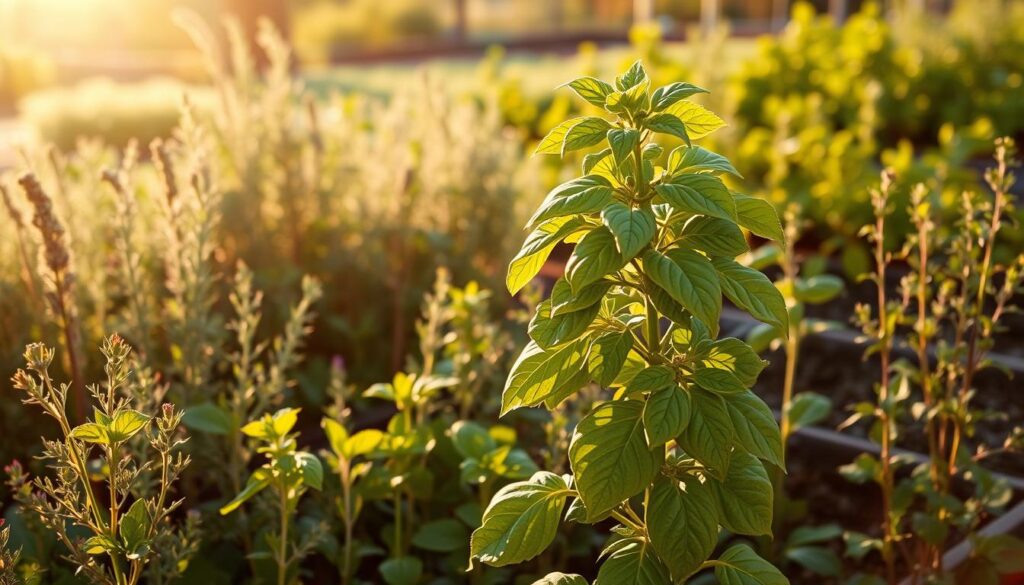
Basil is the top choice for those looking to boost their dish flavours. It’s loved by both new and seasoned gardeners. Its fragrant leaves are key in many recipes, like Italian dishes, adding a special taste to sauces and salads. Learning how to grow herbs well can lead to a rich basil harvest.
Basil: A Game Changer
Growing basil can change how you cook. Its bright green leaves and scent add depth to meals. It’s a hit with chefs and home cooks for its versatility in the kitchen.
Tips for Growing Basil Successfully
Here are some tips for a great basil harvest:
- Sunlight: Basil loves sunlight, so place it where it gets at least six hours of direct sun a day.
- Soil: Use soil that drains well to avoid waterlogged roots and root rot.
- Regular harvesting: Cutting the leaves encourages bushy growth and keeps the flavour strong by preventing flowering.
- Pot growing: Growing basil in a pot makes it easy to control its size and move it for better sunlight.
- Fresh use: Use fresh basil in your cooking to get the most out of its flavour.
The Benefits of Fresh Herbs
Adding fresh herbs to your meals boosts your health and taste. These plants are full of nutrients and flavour. They help make your food better and your body healthier.
Nutritional Advantages
Fresh herbs are packed with vitamins, minerals, and antioxidants. They add quality to your meals. For example, parsley and coriander are full of Vitamin K. Basil has oils that protect against damage.
Adding these greens to your food gives you important nutrients. It also brings a burst of flavour to your dishes.
Aromatic Properties
Herbs make your cooking more enjoyable. They not only taste great but also have health benefits. Lavender, for instance, helps calm you down and reduce stress.
Mint’s scent can ease digestion and prevent nausea. Using herbs in your cooking helps you use less salt and sugar. This leads to healthier meals.
In short, herbs are key for a healthy garden and kitchen. They bring great taste and health benefits to your life.
Companion Planting with Herbs
Companion planting is a clever way to make your garden better. It involves growing herbs alongside other plants. This creates a healthy environment where all plants can grow well.
Some herbs are not just tasty but also protect other plants. They help keep pests away and improve growth. This makes your garden more productive and healthy.
How Herbs Benefit Nearby Plants
Herbs like basil are great for improving the growth of nearby vegetables. For instance, basil with tomatoes tastes better and keeps pests like aphids away. Adding these herbs to your garden helps all plants thrive together.
The Science Behind Companion Planting
Herbs and plants work together in a special way. Some herbs make the soil better for other plants. Others keep pests out or attract helpful insects.
Knowing how companion planting works helps you choose the right herbs. This way, you can make your garden even healthier and more productive.
Popular Herbs to Consider for Your Garden
Choosing the right herbs can make cooking at home much better. Here are three popular herbs that are easy to grow and versatile in the kitchen.
Oregano: The Essential Pizza Herb
Oregano is a must for lovers of Mediterranean food. It adds a strong flavour to pizzas and pasta. It grows well in sunny spots with well-draining soil, perfect for pots or beds.
Adding oregano to your meals not only tastes great but also has health benefits. It’s known for its anti-inflammatory properties.
Rosemary: A Versatile Culinary Gem
Rosemary is a top choice for its unique scent and taste. It’s great for roasting meats and veggies. It does well in many climates, needing dry soil and full sun.
Using fresh rosemary can take your cooking to the next level. Its aroma is a highlight of any dish.
Mint: Refreshing and Invigorating
Mint is easy to grow and adds a refreshing taste to many dishes. It’s perfect for drinks, desserts, or main courses. Mint loves moist soil and some shade, making it easy to grow in any garden.
Cultivating mint at home brings variety to your cooking. It also helps with digestion, making it a great addition to your kitchen.
Choosing the Right Location for Your Herbs
Choosing the right spot for your herb garden is key. Sunlight and soil quality are vital for healthy herbs. By focusing on these, you’ll see your garden flourish and enjoy a great harvest.
Sunlight Requirements
Most herbs need direct sunlight for 4-6 hours a day. Placing them in sunny spots helps them grow strong and taste better. Look around your garden to find the sunniest areas for planting.
Soil Quality Considerations
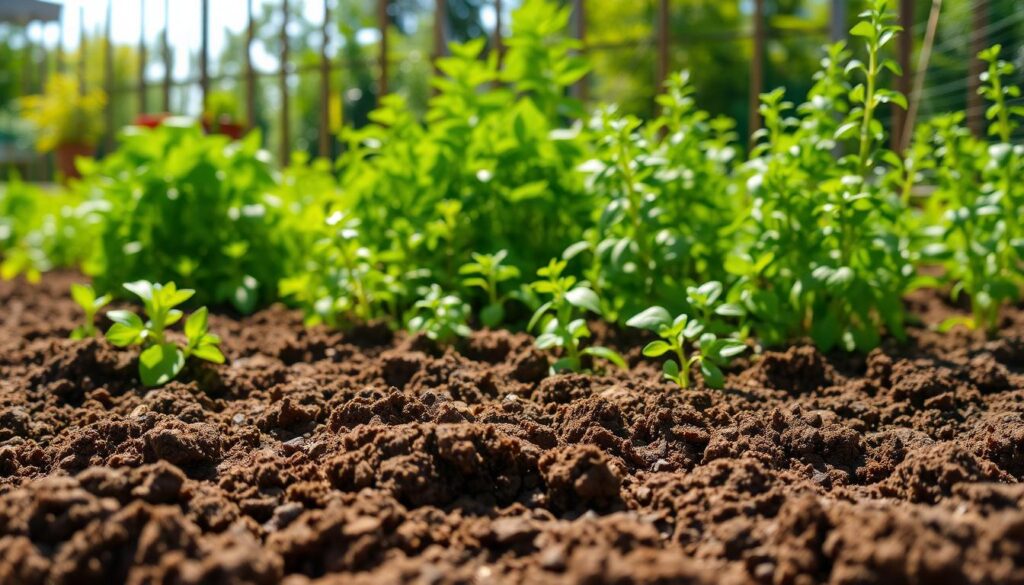
Good soil is the foundation of a great herb garden. You need soil that drains well and is full of nutrients. Improving soil quality can be done by adding compost or a good potting mix. This boosts nutrients and helps with drainage. Testing your soil regularly keeps the pH levels right, making your herbs happy and healthy.
Maintaining a Healthy Herb Garden
Keeping your herb garden healthy is key to growing tasty herbs all season. It’s important to water right and control pests. This guide will help you keep your garden looking great.
Watering Techniques
Herbs like moist soil but too much water can harm them. Finding the right balance is essential. Here are some tips for watering your herbs:
- Water deeply but not too often to help roots grow strong.
- Check the top inch of soil; if it’s dry, it’s time to water.
- Use drip irrigation or soaker hoses to water without getting leaves wet.
- Water in the morning to reduce evaporation and prevent diseases.
Pest Control Tips
Keeping pests away without harsh chemicals can improve your harvest. Here are some natural ways to control pests:
- Bring in beneficial insects like ladybugs and lacewings to fight pests.
- Apply neem oil to keep many insects away.
- Use companion planting to repel pests and help your herbs.
- Check your plants often for pests and remove any affected leaves quickly.
Harvesting Your Herbs for Maximum Taste
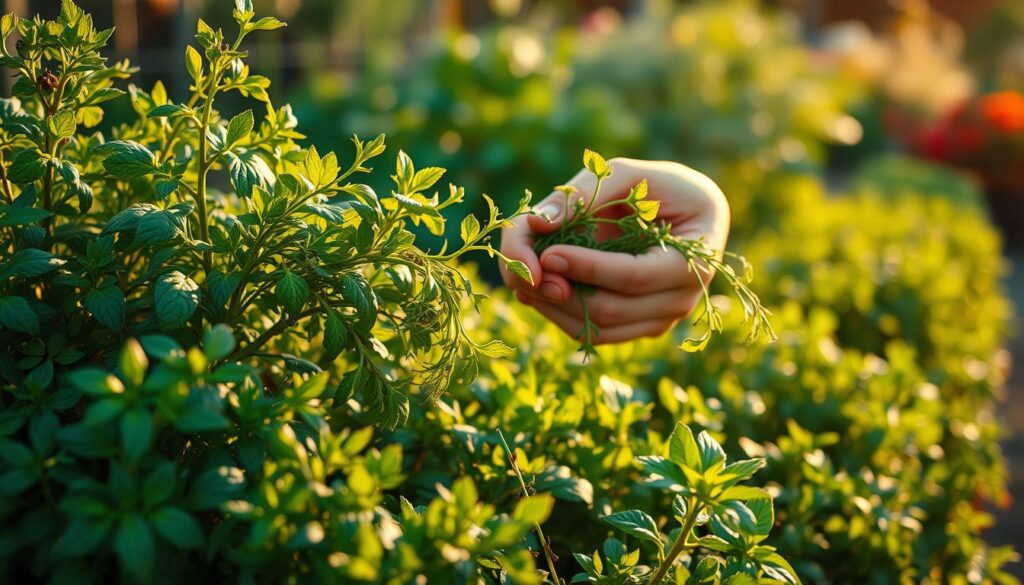
Harvesting your herbs at the right time and using the best techniques can make them taste better and last longer. Good harvesting methods mean you get the freshest and most flavourful herbs for your cooking. Just follow a few simple tips to get the most from your herb garden.
Best Practices for Harvesting
To get the best from your herbs, follow these harvesting tips:
- Start harvesting in the morning when essential oils are at their peak.
- Use sharp scissors or garden snips to avoid damaging the plants.
- Trim above leaf nodes, as this encourages bushier growth and more flavourful leaves.
- Avoid over-harvesting to maintain the health and productivity of your plants.
How to Store Fresh Herbs
Storing herbs properly keeps them fresh and flavourful. Here are some good ways to do it:
- Place fresh herbs in a glass of water and keep them in the fridge, covering the leaves with a plastic bag.
- For longer storage, consider drying your herbs in a dark, dry place, preferably hanging them upside down.
- Once dried, store herbs in airtight containers for maximum potency.
By using good harvesting and storage methods, you can enjoy your home-grown herbs all year round.
Using Herbs in Everyday Cooking
Herbs can make your daily meals special. Adding fresh herbs like basil, mint, and oregano brings vibrant flavours and scents. With a little creativity, you can find easy recipes and new ways to use these herbs.
Simple Recipes to Elevate Your Dishes
Begin with simple recipes that show off different herbs. Try making:
- Mint Tea: Steep fresh mint leaves in hot water for a refreshing drink.
- Basil Pesto: Blend fresh basil, garlic, pine nuts, Parmesan cheese, and olive oil for a tasty pasta or sandwich topping.
- Oregano-Infused Marinade: Mix oregano with olive oil, lemon juice, and garlic for a zesty marinade for meats or veggies.
Creative Ways to Incorporate Herbs
Think beyond cooking by trying herbs in different ways:
- Garnishing: Fresh herbs can brighten up soups and salads, adding colour and flavour.
- Flavouring Oils: Infuse olive oil with herbs for drizzling over dishes or dipping bread.
- Herb Desserts: Try mint chocolate chip ice cream for a sweet surprise.
Discover how herbs can improve your cooking. Your homegrown herbs not only add flavour but also spark creativity. Enjoy finding new ways to mix herbs and enhance your dishes!
The Joy of Growing Your Own Herbs
Growing your own herbs is more than just adding flavour to your food. It lets you connect deeply with nature, turning your garden into a haven of fresh scents and colours. This hobby not only enriches your life but also brings joy to your daily routine.
Connecting with Nature
As you care for your herbs, you engage your senses and find peace in gardening. The soft leaves of basil or the zesty smell of mint teach us to cherish life’s simple joys. This hands-on experience relaxes you and keeps you in tune with nature’s rhythm.
Sharing Your Herbs with Friends and Family
Sharing herbs with others can strengthen bonds by exchanging not just food, but also recipes and stories. Imagine giving a bouquet of fresh rosemary or mint to a friend, along with a special dish. Such acts can start conversations and encourage others to grow their own herbs. Sharing your harvest brings joy and closer relationships.