Ever thought about how one herb can change your garden? It can make food taste better and keep pests away. Herbs are amazing for adding flavour and helping your garden grow healthy.
They’re not just for cooking. Herbs can also keep pests away and make your garden full of life. Whether you’re new to gardening or have been doing it for years, the right herbs can make a big difference.
Key Takeaways
- Herbs enhance the flavours of homegrown produce.
- Many herbs serve as effective organic pest repellents.
- Incorporating edible flowers can act as natural pest deterrents.
- Companion planting with herbs promotes a healthy garden ecosystem.
- Herbs attract beneficial insects, improving pollination.
Why Growing Herbs is Beneficial for Your Garden
Growing herbs in your garden is great for many reasons. It can make your cooking better and help your garden stay healthy. These plants add tasty flavours and help the environment.
Enhancing Flavour Profiles
Herbs like basil, parsley, and thyme make food taste better. Fresh herbs have bold flavours that dried ones can’t match. For example, rosemary can make a simple roast taste amazing, and mint can make desserts and drinks refreshing.
By using different herbs, you can discover new tastes in your cooking.
Nutritional Benefits of Herbs
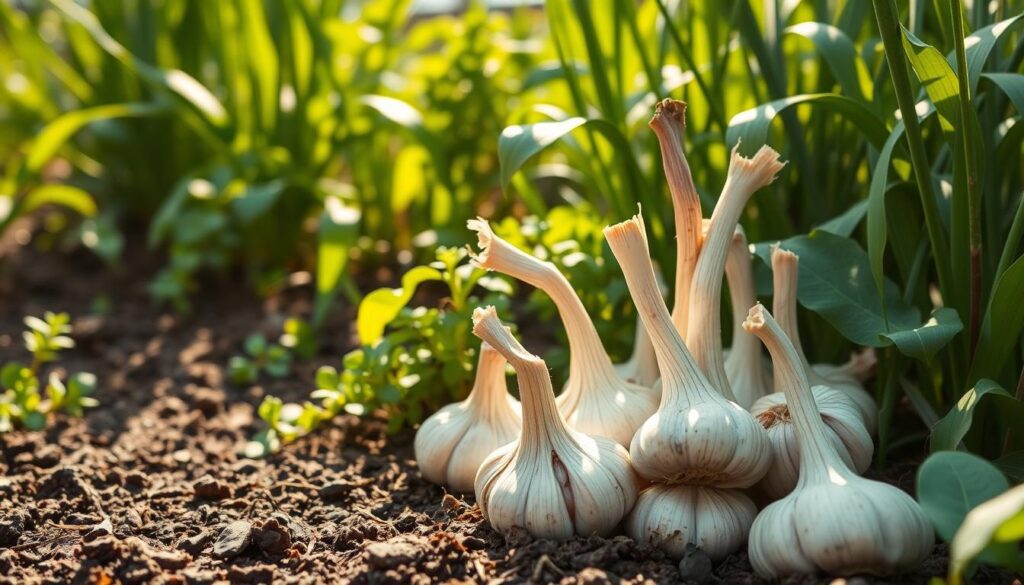
Herbs are full of good stuff like vitamins and antioxidants. They’re important for staying healthy. For instance, coriander is full of vitamin K, and garlic has many health benefits.
Adding these herbs to your meals not only tastes great but also makes your diet better. Growing them without harmful chemicals means you can enjoy their health benefits fully.
Attracting Pollinators
Some herbs, like lavender and borage, attract bees and butterflies. Planting these herbs brings more wildlife to your garden. This helps your vegetables grow better by attracting pollinators.
Using herbs as companions helps keep your garden healthy without harmful chemicals. This way, your garden stays balanced and productive.
| Herb | Flavour Profile | Nutrient Highlights | Pollinator Attraction |
|---|---|---|---|
| Basil | Sweet, peppery | Rich in vitamin K | Attracts bees and butterflies |
| Parsley | Fresh, mild | High in antioxidants | Supports various pollinators |
| Lavender | Floral, herbaceous | Contains antibacterial properties | Excellent for attracting bees |
| Borage | Cucumber-like | Rich in gamma-linolenic acid | Favours pollinators |
The Best Herb to Grow for Culinary Uses
Growing herbs in your garden makes your cooking better and gardening more fun. These herbs add flavour and keep pests away. Basil, mint, and rosemary are the top choices for cooking.
Basil: The Versatile Kitchen Essential
Basil is known for its strong smell and use in many dishes. It makes pasta, salads, and sauces taste better. Basil also keeps flies and mosquitoes away, helping with pest control.
Mint: Refreshing and Revitalising
Mint adds a cool taste to drinks, desserts, and meals. It makes simple things like tea or fruit salad special. Mint also keeps ants and pests away, making your garden healthier.
Rosemary: A Classic Aromatic Herb
Rosemary has a strong smell that makes meats and veggies taste better. It’s a key ingredient in many dishes. Rosemary also keeps insects away, helping your garden stay healthy.
How to Properly Grow Your Chosen Herb
To grow your herb well, you need to know what it likes. Herbs do best in soil that drains well and gets lots of sunlight. By getting the growing conditions right, you can improve your harvest’s quality and quantity.
Ideal Conditions for Growth
Most herbs love:
- Sunlight: At least 6-8 hours of direct sunlight each day.
- Soil: Well-draining, nutrient-rich soil, ideally amended with organic matter.
- Temperature: Night temperatures between 10-15°C and day temperatures around 20-25°C.
Common Mistakes to Avoid
To keep your herb garden healthy, watch out for these mistakes:
- Over-fertilising, which can hinder flower production and lead to excessive leaf growth.
- Waterlogged conditions that contribute to root rot and diminish overall plant health.
- Neglecting to prune herbs, leading to overcrowding and reduced airflow.
Watering and Feeding Techniques
Herbs need consistent moisture, more so in dry times. Follow these watering tips:
- Water deeply but infrequently, allowing the top layer of soil to dry out between watering.
- Use rainwater or treated water to avoid harmful chemicals often found in tap water.
- Incorporate eco-friendly pest prevention strategies such as companion planting to deter pests while feeding your herbs.
Companion Planting: Enhancing Growth with Herbs
Companion planting is about placing different plants together to help each other grow. It can make plants grow faster, taste better, and keep pests away naturally. Adding herbs to your garden attracts good bugs and keeps pests off without chemicals.
What is Companion Planting?
Companion planting uses the natural bonds between plants. It pairs plants in a way that helps them all grow better. For instance, some herbs bring in pollinators, while others keep pests away, making crops healthier.
Best Pairings with Your Chosen Herb
Pairing herbs with vegetables can really improve things. Here are some great matches:
- Basil with tomatoes to enhance flavour and growth.
- Mint with cabbage to repel pests.
- Rosemary alongside beans to deter unwanted insects.
Benefits for Your Overall Garden
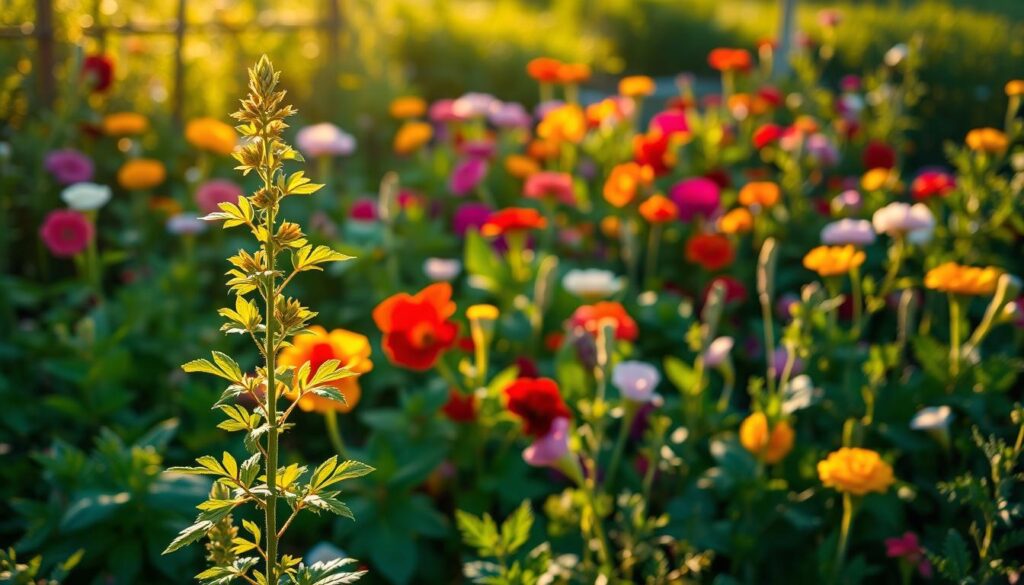
Companion planting does more than just help individual plants. It makes your whole garden healthier. Using herbs like marigolds and nasturtiums attracts good bugs and keeps pests away. This approach makes your garden diverse and strong, without using harmful chemicals.

Harvesting Your Herbs: When and How
Harvesting your herbs at the right time is key for their flavour and potency. Watch your plants closely to know when to pick. Look for vibrant leaves and flowers at their peak to know they’re ready.
Signs It’s Time to Harvest
Here are some signs it’s time to harvest your herbs:
- Leaves are lush and green, showing their full colour.
- Flowers are open and blooming, which means they’re at their best flavour.
- Herbs are mature but not yet wilted or overgrown.
Best Practices for Harvesting
To keep your herbs’ essential oils and taste, follow these tips:
- Pick in the morning after the dew has dried.
- Use clean, sharp scissors or pruning shears to avoid harming the plant.
- Harvest only what you need to avoid stressing the plant too much.
Storing Your Harvested Herbs
Proper storage keeps your herbs fresh. Here are some ways to do it:
- Keep herbs in a glass of water like a bouquet, covering the leaves with a plastic bag.
- Dry herbs in a cool, shaded area to avoid direct sunlight.
- Use airtight containers after drying to keep them fresh.
Using non-toxic pest control methods during growing season helps keep your herbs fresh. This way, your herbs can be used as organic pest repellent. It ensures your herbs last longer and keeps pests away.
Cooking with Fresh Herbs: Tips and Tricks
Fresh herbs make your food taste amazing, adding bold flavours to everyday dishes. They not only make meals better but also help keep pests away in your garden. This is a natural way to keep pests out.
Boosting Flavours in Everyday Dishes
Adding fresh herbs to your food can change simple recipes into something special. Just a sprinkle of basil or rosemary can make soups, stews, and salads taste vibrant. Try mixing different herbs to find the perfect flavour for you.
Creative Uses for Your Harvest
Using your fresh herbs in new ways can be exciting. You can make herb-infused oils by soaking herbs in olive oil. This not only makes food taste better but also keeps pests away from your garden. For more ideas, check out this source on using edible flowers in cooking.
Making Herb-infused Oils and Garnishes
Making herb-infused oils is a fun way to spice up your cooking. Mix fresh herbs with olive oil in a jar and let it sit for a few days. You can use this oil on pasta, in dressings, or as a dip. It also helps keep pests away from your garden.

Preserving Your Herbs for Year-Round Use
Preserving herbs lets you enjoy their flavours all year. You can dry, freeze, or make herb pastes and pestos. These methods keep the taste and support green gardening.
Drying Herbs: Methods and Tips
Drying herbs is easy to do. You have a few options:
- Air-drying: Tie herbs together and hang them upside down in a dark, dry spot.
- Dehydrator: Set your dehydrator to low to dry out herbs quickly.
- Oven: Put herbs on a baking sheet and dry them at a low heat.
Drying herbs keeps their flavour and helps with pest control. It means less need for harmful chemicals.
Freezing Herbs for Long-Term Storage
Freezing is great for keeping herbs fresh. Just chop them and put them in ice cube trays with water or oil. Then, move the cubes to a bag for easy use.
This method is perfect for making pest control remedies. It means you always have natural solutions ready.
Creating Herb Pastes and Pestos
Turning herbs into pastes or pestos is a clever idea. Mix them with oil, nuts, and cheese. Store them in jars in the fridge or freezer.
This keeps your herbs fresh and supports green gardening. It’s a smart way to use your garden’s produce.
Common Pests and Diseases Affecting Herbs
Keeping your herb garden healthy can be tough when pests and diseases show up. Spotting these problems early is key to managing pests. With the right knowledge and non-toxic methods, you can keep your herbs safe and the planet too.
Identifying Common Pests
In herb gardening, some pests love to target your plants. Here are a few common ones:
- Aphids – Small, sap-sucking insects that can weaken herb growth.
- Spider mites – Tiny creatures that create fine webs and cause leaf discolouration.
- Whiteflies – Small white insects that feed on the underside of leaves.
Seeing these pests early can stop them from causing big damage. This lets you act quickly to save your plants.
Organic Solutions to Pest Problems
Using organic solutions is the best way to manage pests. Introducing beneficial insects, like ladybirds or lacewings, can help a lot. Also, homemade sprays, like garlic or neem oil, can keep pests away without harming wildlife.
Keeping Your Herbs Healthy
A healthy plant can fight off pests and diseases better. To keep your herbs strong, follow these tips:
- Water your plants well but avoid too much water.
- Give them lots of sunlight, as most herbs love bright light.
- Feed them the right nutrients to help them grow strong.
Using these methods in your pest management plan will help your herbs stay healthy and strong.
Seasonal Planting and Care for Herbs
Timing and care in different seasons are key for a successful herb garden. Each season has its own tasks to keep your herbs growing well. Focus on spring planting, summer care, and winter protection to keep your garden alive.
Spring Planting Essentials
Spring is the best time to plant fresh seeds. Start by making your soil perfect for growth. Good drainage and rich soil help your herbs grow strong.
Choose herbs that grow well in your area for a healthy harvest. Use eco-friendly pest control to protect your seedlings from pests.
Summer Care for Thriving Herbs
In summer, focus on watering and harvesting. Keep the soil moist, even when it’s hot. Check for pests and use natural solutions to keep them away.
Harvesting regularly helps your herbs grow more. This way, you can enjoy fresh herbs in your summer dishes.
Winter Protection Techniques
When it gets cold, protect your herb garden. Mulching keeps the soil warm and protects roots. Cover plants with cloth or use cloches for sensitive ones.
Use eco-friendly pest control in winter to keep pests away. This helps your herbs grow stronger when spring comes.
| Season | Main Tasks | Pest Prevention Methods |
|---|---|---|
| Spring | Plant seeds, prepare soil | Eco-friendly pest prevention |
| Summer | Water, harvest regularly | Edible flower pest control |
| Winter | Provide insulation, mulch | Eco-friendly pest prevention |
The Environmental Benefits of Growing Herbs
Growing herbs in your garden has many benefits. They not only make your food taste better but also help the environment. They support biodiversity and are good for sustainability.
Promoting Biodiversity in Your Garden
Herbs are key to a healthy garden ecosystem. They attract bees and ladybirds, boosting pollination and pest control. By planting herbs together, you get even more benefits.
For example, marigolds and borage attract pollinators and keep pests away. This creates a garden full of life. Learn more about these plants at this link.
Reducing Carbon Footprint with Homegrown Herbs
Growing herbs in your garden cuts down on pollution. It’s a step towards a greener lifestyle. Using organic pest control also helps the environment.
Make your garden more beautiful and healthy. Add these plants to your design. For tips on mixing edibles and flowers, see this resource.
Conclusion: Start Growing Your Best Herb Today
Now is the perfect time to start your herb garden. It brings joy to cooking and helps the planet. Herbs make your food taste better and keep pests away naturally.
Edible flowers are a great way to control pests. They add beauty to your garden and keep it healthy. This balance makes your garden a lovely place to be.
Encouragement to Get Started
Starting your herb garden is a rewarding journey. Mix herbs with edible flowers for better pest control. This approach makes gardening more fun and effective.
Don’t wait to grow your best herb. It’s good for you and the planet. Start your herb garden today and see how it changes your cooking and gardening.