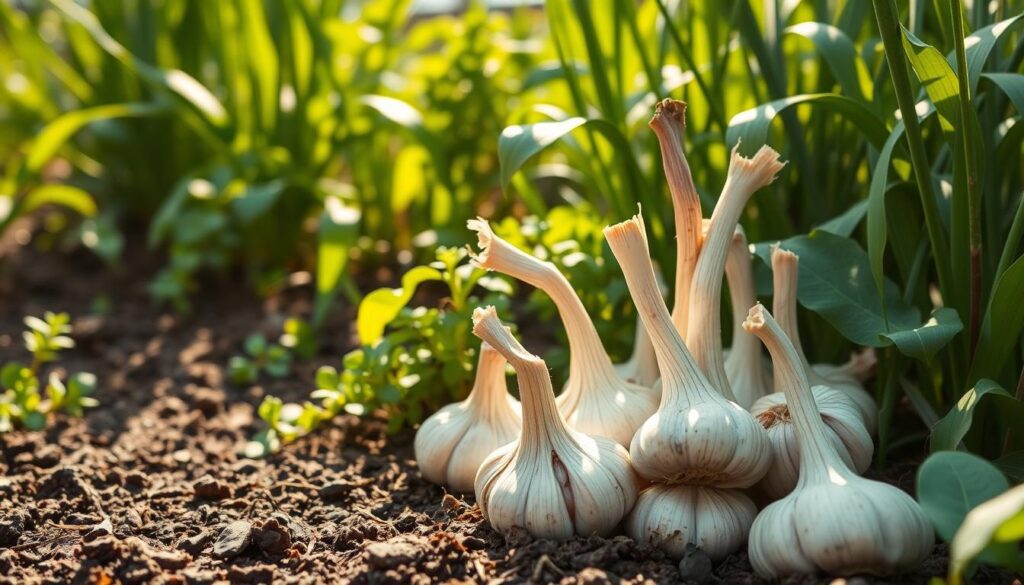
Ever thought a simple bulb could change your garden? Garlic is more than a tasty ingredient; it’s a powerful natural pesticide. Discover how garlic helps your plants grow strong and healthy. It makes gardening greener and safer, without harsh chemicals.
Key Takeaways
- Garlic acts as a natural pesticide, protecting plants from various pests.
- Utilising garlic in gardening encourages organic practices over chemical alternatives.
- Garlic is effective in boosting plant resilience and growth.
- Incorporating garlic can lead to healthier soil and a better garden ecosystem.
- Exploring garlic as a pesticide can transform your gardening methods.
Introduction to Garlic as a Plant Protector
Garlic is not just for cooking. It’s also a powerful tool in gardening. Its strong smell and taste hide many benefits. These include medicinal properties and the ability to keep pests away.
Learning about garlic’s benefits can change how you garden. It opens up new ways to use garlic, beyond just cooking.
Overview of Garlic’s Benefits
Garlic is great for gardens. It keeps pests away from your plants. Its strong smell and taste are effective against insects.
Garlic also fights off diseases. This makes your garden healthier. Using garlic in your garden can lead to stronger, more vibrant plants.
Historical Use of Garlic in Gardening
Garlic has been important for centuries. Ancient cultures used it in many ways. It was a staple in cooking, medicine, and pest control.
From Egypt to Rome, garlic was valued. It helped fight off pests and diseases. This shows its lasting importance in gardening.
The Natural Pesticide Properties of Garlic
Garlic is a great natural pesticide. It has special compounds that help fight pests without harming the environment. These compounds also stop harmful bacteria and fungi from growing on plants.
Antimicrobial Effects
Garlic’s power comes from allicin, a key compound. Studies show it stops some bacteria and fungi from growing. This makes garlic a safe, chemical-free way to protect your garden.
Insect Repellent Qualities
Garlic also keeps insects away. Its strong smell and taste are unappealing to many pests. Using garlic in your garden or as a spray can protect your plants from bugs.
Garlic’s ability to fight microbes and repel insects makes it very useful. Using it in your garden helps your plants grow strong and healthy, without the need for harmful chemicals.
How to Use Garlic in Your Garden
Garlic is a great natural way to keep pests away in your garden. Making a garlic spray is easy. Here’s how to make it and use it to keep your plants healthy and pest-free.
Garlic Spray Recipe
To make a simple garlic spray, you’ll need:
- 2-3 cloves of garlic
- 1 litre of water
- 1-2 teaspoons of liquid soap (like Castile soap)
Here’s how to make the garlic spray:
- Crush the garlic cloves well to get their oils out.
- Mix the crushed garlic with water in a bowl.
- Let it steep overnight to get stronger.
- Strain the liquid into a spray bottle and throw away the garlic.
- Add liquid soap to help it stick to the leaves.
This homemade garlic spray is a great DIY pesticide to keep pests away.
Application Techniques
Using the right ways to apply your garlic spray is key. Here are some tips:
- Use it in the early morning or late evening to avoid leaf burn.
- Spray it on the affected areas and make sure to cover all leaves.
- Reapply every week or after heavy rain to keep it working.
- Test it on a small area first to see if your plants react badly.
Using garlic spray in your garden is a natural way to keep it healthy.
Companion Planting with Garlic
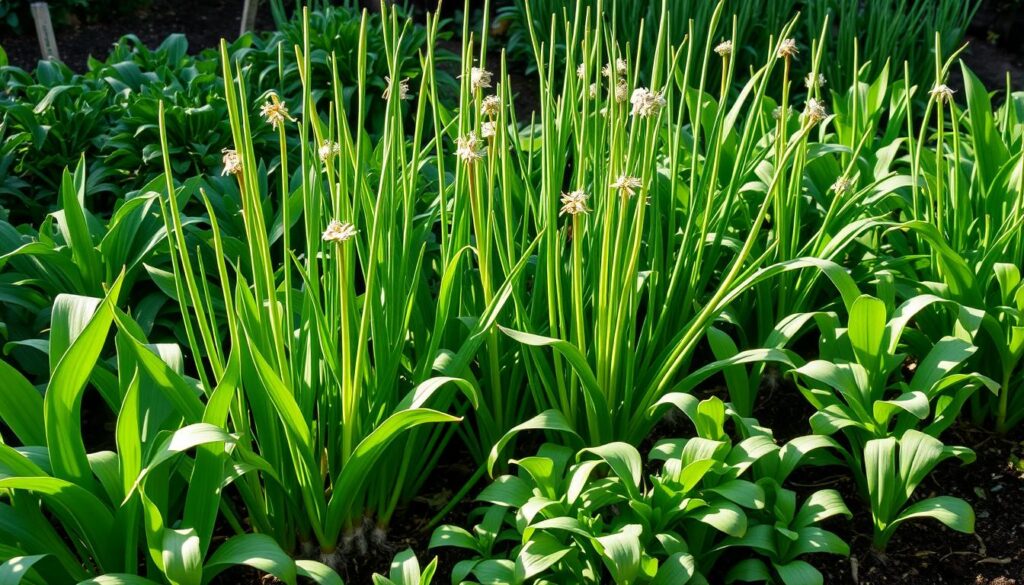
Companion planting is a smart way to garden. It pairs plants that help each other grow. Garlic, when planted with certain friends, controls pests and boosts growth. This makes your garden stronger and more resilient.
Ideal Companion Plants
Garlic is great with many herbs, veggies, and flowers. These plants protect and improve health in your garden. Some top choices include:
- Herbs: Basil, Mint, and Dill keep pests away and taste better.
- Flowers: Marigolds and Nasturtiums keep pests at bay.
- Vegetables: Onions and other alliums, like garlic, protect against pests.
In companion planting, these pairs make garlic more effective and plants healthier.
Enhancing Growth and Resilience
Planting garlic with the right friends helps manage pests and grows your garden. Garlic’s natural benefits mix with those of its companions. This creates a healthy soil environment.
With careful companion planting, you can grow a vibrant garden. It shows how garlic and its friends can thrive together.
Garlic in Pest Control Strategies
Garlic is a top choice for pest control, thanks to its natural powers. It’s a strong ally against many pests. Gardeners love it because it keeps pests away without using harsh chemicals.
Specific Pests its Effective Against
This powerful plant is great against many pests. Garlic is a must-have for fighting:
- Aphids
- Whiteflies
- Spider mites
- Slugs
- Thrips
Using garlic in your pest control helps your plants stay healthy. It also makes gardening more eco-friendly.
Comparative Efficacy with Chemical Pesticides
Chemical pesticides might solve problems fast, but they have big downsides. Garlic, on the other hand, is safer and fits with organic gardening. Here’s how they compare:
| Feature | Chemical Pesticides | Garlic Pest Control |
|---|---|---|
| Effectiveness | Quick kill of pests | Effective deterrent |
| Environmental Impact | Potentially harmful | Minimal impact |
| Health Risks | Possible health hazards | Generally safe for humans and pets |
| Cost | Higher expense | Cost-effective and readily available |
This comparison shows why gardeners choose garlic for pest control. It’s a healthier choice that keeps pests away without harming the environment.
Garlic’s Nutritional Benefits for Soil
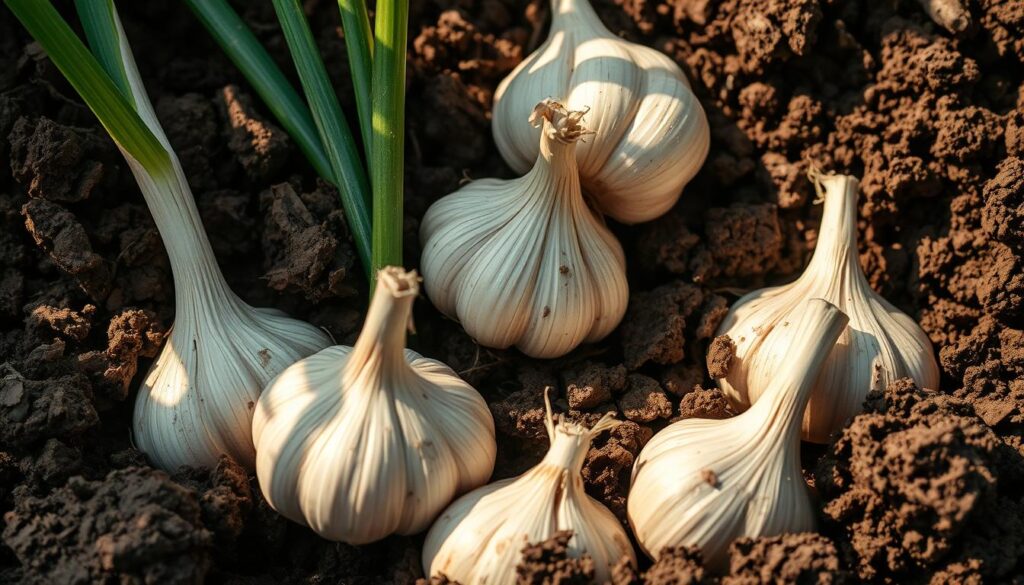
Garlic is key to better soil nutrition, boosting soil health. Adding garlic to your garden brings natural benefits for organic gardening. It helps create a thriving garden ecosystem.
Nutrient Release Mechanism
As garlic decomposes, it releases nutrients into the soil. These nutrients include nitrogen, phosphorus, and potassium. They are vital for plant growth and soil health.
Garlic’s breakdown improves soil structure and microbial activity. This makes nutrients more available to plants.
Soil Health Improvement
Using garlic for soil health creates a home for beneficial organisms. It increases organic matter, improving soil aeration and moisture. This leads to better soil texture and fertility.
Garlic’s natural properties also help plants grow strong. They resist disease and pests, making garlic great for sustainable gardening.
| Nutrient | Benefit to Soil |
|---|---|
| Nitrogen | Enhances plant growth and leaf development. |
| Phosphorus | Promotes root development and flowering. |
| Potassium | Improves overall plant health and resilience. |
Potential Drawbacks of Garlic Use
Garlic has many benefits for gardening, but it also has some downsides. Knowing these can help you avoid common problems. Some plants might not get along with garlic’s strong smell.
Common Misconceptions
Many think garlic is good for all plants. But, it’s not a magic solution for all pests. It’s key to understand each plant’s needs, not just rely on garlic.
Possible Plant Sensitivities
Be careful when adding garlic to your garden. Some plants might not like it and could grow poorly. Knowing which plants are sensitive helps you use garlic wisely.
Garlic Varieties and Their Benefits
Knowing about different garlic types is key for gardeners. Each variety has its own special traits and perks. By looking into hardneck and softneck garlic, you can pick the best for your garden.
Hardneck vs. Softneck Garlic
Garlic comes in two main types: hardneck and softneck. Hardneck garlic has a stronger stalk and taste. Its cloves are bigger and easier to peel, great for cooking.
Softneck garlic has a softer stalk, perfect for braiding and storing longer. It tastes milder, ideal for those who like a gentle garlic flavour.
Selecting the Right Variety for Your Garden
When picking garlic for your garden, think about a few things:
- Climate: Hardneck garlic does well in cold weather. Softneck garlic prefers milder climates.
- Usage: Decide if you want garlic for cooking or keeping. This helps choose the right type.
- Storage: If you want to keep garlic for a long time, softneck is better.
Choosing the right garlic variety depends on what you like and your garden’s conditions. Explore the variety of garlic to make your gardening more rewarding.
DIY Garlic Remedies for Common Plant Issues
Garlic is known for its healing powers, and it works well for plants too. It can help with fungal infections and mildew. These DIY garlic remedies are easy to make and use common ingredients. They’re great for anyone wanting to naturally improve their plants’ health.
Treating Fungal Infections
Fungal infections can harm your plants. But garlic can fight these problems. Here’s how to use garlic to treat your plants:
- Crush 5-10 cloves of garlic and soak them in 1 litre of water for 24 hours.
- Strain the garlic from the water.
- Add a little liquid soap to the garlic water to help it stick to the leaves.
- Use a spray bottle to apply the mixture to the infected areas of your plants.
- Do this every 7-10 days until the infection is gone.
This fungal infections treatment uses garlic’s antifungal properties to heal your plants.
Combating Mildew Dilemmas
It’s important to prevent and treat mildew in your garden. Garlic can help with this. Here’s a mildew solution you can try:
- Mix 2-3 crushed garlic cloves with ½ litre of water and let it sit for 12 hours.
- Strain the mixture and add 1 tablespoon of baking soda to the garlic-infused water.
- Spray this solution on plants with mildew.
- Do this every week to keep mildew away.
Using these mildew solutions can keep your garden healthy. It helps prevent future mildew problems.
Adding garlic remedies to your gardening routine can help with fungal infections and mildew. This makes your plants stronger and healthier. Always check on your plants after treatment to make sure they’re doing well.
Conclusion: Embracing Garlic in Your Gardening Routine
Thinking about natural pesticides in your garden? Adding garlic to your routine could change everything. It not only keeps pests away but also makes your soil better. This creates a lively garden ecosystem.
Using garlic in your garden can make your plants stronger. It also helps you use organic pest control methods. This is a step towards a greener gardening future.
Try garlic in your garden, whether as a DIY solution or by planting it with your crops. You’ll see how it can change your gardening. Garlic is a powerful tool for growing plants naturally.
So, why wait? Adding garlic to your garden helps protect your plants and supports a greener world. Let garlic be your gardening partner and see the good it does for your garden.