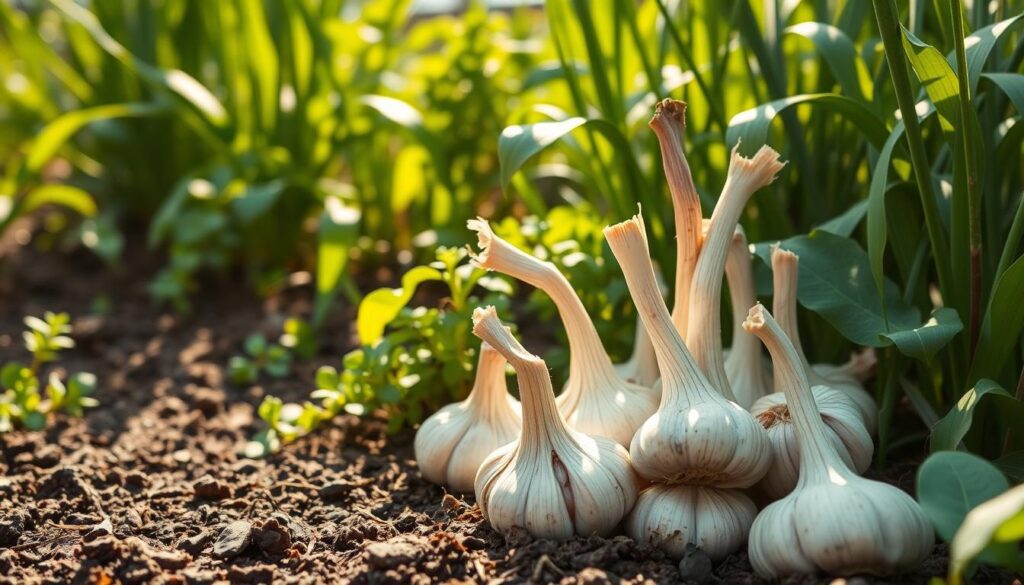
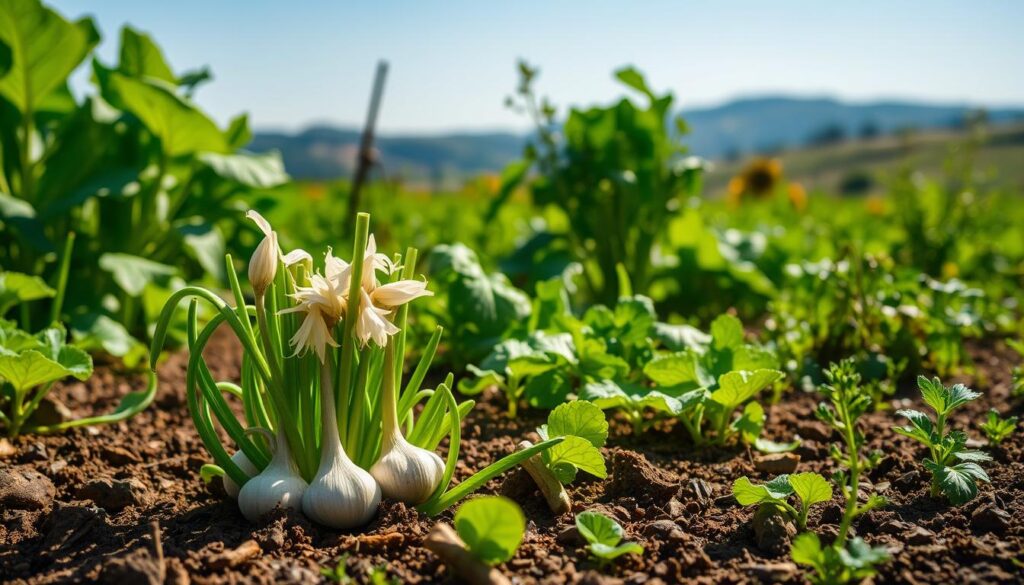
Ever thought about how garlic could make your garden healthier? It’s not just for cooking. Garlic is a natural pest fighter and boosts soil health. This article shows how garlic can protect your plants and make your garden better.
Adding garlic to your garden can make it a safe and healthy place. It’s a natural way to keep pests away without using harmful chemicals. So, is garlic good for plants? Let’s find out!
Key Takeaways
- Garlic serves as a powerful natural pesticide.
- It enhances soil health, contributing to your garden’s vitality.
- Using garlic is a cost-effective alternative to chemical pesticides.
- Incorporating garlic in your gardening practices can promote sustainability.
- Understanding garlic’s properties allows for informed gardening decisions.
Understanding Garlic’s Role in Gardening
Garlic is more than just a tasty ingredient. It plays a key role in gardening too. Its special properties help control pests and improve soil health. This makes your gardening work more effective.
How Garlic Acts as a Natural Pesticide
Garlic’s strong sulphurous compounds are great at keeping pests away. They keep aphids, spider mites, and Japanese beetles from your plants. Using garlic pest control in your garden helps protect your plants. It keeps them healthy and growing well, without the need for harmful chemicals.
Benefits for Soil Health
Garlic does more than just keep pests out. It also makes the soil better. Planting garlic with other crops adds organic matter to the soil. This helps beneficial microorganisms grow, making the soil healthier.
With a healthier soil ecosystem, your garden becomes more vibrant. Your plants grow stronger and produce more. It’s a win-win for your garden.
Natural Compounds in Garlic
Garlic is more than just a tasty addition to your meals. It’s packed with natural compounds that boost plant health and keep pests away. The key compound, allicin, is a powerful protector for your garden.
Allicin: The Magic Component
When garlic is crushed, allicin is released. This bioactive compound is a strong defence against garden pests. It not only repels insects but also fights off fungi and bacteria.
These qualities help keep your garden healthy and your plants strong. For more on garlic’s compounds and their use as pesticides, check out this research article.
Other Beneficial Compounds
Garlic also has compounds like diallyl disulfide and diallyl trisulfide. These add to garlic’s natural pesticide power and help plants stay healthy. Their antimicrobial properties protect your crops and promote plant health.
Using garlic in your garden can make it more productive and free from pests.
How to Use Garlic in Your Garden
Garlic can make your garden better for both pest control and plant health. Making a homemade garlic spray is a great way to keep pests away naturally. Planting garlic with other plants can also help your garden grow strong and pest-free.
Garlic Spray Recipe
Creating your own garlic spray is easy. Here’s how to do it:
- Crush 4-5 cloves of garlic.
- Mix the crushed garlic in 1 litre of water.
- Add a few drops of liquid soap to help the solution stick to plants.
- Let the mixture sit overnight.
- Strain it and mix with another 1 litre of water.
- Pour the garlic spray into a spray bottle.
Use this spray every week to keep pests away from your plants.
Companion Planting with Garlic
Planting garlic with other crops can make your garden healthier. Garlic repels pests when planted with roses and tomatoes. This way, your garden becomes a balanced ecosystem, good for all plants.
For more on using garlic to fight pests, check out natural pest solutions online.
Benefits of Garlic for Pest Control
Garlic is a great natural way to keep pests away from your garden. It helps protect your plants and makes your garden healthier. Using garlic for pest control is a smart choice for gardeners.
Repelling Common Garden Pests
The smell of garlic keeps pests like aphids, caterpillars, and slugs away. It’s a key tool for gardeners. Garlic can greatly reduce pest numbers, helping your plants grow well.
Many gardeners use garlic to keep their plants healthy. It’s a green way to care for your garden.
Attracting Beneficial Insects
Garlic also helps attract good insects to your garden. Ladybugs and lacewings eat pests that harm your plants. By using garlic, you create a welcoming space for these beneficial insects.
This balance is key to a healthy garden ecosystem. It ensures natural pest control works well.
Garlic’s Effect on Soil Microorganisms
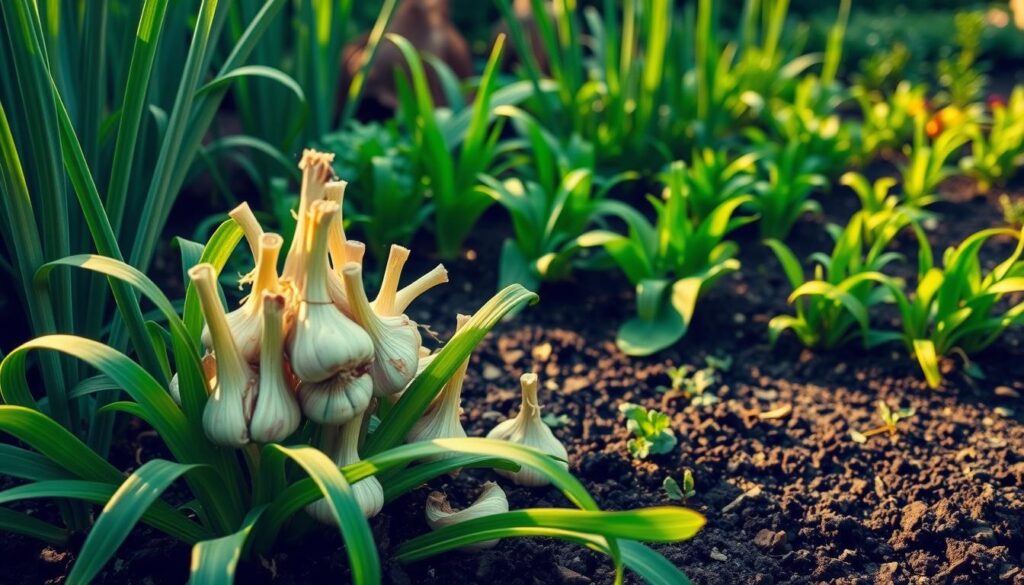
Adding garlic to your garden can greatly improve soil health. Garlic’s compounds boost microorganism activity, which is key for soil fertility. This helps create a lively ecosystem in the soil, benefiting your plants.
Enhancing Soil Fertility
Garlic’s natural properties are great for soil fertility. By using garlic in your garden, you attract beneficial microbes. These microbes break down organic matter and make nutrients available to your plants. This boosts their growth and health.
Promoting Healthy Plant Growth
More microorganism activity means healthier plants. Garlic makes the soil better for plants by improving its structure and nutrient levels. Your plants will grow stronger and produce more in a well-nourished soil environment.
Tips for Planting Garlic
For successful garlic cultivation, timing and growing conditions are key. Choosing the right planting times is vital for strong growth and a good harvest. Plant bulbs in autumn or early spring. This lets roots grow before cold weather hits.
Best Times to Plant Garlic
Garlic needs a good planting time. Here are some planting garlic tips to remember:
- Autumn planting is best in most UK areas, letting garlic grow before winter.
- Spring planting works in milder places, but autumn usually gives better yields.
- Watch your local climate to find the best planting time for you.
Ideal Growing Conditions
Garlic needs the right environment to grow well. Here are the best growing conditions:
- Use well-drained soil with organic matter for nutrients.
- Garlic loves full sun, so pick a spot with at least six hours of sunlight daily.
- Keep the soil moist but not too wet for healthy garlic growth.
Potential Drawbacks of Using Garlic
Using garlic in your garden can have its downsides. It might not work well with all plants. Knowing these limitations is key to keeping your garden healthy.
When Garlic May Not Be Effective
Garlic is great for many things, but it’s not a fix for all problems. For severe pest issues, you might need more than garlic. Using different methods can help protect your plants better.
Possible Plant Compatibility Issues
Garlic can be tricky to pair with other plants. Legumes and potatoes might not do well with it. It’s important to think about which plants go together in your garden. This helps avoid problems that can slow down growth.
Garlic for Disease Prevention
Garlic is a powerful tool in gardening, helping prevent diseases. It has compounds that fight off fungi and bacteria, keeping plants healthy. Using garlic in your garden makes plants stronger and less likely to get sick.
Fungal and Bacterial Resistance
Garlic fights off fungal problems like powdery mildew and bacterial wilt. These issues can harm plant health and productivity. Garlic in your garden helps protect plants from these threats.
Regular use of garlic creates a shield against infections. This reduces the risk of severe diseases.
Strengthening Plant Immunity
Garlic also boosts a plant’s immune system. It contains compounds that help plants defend themselves against stress. This makes plants more resilient and helps them grow well.
Choosing garlic for your garden is a smart move. It offers quick benefits and supports long-term plant health.
Conclusion: Embrace Garlic in Your Garden
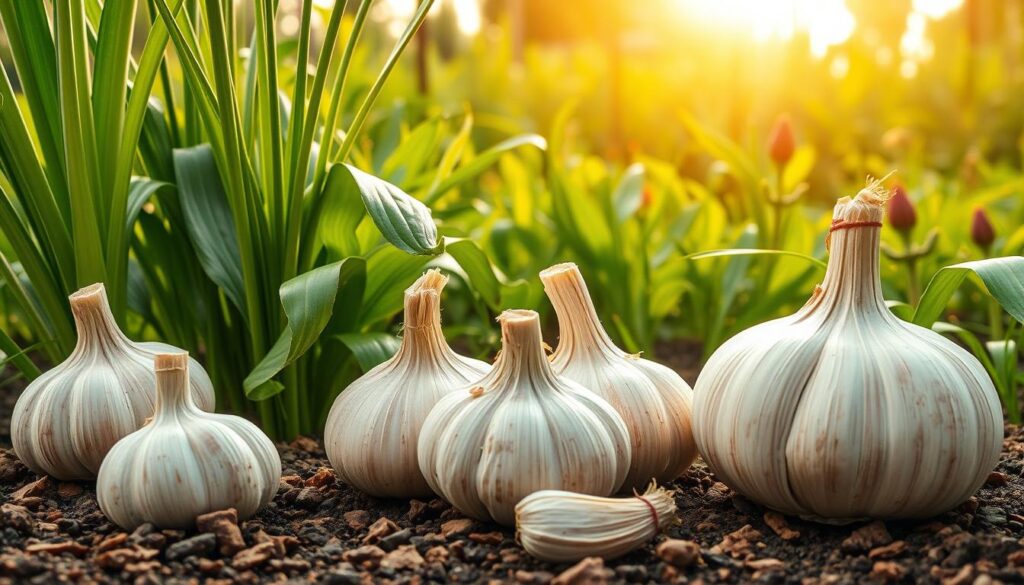
Adding garlic to your garden can make it healthier and more productive. It’s not just for keeping pests away. Garlic also makes the soil better and helps plants grow strong.
By making your own garlic solutions and planting garlic with other plants, you help the environment. This makes your garden more resilient and eco-friendly.
Now is a great time to try garlic in your garden. It helps control pests and makes the soil richer. This means your plants will grow better, and you can enjoy tasty garlic in your cooking.
Don’t wait to start using garlic in your garden. Small changes can make a big difference. Try garlic today and see how it changes your garden for the better!