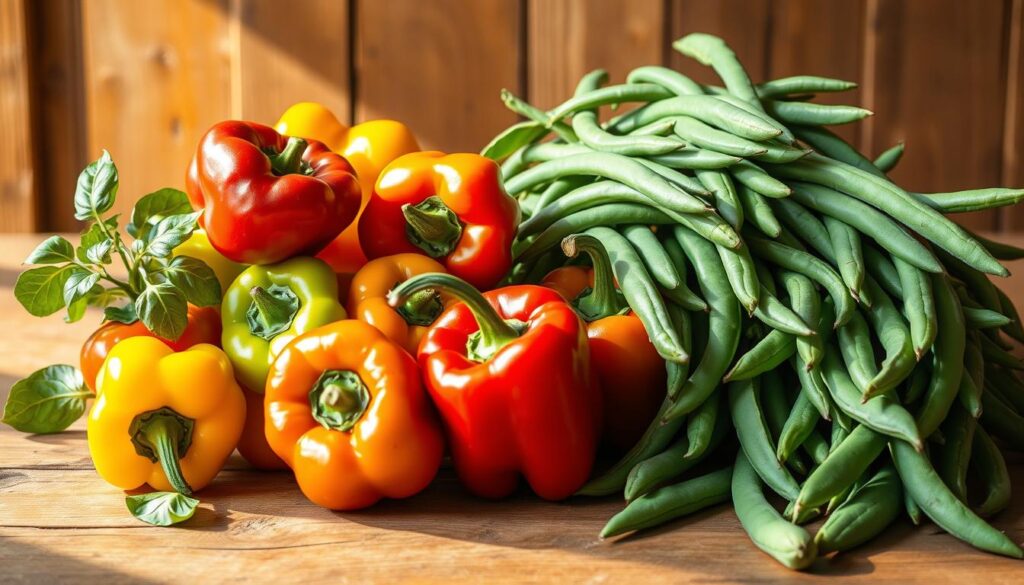
Ever wondered why some gardeners love companion planting, while others advise against it? Growing peppers and beans together can be tricky. It’s all about the science of allelopathy. This fascinating topic can help you grow better plants and get more from your garden.
Some plants release chemicals that can harm their neighbours. This is what allelopathy is all about. Knowing about it is key to growing healthy plants and getting the most from your garden.
Key Takeaways
- Understanding allelopathy is vital for successful gardening.
- Peppers can negatively affect the growth of beans.
- Companion planting requires careful consideration of plant relationships.
- Improving garden harmony involves selecting compatible plants.
- Awareness of chemical interactions can enhance your yields.
Understanding Allelopathy and Its Effects
To grow a healthy garden, knowing about allelopathy is key. This natural process happens when some plants release chemicals that stop others from growing. These chemicals can harm plant health and growth, making gardening tricky. Learning about allelopathy helps you choose the right plants to grow together.
What is Allelopathy?
Allelopathy is when one plant makes chemicals that affect others. These chemicals, called allelochemicals, slow down other plants’ growth. For example, some plants release these chemicals into the soil or air. This stops seeds from germinating or new plants from growing nearby.
Knowing which plants have these effects helps avoid problems in your garden.
How Does Allelopathy Work?
Allelopathy works through chemicals that plants make and release. These chemicals can harm how plants grow, get nutrients, and stay healthy. For instance, sunflowers can stop beans and peas from growing well.
When planning your garden, think about these effects. This helps you avoid problems caused by these chemicals.
The Relationship Between Peppers and Beans
Understanding the relationship between pepper plants and bean plants is key. Each plant has its own growing needs. These needs can affect their growth and how well they do when grown together.
Growing Conditions for Peppers
Pepper plants love warm, sunny spots. They need at least six hours of direct sunlight every day. They also prefer soil that drains well and has a pH between 6.0 and 6.8.
Watering should be just right. Too much water can cause root rot. Not enough can slow down their growth.
Growing Conditions for Beans
Bean plants prefer slightly moist soil. They do well in conditions that keep their soil moist. They need at least four to six hours of sunlight, which is less than pepper plants.
Their soil pH is similar to pepper plants, around 6.0 to 7.0. But beans are more flexible with soil types.
Knowing these differences is important when planning your garden. Each plant has its own needs. This can lead to competition for nutrients and water, affecting their growth and yield if grown together.
Why Peppers and Beans Shouldn’t Be Planted Together
Peppers and beans in the garden can cause big problems. They both need lots of nutrients and space. This can make it hard for them to grow well together.
Competing Nutrients and Space
Peppers and beans take up a lot of nutrients, mainly nitrogen. This competition can slow down their growth. Their roots also spread out, taking up more space and making things worse.
Impact on Growth Rates
When they grow together, one plant can block the sunlight for the other. This can hurt their growth rates. Peppers need more sunlight and space, while beans do better in the shade.
| Plant Type | Nutrient Demand | Growth Space Needed | Impact on Companion |
|---|---|---|---|
| Peppers | High | Larger | Can overshadow |
| Beans | Moderate to High | Medium | Can stifle growth |
Common Mistakes in Companion Planting
Many gardeners make mistakes in companion planting. These errors can lead to poor yields and sick plants. It’s key to choose plants that grow well together.
Consider their nutrient needs and growth patterns. This ensures a healthy garden.
Ignoring Plant Compatibility
Plant compatibility is vital in companion planting. Neglecting this can cause plants to grow poorly. This wastes space and harms plants.
For example, plants with different nutrient needs can struggle. Researching plant needs helps avoid these problems.
Overlooking Soil Health
Soil health is critical for gardening success. Many gardeners overlook its importance. Poor soil can harm plant growth.
Testing and improving soil quality is essential. This helps plants grow well together. Focus on soil health for a thriving garden.
Signs of Poor Growth in Mixed Planting
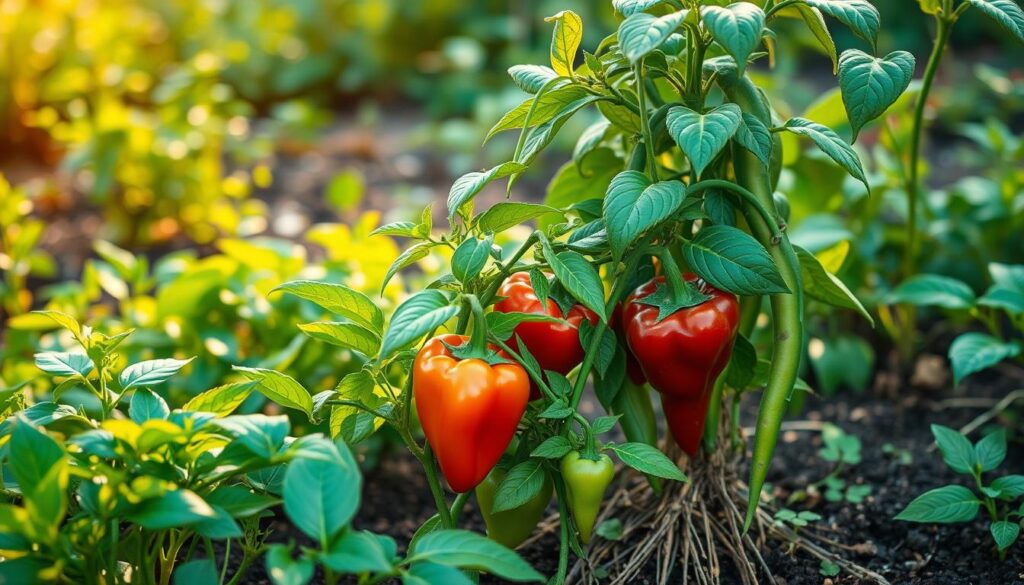
It’s important to spot signs of poor plant growth to keep your garden healthy. When you mix plants like peppers and beans, you might see signs of stress. Knowing these signs helps you fix problems quickly.
Stunted Growth
Stunted growth happens when plants fight for nutrients and space. This can make them shorter or have fewer leaves. If your peppers are not growing well, it might be because of beans nearby.
Discolouration and Wilting
Yellow leaves can mean many things, like not enough nutrients or bad soil. If leaves are wilting too, it’s a sign of trouble. This could be because of too much competition from other plants.
Alternative Companion Plants for Peppers
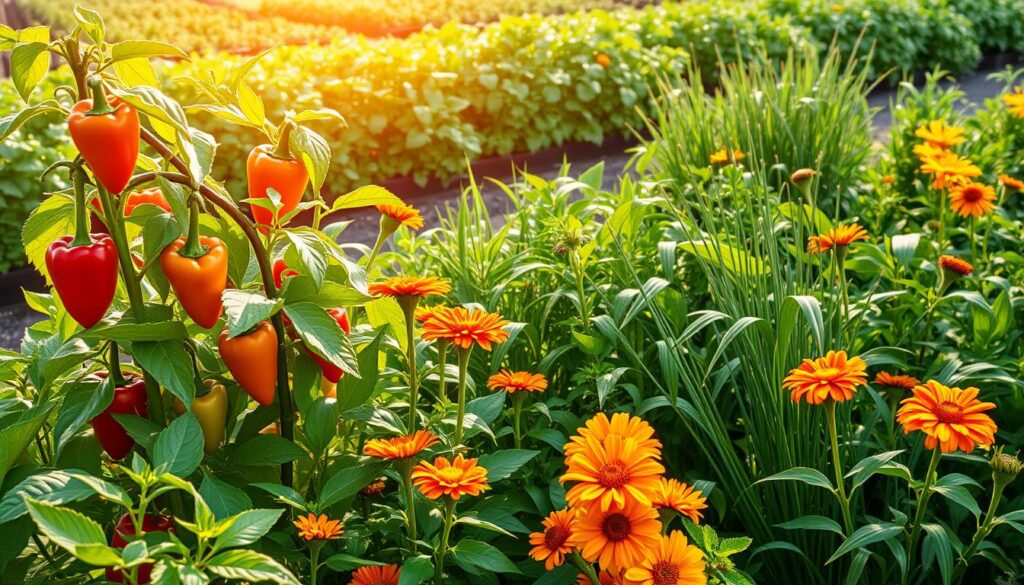
Choosing the right companion plants for peppers is key. They help your peppers grow strong and healthy. By picking the right vegetables and herbs, you can make your garden more productive.
Suitable Vegetables
Some vegetables are great friends to peppers. They help your peppers grow better. Here are some top picks:
- Basil – This herb adds flavour to peppers and keeps pests away.
- Carrots – Their deep roots improve soil aeration and don’t compete for nutrients.
- Onions – Their scent keeps aphids and other pests from peppers.
Herbs that Pair Well
Some herbs are perfect friends for peppers. They make the soil better and keep pests off. Try these:
- Oregano – It loves the same conditions as peppers and tastes great.
- Thyme – It attracts good bugs, making your garden a healthy place.
Exploring Bean Varieties for Your Garden
Choosing the right bean varieties can make gardening more enjoyable. Each type of bean has special qualities that fit different gardening needs. Whether you have little space or want quick results, knowing your options is key. A wide range of beans can make your garden healthier.
Types of Beans to Consider
Here are a few popular types of beans to think about for your garden:
- Bush Beans: These beans grow compact and are excellent for gardens with limited space. They mature faster than other varieties, making them ideal for staggered planting.
- Pole Beans: Pole beans require support structures and offer higher yields. They take longer to mature and are great for vertical gardening.
- Snap Beans: These are perfect for eating fresh. They can be either bush or pole types and provide a delightful crunch.
- Dry Beans: For those who enjoy preserving their harvest, dry beans are a superb choice, as they can be stored for long periods.
Benefits of Diverse Bean Cultivation
Cultivating a variety of beans not only enhances your garden’s aesthetics but also improves soil health. This occurs through:
- Nitrogen Fixation: Beans are legumes, which means they can fix nitrogen in the soil. This natural process enriches the soil and benefits future crops.
- Pest Management: Different bean varieties can help deter pests, reducing the need for chemical interventions.
- Enhanced Resilience: A diverse range ensures that even if one variety fails due to environmental factors, others may thrive.
Incorporating various bean varieties into your gardening plan can be rewarding. You will foster crop diversity, improve soil quality, and enjoy a more fruitful harvest.
Soil Health: Key to Successful Gardening
A thriving garden starts with good soil health. Soil analysis shows what nutrients and pH levels your soil has. This info helps you improve your garden’s soil.
Importance of Soil Analysis
Knowing your soil’s state helps spot growth blockers. Regular tests show nutrient and acidity levels. This lets you add the right stuff to your soil for better plant growth.
Tips for Improving Soil Quality
To better your soil, try these:
- Incorporate compost: Compost adds nutrients and improves soil structure.
- Use organic fertilisers: They boost nutrients without synthetic risks.
- Plant cover crops: Crops like clover or rye boost fertility and stop erosion.
These steps can greatly improve your soil. This leads to a more rewarding gardening journey.
Pest Management in Mixed Plantings
Effective pest management is key in organic gardening, like when growing peppers and beans together. Knowing the common pests in vegetable gardens helps protect your plants. This ensures a good harvest. Peppers and beans face similar pests, which can harm their health and reduce yields.
Common Pests Affecting Peppers and Beans
Many pests can damage your garden. Key pests include:
- Aphids
- Spider mites
- Whiteflies
- Cutworms
These pests target both peppers and beans. This shows the need for good pest management using organic methods.
Effective Organic Solutions
Using natural methods can control pests and keep your garden healthy. Here are some organic pest management tips:
- Introduce beneficial insects: Ladybugs and lacewings eat aphids, keeping a natural balance.
- Build barriers: Fine mesh fabric or row covers protect plants from pests.
- Utilise natural repellents: Neem oil or insecticidal soap sprays keep pests away without harming good insects.
- Maintain plant health: Healthy plants can better fight off pests.
Knowing the pests that target peppers and beans and using organic solutions can make your garden thrive. This minimises the impact of pests.
| Pest | Common Symptoms | Organic Management Options |
|---|---|---|
| Aphids | Curled leaves, sticky residue | Ladybugs, neem oil |
| Spider Mites | Webbing, yellowing leaves | Insecticidal soap, water sprays |
| Whiteflies | Yellow leaves, honeydew secretion | Yellow sticky traps, natural predators |
| Cutworms | Chewed stems, sudden wilting | Row covers, hand-picking |
Tips for Successful Crop Rotation
Using crop rotation in your garden can make the soil healthier and plants stronger. This method keeps the soil rich and ensures plants grow well. It also helps fight pests and diseases, making your garden better.
Benefits of Crop Rotation
Crop rotation has many benefits, including:
- Improving soil fertility by switching between plants that use a lot of nutrients and those that fix them, like legumes.
- Lowering the chance of pests and diseases by breaking their life cycles.
- Boosting garden diversity, which makes your crops more resilient.
Effective Rotation Strategies
Here are some tips for crop rotation:
- Put plants in groups based on their nutrient needs. Move heavy feeders like tomatoes away from light feeders like carrots.
- Use legumes after heavy feeders to add nitrogen back to the soil.
- Plant deep-rooted plants to loosen the soil, improving its health.
For more tips on crop rotation and gardening, check out this resource. Using these strategies can make your gardening more sustainable and productive.
Conclusion: Garden Harmony through Thoughtful Planting
To get true garden harmony, you need to plant carefully. Knowing about allelopathy helps you pick plants that work well together. This makes your garden healthier and your veggies grow better.
Not all plants get along. Some can even stop others from growing. So, it’s key to choose plants that are good friends in your garden.
Using smart strategies like crop rotation and improving soil health helps a lot. Every choice you make helps your garden grow strong and give lots of food. This way, your hard work will pay off with a big harvest.
By focusing on garden harmony, you’re not just growing plants. You’re building a lively ecosystem. Your garden will be a success, full of life and flavour. It will make your meals even more special.