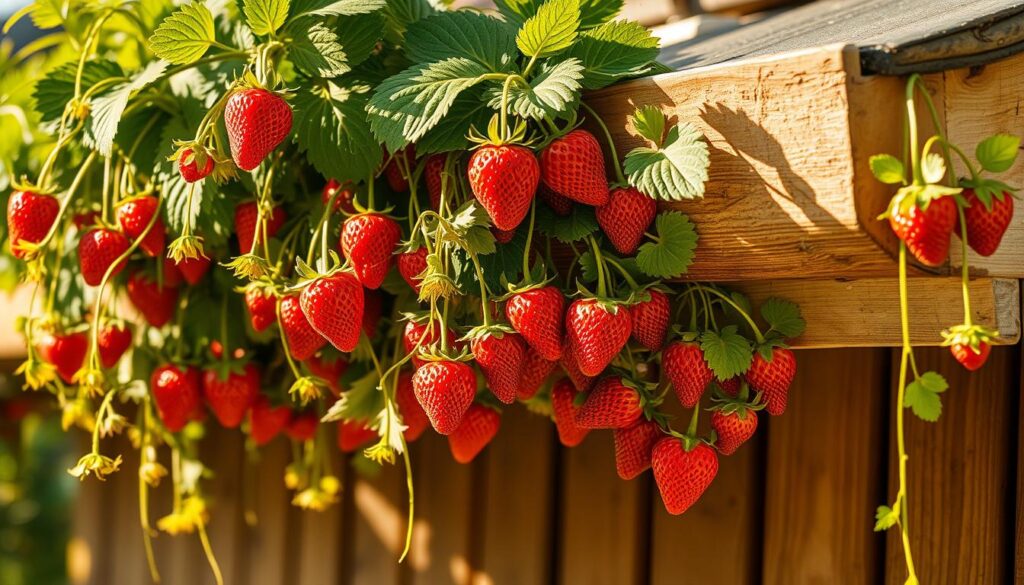
Ever thought about using a rain gutter for growing strawberries? Many think strawberries need big garden beds to grow well. But, a rain gutter strawberry farm could change that. It shows how to grow strawberries in small spaces, making gardening more fun.
Key Takeaways
- Growing strawberries in a rain gutter is a practical solution for limited spaces.
- Rain gutter strawberry farms can enhance accessibility and ease of maintenance.
- Understanding the ideal conditions for strawberries is key for success.
- Certain strawberry varieties are perfect for gutter systems.
- Proper preparation of your rain gutters is vital for healthy plants.
- Regular watering and fertilising are essential for the best yields.
- Good pest management keeps your plants healthy for longer.
What You Need to Know About Growing Strawberries
Growing strawberries in rain gutters is a clever way for gardeners to make the most of their space. It offers better drainage, uses space wisely, and makes picking fruits easier. To grow perfect strawberries, you must create the best conditions for them.
Benefits of Growing Strawberries in Rain Gutters
Using rain gutters for strawberries has many benefits:
- Efficient Drainage: It keeps water away, stopping roots from rotting.
- Space-Saving: It’s great for small gardens because it uses vertical space well.
- Accessibility: It makes picking easier and keeps plants away from soil diseases.
Ideal Conditions for Strawberry Growth
Creating the right environment is key for healthy strawberries. Here are some important factors:
- Sunlight: They need at least six hours of direct sunlight a day.
- Temperature: The best temperature is between 15°C to 25°C.
- Moisture: They need consistent moisture, keeping the soil damp but not too wet.
Types of Strawberries Perfect for Gutters
When picking strawberry varieties for gutters, consider these two:
- June-Bearing: They give one big harvest in late spring or early summer.
- Ever-Bearing: They produce fruit all season, giving a steady supply.
Preparing Your Rain Gutter
Getting your gutter ready for strawberry plants is key to success. The right size is essential for growth. Cleaning the gutters is also vital to avoid contamination. We’ll look at choosing the right gutter size and why cleaning is so important.
Selecting the Right Gutter Size
The size of your gutter matters a lot for strawberry plants. A common size is 4 to 6 inches wide. This size gives enough room for roots and is easy to handle.
Smaller gutters might not let plants grow as much. But bigger ones can hold too much water, which is bad.
Cleaning Your Gutter Before Use
Cleaning your gutter before planting is a must. Old dirt, pollutants, or leftovers from before can harm your plants. Use warm soapy water and a brush to clean it well.
This makes sure your gutter is clean and ready for your strawberry plants. It gives them a healthy start.
| Gutter Size | Advantages | Disadvantages |
|---|---|---|
| 4 inches | Compact, easy to manage | Limited soil volume |
| 5 inches | Balanced size for growth | Requires more effort to set up |
| 6 inches | More room for roots, potentially better yield | Can hold excess moisture |
Choosing the Right Strawberries
Choosing the right strawberries is key for a successful strawberry planting gutter. The type of strawberry you pick affects your yield and plant health. You have two main options: June-bearing and ever-bearing strawberries. Each type suits different growing conditions.
June-Bearing vs. Ever-Bearing Strawberries
June-bearing strawberries give a big harvest in late spring or early summer. They are sweet and juicy, making them a favourite among gardeners. Ever-bearing strawberries, on the other hand, produce fruit all season. They offer a second, lighter harvest in late summer and sometimes in autumn too.
- June-Bearing: Excellent flavour, high yields during a short period.
- Ever-Bearing: Steady production, ideal if you want fresh strawberries over an extended time.
Disease-Resistant Varieties
Choosing disease-resistant strawberry varieties boosts your garden’s productivity. These varieties fight off common diseases better. This means you get more fruit with less work. Look for ‘Cavendish’ or ‘Albion’ for their strong disease resistance.
Using these varieties in your strawberry planting gutter keeps your plants healthy. It also ensures a rich harvest all season long.
Planting Strawberries in Gutters
Planting strawberries in gutters is a creative way to garden. It makes gardening easier and more productive. To do it right, you need to fill the gutter with compost and space your plants correctly. Let’s look at how to fill your gutter with compost and space your strawberries well.
How to Fill Your Gutter with Compost
To make your strawberry gutter garden work well, start with good compost. Good compost keeps moisture, gives nutrients, and helps roots grow. Here’s how to do it:
- Clean your gutters before you fill them.
- Put small stones at the bottom for drainage.
- Mix compost and peat moss in equal parts for the best soil.
- Fill the gutters, leaving a bit at the top for water.
Spacing Your Strawberry Plants
Spacing your strawberry plants right is key for air and growth. Plant them about 30 cm apart. This lets each plant grow without being too crowded. Follow these tips for spacing:
- Mark spots evenly along the gutter for even planting.
- Space bareroot plants well for their roots to spread.
- Some strawberry varieties need a bit more space to grow well.
Watering Your Strawberry Plants
Watering strawberry plants right is key to their health. They need steady moisture to grow well. Without enough water, strawberries may not grow as they should, leading to fewer fruits.
Learning how to keep strawberries moist is important. It can greatly improve your gardening success.
Importance of Consistent Moisture
Keeping strawberries moist helps them avoid stress. This stress can harm their fruit production and quality. They need a steady water supply, more so during important growth times.
Not enough or uneven watering can cause wilting and poor fruit growth. It also makes them more likely to get sick. Moist soil helps roots grow strong, letting plants take in nutrients better.
Techniques for Efficient Watering
There are ways to make sure your strawberry plants get the right water:
- Drip Irrigation: This method waters plants at their base, cutting down on evaporation and runoff.
- Soaker Hoses: These hoses let water slowly soak into the soil, giving plants even moisture.
- Moisture-Retaining Soil Amendments: Adding things like coconut coir or peat moss helps keep soil moist. This gives plants a steady water supply.
Using these watering methods can help keep strawberries moist. This ensures they grow well all season long.
| Watering Technique | Advantages | Considerations |
|---|---|---|
| Drip Irrigation | Reduces water wastage, targets root zone | Initial setup can be costly |
| Soaker Hoses | Easy to install, low maintenance | Needs regular monitoring for clogs |
| Moisture-Retaining Soil Amendments | Improves water retention, consistency | Can affect soil pH, may require amendment over time |
Fertilising Strawberries for Better Yield
To get a great strawberry crop, knowing how to fertilise is key. This part talks about the best fertilisers for strawberries. It helps you give your plants the nutrients they need when they need them.
Best Fertilisers for Strawberries
Strawberries need a mix of nutrients like nitrogen, phosphorus, and potassium. Organic stuff like well-rotted manure and compost is good for the soil and the planet. If you prefer store-bought, look for berry fertilisers. A balanced NPK fertiliser is great for growth.
When and How to Fertilise
When you fertilise matters a lot for strawberry health. Fertilise in early spring when they start growing. Then, do it again after the first fruit. Spread fertiliser around the base of the plants for best absorption. Always follow the fertiliser’s instructions to avoid harming your plants.

| Fertiliser Type | Nutrient Composition | Usage Timing | Application Method |
|---|---|---|---|
| Compost | High in organic matter | Spring and post-harvest | Spread around base |
| NPK Fertiliser | Balanced NPK formula | Early spring, after fruiting | Granular, mix into soil |
| Fish Emulsion | High nitrogen | Spring | Dilute and water |
| Bone Meal | High phosphorus | Pre-planting | Mix into soil |
Using the right fertiliser and timing helps your strawberries grow well. It makes them taste sweeter and more flavourful. By choosing the right fertiliser and following a good schedule, you’ll get a big harvest.
Managing Pests and Diseases
Keeping your strawberry plants healthy means watching out for pests and diseases, which can be a problem in gutters. It’s important to manage pests in strawberry gutters to protect your crop and increase yield. Spotting problems early helps you make the right changes to keep your strawberries safe.
Common Pests to Watch For
Strawberries face many pests that can harm their growth and quality. Some common ones are:
- Spider mites
- Aphids
- Slugs
- Whiteflies
These pests can cause a lot of damage if not treated. Spider mites suck the sap, while slugs eat the berries. It’s key to watch these pests closely.
Preventative Measures for Healthy Plants
Preventing diseases is key for healthy strawberries. Here are some ways to do it:
- Proper spacing to improve air circulation
- Companion planting to attract beneficial insects
- Using organic solutions such as soap sprays for aphids
- Employing physical barriers like floating row covers to protect against pests
Planting marigolds can help control nematodes by attracting them to their roots. For more tips on pest control, check out this resource. Using these methods can help grow strong strawberry plants and enjoy a good harvest.
Harvesting Your Strawberries
Harvesting strawberries is a joy that lets you enjoy your hard work. It also makes your strawberries taste sweeter. Knowing when to pick them is key for the best flavour.
When to Harvest for Maximum Sweetness
Timing is everything when picking strawberries. Look for a bright red colour to know they’re ripe. Check them every day as the season starts.
The best time to pick strawberries is in late spring to early summer. Soft spots and a sweet smell mean they’re ready. Harvest in the morning to keep them fresh.
Techniques for Safe Harvesting
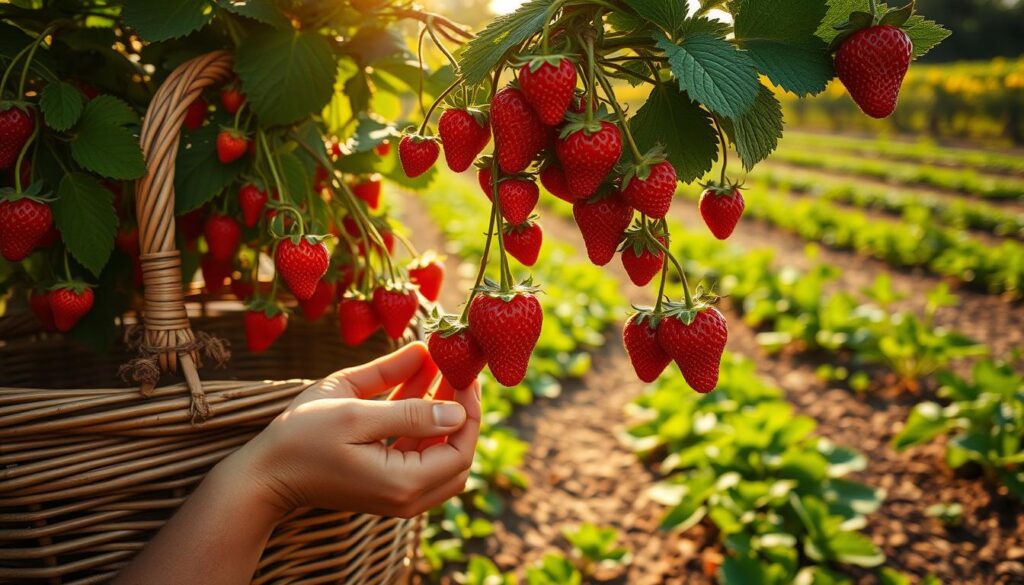
Harvesting strawberries the right way keeps your plants healthy. Use both hands to pinch the stem and pull gently. A twist can help remove the berry without damaging the leaves.
Put ripe strawberries in a basket carefully to avoid squishing them. Check for any berries left behind to prevent pests or diseases.
Tips for Year-Round Strawberry Production
To keep strawberry plants healthy all year, you need to take good care of them, even in winter. Protecting your plants from cold weather ensures a constant supply of strawberries. Here are some tips to keep your strawberries safe and grow well.
How to Protect Your Plants in Winter
Protecting your strawberries in winter is key for year-round production. Here are some steps to follow:
- Cover your strawberry beds with a thick layer of mulch to insulate the roots from frost and extreme cold.
- Consider using row covers to shield plants from harsh weather while allowing light and moisture to penetrate.
- Be vigilant about moisture; ensure your strawberries receive enough water before the ground freezes.
- Avoid fertilising late in the season, as new growth may become vulnerable to cold damage.
Companion Plants That Benefit Strawberries
Choosing the right plants to grow with strawberries can make them healthier and more productive. Some plants not only keep pests away but also improve the soil:
| Companion Plant | Benefits |
|---|---|
| Spinach | Provides ground cover, suppressing weeds and retaining moisture. |
| Basil | Repels pests like flies and mosquitoes, while also improving the flavour of strawberries. |
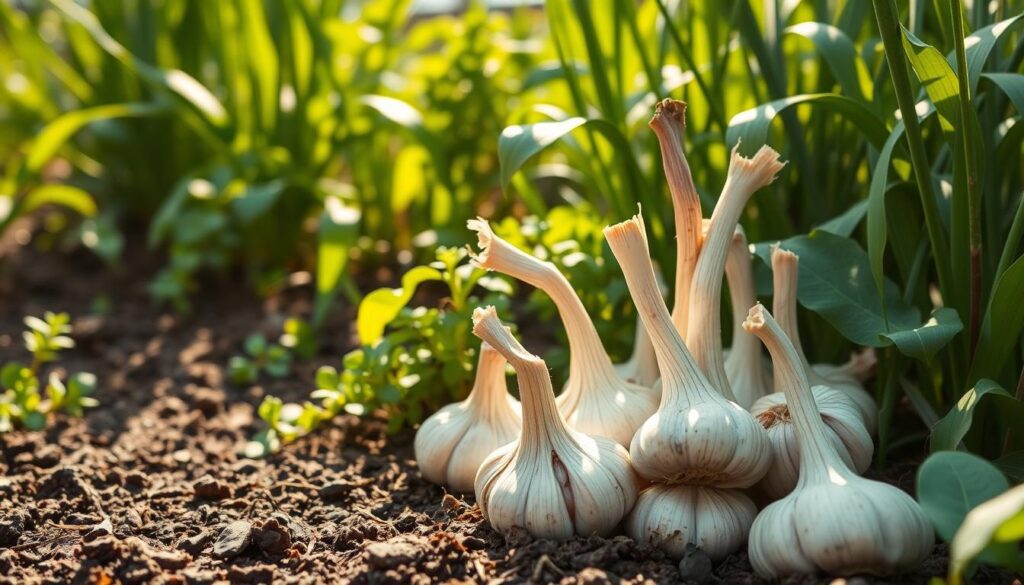
| Garlic | Acts as a natural pest deterrent and improves overall plant vigour. |
| Marigolds | Repel nematodes and other harmful pests, benefiting strawberry health. |
Additional Considerations
Starting your strawberry-growing journey? Think about the bigger picture of vertical gardening. Using gutter systems can make the most of your outdoor space, perfect for small areas. It not only saves ground space but also looks great and improves air and light for plants.
There’s more to gutter gardening than looks. It lets you pick fresh strawberries and helps your garden grow in a green way.
Exploring Vertical Gardening Benefits
Vertical gardening changes how you garden. It saves space and makes your garden neat and easy to manage. It’s great for those who find gardening hard, as it’s less tiring.
It leads to healthier plants and more food. You’ll see your garden thrive and grow more than ever before.
Using Gutter Systems Beyond Strawberries
Strawberries are just the start. Gutter systems can hold herbs, greens, and flowers too. This adds colour and taste to your cooking.
By growing different things, you get the most out of your space. Your garden stays full of life and flavour all year.