
Ever wondered why some plants grow better together? Tomatoes and basil are a perfect example. They not only help each other grow but also add amazing flavour to our food. Let’s dive into the world of gardening with these two friends and see how they make our gardens better.
Key Takeaways
- Tomatoes and basil thrive together in the garden, making them excellent companions.
- Their relationship enhances growth and flavour, creating a win-win for gardeners.
- Companion planting promotes sustainable gardening practices.
- Growing tomatoes and basil together can help control pests naturally.
- This duo adds richness to various culinary dishes, elevating everyday meals.
- Home gardening can provide freshness and sustainability in your kitchen.
The Fascinating History of Tomatoes and Basil
Exploring the history of tomatoes and basil is a journey of discovery. It shows how these ingredients went from simple beginnings to being key in Italian cooking. Their history adds depth to many dishes we love today.
Origins of Tomatoes
Tomatoes started in the Andes of South America, where the Aztecs first grew them. When they came to Europe in the 1500s, many were unsure if they were safe to eat. But, over time, tomatoes became a favourite in many places, including Italy.
Origins of Basil
Basil has a fascinating history too. It comes from India and Iran. It was loved in ancient Greece and Rome for its beauty and good luck. In Italy, basil became a key ingredient, often paired with tomatoes.
How They Became Culinary Partners
Tomatoes and basil grew together in gardens and kitchens. Their flavours complement each other perfectly. This made them a classic pair in Italian cooking and around the world.
Understanding Companion Planting
Companion planting is a way to grow plants together for their mutual benefit. It uses the natural connections between plants to help them grow better and produce more. By knowing these plant relationships, you can make your garden a thriving ecosystem.
What is Companion Planting?
This method uses the good relationships between plants to help them grow. Some plants keep pests away, while others attract helpful insects. It’s about making smart choices to make your garden more productive.
Benefits of Growing Companion Plants
Companion planting offers more than just pest control. It can make your garden better in many ways. Here are some benefits:
- Plants can share nutrients better because of their roots.
- Some plants can fight off diseases naturally.
- They can attract insects that help with pollination.
- Together, plants can grow more and produce better.
Why Tomatoes and Basil Are Best Friends
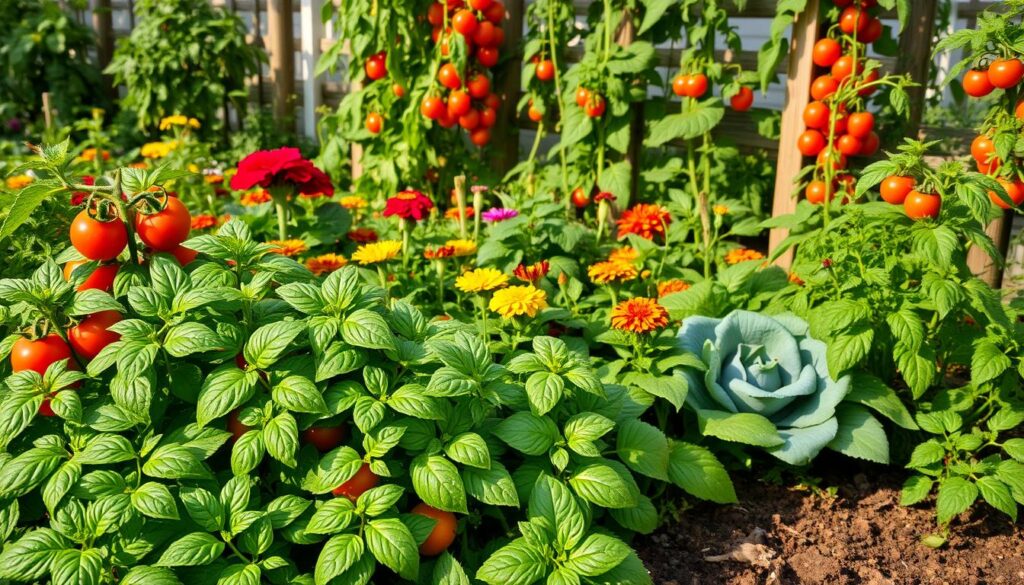
The bond between tomatoes and basil is more than just about taste. They work together to keep pests away, make flavours better, and grow stronger. Knowing these perks can make gardening more fun.
Natural Pest Control
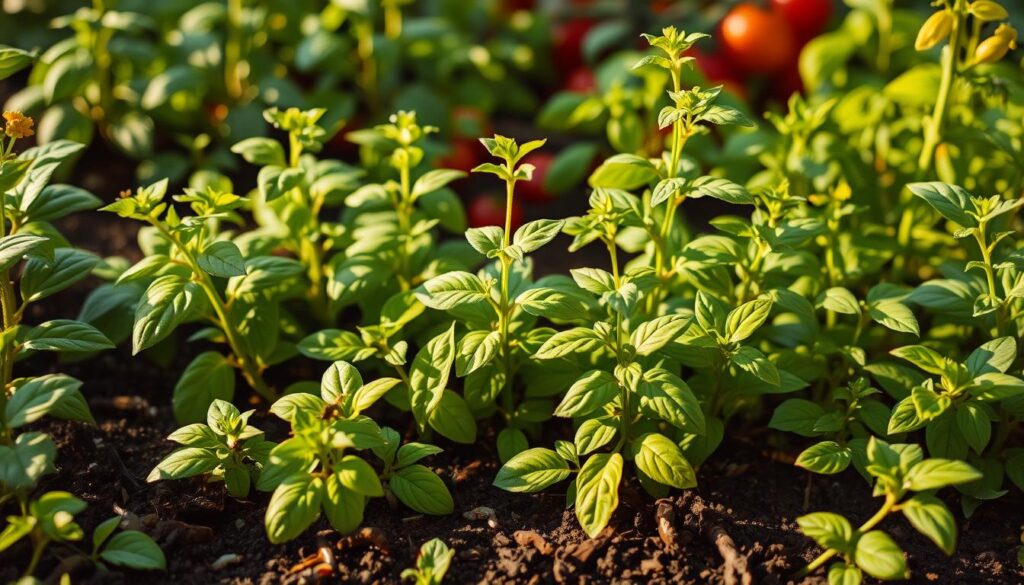
Basil’s scent keeps pests like aphids and hornworms away from tomatoes. This means you don’t need to use harmful chemicals. Growing basil with tomatoes makes your garden healthier and safer.
Enhancing Flavour
Basil and tomatoes taste amazing together. Basil makes tomatoes taste even better in recipes. They also help each other grow, making your food more delicious.
Improved Growth and Productivity
Tomatoes and basil grow better when together. They produce more and are healthier. With the right care, like water and sunlight, you’ll get a big harvest. This shows how good they are as neighbours in the garden.
Growing Tomatoes and Basil Together in Your Garden
Growing tomatoes and basil together can make your garden thrive. It’s all about the right spacing, soil, and care for watering and sunlight. This way, both plants will grow well side by side.
Spacing and Arrangement
When growing tomatoes and basil, spacing is key. Plant them 30–45 cm apart for good airflow and to prevent diseases. In pots, make sure the size is big enough for both plants. This setup helps them grow well together.
Soil Conditions
Soil quality is essential for growing tomatoes and basil. They love well-draining soil with lots of organic matter. Add compost or manure to make the soil richer. Check the soil’s pH to keep it between 6.0 and 7.0, perfect for both plants.
Watering and Sunlight Requirements
Watering and sunlight are vital for these plants. Keep the soil moist but not too wet. Basil likes regular water, while tomatoes need deeper watering sometimes. Both plants need at least six to eight hours of sunlight a day. This care leads to strong growth and a bountiful harvest.
Tips for Thriving Plants
For your plants to thrive, you need to focus on several key areas. Mulching helps control weeds and keeps the soil moist. Choosing the right fertiliser is also vital for providing the nutrients they need.
Mulching and Weed Control
Mulching around your plants offers many benefits. It keeps the soil moist, stops weeds from growing, and protects the roots from harsh temperatures. Regular mulching boosts your plants’ growth, making your garden flourish.
Choosing the Right Fertiliser
Choosing the right fertiliser is essential for your plants. Different plants need different nutrients. Use a balanced fertiliser that meets your plants’ specific needs for strong growth and high productivity.
Common Pests and How Basil Helps
When growing tomatoes, knowing about common pests is key. Aphids and hornworms are big threats. But, basil can help protect your garden. Its smell can confuse pests, keeping your plants healthy.
Aphids and Hornworms
Aphids are tiny insects that suck sap from plants. They weaken plants and spread diseases. Hornworms eat a lot of plant leaves, causing damage.
The smell of basil keeps these pests away. It makes it hard for them to stay on your plants.
Beneficial Insects
Adding beneficial insects to your garden helps manage pests. Ladybugs and lacewings eat aphids and other pests. Planting basil attracts these helpful bugs.
This helps protect your tomatoes from pests. It also makes your garden ecosystem thrive. Your plants and the environment benefit from this balance.
Culinary Uses for Tomatoes and Basil
Tomatoes and basil add vibrant flavours and aromas to your kitchen. They make simple meals special. With many recipes available, they can turn your meals into a joy.
Classic Dishes Featuring the Duo
The Caprese salad and Margherita pizza show how great tomatoes and basil are together. They make a fresh and tasty mix. These dishes are simple but full of flavour, making them stand out.
Everyday Meal Enhancements
Adding tomatoes and basil to your meals can make them better. Try them in pasta, on grilled meats, or in soups. For pasta lovers, check out some tasty recipes with tomatoes basil to wow your guests.
Preserving Your Harvest
Got lots of tomatoes and basil? Preserve them for later. Make homemade sauces or freeze basil for pestos. This way, you can enjoy summer’s taste all year.
Sustainability in the Garden
Embracing sustainable gardening practices can make your gardening more enjoyable. It also helps the environment. Growing your own tomatoes and basil reduces waste and lets you see your food’s journey.
Reducing Plastic and Packaging Waste
Sustainable gardening cuts down on plastic and packaging waste. By growing your own food, you avoid the plastic-wrapped items from stores. Your homegrown tomatoes and basil taste better and are better for the planet.
This practice reduces your carbon footprint. It also strengthens your bond with nature.
Understanding Your Food’s Journey
Your food’s journey starts in the soil. As you care for it, it grows into the food you eat. Sustainable gardening lets you see where your food comes from.
This knowledge makes you appreciate the hard work behind fresh produce. Growing your own food builds a stronger connection with what you eat. It encourages you to make healthier choices.
Getting Started with Your Garden
Starting your gardening journey is both exciting and daunting. Having the right tools and knowledge is key to a successful tomatoes basil garden. Knowing the essential tools and resources will guide you. Also, understanding planting tips helps you make the best choices for your crops.
Essential Tools and Resources
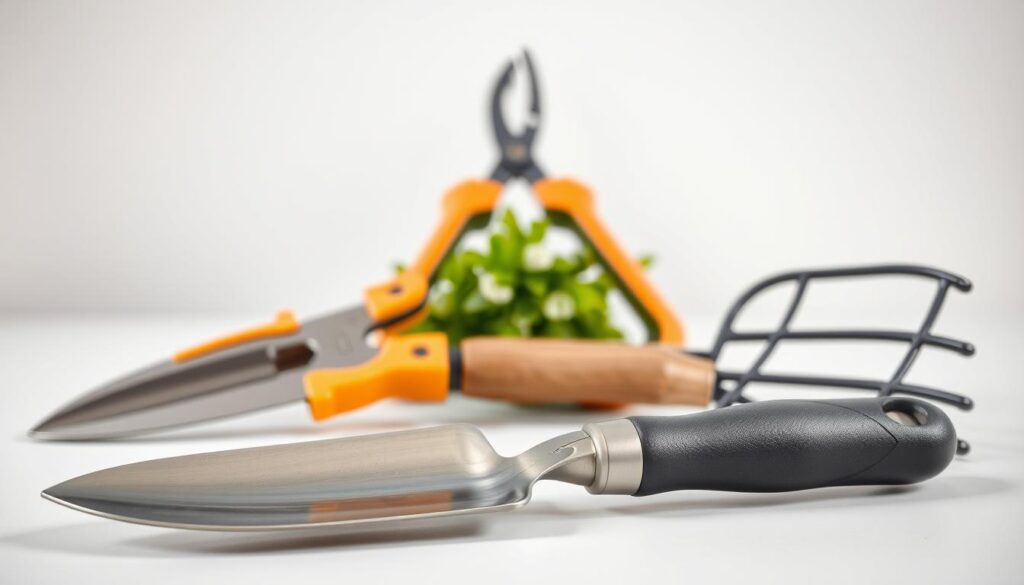
To begin your tomatoes basil garden, you’ll need some basic tools. You’ll need:
- Trowels for digging and planting
- Pruners to manage plant growth and remove dead branches
- Watering cans or hoses to ensure proper moisture
Books, tutorials, and local nurseries are also great resources. They provide expert advice and tips for a thriving garden.
When to Plant for Best Results
Planting at the right time is vital for growth. For tomatoes and basil, wait until after the frost. Late spring is usually the best time:
- Start seeds indoors 6-8 weeks before the last frost date.
- Transplant seedlings outdoors when temperatures consistently exceed 10°C at night.
- Consider companion planting to enhance growth and flavour.
Following these tips will help your tomatoes basil garden thrive all season.
Conclusion
The partnership of tomatoes and basil is more than just a tasty combination. It’s a key to gardening success. By growing them together, you boost your garden’s productivity and the taste of your food.
Using companion planting and good growing techniques helps both plants do well. Whether you’re new to gardening or have lots of experience, trying this duo can make your harvest bigger and your gardening more rewarding.
Together, tomatoes and basil make your garden healthier and your meals more delicious. So, start preparing your seeds and pots. Get ready to enjoy the results of this amazing gardening partnership.