
Ever thought why many gardeners miss out on a powerful fertiliser? Worm castings, often ignored, are more than just compost leftovers. They’re a natural wonder that boosts your garden’s health. These treasures don’t just feed the soil; they turn it into a vibrant ecosystem.
By adding this top fertiliser to your garden, you can change your soil and garden for the better. Find out how worm castings can transform your garden into a lush paradise.
Key Takeaways
- Worm castings are nutrient-rich and improve soil health.
- This best fertiliser promotes healthier plant growth.
- Utilising worm castings can enhance microbial diversity in your garden.
- Worm castings are beneficial for both soil structure and moisture retention.
- Incorporating worm castings supports sustainable gardening practices.
Understanding Worm Castings
Worm castings, known as nature’s gold, are the nutrient-rich waste of earthworms. They are full of microbes and help soil health and plant growth. Knowing how they are made is key to using them as a great fertiliser.
What are Worm Castings?
Worm castings come from earthworms breaking down organic matter like vegetable scraps. This process turns it into a nutrient-rich product. It’s also full of good microbes that help plants grow well.
The Composition of Worm Castings
Worm castings have many nutrients plants need to grow. They include:
| Nutrient | Function |
|---|---|
| Nitrogen | Promotes healthy leaf and stem growth. |
| Phosphorus | Supports root development and flowering. |
| Potassium | Enhances overall plant health and disease resistance. |
| Micronutrients | Facilitate various biochemical processes in plants. |
How Worms Create Quality Fertiliser
The way worms make worm castings is amazing. They digest organic matter and add enzymes and microbes to it. These help break down nutrients for plants, making worm castings a top choice for gardeners and farmers.
The Benefits of Using Worm Castings in Your Garden
Adding worm castings to your garden brings many benefits. It boosts plant health and soil quality. This natural ingredient helps make gardening more sustainable by improving soil health and adding organic matter.
Nutrient Rich Component
Worm castings are a powerful nutrient-rich amendment for plants. They slowly release nutrients like nitrogen, phosphorus, and potassium. This steady supply helps plants grow strong and have healthy leaves.
Positive Impact on Soil Health
Worm castings greatly improve soil health. They make the soil better at holding air and water. This is key for plants to grow well in different conditions. They also boost microbial activity, creating a healthy soil ecosystem for plants to thrive.
| Benefits | Description |
|---|---|
| Nutrient-Rich | Provides essential nutrients for steady plant growth. |
| Improves Soil Structure | Enhances aeration, drainage, and water retention. |
| Encourages Microbial Activity | Supports a healthy ecosystem within the soil. |
| Reduces Chemical Fertiliser Usage | Increases soil’s capacity to hold nutrients naturally. |
Worm Castings: The Best Fertiliser for Plant Growth
Worm castings are a great way to boost your garden. They are an organic fertiliser that helps plants grow well. They improve soil quality and make plants look vibrant and healthy.
Worm castings also help seeds grow faster and vegetables yield more. This makes your garden more productive and full of life.
Boosting Germination Rates
Seeds planted in worm casting-rich soil get a head start. They get the nutrients they need right away. This creates the best environment for seedlings to grow.
Studies, like those from the University of Maine, show that plants grow faster. This leads to stronger seedlings. A good start is key to a successful garden.
Improving Vegetable Yields
Using worm castings in your garden can really help vegetables grow. The nutrients and microorganisms in worm castings support plant growth. This makes vegetables healthier and more plentiful.
Many gardeners have seen their harvests increase. They attribute this to the growth boost from worm castings.
Using Worm Castings Correctly
Using worm castings in gardening can really boost plant growth and soil health. Knowing how to use worm castings right can greatly improve your garden’s success.
How to Incorporate Worm Castings in Soil
To mix worm castings into your soil, aim for the right balance. Start by mixing one part worm castings with three parts of your native soil. This mix is great for planting or when you need to adjust the soil seasonally. It adds essential nutrients from the start, helping your plants grow strong and healthy.
Top Dressing Techniques
Top dressing is a smart way to boost your plants’ nutrient intake. Spread a thin layer of worm castings around your plants every 2-3 months. This keeps your plants well-nourished as they grow. It’s a key gardening technique for keeping your soil healthy for a long time.
Disadvantages of Worm Castings
Worm castings are great for gardening, but they have some downsides. Knowing these can help you make better choices for your garden.
Quantity vs. Demand
Getting enough worm castings can be hard. Worms don’t multiply fast, so it’s tough to get enough for big gardens. This is a big problem if you have a lot of plants to feed.
Time Considerations for Harvesting
Harvesting worm castings takes a lot of time and effort. You need to feed the worms, empty the bin, and sift the castings. This can be a big challenge, making gardening harder if you’re busy. Buying pre-sifted castings might help make gardening easier.
| Disadvantage | Impact | Possible Solutions |
|---|---|---|
| Limited Quantity | Insufficient castings for larger areas | Pursue community worm farming or purchase castings |
| Time-consuming Harvesting | Increased labour and time investment | Consider ready-made worm castings |
Maximising Nutrient Distribution with Worm Castings
To get the most from worm castings, you need a balanced soil mix. This mix boosts nutrient distribution for strong plant growth. It also keeps the soil healthy. By mixing worm castings with other ingredients, you create a great environment for plants.
Creating a Balanced Soil Mix
For a balanced mix, add worm castings to compost, peat moss, and perlite. This blend improves soil structure and drainage. It creates a perfect spot for roots, holding moisture and nutrients well. This mix is key for your garden’s health and growth.
Using Worm Castings with Other Organic Fertilisers
Using worm castings with organic fertilisers like manure and fish emulsion boosts nutrient levels. This mix offers a wide range of nutrients for plant health. It’s a natural way to feed your garden, avoiding synthetic fertilisers.
Alternative Uses for Worm Castings
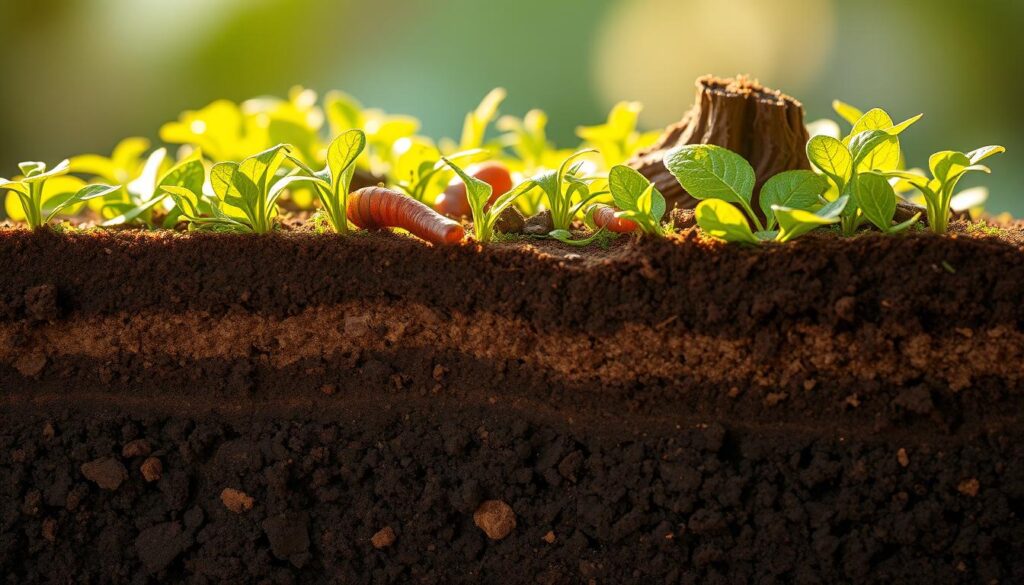
Worm castings are not just for soil. They have many other uses that help plants grow well. One great use is making worm tea, a liquid fertiliser. It’s full of nutrients that plants love, helping them grow strong.
Making Liquid Fertiliser from Worm Castings
To make worm tea, mix castings with water. Let it sit for 24 to 48 hours. Then, strain it and use it on your plants. It gives them a quick nutrient boost and makes the soil healthier.
Utilising Worm Castings in Compost Piles
Adding worm castings to compost piles makes them work better. It speeds up the breakdown of organic matter. This creates compost that’s full of nutrients, making your soil even better.
Comparing Worm Castings with Other Fertilisers
Looking at different fertilisers, worm castings stand out. They are more than just a simple ingredient. They are a powerful organic fertiliser that boosts plant health and soil quality.
Worm Castings vs. Traditional Compost
Worm castings release nutrients slowly and steadily. This is different from traditional compost, which can release nutrients too quickly. This slow release helps plants grow better.
Another benefit is that worm castings lower the risk of salinity stress. This is good for plants that are easily damaged by salt. They also support a healthy mix of microbes, which is key for plant health.
| Feature | Worm Castings | Traditional Compost |
|---|---|---|
| Nutrient Release | Slow and Balanced | Varies, often Faster |
| Salinity Stress | Reduces Risk | Can Increase Risk |
| Microbial Impact | Enhances Biodiversity | Variable Quality |
| Application Frequency | Less Frequent | Needs Regular Replacement |
The Role of Worm Castings in Organic Gardening
In organic gardening, worm castings are a treasure. They are a green alternative to harmful synthetic fertilisers. They help plants grow naturally and support the health of the soil.
Using worm castings makes your garden more sustainable. It’s a way to care for the earth while growing your own food.
How to Source Quality Worm Castings
Starting your gardening journey? Sourcing worm castings is key to better soil and plant health. You can buy them or make your own with a vermicomposting system. Knowing the differences between buying and making can guide your choice.
Buying Worm Castings vs. Making Your Own
Buying worm castings is quick and easy for big gardens. Reputable suppliers offer a nutrient-rich product. Making your own is sustainable and lets you control quality, ensuring the best feedstock.
Identifying Quality Products
Quality is essential when buying worm castings. Look for dark, crumbly castings with an earthy smell. These signs mean they’re full of beneficial microbes like bacteria and fungi. Check for certifications or ask about the supplier’s practices. For more tips, see this buyer’s guide.
Conclusion
Worm castings are top-notch fertilisers for gardeners. They are packed with nutrients that boost soil quality and help plants grow well. Using worm castings also helps the environment.
Getting started might take some effort, like harvesting and time. But the benefits are huge. By using worm castings right, you can make your garden look amazing. It makes your soil better and keeps your plants healthy.
Adding worm castings to your garden is a smart move. It’s a green way to care for your plants. It makes your garden grow strong and beautiful, all while being good for the planet.