

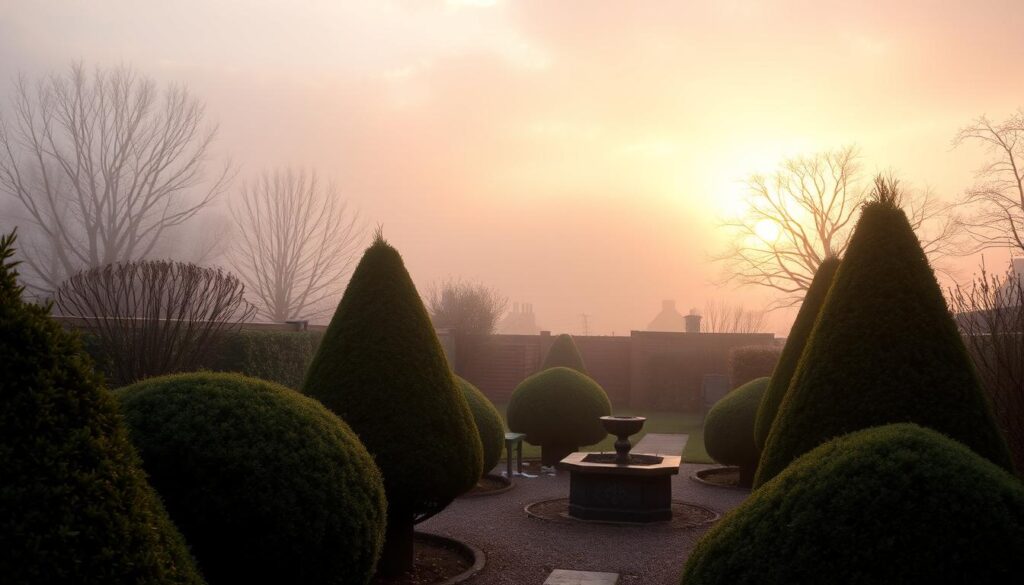
For centuries, Buxus sempervirens (common box) has been the backbone of British garden design, lending year-round structure and elegant formality to spaces both grand and modest. This versatile evergreen shrub has adorned royal gardens and cottage borders alike, standing as a testament to the enduring appeal of classic garden elements. In today’s compact urban gardens, boxwood’s ability to maintain crisp lines and verdant presence throughout the seasons makes it particularly valuable for creating a sense of permanence and sophistication in limited spaces.
Buxus sempervirens creating classic structure in a compact formal garden
Design Applications: Versatile Structure for Every Garden Style
The remarkable versatility of Buxus sempervirens allows it to shine in various garden contexts, from the most formal historical designs to contemporary minimalist spaces. Its dense growth habit and responsiveness to pruning make it ideal for creating defined shapes that bring order and visual interest to the garden year-round.
Topiary: From Classic to Contemporary
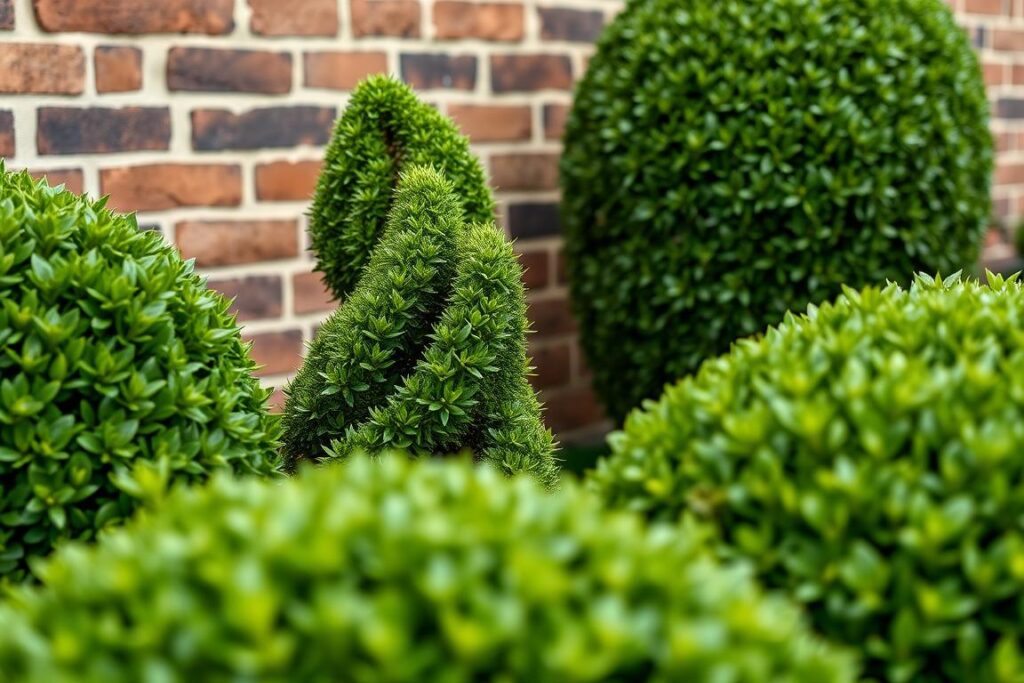
Classic boxwood topiary forms adding vertical interest
Boxwood’s fine texture and dense growth make it the premier choice for topiary in UK gardens. At Hampton Court Palace, intricate parterres showcase the plant’s ability to maintain precise geometric forms, while contemporary urban gardens often feature boxwood in simpler, more abstract shapes that complement modern architecture.
Classic topiary forms include:
- Spheres and globes for punctuation points
- Spirals and cones for vertical accent
- Cubes and pyramids for formal structure
- Animals and figurative shapes for whimsical interest
Modern applications include:
- Cloud-pruned forms for Japanese-inspired gardens
- Geometric blocks for minimalist designs
- Undulating waves for contemporary movement
- Clustered groupings for textural contrast
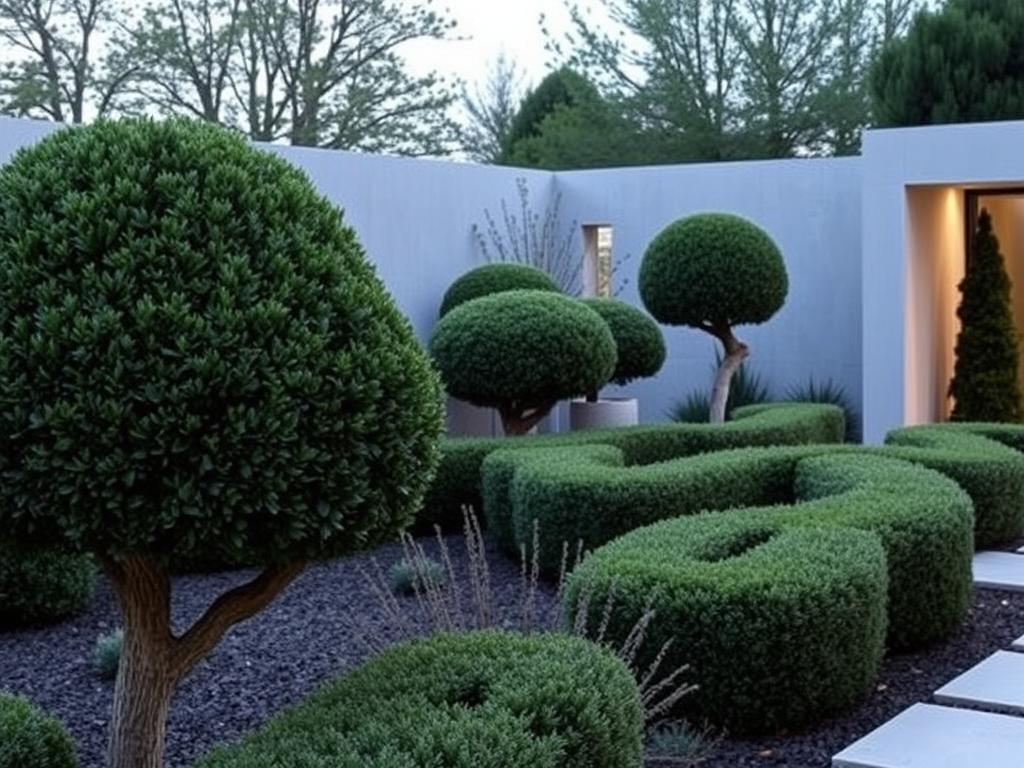
Contemporary cloud-pruned boxwood creating organic structure
Borders: Defining Garden Spaces
Low boxwood hedging excels at defining pathways, beds, and garden rooms, creating a framework that organizes planting areas and guides movement through the garden. In herb gardens, Buxus sempervirens provides the perfect foil for aromatic plants, its evergreen structure maintaining order when herbaceous plants die back in winter.

Low boxwood hedging creating structure in a compact herb garden
Containers: Portable Structure
Boxwood thrives in containers, making it ideal for adding structure to patios, balconies, and entranceways. The choice of container can dramatically influence the overall effect, from traditional terracotta for a classic look to contemporary zinc or composite materials for modern settings.
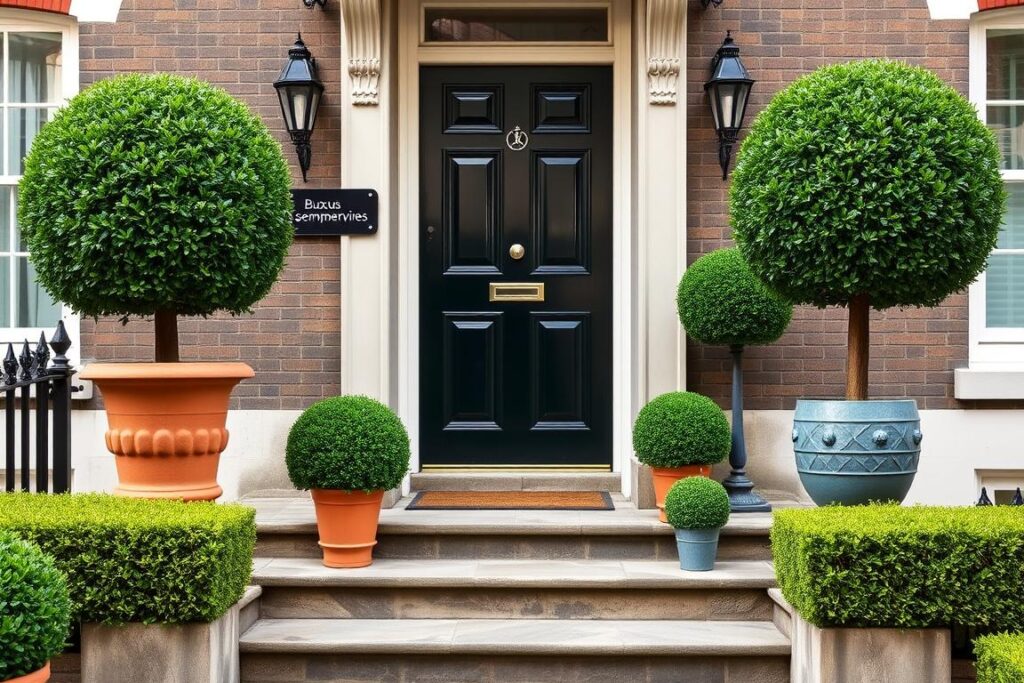
Boxwood in containers creating symmetry at a garden entrance
Container selection tips:
- Terracotta ages beautifully but requires winter protection
- Lead or zinc planters offer elegant patina over time
- Composite materials provide durability with less weight
- Wooden planters complement cottage garden styles
Companion planting ideas:
- Spring bulbs for seasonal color contrast
- Trailing ivy for cascading texture
- Seasonal bedding for changing color accents
- White flowering plants for elegant simplicity
Maintenance: Keeping Boxwood at Its Best
The enduring appeal of Buxus sempervirens comes with a commitment to proper maintenance. While not overly demanding, boxwood benefits from regular attention to maintain its dense growth and crisp outlines.
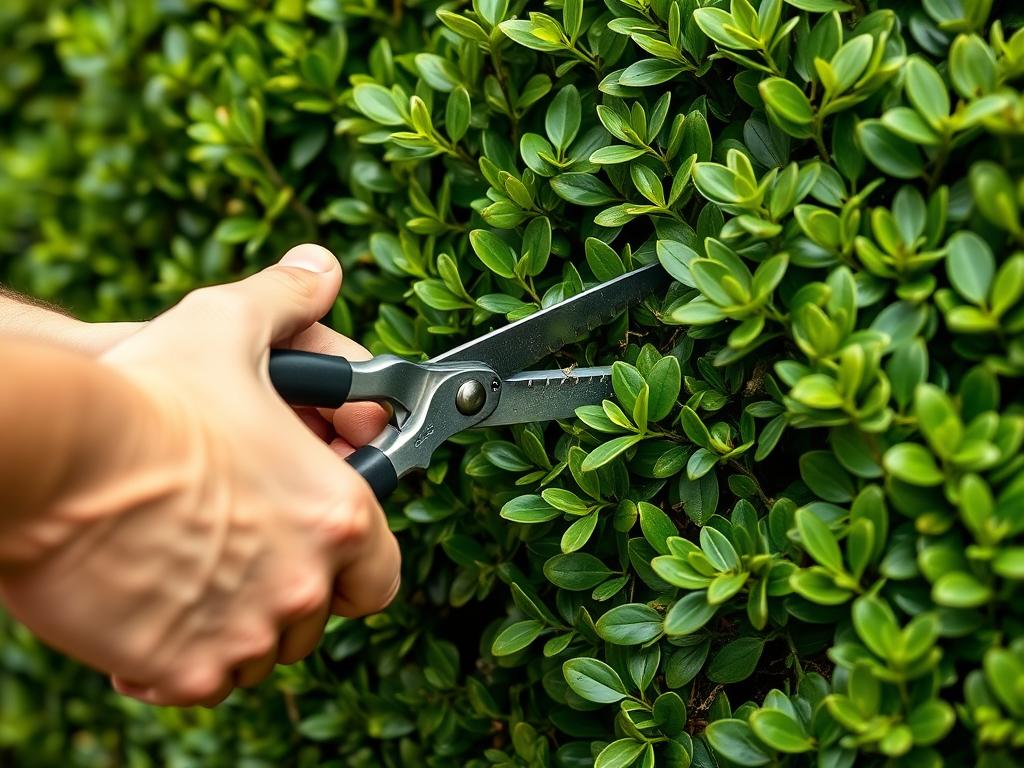
Proper trimming technique for maintaining boxwood structure
Clipping Schedule and Techniques
The key to maintaining crisp boxwood forms lies in regular, thoughtful pruning. For most UK gardens, a twice-yearly clipping schedule works well: the first major trim in late spring after the risk of frost has passed (typically late May to early June), and a lighter trim in early autumn (September) to maintain shape before winter.
“The secret to beautiful boxwood is patience and sharp tools. Rush the process, and you’ll end up with uneven growth and stressed plants.”
Shaping Techniques
- Use templates for consistent geometric forms
- Clip on cloudy days to prevent leaf scorch
- Work gradually, removing small amounts each time
- Step back frequently to check overall symmetry
- Taper sides slightly wider at the base for light penetration
Essential Tools
- Sharp, clean hand shears for detailed work
- Lightweight hedge trimmers for larger areas
- Garden line for straight edges
- Cardboard templates for consistent curves
- Tarpaulin for collecting clippings
Soil and Feeding Requirements
Buxus sempervirens thrives in well-drained, slightly alkaline soil with consistent moisture. In the UK’s often clay-heavy soils, improving drainage is essential for healthy growth. A pH between 6.5 and 7.5 is ideal, making boxwood well-suited to many British gardens, particularly in limestone areas.

Healthy boxwood foliage indicating proper nutrition and care
Seasonal Care Calendar
Spring: Apply slow-release fertilizer specifically formulated for evergreens. Inspect for winter damage and prune as needed.
Summer: Water during dry periods, focusing on root zone. Main clipping in late May/early June.
Autumn: Light trim in September. Apply mulch to retain moisture and suppress weeds.
Winter: Protect from drying winds and heavy snow loads. Avoid pruning during frost periods.
Box Blight Solutions: Protecting Your Investment
Box blight has become a significant concern for UK gardeners, but with proper management and resistant varieties, Buxus sempervirens can still thrive in British gardens. Understanding the disease and implementing preventative measures are key to maintaining healthy plants.
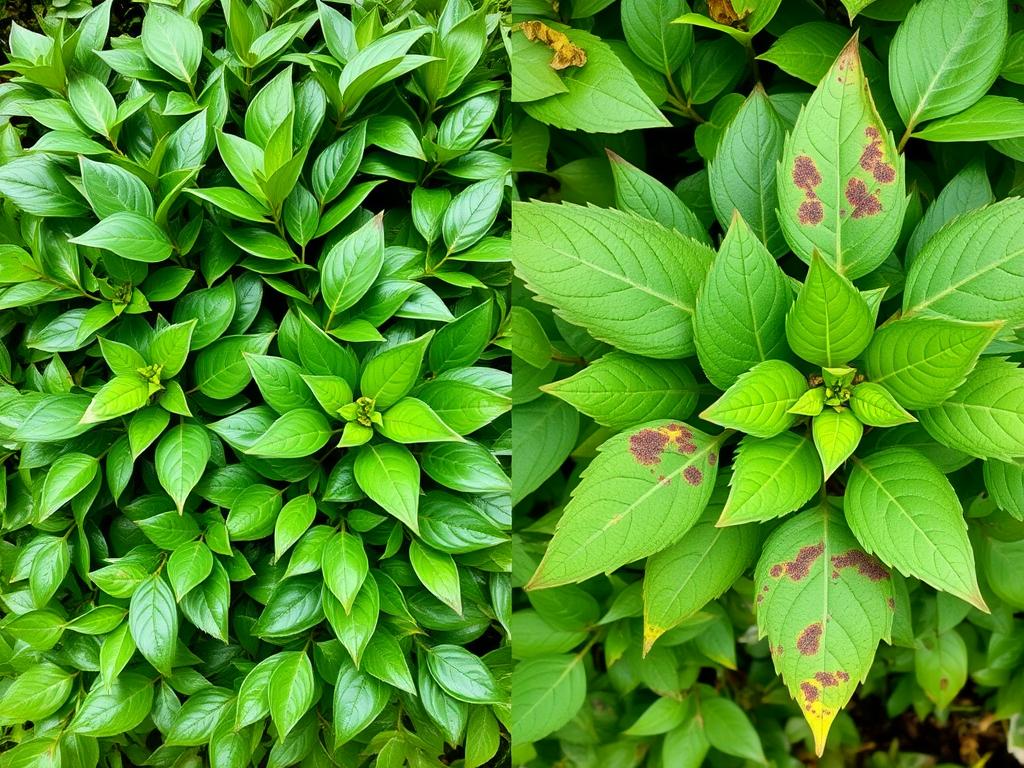
Identifying box blight: healthy foliage (left) versus infected plants (right)
Identifying and Managing Box Blight
Box blight is caused by two fungi, Cylindrocladium buxicola and Volutella buxi, which cause leaf spots, dieback, and eventual defoliation. Early identification and prompt action are crucial for effective management.
Symptoms to Watch For
- Brown or black leaf spots with dark borders
- Black streaks on stems
- Rapid leaf drop, especially in lower portions
- Dieback of young shoots
- White fungal growth in humid conditions
Prevention Strategies
- Ensure good air circulation around plants
- Water at the base, avoiding leaf wetness
- Remove and destroy infected material promptly
- Disinfect tools between plants
- Apply preventative fungicides in high-risk periods
Important: Box blight spreads rapidly in wet conditions. If you identify symptoms, act quickly to isolate affected plants and implement control measures to protect healthy specimens.
Resistant Cultivars and Alternatives
Research has identified several Buxus cultivars with improved resistance to box blight, offering hope for gardeners in affected areas. Additionally, several alternative plants can provide similar structural qualities when boxwood isn’t suitable.
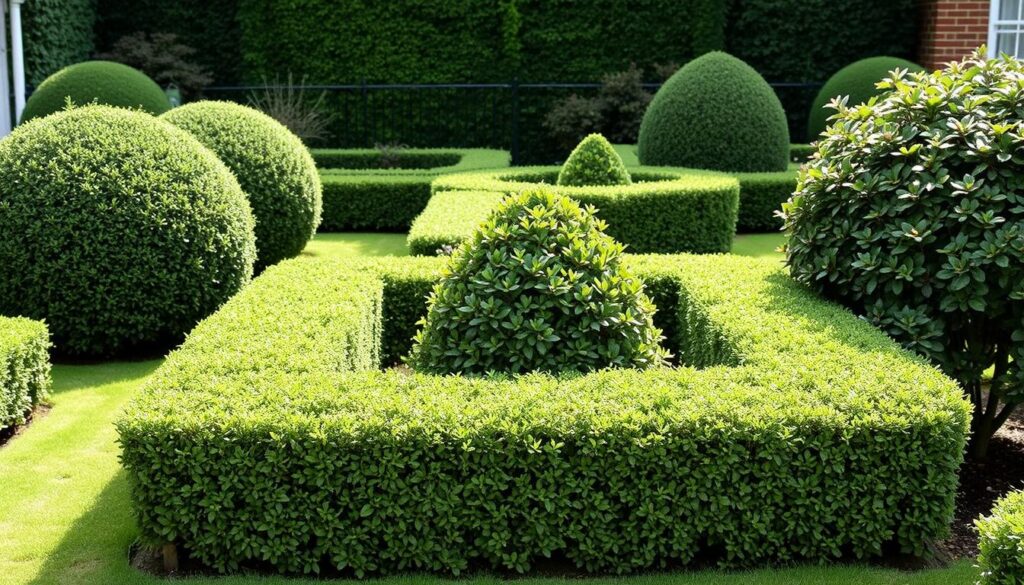
Buxus ‘Faulkner’ (left) and Ilex crenata (right) used for similar structural effects
Resistant Buxus Cultivars
- ‘Faulkner’ – Compact growth with good resistance
- ‘Suffruticosa’ – Traditional edging box with moderate resistance
- ‘Elegantissima’ – Variegated form with improved tolerance
- ‘Vardar Valley’ – Blue-green foliage, good disease resistance
- ‘Green Gem’ – Hybrid with excellent cold hardiness
Alternative Plants
- Ilex crenata – Japanese holly with similar appearance
- Taxus baccata ‘Standishii’ – Dwarf yew for formal shapes
- Lonicera nitida – Fast-growing alternative for hedging
- Euonymus japonicus – Glossy evergreen for structure
- Pittosporum tenuifolium – For milder UK regions
Boxwood in Action: Inspiring Garden Examples
From historic National Trust properties to award-winning contemporary designs, Buxus sempervirens continues to play a starring role in British gardens of all styles and sizes. These real-world examples demonstrate the versatility and enduring appeal of this classic plant.
Formal Heritage Gardens

Intricate boxwood parterre at Hidcote Manor Garden, Gloucestershire
The National Trust’s Hidcote Manor Garden showcases how Buxus sempervirens can create intimate garden rooms through precisely clipped hedges and topiary. The Arts and Crafts-inspired design uses boxwood to frame colorful herbaceous plantings, demonstrating how structure and exuberance can work in harmony.
At Levens Hall in Cumbria, ancient boxwood topiary dating back to the 17th century proves the remarkable longevity of well-maintained specimens. These venerable plants, some over 300 years old, continue to define the garden’s character and demonstrate the potential for Buxus sempervirens to become a multi-generational garden legacy.
Contemporary Designs
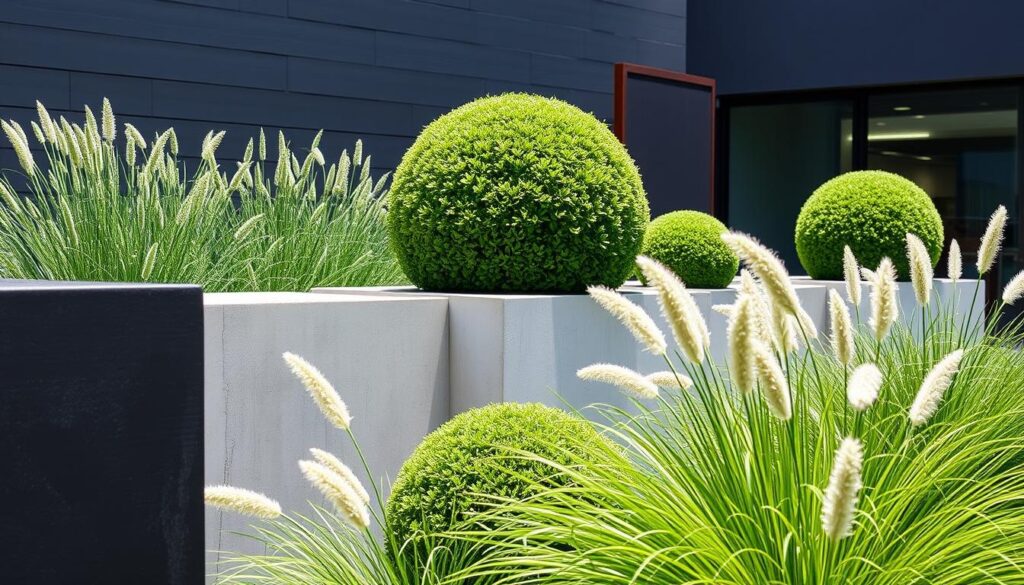
Award-winning Chelsea Flower Show garden featuring architectural boxwood forms
Recent RHS Chelsea Flower Show gardens have reimagined boxwood for the 21st century. Designer Tom Stuart-Smith’s acclaimed gardens often feature Buxus sempervirens clipped into simple, bold forms that complement contemporary architecture and create dialogue with more naturalistic planting styles.
In urban settings, designers like Charlotte Rowe have demonstrated how boxwood can bring order and calm to small city gardens. By using a limited palette of materials and plants, with boxwood providing the structural framework, these spaces achieve a sense of tranquility despite their compact dimensions.
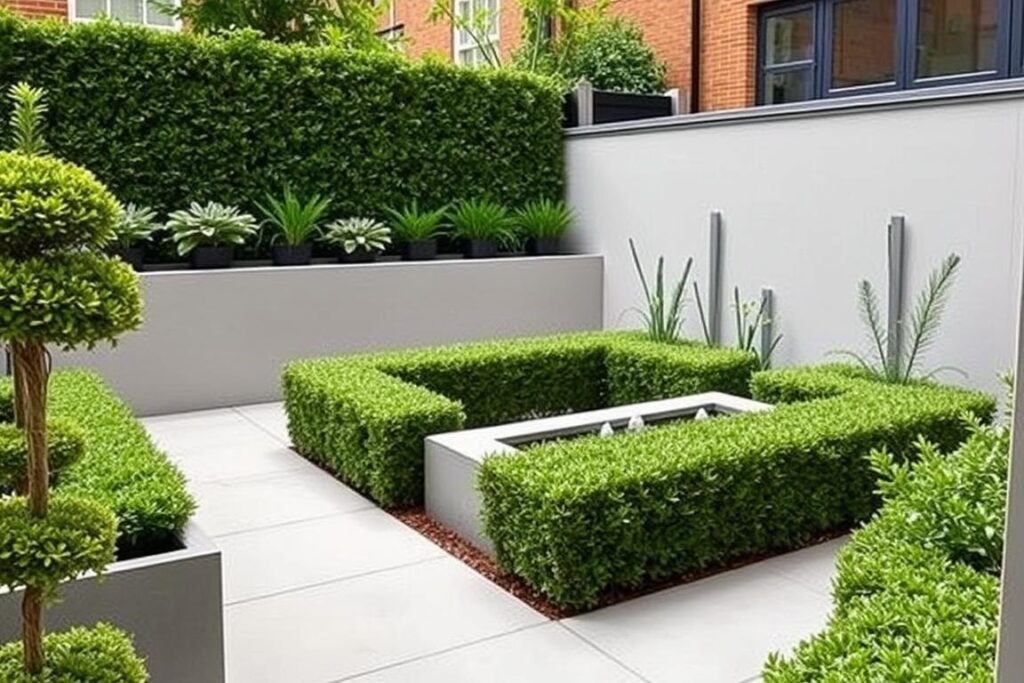
Boxwood bringing order and structure to a compact London garden
Conclusion: The Timeless Appeal of Boxwood
Buxus sempervirens remains an indispensable element in British garden design, offering structure, elegance, and year-round interest that few other plants can match. Despite challenges like box blight, its adaptability to different garden styles and contexts ensures its continued relevance in contemporary landscapes.
For small UK gardens, boxwood’s ability to define space, create visual interest, and provide a framework for seasonal plantings makes it particularly valuable. Whether in formal parterres, contemporary minimalist designs, or traditional cottage gardens, Buxus sempervirens brings a sense of permanence and sophistication that enhances any outdoor space.
With proper care, thoughtful placement, and selection of appropriate cultivars, boxwood can continue its centuries-long tradition of bringing structure and beauty to British gardens for generations to come.
The enduring appeal of boxwood: creating structure and beauty in all seasons