Whether you’re looking to create a bee-friendly border, a fragrant pathway, or simply want fresh herbs within arm’s reach of your kitchen, thyme delivers remarkable versatility in the smallest of spaces. Its drought tolerance and hardy nature make it particularly well-suited to the UK’s variable climate, offering year-round interest with minimal maintenance.
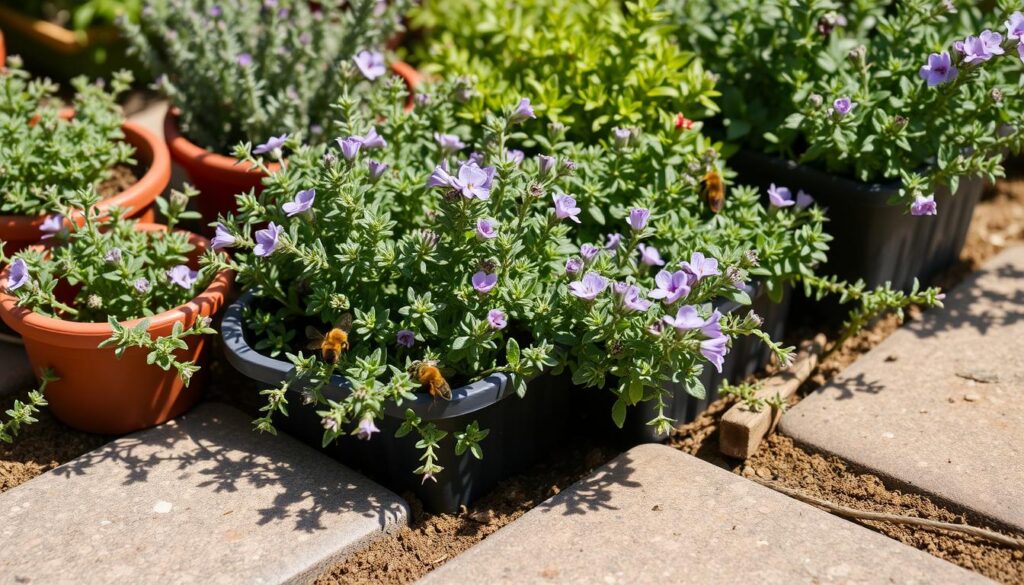
Thyme thrives in various small-space settings, from containers to crevices between stones
Why Thyme Thrives in Small Gardens
Thyme is particularly well-suited to small-space gardening in the UK climate for several compelling reasons. Its Mediterranean origins have equipped it with remarkable resilience that translates beautifully to our often challenging weather conditions.
Growing Thyme in Small Spaces
Thyme’s shallow root system and small leaves minimise water loss, making it perfect for containers and rockeries that may dry out quickly. Even during summer dry spells, established thyme plants require minimal watering—ideal for busy gardeners or those without outdoor taps.
Space Efficiency
Growing just 15-30cm tall but spreading up to 40cm wide, thyme maximises horizontal rather than vertical space. This growth habit makes it perfect for ground cover, edging, and planting between stepping stones where it releases its fragrance when brushed against.
Year-Round Interest
Unlike many herbs that die back in winter, most thyme varieties remain evergreen in all but the harshest UK winters. This provides structure and interest throughout the year, with the added bonus of summer flowers that attract bees and other beneficial pollinators.
| Thyme Variety | Growth Habit | Flower Colour | Culinary Use | UK Hardiness |
| Common Thyme (Thymus vulgaris) | Upright, bushy | Pale purple | Excellent all-purpose | Very hardy |
| Creeping Thyme (Thymus serpyllum) | Low, spreading | Pink to purple | Mild flavour | Extremely hardy |
| Lemon Thyme (Thymus citriodorus) | Compact mound | Pale pink | Citrus notes, fish dishes | Hardy |
| Woolly Thyme (Thymus pseudolanuginosus) | Very low carpet | Pale pink (rare) | Ornamental only | Moderately hardy |

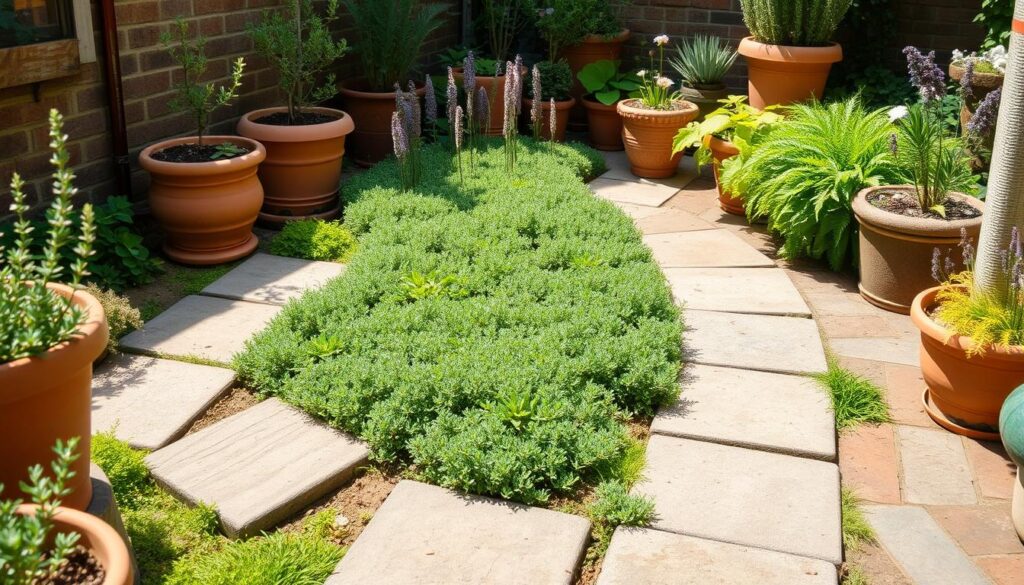
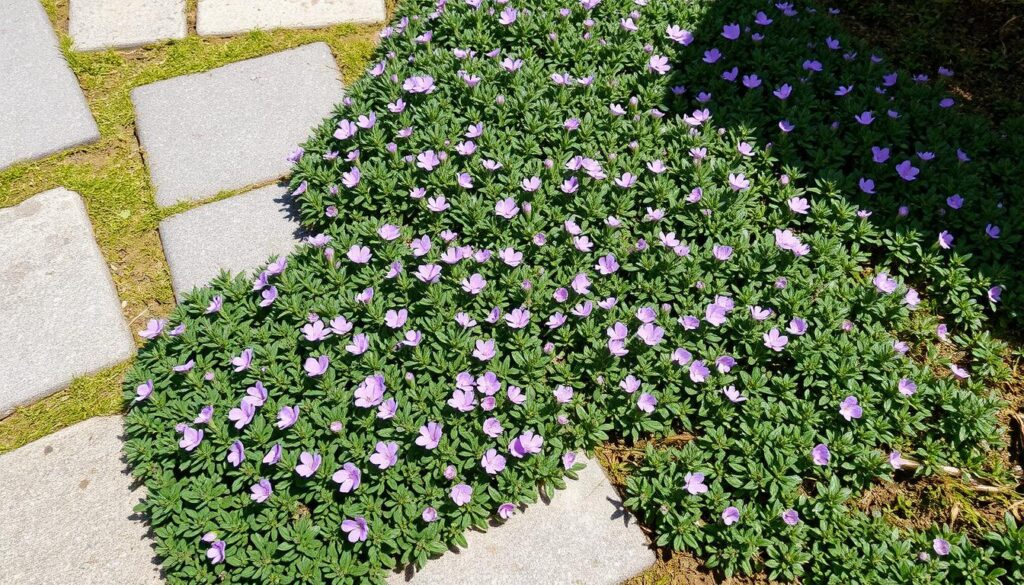
Creeping thyme flourishes between paving stones, creating a fragrant pathway
Planting Locations & Techniques
Thyme’s adaptability makes it suitable for various small-space applications in UK gardens. Whether you’re looking to green up a patio, create a fragrant pathway, or add interest to a balcony, thyme can thrive in surprisingly limited spaces.
Between Paving Stones
The cracks and crevices between paving stones offer perfect growing conditions for creeping thyme varieties. As you walk across the stones, the plants release their aromatic oils, creating a sensory garden experience even in the smallest of spaces.
- Prepare the gaps by removing weeds and loosening compacted soil
- Mix equal parts gritty sand and compost for excellent drainage
- Plant small divisions or plugs 20-30cm apart (they’ll spread to fill gaps)
- Water sparingly until established, then rainfall is usually sufficient
- Choose foot-traffic tolerant varieties like Thymus serpyllum ‘Elfin’ or ‘Pink Chintz’
In Containers
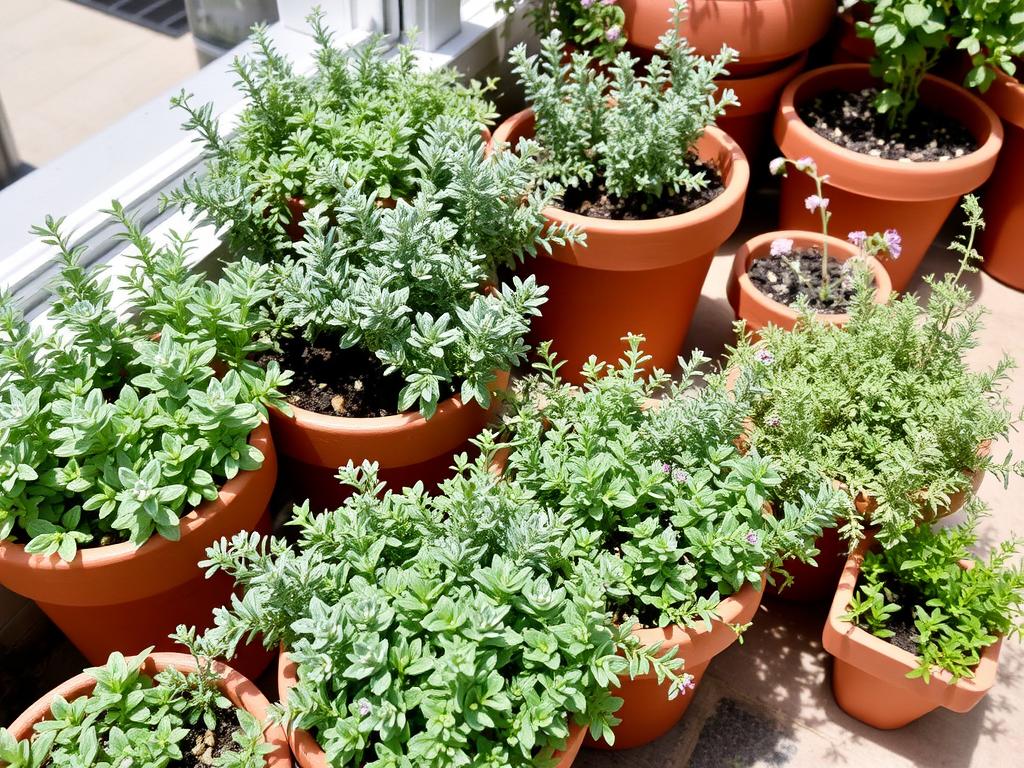
Container growing is perfect for thyme, especially in small gardens, balconies, or patios. The herb’s shallow root system means it doesn’t need deep pots, and its drought tolerance makes it forgiving if you occasionally forget to water.
- Choose containers at least 15cm deep with ample drainage holes
- Use terracotta pots for better air circulation and moisture regulation
- Fill with a mix of 70% multi-purpose compost and 30% horticultural grit
- Position in the sunniest spot available—south or west-facing is ideal
- Combine with other Mediterranean herbs like rosemary and sage that share similar needs
Along Path Edges
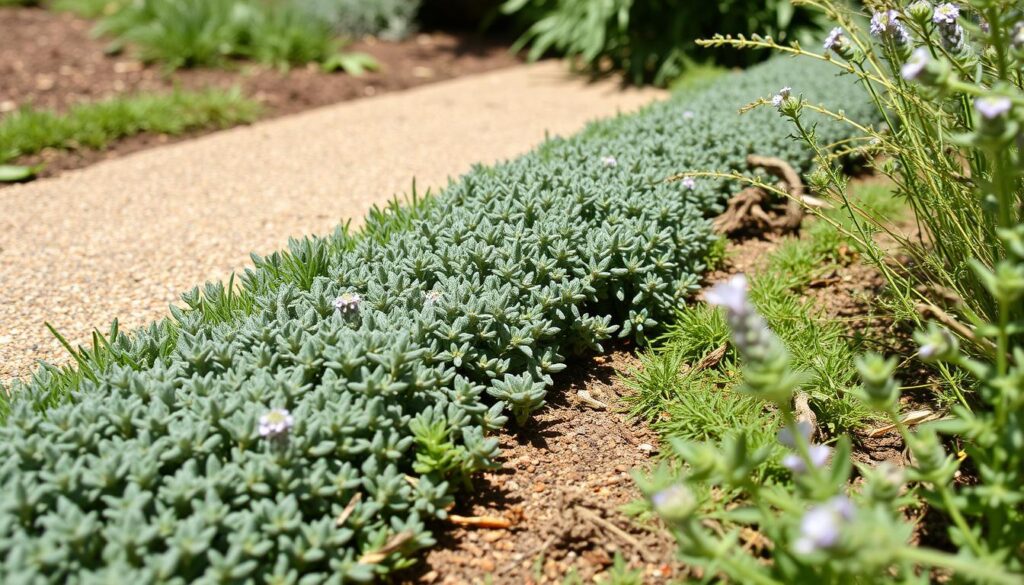
Planting thyme along the edges of garden paths creates a soft, fragrant border that spills slightly onto the walkway. This technique maximises limited space by using the often-neglected edges between hard landscaping and planting areas.
- Prepare a narrow trench 15cm wide along path edges
- Incorporate plenty of grit or sharp sand for drainage
- Plant thyme varieties 20-25cm apart, alternating types for visual interest
- Trim back occasionally to prevent excessive spread onto pathways
- Consider combining low-growing varieties with slightly taller ones for dimension
Essential Tools & Materials for Planting Thyme
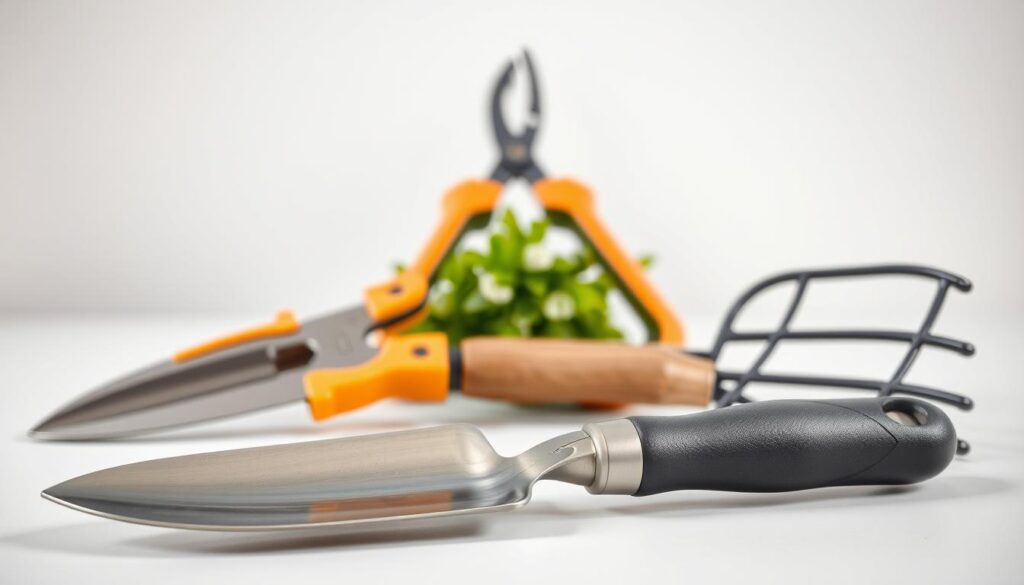
- Hand trowel for planting in tight spaces
- Horticultural grit or sharp sand for drainage
- Multi-purpose compost or John Innes No. 2
- Small garden fork for soil preparation
- Secateurs for taking cuttings and pruning
- Watering can with rose attachment for gentle irrigation
Care & Harvesting
One of thyme’s greatest attributes for small-space gardeners is its minimal maintenance requirements. With just a few simple care techniques, your thyme plants will thrive year after year in even the most compact growing areas.

Pruning for Dense Growth vs. Flowering
How you prune your thyme depends on whether you’re growing it primarily for culinary use or ornamental value. For cooking, you’ll want dense, leafy growth, while for visual appeal and pollinator attraction, you’ll want to encourage flowering.
For Culinary Use
- Harvest regularly throughout the growing season
- Cut stems back by up to one-third their length
- Prune in early spring to remove any winter damage
- Trim after flowering to encourage new leaf growth
- Avoid cutting into woody stems as they won’t regrow
For Ornamental Display
- Allow flower buds to develop fully before harvesting
- Deadhead spent flowers to encourage more blooms
- Cut back by one-third after main flowering period
- Shape plants in autumn to maintain compact form
- Leave some flowers for bees in summer months
Harvesting Without Damaging Plants
Proper harvesting techniques ensure your thyme plants remain productive and healthy, even in limited space. The key is to harvest little and often, rather than taking too much at once.
- Use sharp scissors or secateurs for clean cuts that heal quickly
- Harvest in morning after dew has dried but before midday heat
- Cut stems just above a growth node to encourage branching
- Take no more than one-third of the plant at any one time
- Focus on younger, non-woody stems for best flavour
In the UK, thyme can be harvested year-round, though growth slows considerably from November to February. During winter months, take only what you need for immediate use and avoid heavy pruning until spring.
Troubleshooting Common Issues
Even with thyme’s resilience, UK gardeners may encounter a few challenges, particularly in our often-damp climate. Here’s how to address common problems:
Root Rot in Rainy Areas
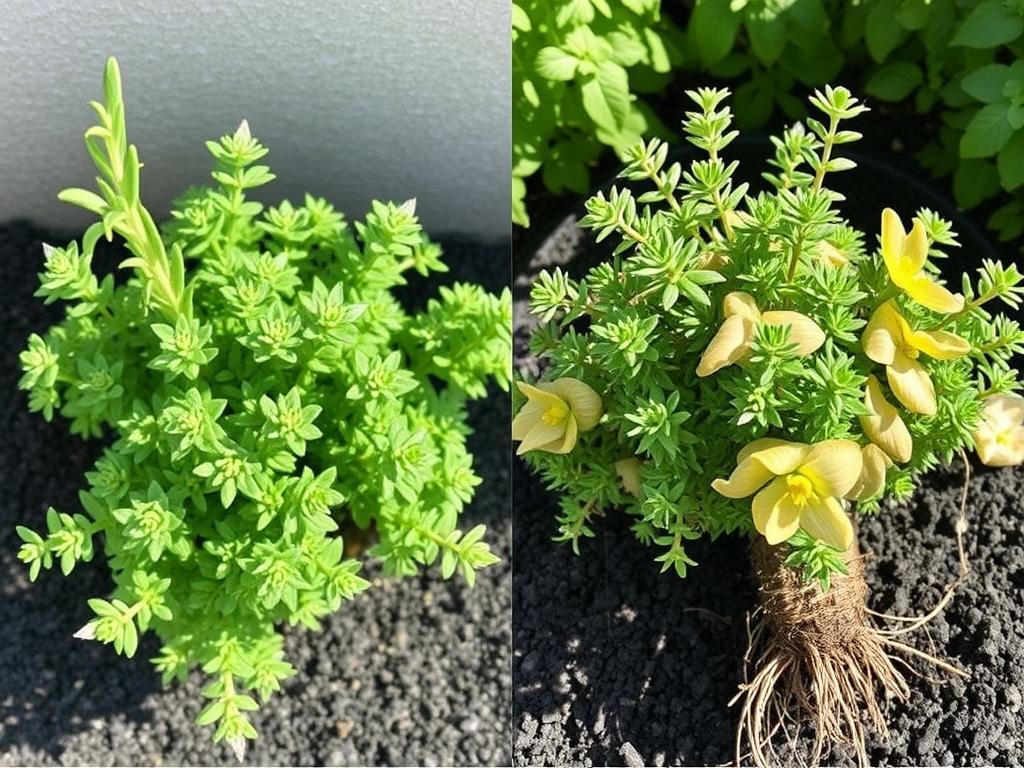
In particularly wet UK regions or during unusually rainy periods, thyme can develop root rot. Ensure excellent drainage by adding extra grit to soil, elevating containers slightly, and avoiding overwatering. If plants show yellowing leaves and wilting despite moist soil, they may have root rot—consider taking healthy cuttings and starting fresh in better-draining conditions.
Woody, Sparse Growth
After 3-4 years, thyme plants often become woody with sparse foliage. This is natural and signals it’s time to replace them. In early spring, take cuttings from healthy growth to propagate new plants, then remove the old ones. Alternatively, try rejuvenation pruning by cutting back to 2.5cm above ground level after flowering and applying a light compost dressing.
Winter Protection
While most thyme varieties are hardy throughout the UK, container-grown plants are more vulnerable to winter damage. In northern regions or exposed gardens, consider moving pots to a sheltered location against a south-facing wall. Raise containers slightly off the ground on pot feet to prevent waterlogging during winter rains. For extra protection, surround plants with horticultural grit or gravel mulch.
Companion Plants for a Mini Kitchen Garden
Creating a harmonious small-space herb garden means selecting companions that not only look attractive alongside thyme but also share similar growing requirements. These carefully chosen plant partnerships can maximise limited space while creating a productive and visually appealing mini garden.
Oregano
Like thyme, oregano thrives in poor, well-drained soil and full sun. Its slightly larger, rounder leaves create a pleasing textural contrast while maintaining a cohesive Mediterranean look. The two herbs share similar watering needs, making them ideal container companions. Oregano’s slightly taller growth habit (30-45cm) complements thyme’s lower profile, creating natural layering in small spaces.
Chamomile
Roman chamomile (Chamaemelum nobile) forms a low-growing, apple-scented mat that pairs beautifully with thyme in pathway plantings. Its delicate white daisy-like flowers provide striking contrast against thyme’s tiny purple blooms. Choose the non-flowering variety ‘Treneague’ for areas with foot traffic. Both plants tolerate poor soil and drought once established, making maintenance simple.
Chives
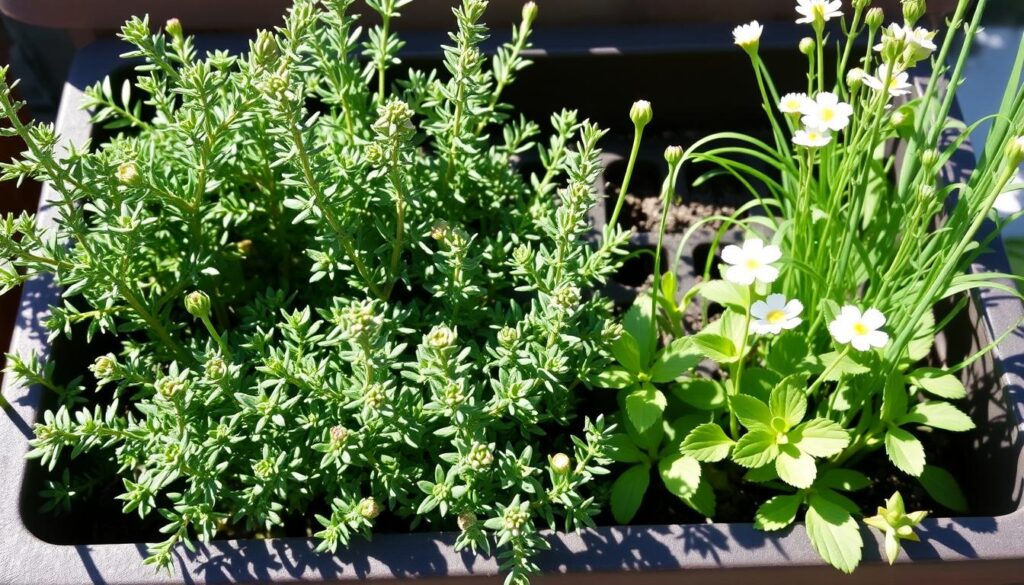
Chives add vertical interest to a thyme planting with their slender, tubular leaves reaching 30cm tall. Their globe-shaped purple flowers complement thyme blossoms while attracting different pollinators. As one of the earliest herbs to emerge in spring, chives provide interest while slower-growing thyme varieties are still waking up. Both herbs are perennial and winter-hardy throughout the UK.
Corsican Mint
This tiny-leaved mint (Mentha requienii) forms a dense, bright green carpet just 2-3cm tall that releases an intense peppermint fragrance when brushed. Unlike common mint, it’s not invasive, making it safe to plant near thyme. Its vivid colour contrasts beautifully with silver-leaved thyme varieties. Best in partial shade in most UK gardens, it appreciates slightly more moisture than thyme but still requires good drainage.
Alpine Strawberries
These compact, non-running strawberries produce small, intensely flavoured fruits throughout summer. Growing just 15-20cm tall, they work well interspersed with thyme in containers or border edges. The bright green foliage and white flowers, followed by red fruits, create season-long interest. Both plants prefer well-drained soil and tolerate partial shade, though strawberries appreciate slightly richer soil.
Compact Lavender
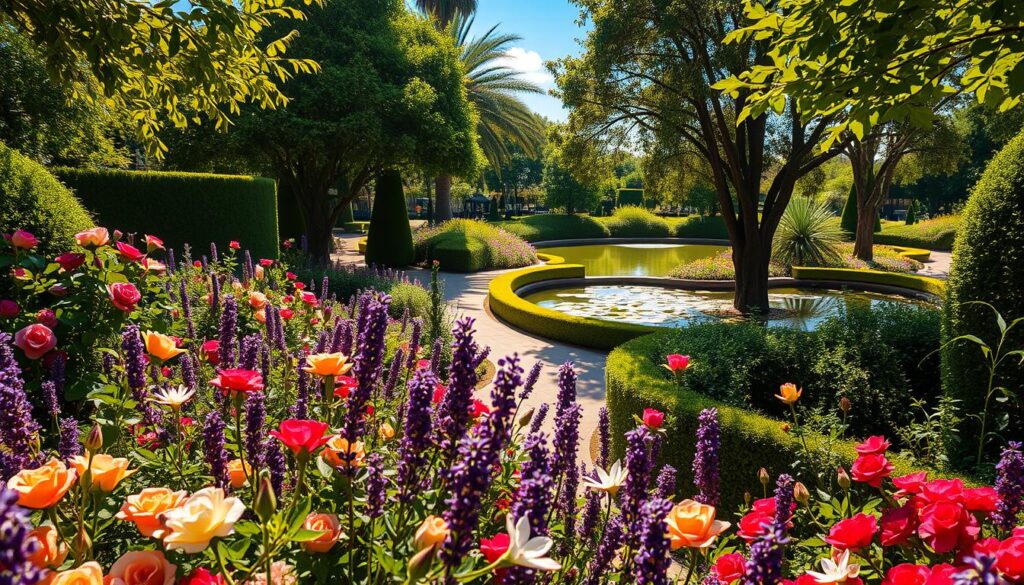
Dwarf lavender varieties like ‘Hidcote Blue’ or ‘Little Lottie’ (30-40cm) provide structural height behind lower-growing thyme. Both Mediterranean natives share identical soil and watering requirements, thriving in poor, alkaline, well-drained conditions. The contrasting flower colours—purple-blue lavender with pink-purple thyme—create a harmonious palette that attracts numerous pollinators to even the smallest garden.

Design Tip: Textural Contrasts
When planning companion plantings with thyme, consider leaf texture as much as flower colour. Combine fine-leaved thyme varieties with broader-leaved herbs like oregano or sage for maximum visual impact in minimal space. This approach creates interest even when plants aren’t flowering.
Embracing Thyme in Your Small Space
Growing thyme in small spaces offers UK gardeners a perfect blend of practicality and beauty. Whether tucked between paving stones, cascading from containers, or forming fragrant borders along path edges, this versatile herb delivers year-round interest while requiring minimal care—ideal for busy gardeners or those with limited outdoor space.
The dual-purpose nature of thyme—as both culinary essential and ornamental ground cover—makes it an exceptional value plant for space-conscious gardens. Its ability to attract pollinators while deterring certain pests further enhances its credentials as a small-space superstar.
Even the most modest balcony, patio, or window box can accommodate this Mediterranean gem, bringing fragrance, flavour, and a touch of cottage garden charm to urban and suburban homes across the UK. Why not transform your small outdoor space with thyme this season? Your kitchen dishes—and local bees—will thank you.