
Ever wondered why your lavender seems to dislike humid weather? It’s key to know how lavender prefers humidity if you want to care for these plants. Lavender, being a Mediterranean herb, loves dry air. This makes it very sensitive to moist environments.
This article will share tips on growing lavender, whether indoors or outdoors. We’ll cover everything from its natural home to how to care for it in damp climates. Get ready to make your lavender garden flourish!
Key Takeaways
- Lavender thrives in dry conditions and struggles in high humidity.
- Understanding its natural habitat helps in effective cultivation.
- Key signs of stress in lavender are vital for monitoring health.
- Soil drainage and sunlight are key for optimal growth.
- Adapting your gardening techniques can improve lavender’s resilience.
Understanding Lavender’s Natural Habitat
To grow healthy lavender, knowing its natural home is key. Lavender loves warm, dry places. This shows it needs certain things to thrive.
Native Conditions of Lavender
Lavender comes from the Mediterranean. It grows best in the sun and dry air. These conditions make it strong and able to handle little water. By copying these, you can make your garden perfect for lavender.
Temperature Preferences
Lavender does best in temperatures between 15°C to 21°C. At these levels, it gets good air flow. This helps prevent diseases. Too much moisture is bad for it, so keeping the temperature right is important.
Soil Characteristics
Lavender grows well in dry, rocky soil. It prefers alkaline soil with a pH of 6.7 to 7.3. This helps it grow without getting too wet. Keeping the soil dry is key for lavender.
The Impact of Humidity on Lavender
It’s key to understand how humidity affects lavender plants. High humidity can slow growth and cause issues like root rot and fungal diseases. Spotting these problems early is part of caring for your lavender.
Effects of High Humidity on Growth
High humidity can make lavender plants grow poorly. The roots find it hard to breathe in wet soil. This can harm your plants. Keeping humidity levels right is essential for healthy growth.
Signs of Stress in Lavender Plants
Watch out for signs of too much water. Look for wilting, yellow leaves, and a droopy look, even with moist soil. Catching these signs of overwatering early can prevent damage. For more on humidity issues and solutions, check this resource. Better air flow and draining soil help your lavender thrive.
Ideal Growing Conditions for Lavender
To grow lavender well, you need to know its best conditions. Sunlight and soil drainage are key. These help your lavender grow strong and live long.
Sunlight Requirements
Lavender needs 6 to 8 hours of direct sunlight daily. A south-facing spot is best for indoor growing. It gets the most light. Without enough sun, your lavender might not stay healthy.
Following these tips helps create the perfect conditions. This leads to beautiful blooms and fragrant leaves.
Soil Drainage Needs
Lavender loves well-draining, gritty soil. To improve this, add perlite or coarse sand. This stops water from pooling and helps roots grow well.
By focusing on these soil needs, you’ll have a thriving lavender garden. It’s all about creating the right environment for your plants.
Different Types of Lavender Varieties
Choosing the right lavender for your garden is key. Each type has its own growth habits and how it handles humidity. Knowing which ones do well in humid conditions and indoors can make your garden flourish.
English Lavender vs. French Lavender
English lavender (Lavandula angustifolia) is tough and great for cooking. It loves cooler weather, making it a favourite in the UK. French lavender (Lavandula dentata), on the other hand, is known for its scent and does well in warmer spots. If your area is humid, English lavender might find it hard, but French lavender could do better.
Best Varieties for UK Gardens
For those dealing with humidity, here are some top lavender picks:
- Lavandula x intermedia: Known as French hybrids, these lavenders are strong and handle moisture well, making them great for humid areas.
- Lavandula stoechas: This Spanish lavender loves a bit of moisture and is perfect for UK gardens.
- Lavandula angustifolia ‘Hidcote’: A classic English lavender, it can grow indoors with enough light and good drainage.
Picking the right variety for your garden ensures you get beautiful blooms and lovely lavender scent all season.
| Variety | Hardiness | Ideal Conditions | Uses |
|---|---|---|---|
| Lavandula angustifolia | Cold-hardy | Cool climates | Culinary, oil production |
| Lavandula dentata | Warmth-tolerant | Slightly warmer regions | Aromatic uses |
| Lavandula x intermedia | Moderate resilience | Moist environments | Oil, ornamental |
| Lavandula stoechas | Moderate resilience | Slightly humid | Ornamental |
Preparing Your Garden for Lavender
Starting a garden for lavender needs careful planning. You must make sure your garden meets this lovely plant’s needs. Here are some important tips to help you prepare your garden for lavender.
Soil Preparation Tips
Soil is key for your lavender’s success. Choose a spot that drains well, using raised beds if your soil is too wet. These beds help avoid waterlogged soil and ensure good drainage.
- Add coarse sand or gravel to improve drainage.
- Don’t put rich compost in the hole; use native soil instead.
- Use materials that help with drainage without adding too many nutrients.
Choosing the Right Location
It’s vital to pick the right spot for your lavender. Look for a sunny area that gets at least six hours of sunlight daily. A south-facing slope can get even warmer, helping your lavender grow well.
- Make sure there’s good air flow to prevent too much moisture.
- Stay away from shaded spots, as lavender loves the sun.
How to Manage Humidity Levels
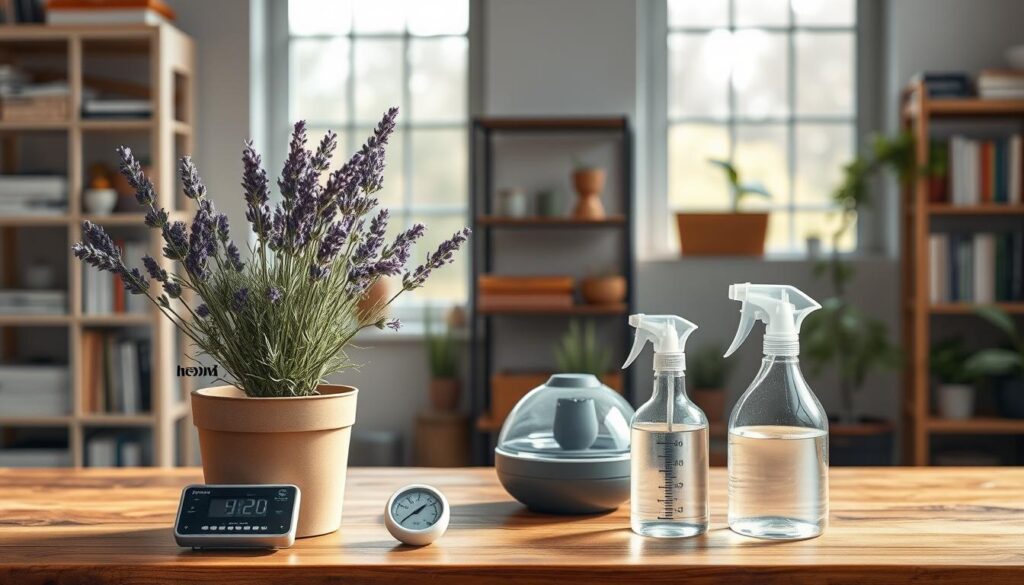
Keeping humidity levels right is key for your lavender’s health. In places with lots of moisture, creating a special microclimate is vital. It gives your lavender a stable place to grow and flourish.
Creating a Microclimate
To control humidity around your lavender, pick the right container materials. Terracotta pots are great because they soak up extra moisture. This keeps the humidity just right for your lavender.
Using raised beds is also a good idea. They help with drainage and keep plants out of soggy soil. Watching your local weather helps you make the best choices for your lavender.
Mulching to Retain Soil Moisture
Mulching is another smart way to manage humidity. It keeps the soil moist, so your lavender gets enough water. Use wood chips or straw for mulch, as they let air through and prevent fungus.
But don’t mulch too thickly, or it can hold too much water. Check your soil’s moisture often to keep it just right for your lavender.
Watering Practices for Lavender
Getting the right amount of water is key for your lavender plants’ health. Knowing when to water is important to avoid drowning them. Lavender plants do best when their soil is allowed to dry out a bit between waterings.
Frequency and Amount of Water
For lavender care, aim for deep but less frequent watering. Let the top two inches of soil dry out before you water again. This method helps prevent root rot and encourages strong roots.
Recognising Overwatering
Watch out for signs of too much water, which can harm your lavender. Look for wilting, yellow leaves, and a musty smell in the soil. If you see these, it’s time to change your watering schedule to keep the soil just right.
Seasonal Care for Lavender
Looking after your lavender means knowing what it needs each season. Spring and winter are key times for care. Pruning in spring and winter prep are vital for your plants’ health and beauty.
Pruning in Spring
Spring is the best time to prune your lavender. Cut back about one-third of last year’s growth. This encourages new, healthy shoots.
Focus on the older wood. Avoiding cuts there helps with foliage and flower growth. Use sharp, clean shears for a stress-free cut.
Preparing for Winter
Winter is coming, and your lavender needs protection. Start with a light mulch layer to keep roots warm. Also, make sure your planting area drains well to prevent crown rot.
Common Pests and Diseases of Lavender
Lavender is known for its strong scent and robust nature. These traits help protect it from many pests. But, when plants face stress, they can become vulnerable. Knowing about common pests and diseases helps in managing and protecting them.
Identifying Lavender Pests
Aphids and spider mites often attack stressed lavender plants. Aphids cause curled leaves and sticky stems. Spider mites show up as yellow leaves and webs. Regular checks are key to spotting these pests early.
Acting fast at the first sign of trouble can stop problems from getting worse.
Preventative Measures
Keeping your lavender healthy is key to avoiding diseases. Here are some tips to protect your plants:
- Keep the soil moist but avoid overwatering to prevent root rot.
- Ensure the soil drains well to prevent waterlogged conditions.
- Choose lavender varieties that are resistant to diseases for better chances of success.
- Regularly inspect your plants to catch pest issues early.
By following these tips, your lavender can thrive without pests and diseases.
Companion Planting with Lavender
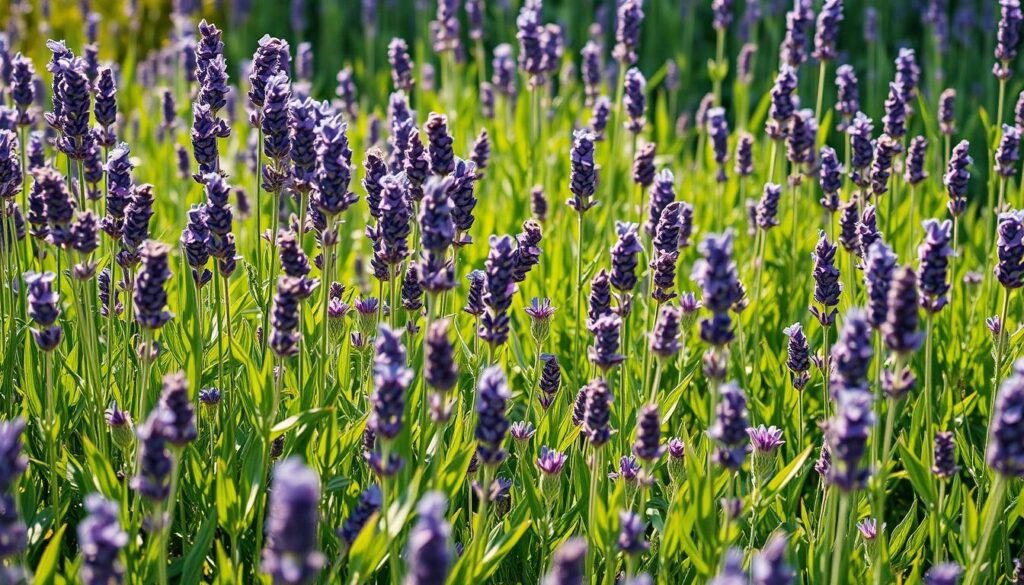
Companion planting with lavender makes your garden thrive. Lavender beautifies your garden and grows well with other plants. Choosing the right neighbours helps both lavender and other plants grow strong and healthy.
Best Neighbours for Lavender
Look for herbs and plants that love well-drained soil and full sun when picking lavender companions. Here are some great options:
- Rosemary: A drought-tolerant herb that has similar watering needs.
- Thyme: Another aromatic herb that thrives in full sun.
- Sage: Companion planting with sage can help repel pests.
These plants help lavender grow while using space and resources well. Adding these herbs to your garden brings a variety of tastes and smells.
Plants to Avoid
Stay away from planting lavender near plants that love moisture. This can cause overwatering and diseases. Here are some plants to avoid:
- Pansies: They need more water than lavender can handle.
- Fuchsias: These plants prefer damp conditions, which can stress lavender.
- Astilbe: They like shaded, moist places, which is bad for lavender.
In summary, planting lavender with the right companions creates a balanced garden. Following good care tips ensures your lavender stays healthy and vibrant.
DIY Lavender Solutions
Lavender is a treat for the senses and has many benefits. You can use it in DIY projects to make your home more relaxing. Making lavender oil and using dried lavender in crafts can bring peace into your space.
Making Lavender Oil
To make lavender oil, start with fresh lavender flowers. Pick a carrier oil like almond or jojoba oil. Here’s how to do it:
- Harvest a handful of fresh lavender flowers, making sure they’re free from pesticides.
- Chop them finely to release their oils.
- Add the flowers to a clean jar and pour in the carrier oil, making sure they’re covered.
- Seal the jar and put it in a warm, sunny spot for two to four weeks, shaking it now and then.
- Strain the oil through a cheesecloth or fine mesh to remove the flowers, and store it in a dark bottle.
This homemade lavender oil can be used in many ways. It’s great for self-care and stress relief.
Using Dried Lavender in Crafts
Dried lavender can make your home smell nice and look good. Here are some ideas:
- Make lavender sachets to keep your clothes smelling fresh and add a calming scent to your bedding.
- Make potpourri by mixing dried lavender with other herbs and flowers. It’s perfect for decorative bowls.
- Add dried lavender to homemade candles or soaps for a lovely fragrance.
These crafts not only show off lavender’s beauty but also help make your space calmer. They’re great for stress relief.
Top Tips for Successful Lavender Growing
To make sure your lavender grows well, keep an eye on the soil moisture. A simple trick is to check the soil by sticking your finger in it. If the top two inches are dry, it’s time to water your plants. Regular checks are key to good lavender care, no matter the humidity.
Also, try out different lavender types. Some do better in humid weather, while others prefer it dry. Find the best lavender for your garden’s climate and soil by doing some research.
By trying different soils and varieties, your lavender will not only be healthier but also make your garden beautiful and fragrant. With a bit of patience and care, you can enjoy your lavender’s beauty and scent all year round.