
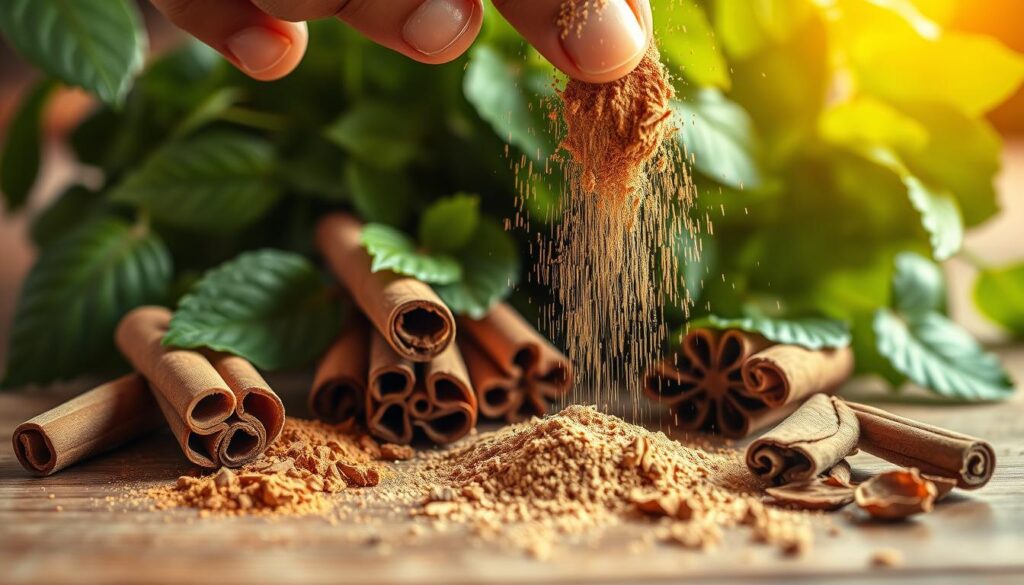
Ever thought about a safe way to fight off fungus in your garden? What if a simple kitchen spice could help? Cinnamon is becoming a top choice for gardeners looking for natural ways to keep plants healthy. This article will show how cinnamon can be a game-changer for your garden, keeping it vibrant and fungus-free without harsh chemicals.
Key Takeaways
- Cinnamon is proven to combat various fungal infections in plants.
- It serves as a safe, natural fungicide for gardening enthusiasts.
- The spice can effectively promote overall plant health.
- Utilising cinnamon is cost-effective compared to commercial solutions.
- Regular monitoring can enhance its effectiveness in plant care.
- Discovering the right application methods ensures better results.
Understanding the Fungal Threat to Plants
Fungal infections are a big problem for plants inside and outside. They cause about 85% of plant diseases. Knowing about common fungal infections, their signs, and how they affect plants helps you manage them well.
Common Types of Fungal Infections
It’s important to know the common fungal infections in plants. This helps with diagnosing plant diseases. Here are some common ones:
- Black Spot: Causes dark, round spots on leaves, leading to early leaf drop.
- Rust: Manifested by rusty spots on leaves, it can lead to wilting and stunted growth.
- Powdery Mildew: Appears as a white, powdery coating on leaves and stems, reducing photosynthesis efficiency.
Symptoms of Fungal Problems
Knowing the signs of fungal infections helps you diagnose plant diseases better. Look for:
- Discolouration of leaves ranging from yellowing to browning.
- Development of spots or blotches on foliage.
- The presence of mould or fungal growth on the plant surface.
How Fungi Impact Plant Health
Fungi can harm plant health by taking advantage of weaknesses. Infected plants may grow poorly, produce less, and attract pests. It’s key to manage fungal infections to keep your plants healthy and strong.
| Fungal Infection | Symptoms | Impact on Plant Health |
|---|---|---|
| Black Spot | Dark spots, leaf drop | Weakens plant structure, reduces aesthetic appeal |
| Rust | Rusty spots, wilting | Stunts growth, reduces photosynthesis |
| Powdery Mildew | White powdery coating | Impedes growth, lowers crop yield |
Why Cinnamon is a Natural Fungicide
Cinnamon is a strong ally against fungal infections in plants. It contains compounds like cinnamaldehyde, which have great antifungal powers. This shows why cinnamon is good at fighting fungal diseases naturally.
The Science Behind Cinnamon’s Properties
Cinnamon’s active parts, like cinnamaldehyde, stop fungal pathogens from growing. Studies show these compounds harm fungal cell membranes. This kills the fungus without harming the plant. So, cinnamon is great for keeping plants healthy and avoiding harsh chemicals.
Historical Uses of Cinnamon in Agriculture
Farmers have used cinnamon for ages because of its benefits. Old civilisations knew it fought fungi well. This history shows cinnamon’s value in farming, where chemicals are often used.
Comparing Cinnamon to Chemical Fungicides
Cinnamon is safer than many chemical fungicides. Chemicals can harm plants and the environment, but cinnamon doesn’t. Choosing natural options like cinnamon makes gardening safer and healthier.
How to Use Cinnamon in Your Garden
Using cinnamon to fight plant fungus is easy and works well. This spice can be used in different ways to help your garden. Here are some methods to keep your plants healthy and fungus-free.
Full Application Methods
To use cinnamon fully in your garden, sprinkle it generously on the soil. This can greatly reduce harmful pathogens, making it hard for fungi to grow. Adding this to your gardening routine helps fight plant fungus effectively.
Spot Treatments for Affected Areas
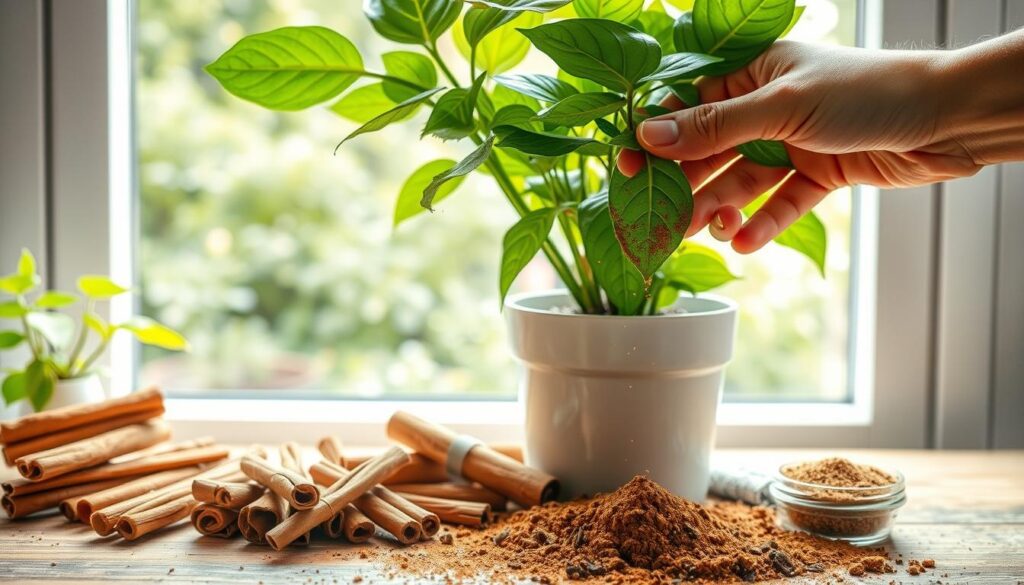
For plants with fungal infections, a cinnamon paste or spray can be very helpful. Mix cinnamon powder with water to make a paste. Apply it to the infected spots. This targets the problem areas without overwhelming the plants.
Cinnamon in Potting Mixes
Adding cinnamon to your potting mix helps prevent fungal diseases, great for new plants. Mixing a bit of cinnamon with your potting soil adds protection. It shows how cinnamon can help plants thrive, making it a natural solution for garden health.
The Benefits of Using Cinnamon for Your Plants
Cinnamon is a great help in gardening. It’s good for the environment and makes your garden grow well. Using cinnamon can make your plants healthy and strong.
Safety for Beneficial Insects
Cinnamon is safe for good insects. Unlike harmful chemicals, it doesn’t hurt them. This lets pollinators and natural predators live well with your plants.
Cost-Effectiveness Compared to Store-Bought Solutions
Cinnamon is cheaper than store-bought gardening stuff. It saves you money and works just as well. It’s a smart choice for any gardener.
Additional Nutritional Benefits for Plants
Adding cinnamon to your garden helps your plants a lot. It makes the soil better, fighting off diseases and pests. This makes your garden healthier and more vibrant.
When to Apply Cinnamon Treatment
Knowing when to use cinnamon on your plants is key to their health. The right time can make a big difference. It’s best to apply cinnamon in early spring or when you see fungal infections.
Best Times During the Growing Season
Fungi grow more in warmer, humid weather. Using cinnamon early can stop problems before they start. Also, treat your plants with cinnamon if you see signs of illness like wilting.
Seasonal Considerations for Plant Care
Every season brings different challenges for your garden. Humidity and temperature changes affect fungi growth. Use cinnamon more often in wet, humid times. Adjust your treatment schedule as needed to keep your plants healthy.
Monitoring Plant Health Post-Application
Watch your plants closely after using cinnamon. Look for signs of improvement or any bad reactions. Regular checks help your plants stay healthy and strong. Catching issues early means quick fixes.
Other Natural Remedies for Plant Fungal Issues
Looking for ways to fight plant fungus? Try natural remedies like baking soda, neem oil, and essential oils. They offer effective solutions without harsh chemicals.
Baking Soda and Its Effectiveness
Baking soda, or sodium bicarbonate, is great for fighting fungus. It changes the pH on plant leaves, making it hard for fungi to grow. Using it regularly can help keep your plants fungus-free.
Neem Oil as an Alternative Solution
Neem oil comes from the neem tree and fights fungi and pests. It stops fungi from growing and keeps pests away. Adding neem oil to your plant care routine can protect your plants from many dangers.
The Role of Essential Oils
Essential oils like tea tree and lavender have antifungal properties. They can boost the power of baking soda or neem oil. Using essential oils in your garden not only helps your plants but also adds a nice scent.
Creating a Fungus-Resistant Environment
Creating a fungus-resistant environment is key to stopping fungal problems. By focusing on proper plant care, you can shield your plants from dangers. With smart practices, your garden will flourish, and your plants will thrive.
Proper Watering Techniques
Watering is vital for keeping plants healthy. To avoid too much moisture on leaves, try not to water from above. Water at the base of the plants instead. This lets the soil soak up the water, reducing fungal growth.
Using Quality Soil and Compost
Choosing the right soil and compost is critical for strong roots. Good soil with organic matter helps with drainage and air. Adding compost regularly boosts soil fertility, giving your plants the nutrients they need.
Encouraging Air Circulation Among Plants
Good air circulation is essential for healthy plants. Make sure plants are not too close together and prune them carefully. This reduces humidity and stops fungal outbreaks. With free air flow, you lower fungal risks and create a healthier garden.
Precautions to Take When Using Cinnamon
Cinnamon is a strong natural fungicide but needs careful use. Following the right steps can make it work better and keep your plants safe. Knowing how to use cinnamon right is key to its success. It’s important to know which plants can handle it well.
Dos and Don’ts of Cinnamon Application
- Do apply cinnamon in a layer about ⅛ inch thick for soil mold.
- Don’t use cinnamon on dry plants; make sure leaves are wet for it to stick.
- Do keep applying until all mold is gone.
- Don’t forget to keep the air moving to lower humidity around plants.
Avoiding Over-application and Its Risks
Too much cinnamon can harm your plants’ roots. It’s vital to use cinnamon safely and not too much. If you think you’ve used too much, consider repotting and cleaning the roots to get rid of any leftover cinnamon.
Recognising Plant Sensitivities
It’s important to know how your plants react to cinnamon. Some might not take it well. Try a small test on a leaf first. For more tips on using cinnamon safely, check out the application guidelines for plant care.
Personal Stories: Successes with Cinnamon
Many gardeners have found cinnamon to be a natural solution for plant fungal issues. They share their experiences online, showing how cinnamon fights fungi and helps plants grow well.
Gardening Experiences from Fellow Enthuasiasts
Gardening fans often post their cinnamon success stories online. They talk about how cinnamon has saved their plants, from young seedlings to older ones. Their stories show the real benefits of using cinnamon in gardening.
Before-and-After Effects to Inspire You
Seeing the change can be very inspiring. Many share before-and-after photos of their plants after using cinnamon. These pictures not only motivate you to try cinnamon but also prove its effectiveness in gardening.
Community Testimonials on Natural Remedies
The gardening community is full of natural remedy testimonials. Gardeners share their successes, urging others to try cinnamon for fungal problems. This sharing helps everyone, from new to experienced gardeners, to grow and learn together.
Final Thoughts on Keeping Plants Fungus-Free
When you garden, using natural solutions like cinnamon can really help your plants. Choosing organic methods is good for the planet and your garden. It makes your garden healthy and strong, without using harmful chemicals.
It’s also key to watch your plants closely for any fungal problems. This way, you can catch and fix issues before they get worse. Keeping an eye on your plants helps them stay healthy and green.
Choosing sustainable gardening is great for your plants and the environment. By trying out these natural ways, you’ll find it easy to keep your garden free from fungus. Enjoy the process of caring for your garden in a natural way.