Looking for a plant that brings both architectural elegance and wildlife appeal to your small garden? Salvia nemorosa ‘Caradonna’ delivers vertical drama, months of colour, and a buzzing community of pollinators in even the most modest spaces. This standout perennial has become a designer favourite for good reason – it combines compact growth with exceptional garden performance, making it perfect for UK gardens where space is often at a premium but wildlife value is increasingly important.
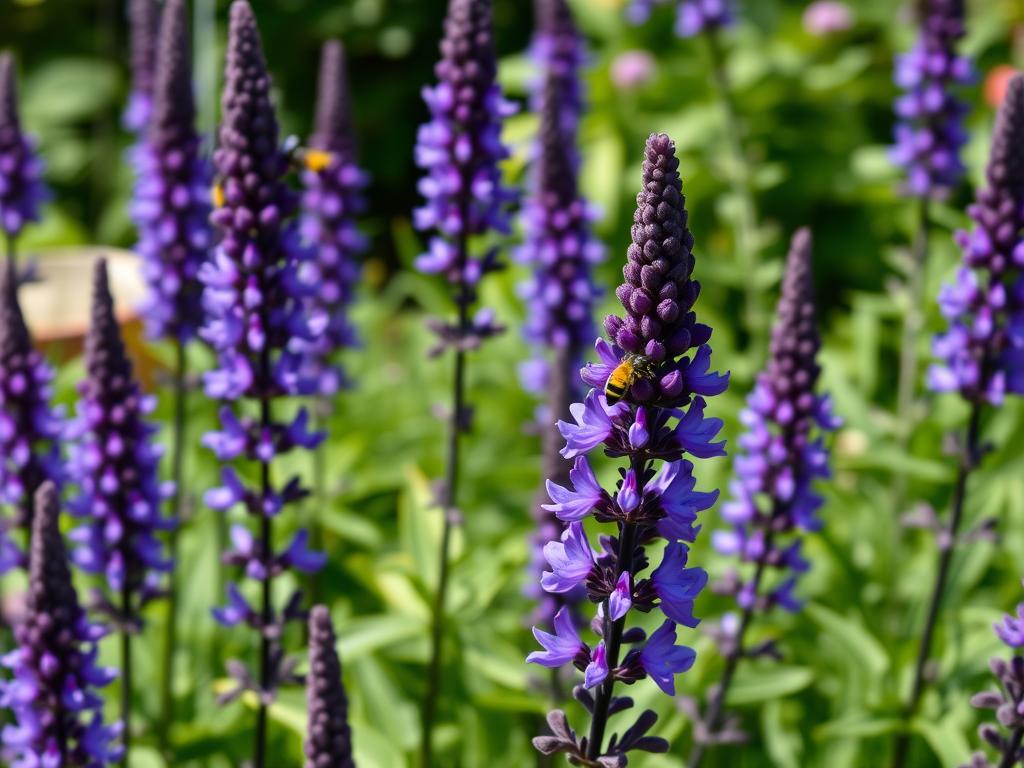
Salvia ‘Caradonna’ showing its distinctive black stems and deep violet flowers
Key Features of Salvia ‘Caradonna’
Striking Vertical Structure
What sets ‘Caradonna’ apart from other Salvia varieties is its exceptional architectural quality. Growing to a manageable 45-60cm in height, this perennial creates dramatic vertical interest with its slender, near-black stems that hold deep violet flower spikes. The dark calyces (flower bases) remain ornamental even after the flowers fade, extending its visual appeal well into autumn.
Extended Flowering Season
One of the most valuable aspects of this plant is its impressive flowering period. Beginning in early June and continuing through September when properly deadheaded, ‘Caradonna’ provides reliable colour when many other perennials have finished their show. This long-season performance makes it excellent value in small gardens where every plant must earn its keep.
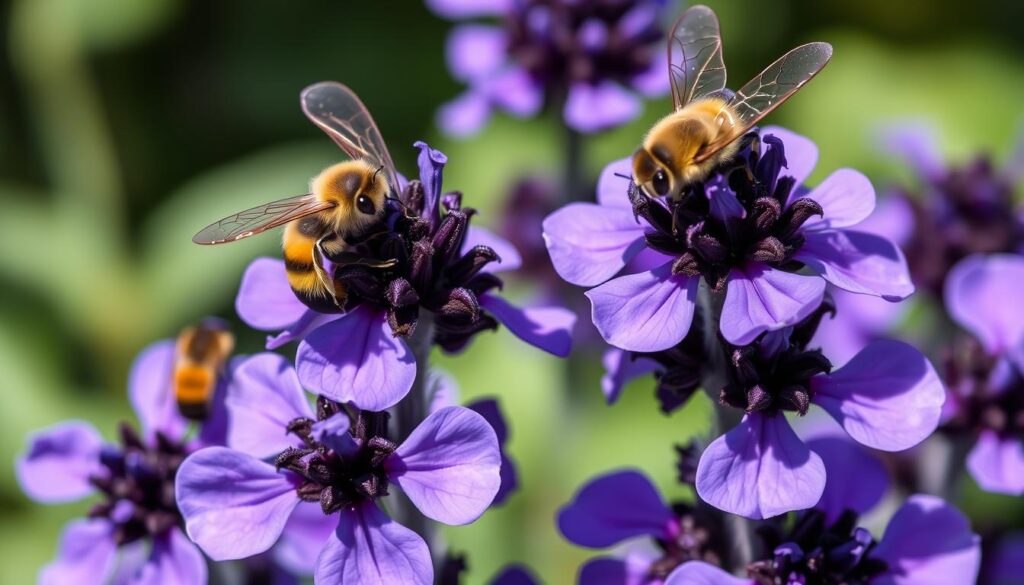
Bees are particularly attracted to the nectar-rich flowers of Salvia ‘Caradonna’
Exceptional Drought Tolerance
Once established, ‘Caradonna’ demonstrates remarkable resilience during dry spells. Its Mediterranean heritage gives it the ability to thrive in hot, dry conditions – a valuable trait as UK summers become increasingly warm and rainfall patterns more erratic. This drought tolerance also means less watering for gardeners, making it a sustainable choice for modern gardens.
Growing Guide: How to Cultivate Salvia ‘Caradonna’
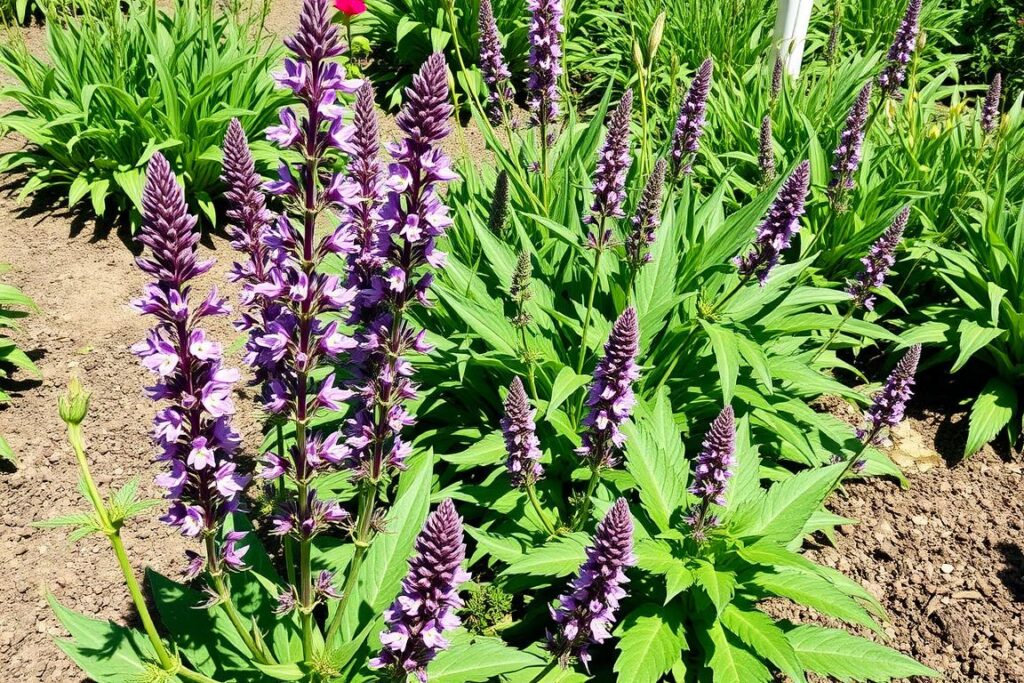
Salvia ‘Caradonna’ thrives in full sun positions with good air circulation
Sunlight Requirements
For the most abundant flowering and strongest stems, plant your Salvia ‘Caradonna’ in full sun. While it can tolerate light shade, you’ll notice significantly fewer flower spikes and potentially leggier growth in such positions. In UK gardens, a south or west-facing aspect typically provides the ideal light conditions for this sun-loving perennial.
Soil Preferences
Well-drained soil is absolutely essential for ‘Caradonna’ to thrive. Heavy clay soils common in many UK gardens can be problematic, causing root rot during wet winters. If you’re dealing with clay, incorporate plenty of grit and organic matter before planting, or consider raising the planting area slightly to improve drainage. This Salvia actually performs best in moderately fertile soil – overly rich conditions can result in floppy growth.
Deadheading encourages fresh flushes of flowers throughout summer
Deadheading Technique
To maintain continuous flowering from June through September, deadheading is essential. When the first flush of flowers begins to fade (typically in early July), cut the stems back to just above a pair of fresh leaves or side shoots. This encourages a second and often third flush of blooms. For time-pressed gardeners, a quicker approach is to shear the entire plant back by one-third after the main flowering period – within 2-3 weeks, you’ll be rewarded with fresh growth and new flower buds.
Essential Care Tips
- Plant in spring or early autumn for best establishment
- Space plants 40-45cm apart to allow for mature spread
- Water regularly during the first growing season until established
- Apply a thin layer of compost around plants in spring, avoiding the crown
- Divide congested clumps every 3-4 years to maintain vigour
- Cut back old growth in early spring rather than autumn for winter protection
Perfect Planting Partners
The architectural quality and violet-blue flowers of Salvia ‘Caradonna’ make it exceptionally versatile in garden design. Here are some outstanding companion plants that enhance its beauty while creating a cohesive, wildlife-friendly display:
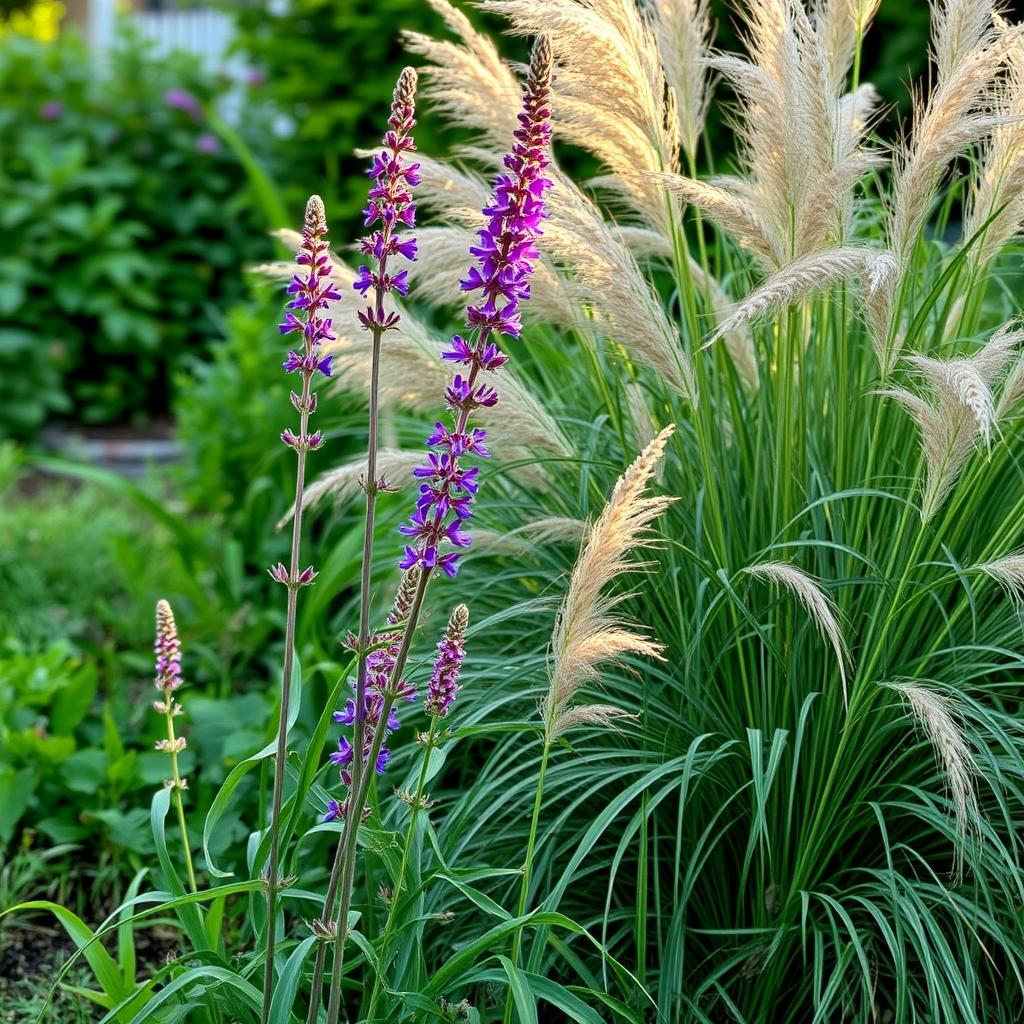
Stipa tenuissima creates a flowing contrast to Salvia’s upright form
Stipa tenuissima
This feathery grass (Mexican feather grass) creates a beautiful textural contrast with the upright Salvia. Its fine, blonde seedheads catch the light and move with the slightest breeze, softening the rigid structure of ‘Caradonna’. Both plants share similar drought-tolerant qualities, making them natural companions in dry, sunny borders.

Echinacea ‘White Swan’ offers striking colour contrast
Echinacea ‘White Swan’
The clean white flowers of this coneflower variety create a striking colour contrast with the deep violet of ‘Caradonna’. Both plants flower simultaneously in midsummer, creating a harmonious display. As an added benefit, Echinacea provides valuable seed heads for birds in autumn and winter, extending the wildlife value of your planting scheme.
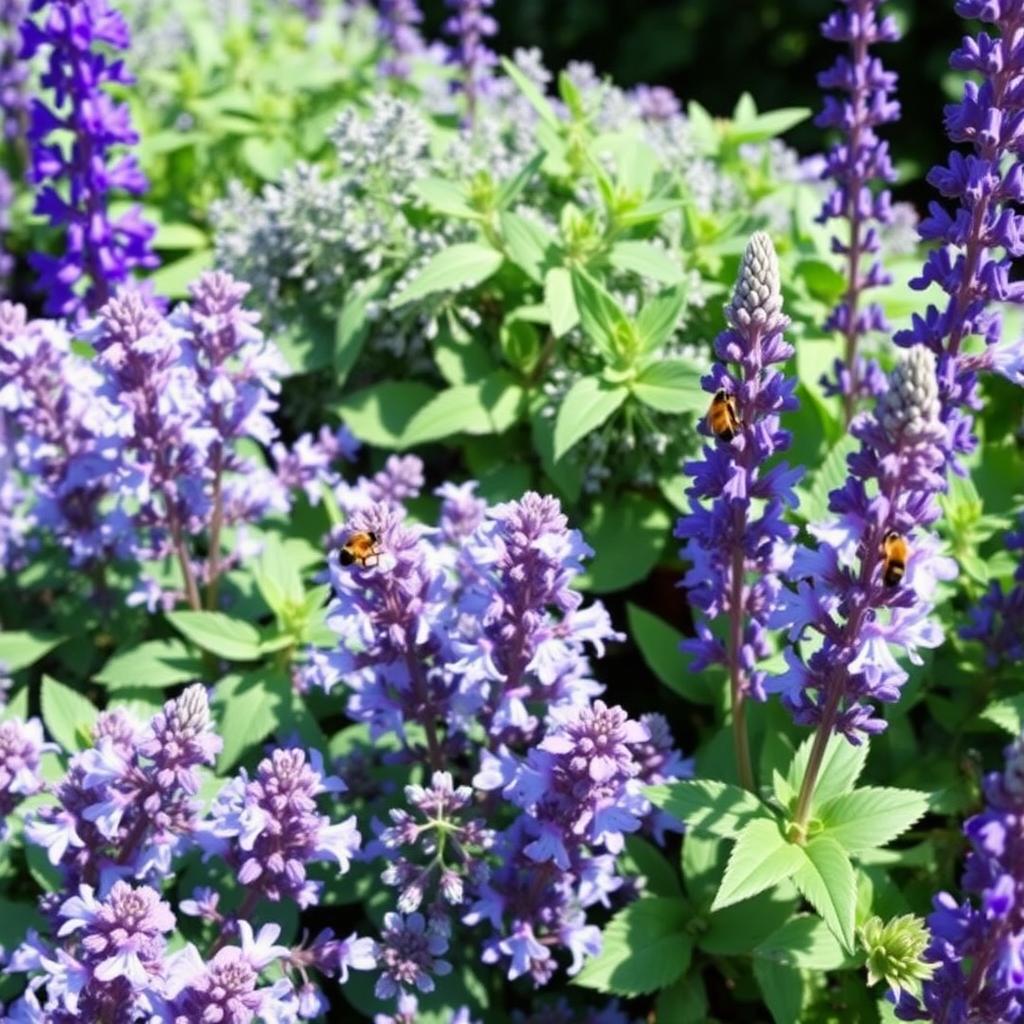
Nepeta ‘Walker’s Low’ creates a flowing foreground to taller Salvia
Nepeta ‘Walker’s Low’
This reliable catmint creates a billowing mound of lavender-blue flowers that perfectly complements the more structured growth of ‘Caradonna’. Plant Nepeta in front of the Salvia for a layered effect. Both plants are exceptional pollinator magnets, creating a buzzing wildlife hub in your garden from late spring through summer.
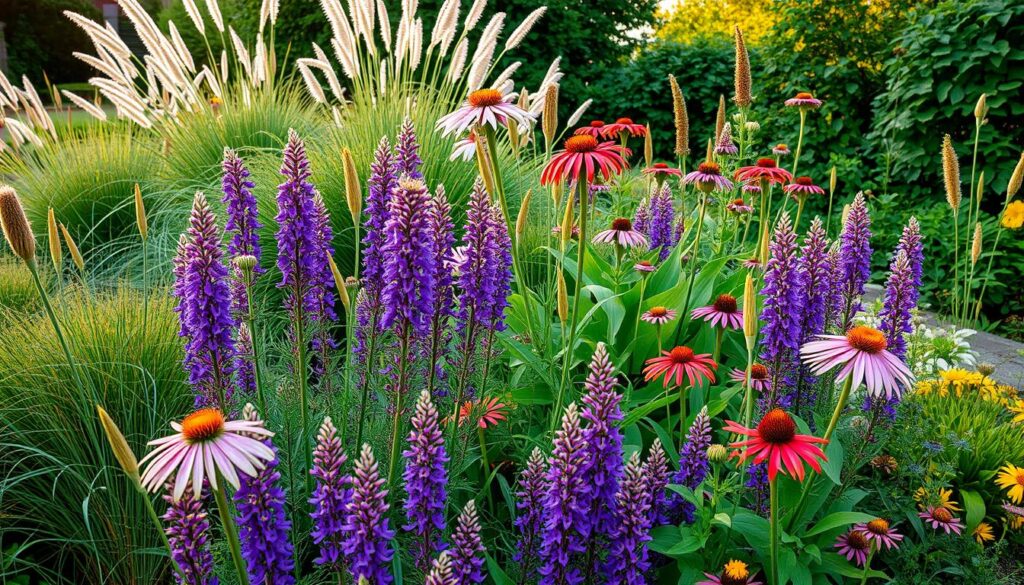
A naturalistic planting scheme combining Salvia with grasses and flowering perennials
Seasonal Planting Tip
For year-round interest, underplant your Salvia ‘Caradonna’ with spring-flowering bulbs like Narcissus ‘Thalia’ or Tulipa ‘Spring Green’. These will provide early season colour before the Salvia begins its growth cycle. The emerging Salvia foliage will then conveniently hide the fading bulb foliage as it dies back – a perfect partnership for continuous garden interest.
Wildlife Benefits: A Buzzing Hub of Activity
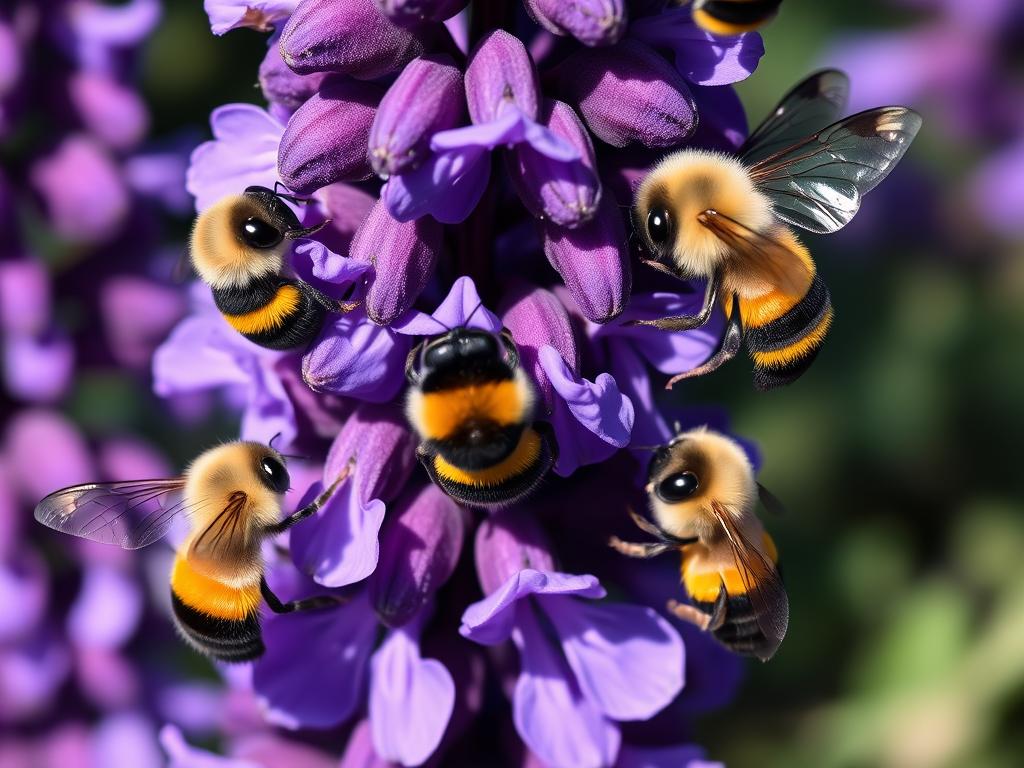
Salvia ‘Caradonna’ attracts a diverse range of pollinating insects
One of the most compelling reasons to grow Salvia ‘Caradonna’ is its exceptional value to wildlife. The nectar-rich flowers are particularly attractive to bees, including several species of bumblebees that can access the tubular blooms with their long tongues. Butterflies, particularly Red Admirals and Peacocks, are also frequent visitors.
The long flowering period makes this plant especially valuable for pollinators, providing a reliable food source from early summer through to early autumn – a critical period when many other garden plants have finished flowering. By including ‘Caradonna’ in your garden, you’re creating a consistent nectar station that supports pollinator populations throughout the growing season.
Pollinator Observation
Take a few minutes to observe your Salvia ‘Caradonna’ on a warm summer day. You’ll likely spot multiple species of bees visiting the flowers, with different species often specializing in different parts of the flower spike. This simple activity can be a fascinating way to connect with the wildlife in your garden and appreciate the ecological value of your planting choices.
Beyond pollinators, the seed heads (if left uncut) provide food for garden birds in autumn. Goldfinches are particularly adept at extracting the small seeds from the dried calyces. Consider leaving some flower spikes standing through winter not only for wildlife value but also for winter structure and frost-covered beauty.
UK-Specific Growing Tips
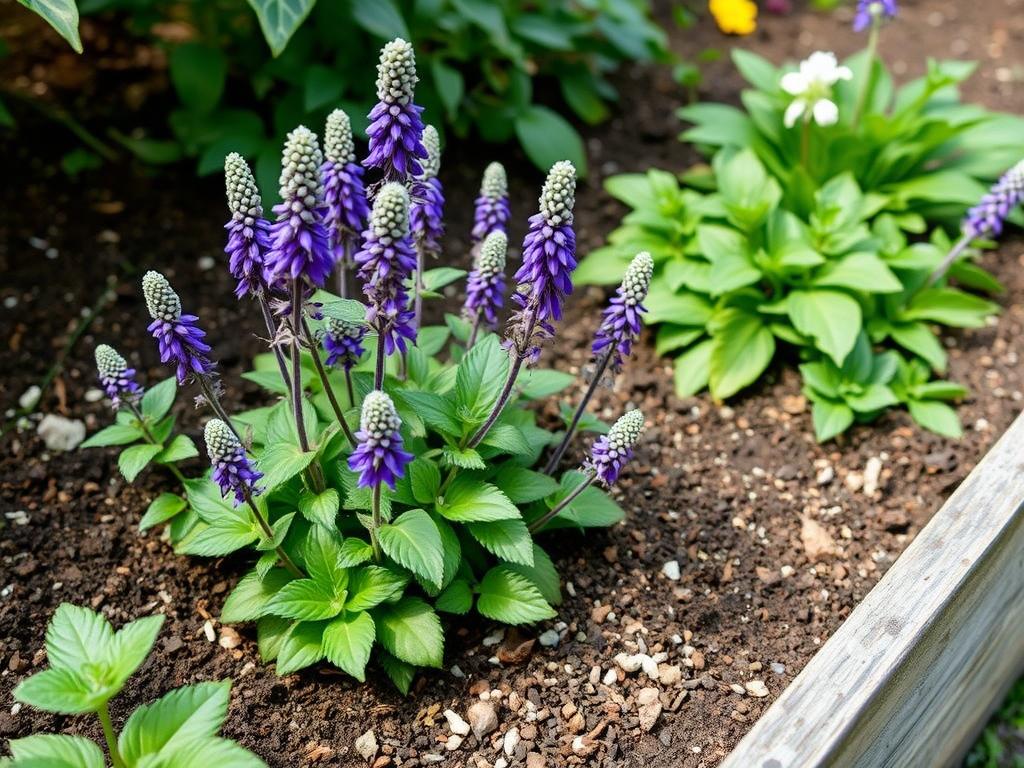
Raised planting areas help overcome drainage issues in heavy UK soils
Managing in Clay Soils
Many UK gardens, particularly in the Midlands and parts of the South East, contend with heavy clay soils that can challenge Mediterranean plants like Salvia. Creating raised planting areas can dramatically improve success rates by enhancing drainage. Even a slight mound (15-20cm higher than the surrounding soil) can make a significant difference. Incorporate plenty of horticultural grit and well-rotted organic matter when planting, and consider adding a handful of grit directly into the planting hole.
Winter Protection
While ‘Caradonna’ is hardy throughout most of the UK (USDA zones 4-8, UK hardiness H5), gardens in exposed northern locations or areas with particularly wet winters may benefit from additional protection. Rather than cutting back all growth in autumn, leave the crown intact until early spring to provide some insulation against winter wet and cold. A light mulch of grit around the crown can also help prevent rot during particularly wet winters.
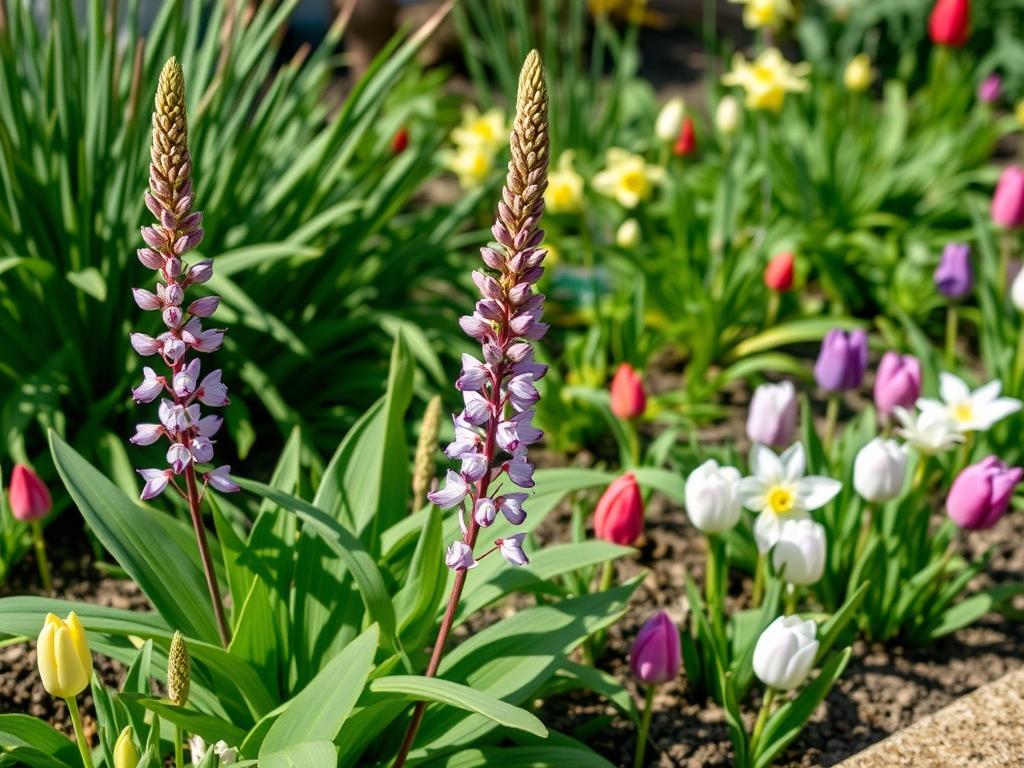
Early spring bulbs extend the seasonal interest of Salvia plantings
Extending Seasonal Interest
To maximise garden impact in the UK’s relatively short growing season, pair ‘Caradonna’ with early spring bulbs and late-season grasses. Narcissus ‘Tête-à-Tête’ or Crocus tommasinianus planted around the Salvia will provide February-March colour before the Salvia begins active growth. As autumn approaches, the seedheads of Salvia combined with the golden tones of grasses like Molinia ‘Transparent’ create beautiful low-light effects typical of UK autumn gardens.
Why We Love Salvia ‘Caradonna’
“Few plants combine architectural presence, pollinator appeal and drought tolerance as effectively as Salvia ‘Caradonna’. In my small London garden, it’s the backbone of my summer borders, attracting bumblebees from June through September with minimal intervention.”
Whether you’re creating a new border or refreshing an existing planting scheme, consider adding Salvia ‘Caradonna’ to your garden this season. Its combination of beauty, resilience, and ecological value makes it a true garden essential for modern UK gardens where both aesthetics and sustainability matter.