

Ever wondered why your snake plant, known for being super tough, seems to be dying? This plant, also called sansevieria trifasciata or mother-in-law’s tongue, can surprise even the most experienced plant lovers. But fear not! With the right knowledge and care, you can bring your plant back to life. This guide will show you how to revive your low maintenance plant and keep it healthy for years.
Key Takeaways
- Understand the basic needs of your snake plant to ensure a healthy environment.
- Recognise the signs of distress in your plant for timely interventions.
- Watering correctly is key; learn how to get it just right.
- Find out the light your snake plant needs for the best growth.
- Discover the best soil and fertiliser options to boost its resilience.
- Establish a regular care routine to keep your houseplant thriving.
Understanding the Snake Plant’s Needs
To create the perfect home for your snake plant, you need to know its basic needs. These plants are easy to care for and thrive in certain conditions. Knowing what they need helps keep them healthy and looking great.
The Ideal Environment for Your Snake Plant
Snake plants do best in temperatures between 18°C to 27°C. They can handle different light levels, making them great for indoor spaces. They grow best in bright, indirect light but can also do well in low light.
They prefer low to moderate humidity. High humidity can cause problems. Make sure the soil drains well to prevent root rot and keep your plant healthy.
Common Misconceptions about Snake Plant Care
Many think snake plants can handle extreme conditions. But, while they are tough, they need proper care to grow well. A big mistake is thinking they need lots of water.
In reality, they like to dry out a bit between waterings. Too much water can harm their roots and health.
Signs of a Healthy Snake Plant
It’s easy to tell if your snake plant is healthy. Look for bright, upright leaves without spots or discoloration. Healthy plants have strong, growing foliage.
New leaves coming from the centre show they’re doing well. Checking these signs regularly helps keep your plant in great shape.
Assessing the Condition of Your Snake Plant
Checking your snake plant regularly is key to keeping it alive. By regularly checking your plant’s health, you can spot problems early. Knowing the signs of a sick plant helps you care for it better.
Identifying Symptoms of a Dying Plant
It’s important to know the signs that your snake plant might be in trouble. Watch out for these signs:
- Yellowing Leaves: This can mean too much water or not enough nutrients.
- Drooping Leaves: This usually means the plant is thirsty or has root issues.
- Brown Tips: This could be because of too little humidity or too much light.
- Soft, Mushy Leaves: This is a clear sign of root rot, often from too much water.
How to Check for Root Health
Good root health is the foundation of a healthy snake plant. Here’s how to check:
- Take the plant out of its pot carefully, without harming the roots.
- Examine the roots. Healthy roots are firm and white.
- Look for dark, mushy roots, which mean rot. Cut off any bad parts.
- Put the plant in new, well-draining soil to help it get better.
Watering Wisely: Finding the Right Balance
Watering your snake plant right is key to its health. Knowing how to water correctly can stop common mistakes. Snake plants are tough but need careful watering, paying special attention to drainage.
The Importance of Drainage
Drainage is vital to stop water from pooling in the pot. Without it, roots can rot, harming your plant. Make sure pots have holes and use a mix that drains well. Soil, sand, and perlite are good for this, helping moisture to leave.
How to Tell When to Water
Figuring out when to water can be hard. Wait until the top two inches of soil are dry. If it’s moist, wait. Dry soil means it’s time to water. Also, watch for wrinkled leaves, which mean it’s time.
Common Watering Mistakes to Avoid
There are mistakes to avoid when watering your snake plant. Here are some tips:
- Don’t overwater; a little is enough.
- Don’t water on a set schedule. Check the soil instead.
- Make sure pots drain well to avoid root rot.
- Choose a potting mix that doesn’t hold too much water.
Light Requirements for Your Snake Plant
Knowing what light your snake plant likes is key to its health. These plants can grow well in different light levels. By adjusting to their needs, you can help them thrive.
Whether your area is dim or bright, you can adjust to keep your plant happy. This ensures it grows well.
Understanding Low Light vs. Bright, Indirect Light
Snake plants are known for being adaptable. They can handle low light, making them great for dark spots. But, for the best growth, they prefer bright indirect light.
This kind of light helps them grow stronger, look more vibrant, and stay healthy.
How to Position Your Plant for Optimal Growth
Getting the right light is vital for your snake plant. Here are some tips:
- Put your plant near a window with bright indirect light.
- Stay away from direct sunlight to prevent leaf burn.
- If it’s dark, rotate your plant to get even light.
- Use sheer curtains to soften sunlight and keep it bright.
https://www.youtube.com/watch?v=BP72Jc3C5pE
Soil Matters: Choosing the Right Medium
Choosing the right potting soil is key for your snake plant’s health. This plant needs soil that drains well and allows for good airflow. The right soil keeps the roots healthy and prevents rot. Knowing when and how to replace the soil is vital for your plant’s growth.
Best Soil Types for Snake Plants
Snake plants do best in well-draining soils. A mix of perlite, coco coir, and sand is highly recommended. You can also mix cactus mix with regular houseplant soil for the best results. Succulent soil is another good option as it prevents waterlogging.
For your plant’s roots to stay healthy, choose a soil that drains well. This ensures your plant stays healthy for a long time.
Replacing Old Soil: When and How
It’s important to replace old potting soil to keep your snake plant thriving. You should do this every couple of years or sooner if the soil looks compacted or depleted. When you replace the soil, gently remove your plant from its pot.
Then, shake off any old soil from the roots. Next, fill the pot with fresh, well-draining soil. Replacing the soil properly is key to your plant’s health. For more on repotting, check out this guide.
Dealing with Pests and Diseases
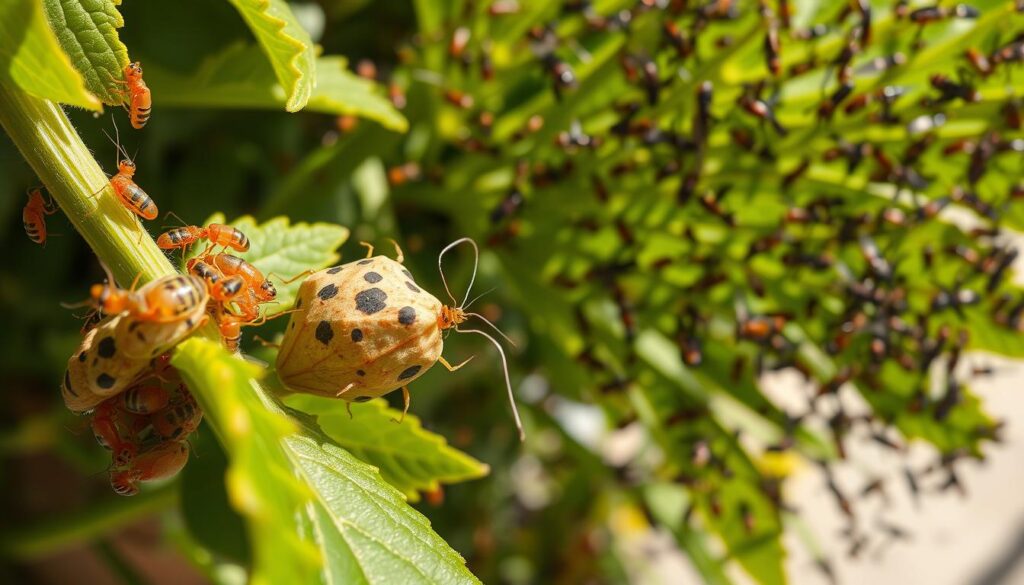
Your snake plant can face many pests and diseases that harm it. Spotting these problems early is key to keeping your plant healthy. Let’s look at the common pests, signs of infection, and how to prevent them.
Common Pests Affecting Snake Plants
Many pests can harm your snake plant. The main culprits are:
- Mealybugs – Small, white waxy insects that cluster on leaves and stem joints.
- Spider mites – Tiny, almost invisible, usually produce webbing and cause stippled leaves.
- Fungus gnats – Small flies that lay eggs in damp soil, with larvae damaging roots.
Signs of Infection and Disease
Be aware of the signs of trouble. Look out for:
- Yellowing leaves – Often a sign of root issues or nutrient deficiencies.
- Wilting or drooping – May indicate overwatering or insect damage.
- Spots or discolouration – These could point to fungal infections or pests.
Prevention Tips to Keep Your Plant Healthy
Acting early can help prevent pests and diseases. Here are some prevention tips:
- Regularly inspect your plant for any early signs of infestation.
- Maintain proper watering practices to avoid creating damp conditions that attract gnats.
- Ensure good air circulation around your snake plant by not overcrowding it with other plants.
| Pest/Disease | Signs | Prevention |
|---|---|---|
| Mealybugs | White cotton-like spots on leaves | Regular inspection, light horticultural oil application |
| Spider mites | Faded patches, webbing on foliage | Maintain humidity, regular misting |
| Fungus gnats | Small flies around soil, root damage | Allow soil to dry out between watering |
Repotting Your Snake Plant
Repotting your snake plant can make it healthier and more vibrant. Knowing when to do it is key for your plant’s growth. The steps are simple, making it easy for anyone to do.
When to Repot Your Plant
Repot your snake plant every two to three years or when it’s too crowded. Look for signs like roots coming out of the pot or if it’s too big. Spring or early summer is the best time to repot.
Step-by-Step Guide to Repotting
- Choose a new pot that’s one size bigger than the old one and has drainage holes.
- Get fresh potting soil that drains well, perfect for succulents.
- Take the snake plant out of its pot by gently squeezing the sides if it’s plastic or tapping the ceramic pot.
- Check the roots, cutting off any that are rotten or damaged.
- Put a layer of fresh soil at the bottom of the new pot.
- Put the snake plant in the new pot, making sure it’s at the same depth. Fill the rest with soil, pressing down lightly.
- Water the plant a little to settle the soil.
- Put the repotted snake plant in a spot with indirect sunlight. Let it get used to its new home.
Fertilising for Growth and Resilience
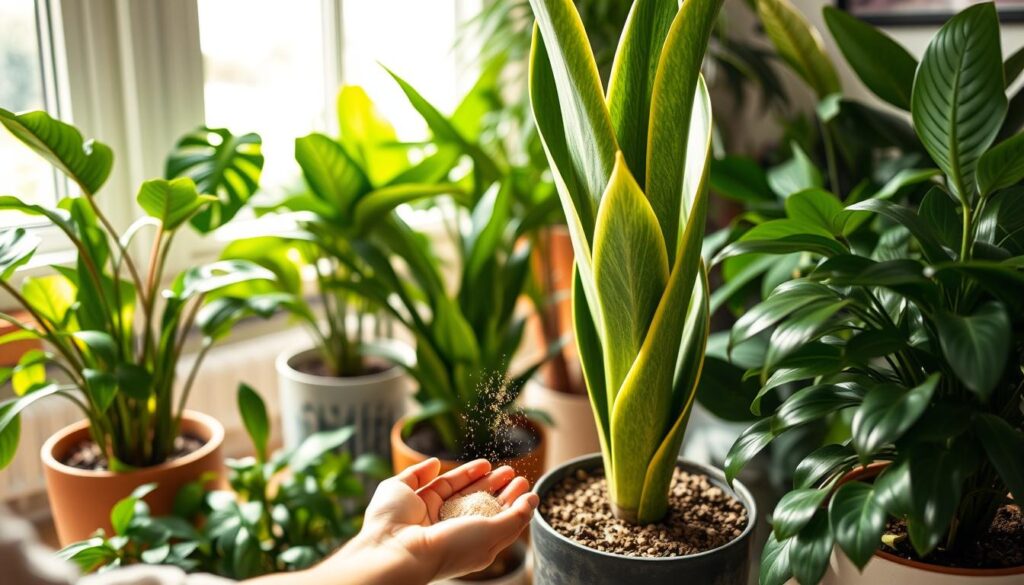
To help your snake plant grow well, it’s key to pick the right fertiliser. Fertilisers give your plant the nutrients it needs to thrive. By choosing the right type and using it correctly, you support your snake plant’s health.
Best Fertiliser Options for Snake Plants
Here are some good fertiliser choices for snake plants:
- Liquid Fertiliser: A balanced liquid fertiliser, like a 10-10-10 formula, is great for regular feeding.
- Slow-Release Granules: Osmocote is a good choice because it gives nutrients slowly, helping your plant grow steadily.
- Organic Options: Compost or worm castings add natural nutrients to the soil, helping your plant grow over time.
How Often Should You Fertilise?
It’s important to know how often to fertilise your plant. The right time depends on the season and the fertiliser you use:
- In spring and summer, fertilise every 4-6 weeks to boost growth.
- In autumn and winter, fertilise less or not at all because your plant grows slower.
Checking your plant’s health often helps you give it what it needs. With the right fertiliser and timing, your snake plant will grow strong and beautiful.
Creating a Routine for Snake Plant Care
It’s key to have a regular plant care routine for your snake plant’s health. Divide your tasks into daily, weekly, and monthly chores. This way, your plant will flourish. Also, adjust your routine with the seasons to meet your plant’s changing needs.
Daily, Weekly, and Monthly Care Tasks
Your routine should mix daily, weekly, and monthly tasks. Here’s a simple plan:
| Frequency | Task |
|---|---|
| Daily | Check soil moisture by touching the surface, ensuring it’s not overly dry. |
| Weekly | Inspect the leaves for dust and wipe them gently with a damp cloth. |
| Monthly | Rotate the plant for even light exposure and assess growth progress. |
Adjustments for Seasonal Changes
Seasonal changes affect your snake plant’s needs. In warmer months, it may need more water and light. In winter, it needs less water as it rests. Keep these changes in mind to care for your plant best:
- Spring/Summer: Increase watering and fertilise monthly to support new growth.
- Autumn: Gradually reduce watering as the light decreases.
- Winter: Water less frequently and avoid fertilising.
Conclusion: Bringing Your Snake Plant Back to Life
Reviving a snake plant is a rewarding journey. It shows your dedication and care. Each step in the recovery process teaches you more about your plant’s needs.
Take time to celebrate small victories. This could be new leaves or a healthy root system. These signs show your plant’s resilience and your commitment to its health.
Celebrating Your Plant’s Recovery
Recognising your snake plant’s progress is fulfilling. It’s important to appreciate these milestones. They show your successful care and intervention.
By knowing your plant’s needs and watching its progress, you can help it thrive. If you face challenges like root rot, there’s help available. Learn more about here.
Keeping Your Snake Plant Thriving Long-term
To keep your snake plant thriving, create a consistent care routine. Pay attention to watering, soil, and light. Regular checks help spot problems early.
This approach fosters a healthy environment for your plant. With the right care, your snake plant will be a vibrant part of your home. It will bring joy and greenery for years.