
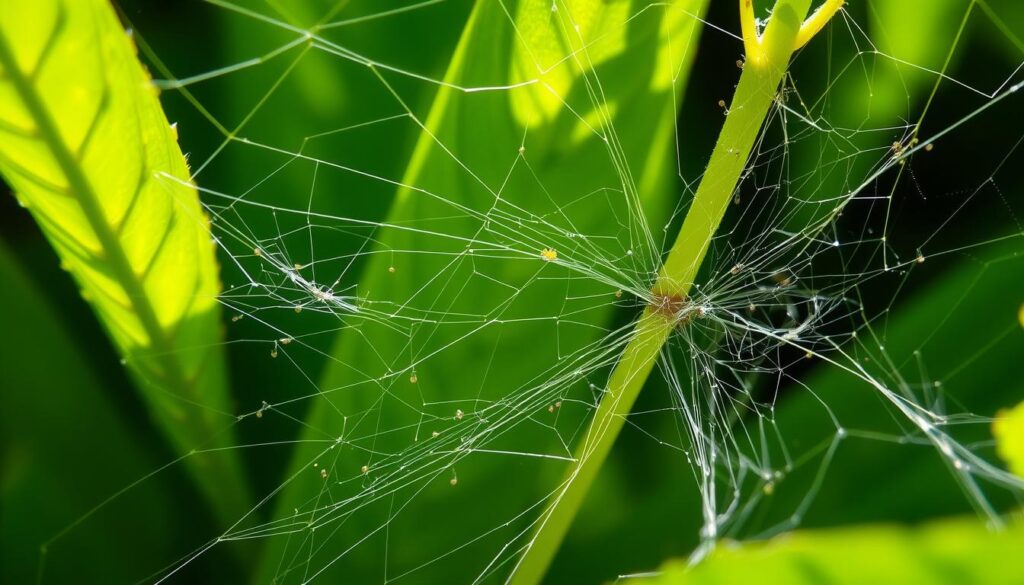
Ever thought about how tiny spider mites can harm your plants? Learning about their link to plant stress is key to better plant care. We’ll look at how spider mites stress plants, how to spot them, and how to control them. Knowing this can help your plants grow strong and healthy.
Key Takeaways
- Spider mites are small pests that can cause significant plant stress.
- Recognising early signs of infestation is key to effective management.
- Using the right spider mites control methods protects your plants.
- Knowing what causes plant stress helps improve plant care.
- Regular checks and upkeep are vital for a healthy garden.
Understanding Plant Stress: What You Need to Know
It’s key to spot plant stress to keep your garden thriving. Many things can weaken plants, like bad watering, not enough nutrients, and pests. Knowing what causes stress helps you act fast to keep your plants healthy.
Common Causes of Plant Stress
Plant stress comes from many things. Some common reasons include:
- Drought conditions that restrict water availability
- Poor soil conditions affecting nutrient absorption
- Pest infestations, like spider mites
Signs Your Plant is Stressed
Spotting plant stress symptoms is vital. Look out for:
- Yellowing or browning leaves
- Wilting or drooping foliage
- Stunted growth or changes in flowering behaviour
How Spider Mites Contribute to Stress
Spider mites are pests that make plant stress symptoms worse. They eat cell sap, causing spots and colour changes on leaves. To stop this, use good plant pest prevention methods to keep your plants strong.
The Life Cycle of Spider Mites
Understanding spider mites’ life cycle is key to managing them. These pests go through many stages, reproducing fast in good conditions. Knowing these stages helps you control their numbers.
From Egg to Adult: The Growth Stages
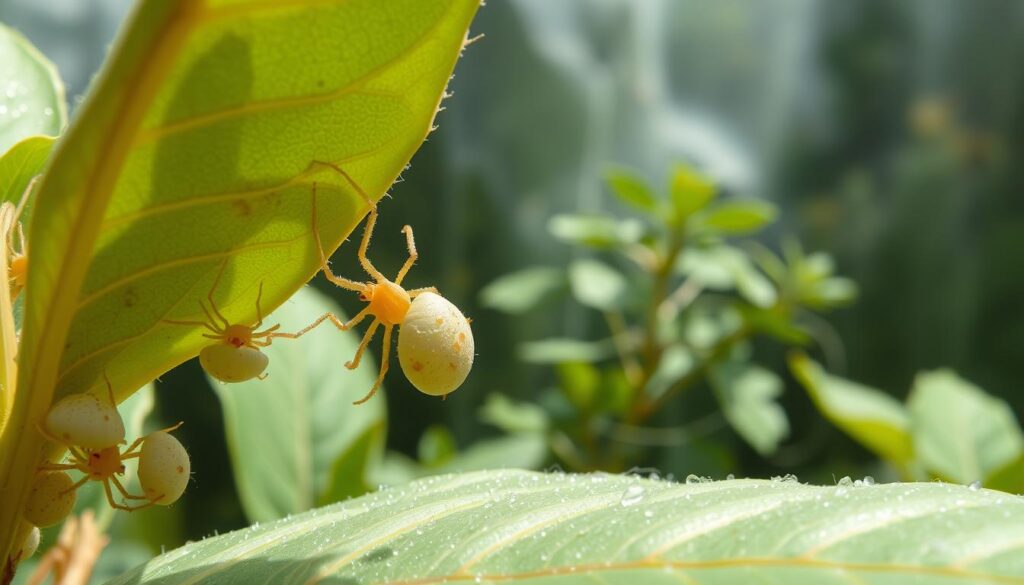
Spider mites start as tiny eggs on leaves’ undersides. After a few days, these eggs hatch into first-instar nymphs. They then go through another nymphal stage before becoming adults.
The whole cycle, from egg to adult, can finish in just one week. This depends on the environment.
Environmental Conditions That Foster Mite Growth
Spider mites love hot temperatures and low humidity. These conditions make them breed quickly. Keeping your garden’s temperature and humidity right is a key control method.
By watching these conditions, you can stop infestations before they start.
Identifying Spider Mite Infestation
Spotting spider mite infestations is key to keeping your plants healthy. Catching it early can stop serious harm. This keeps your plants looking good and strong. Look for signs of spider mites on your plants. Knowing the damage signs helps you act fast to protect your plants.
Symptoms of Spider Mite Damage
The signs of spider mite damage include:
- Stippling: Tiny yellow or white dots on leaves show where mites have eaten.
- Bronzing: Leaves turn unhealthy-looking due to discolouration.
- Webbing: Fine webs on leaves or between branches are common.
- General Decline: Plants look weaker, growing less and blooming less.
How to Use a Magnifying Glass for Detection
A magnifying glass is great for spotting spider mites. Here’s how to use it:
- Pick a healthy leaf from your plant.
- Place the leaf in bright light.
- Use your magnifying glass to find tiny, moving dots. These are spider mites.
- Check both sides of the leaf, as mites often hide on the underside.
Regular checks with these steps help spot spider mite infestations early. This lets you manage and care for your plants better.
The Impact of Spider Mites on Your Plants
Spider mites can harm your plants a lot. They damage the leaves, making it hard for plants to make food from sunlight. This makes plants weak and more likely to get sick. It’s very important to control spider mites to keep plants healthy.
Effects on Photosynthesis and Growth
Spider mites stop plants from growing well. They damage leaves, which makes it hard for plants to make food. You might see yellow leaves and slow growth. If not treated, plants can get even sicker.
Long-term Damage If Left Untreated
Ignoring spider mites can really hurt your plants. They can make plants weak and slow-growing. To fix this, you need to treat spider mites quickly. Regular checks and fast action are key to keeping plants healthy.
Knowing when spider mites are a problem is important. Keeping plants healthy means watching them closely and acting fast when needed. For more on spotting plant problems, click here.
Ways to Manage Spider Mite Infestations
Managing spider mite infestations requires a mix of cultural control and biological strategies. These methods help tackle current problems and prevent future ones. They are key to keeping your plants pest-free.
Cultural Control Methods
Cultural control methods help create a less welcoming environment for spider mites. Here are some techniques to try:
- Water your plants right to avoid stress. Too little or too much water can weaken them, making them easier targets for mites.
- Keep the humidity in your growing area just right. Spider mites don’t like it when it’s too humid, as they prefer dry conditions.
- Change up the crops you grow. This breaks the spider mite life cycle and stops them from taking over one spot.
- Get rid of any debris or dead plants. These can be hiding spots for pests.
Biological Control: Beneficial Predators
Biological control strategies can boost your fight against spider mites. Adding beneficial predators like ladybugs and predatory mites is a smart move. These natural enemies hunt and eat spider mites, making them a great choice for managing pests.
Using both cultural and biological methods makes your garden stronger and healthier. It creates a better environment for your plants to thrive.
Chemical Control Strategies
Managing spider mite infestations needs careful planning. You must use the right insecticides to protect plants without harming good insects. Knowing your options helps you tackle these pests effectively.
Insecticides: What to Choose and When
It’s important to pick insecticides made for spider mites. Here are some good choices:
- Avid: A miticide that stops spider mites from growing.
- Floramite: Works well on all mite life stages.
- Zeal: A selective acaricide, great for greenhouses.
When you apply insecticides early, they work better. Always follow the product’s instructions for safety and best results. Keep an eye on how your plants react and adjust as needed.
Organic Solutions for Eco-conscious Gardeners
For those who prefer organic methods, there are many options. Try these:
- Insecticidal soap: Kills mites on contact.
- Neem oil: Stops spider mites from reproducing.
- Bicarbonate of soda: Helps keep pests away when mixed with water.
These organic methods are good for the environment and effective against pests. Watch your plants closely after treatment to keep them healthy.
| Product Type | Active Ingredient | Target Pest | Environmental Impact |
|---|---|---|---|
| Insecticide | Avid | Spider Mites | Moderate |
| Insecticide | Floramite | Spider Mites | Moderate |
| Insecticide | Zeal | Spider Mites | Low |
| Organic Solution | Neem Oil | Spider Mites | Very Low |
| Organic Solution | Insecticidal Soap | Spider Mites | Very Low |
Enhancing Plant Health to Combat Stress
To keep your plants healthy and fight off spider mites, focus on good watering and balanced nutrients. Healthy plants are stronger against pests and stress.
Proper Watering Techniques
Good watering is key for plant health. Water deeply but not too often to build strong roots. Let the soil dry a bit before watering again to avoid attracting pests. Here’s a quick guide to watering right:
| Technique | Description | Benefits |
|---|---|---|
| Deep Watering | Water thoroughly to saturate the root zone. | Encourages deeper root growth and improves drought resistance. |
| Soil Moisture Testing | Check soil moisture levels before watering. | Prevents over-watering and root rot, boosting plant health. |
| Time of Day | Water in the early morning or late afternoon. | Reduces evaporation and helps plants absorb moisture better. |
Importance of Nutrient Balance
Getting the right nutrients is vital for plant growth. Plants need both big and small nutrients to grow well. Regular soil tests can spot any missing nutrients, helping you feed your plants right. This boosts their health and defence against pests like spider mites. Important nutrients include:
- Nitrogen: Key for leaf growth.
- Phosphorus: Helps roots and flowers.
- Potassium: Boosts plant strength.
- Micronutrients: Iron, manganese, and zinc are needed in small amounts.
Following these tips can make your plants strong against spider mites. This leads to a healthier garden.
Regular Maintenance for Healthy Plants
To keep your plants healthy and stress-free, regular care is key. Using the right pruning techniques helps them grow strong and keeps spider mites away. This part talks about how to keep your garden clean and your plants healthy.
Pruning Techniques to Reduce Stress
Pruning your plants right makes them look good and stay healthy. Cutting off dead or infested parts stops pests from spreading. Here are some pruning tips:
- Use sharp, clean tools for precise cuts.
- Remove damaged or unhealthy leaves and stems.
- Thin out dense areas to let more light in.
- Prune during the plant’s dormant season.
Importance of Cleanliness in Your Garden
Keeping your garden clean is very important. A clean garden is less likely to get pests. Here’s how to keep it clean:
- Remove debris like fallen leaves and clippings often.
- Check your plants regularly for problems.
- Clean your pots and tools to stop pests and diseases.
- Use compost-rich soil to help plants grow well.
By following these care tips and keeping your garden clean, you’ll not only make it look better. You’ll also help your plants stay healthy and grow strong for the future.
Environmental Factors Affecting Plant and Mites
Knowing what affects your plants’ health is key to good gardening. Spider mites grow best in certain conditions, often related to temperature and humidity. By controlling these, you can make your garden less welcoming to pests and better for your plants.
Influence of Temperature and Humidity
Temperature and humidity play a huge role in spider mites’ growth. When it’s hot and dry, they breed fast. As the weather gets warmer, they can cause a lot of harm. Keeping humidity levels right is important to stop them from growing.
Role of Light in Plant Health
Light is also vital for plant health, helping them fight off pests like spider mites. Plants need enough sunlight to stay strong. But, too much shade can make them stay wet, which pests love. Finding the right balance is key to keeping your plants safe.
When to Seek Professional Help
Knowing when to call for professional help is key to tackling spider mite problems. If your plants show severe signs of infestation, it’s time to act fast. Home remedies might not be enough to save your plants from serious harm.
Signs That Indicate Severe Infestation
Watch your plants closely for signs of trouble. You might need professional pest control if you notice:
- Extensive webbing on leaves and stems
- Significant leaf damage such as yellowing or wilting
- Visible clusters of spider mites on the undersides of leaves
- Rapid decline in plant health despite your best efforts
Professional Pest Control Options
Professional pest control services offer custom solutions for your problem. They use advanced methods and products to tackle severe infestations. This approach helps protect your plants’ health. Here’s what experts can help with:
- Implementing effective treatment strategies
- Timing interventions correctly for maximum efficacy
- Developing long-term solutions for pest management
Learning from Spider Mites
Learning how to fight spider mites helps make your plants healthier and your garden thrive. Building resilience in plants makes them stronger against pests. It also makes them more vibrant. Using good strategies to prevent spider mites is key to a strong garden.
Building Resilience in Your Plants
To make plants resilient, focus on better soil and less pest-friendly conditions. Regular soil tests and organic fertilisers boost plant health. Research shows that plants treated with abscisic acid can close their stomata better. This makes them less appealing to spider mites, reducing damage.
This knowledge helps grow stronger plants that need less care.
Strategies for Preventing Future Infestations
Using a mix of methods can lower the chance of future pest problems. Introduce beneficial insects to act as natural pest control. Also, adjust how often you water to avoid creating a pest-friendly environment. Make sure your plants get the right nutrients to stay healthy and strong.
Having a diverse garden is also beneficial. Include plants that might keep spider mites away and attract beneficial insects. Using these strategies will help your garden flourish.
| Strategy | Description | Benefits |
|---|---|---|
| Soil Health | Regular soil testing and amendments. | Improves nutrient availability, promoting robust plant growth. |
| Beneficial Insects | Introduce predators like ladybugs. | Natural pest control reduces reliance on chemicals. |
| Diverse Planting | Mix various plant species. | Creates a balanced ecosystem, deterring pests. |
| Watering Techniques | Adaptive watering schedules. | Prevents overwatering, reducing pest habitats. |
By focusing on these areas, you can grow healthier, more resilient plants. This reduces the chance of spider mites in the future.
Conclusion: The Relationship Between Spider Mites and Plant Care
The link between spider mites and plant health is very important. Knowing how these pests affect plants helps you take action. Spotting early signs of trouble lets you act fast and keep your garden balanced.
Healthy conditions are key to fighting spider mites. This means the right amount of water and nutrients. Regular care keeps your plants strong and healthy. Understanding what your plants need is the first step to beating spider mites.
As you garden, remember what you’ve learned about spider mites and plant stress. Focus on keeping your plants healthy and strong. This way, your garden will grow and flourish, even with spider mites around.