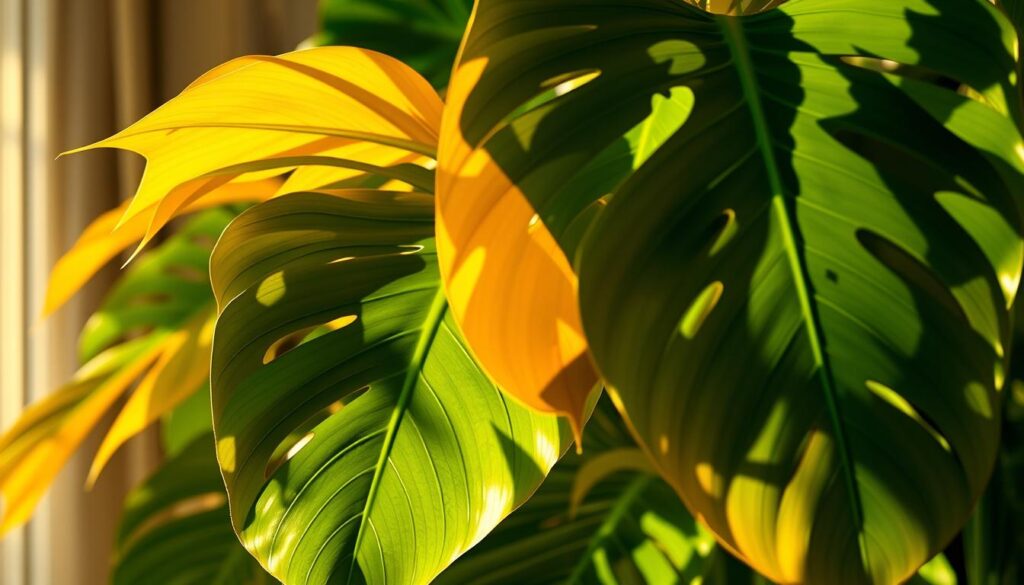
Ever wondered why your Monstera suddenly has yellow leaves? It might be trying to tell you something. Knowing why leaves turn yellow is key to caring for your Monstera. It helps you understand what your plant needs.
Things like moisture, pests, and even humidity can affect your Monstera’s health. This guide will help you figure out why your Monstera’s leaves are turning yellow. It will also show you how to make them green again. For more tips, check out this link.
Key Takeaways
- Understanding yellow leaves on Monstera helps interpret your plant’s needs.
- Moisture levels are vital for maintaining vibrant green leaves.
- Pests can be a hidden threat affecting your Monstera health.
- Humidity plays a key role in preventing yellowing leaves.
- Regular care routines strengthen your Monstera against common issues.
- Healthy soil contributes significantly to your plant’s overall well-being.
Understanding the Importance of Healthy Leaves
Healthy leaves are key to your monstera’s health. They help in photosynthesis, which is vital for growth. Knowing the importance of these leaves helps you understand your plant’s needs.
When you see yellow leaves, it’s a sign of trouble. It means your plant needs help right away.
Watching your monstera’s leaves tells you a lot about its health. Green leaves mean it’s doing well. But if the leaves change colour, it’s a sign of a problem.
By noticing these changes, you can act fast. This helps your monstera stay healthy and strong.
Common Causes of Yellow Leaves on Monstera
Yellow leaves on your monstera can mean different monstera issues. It’s important to find out why to keep your plant healthy. Here are some common reasons:
- Improper watering: Too much or too little water can stress the plant, making leaves turn yellow.
- Inadequate humidity: Monstera loves humid air. Without it, leaves can suffer.
- Insufficient light conditions: Not enough bright, indirect light can slow growth and turn leaves yellow.
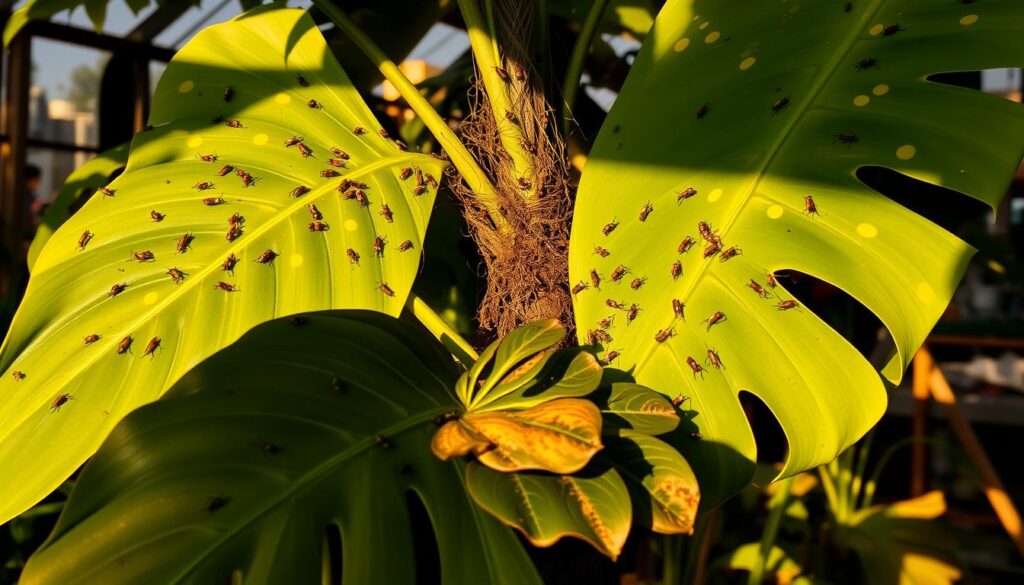
- Pest infestations: Pests like spider mites and mealybugs can harm your plant, causing yellow leaves if not treated fast.
- Natural leaf shedding: Sometimes, older leaves naturally turn yellow and fall off as the plant grows.
Spotting these signs early helps you fix the problem and keep your monstera strong.
Moisture Matters: Overwatering and Underwatering
Keeping the right moisture is key for your monstera’s health. Knowing the signs of overwatering and underwatering helps you care for it well.
Identifying Overwatering Symptoms
Too much water can harm your monstera, causing yellow leaves at the base. This is because roots can’t get enough oxygen. Look out for soggy soil or a bad smell to spot overwatering.
To avoid damage, only water when the top 2-3 inches of soil are dry.
Signs of Underwatering to Recognise
Underwatering shows up as brown edges and yellow leaves. It’s a sign of drought stress. Your monstera might look wilted or droopy.
Checking soil moisture regularly helps you water right. This keeps your plant happy and healthy.
Your Monstera’s Humidity Needs
It’s key to know what humidity your monstera needs to stay healthy. These plants love moist air, where humidity is high. If the air is too dry, you might see leaves turning brown or yellow. This is a sign your plant is not happy.
How Low Humidity Affects Your Plant
Low humidity can harm your monstera. Its leaves might become dry and crispy. This makes your plant more likely to get sick or attract pests. It could also grow slower than it should.
Methods to Increase Humidity in Your Home
To fix dry air, there are a few good ways to boost humidity:
- Misting: Mist your plant often to keep the air moist.
- Humidifiers: A humidifier can help keep humidity levels up.
- Water Trays: Water trays near your plant can increase humidity as water evaporates.
- Grouping Plants: Having your monstera with other plants can make a humid spot.
Using these methods will help your monstera grow well in the right humidity.
Improper Light Conditions and Their Impact
Knowing the right monstera light conditions is key for your plant’s health. Monstera plants love bright, indirect sunlight. This light gives them the energy they need to grow well. If the light is too low, your plant may turn yellow.
On the other hand, too much direct sunlight can cause leaf burn. This can really harm your Monstera’s health.
Optimal Light Levels for Monstera Health
To keep your Monstera happy, find a spot with bright, filtered light. Here are some tips to help you:
- Avoid harsh, unfiltered sunlight.
- Place it near east or north-facing windows for soft morning light.
- Use sheer curtains to soften strong sunlight while keeping it bright.
Consequences of Direct Sunlight Exposure
Watching out for sunlight impact is vital for your Monstera’s health. Direct sunlight can be very bad. Here are some possible problems:
| Sunlight Exposure | Possible Effects |
|---|---|
| Direct Sunlight | Leaf Burn |
| Intense Sunlight | Stunted Growth |
| Unfiltered Light | Yellowing Leaves |
By checking your plant’s spot and adjusting the monstera light conditions, you can help it thrive. Your Monstera will be more vibrant and healthy in your home.
Pest Infestations: A Hidden Threat
Pest infestations can harm your monstera plant’s health. Spotting pests early can prevent a lot of damage. Knowing the common pests that attack monstera is key. Keeping an eye on your plant is vital for its health.
Identifying Common Pests Affecting Monstera
Spider mites and mealybugs are the main pests that can harm your monstera. These tiny pests can be hard to spot until they cause damage. Look out for these signs:
- Sticky residue on leaves, often a result of honeydew excretion.
- Visible webbing between leaves and stems, characteristic of spider mites.
- White, cotton-like masses on leaves, signalling mealybug presence.
Spotting these signs early can help control pests before they spread.
How to Manage Pest Problems Effectively
Dealing with pests on your monstera needs quick action and smart strategies. Here are some ways to fight infestations:
- Apply insecticidal soap to affected areas, ensuring thorough coverage of leaves and stems.
- Use neem oil, a natural remedy, to disrupt pest life cycles and repel future infestations.
- Regularly inspect your plant, checking both the upper and lower leaf surfaces for any signs of pests.
By caring for your plant regularly and watching for pests, you can protect it from harm.
Natural Leaf Shedding in Monstera
As your monstera grows, you might see older leaves turn yellow and fall off. This is a normal part of the monstera growth cycle. The plant is using its energy to grow new, vibrant leaves. Seeing this natural process can help you understand and appreciate it, instead of worrying.
Understanding the Growth Cycle of Your Plant
Shedding older leaves is a sign of a healthy monstera. These leaves are no longer needed, and the plant is focusing on new growth. Look for fresh leaves to know your monstera is doing well.
When to Accept Yellowing Leaves as Normal
When you see yellow leaves, check if your monstera is healthy overall. If new growth appears along with the old leaves falling, it’s just part of the natural leaf shedding. Trusting this cycle helps you bond with your plant and manage your expectations.
Soil Quality and Nutrient Deficiencies
Keeping your monstera’s soil healthy is key. The right mix helps with moisture and nutrients. This keeps your plant strong and vibrant.
Importance of Using the Right Potting Mix
Choosing the right potting mix is vital for your monstera’s growth. Look for mixes with peat moss, perlite, and coconut coir. They help with air and keep the right amount of moisture.
This mix prevents too much or too little water. Both can cause yellow leaves.
Signs of Nutrient Deficiencies in Monstera
Look out for signs your monstera might not be getting enough nutrients. You might see:
- Yellowing leaves—this often means your plant needs more nitrogen.
- Poor growth—this can be due to a lack of nutrients, slowing your monstera’s growth.
- Stunted leaf size—this shows your plant’s soil quality might not be good enough.
Using a balanced fertiliser regularly can help. It ensures your monstera gets the nutrients it needs to flourish.
Yellow Leaves Monstera: When to Worry
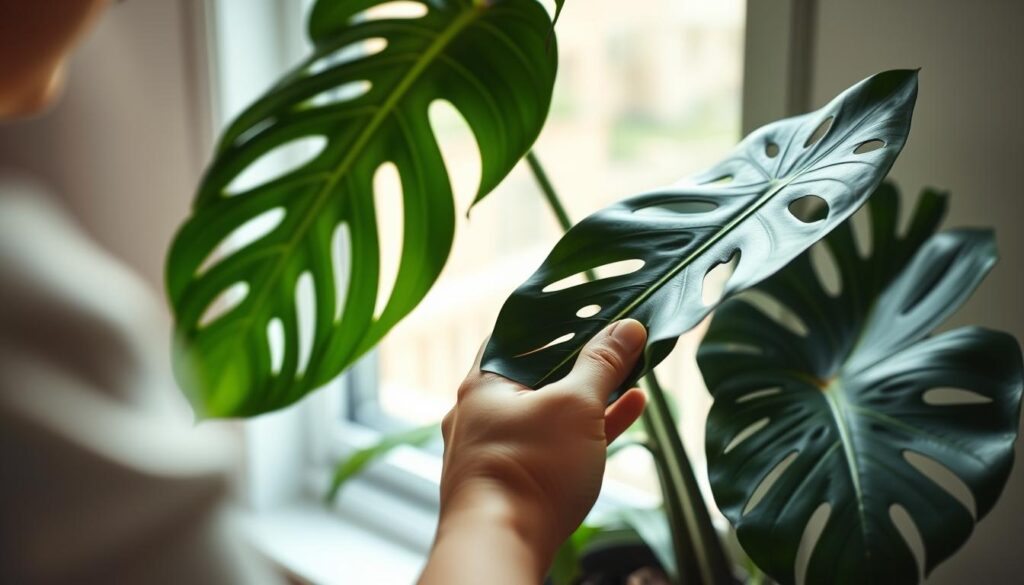
Checking on your monstera’s health can be tricky, mainly when you see yellow leaves. It’s important to look at your plant’s overall health. Watch for new growth, how the other leaves look, and any pests. If the yellow leaves are also wilted or have pests, it’s time to act.
How to Evaluate Overall Plant Health
Start by checking the leaves for any signs of trouble. Look for:
- New leaf growth, which means the plant is doing well.
- Healthy, green leaves, which show the plant is in good shape.
- Roots showing through the drainage holes, which might mean it’s time to repot.
By checking these things, you can see how your monstera is doing and what changes you might need to make.
What Actions to Take for Severely Affected Plants
If your monstera really needs your help, here’s what you can do:
- Repot it in new, rich soil if the roots are too tight.
- Change how often you water, based on the soil and where it is.
- Give it more light, but make sure it doesn’t get too much direct sun.
Enhancing Your Plant Care Routine
Having a regular plant care routine is key to keeping your monstera healthy. Adjust your watering schedule to keep the soil just right. This balance helps your plant grow well.
Feeding your monstera regularly, at the right time, helps it absorb nutrients better. This leads to strong growth.
Scheduling Watering and Feeding Appropriately
Knowing what your monstera needs is the first step. Water when the top inch of soil is dry. This stops overwatering and lets the roots breathe.
Feed your monstera every four to six weeks when it’s growing. Use a balanced fertiliser. This helps your monstera grow strong.
Creating a Balanced Environment for Growth
A healthy monstera needs the right environment. Keep humidity levels between 50 to 70 percent for best growth. Make sure it gets bright, indirect light and keep the temperature between 18°C and 27°C.
Each of these factors is important for your plant care routine. They help your monstera thrive.
Sharing Common Monstera Care Mistakes
Many people who love plants make mistakes when caring for Monstera. One big error is overwatering. This can cause the roots to rot, making the leaves turn yellow and weak. It’s key to watch how often you water and make sure the pot drains well.
Another mistake is not paying enough attention to humidity. Monstera plants need more moisture in the air. If you don’t provide enough, the leaves might suffer. You can use a humidity meter to check the air. If it’s too low, try using a humidifier or placing a water tray near your plant.
Not giving the right amount of light is another common mistake. Too much sun can burn the leaves, while too little can slow growth. It’s important to find the right balance of light and shade for your Monstera. By avoiding these mistakes, you can help your Monstera plant grow strong and healthy.
Conclusion
Proper care is key to fixing yellow leaves on your monstera. Knowing about moisture, humidity, light, and nutrients is important. This knowledge helps your plant stay healthy.
By following the tips in this guide, you can fix current problems and avoid new ones. Every monstera is different, so watch it closely. With patience and care, your monstera will grow strong and beautiful.