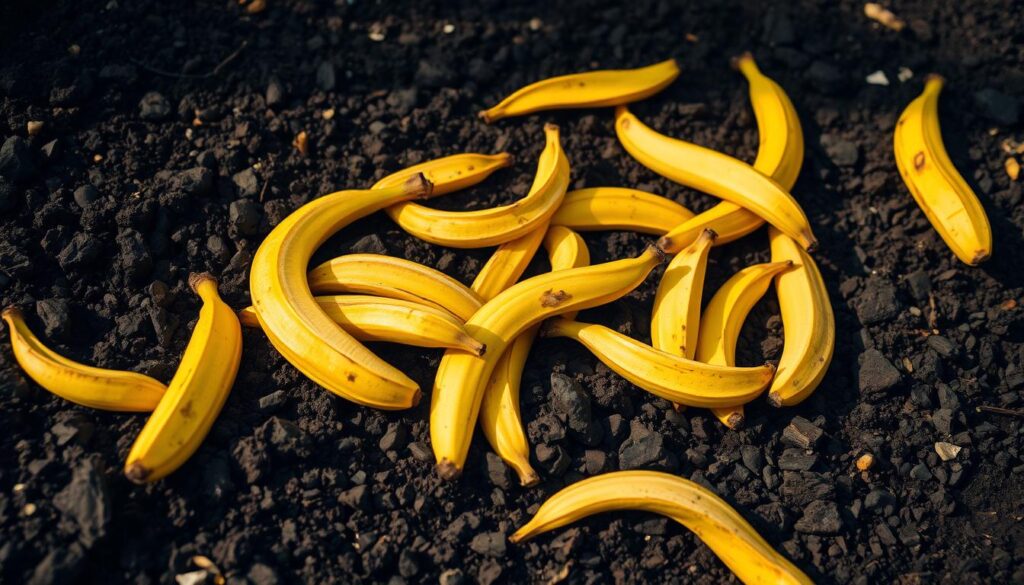
Did you know banana peels can really help your garden? They’re full of nutrients that can make your soil better. Using banana peels in your garden is a great way to go green and improve soil health. This article will show you how banana peels can make your garden better.
Key Takeaways
- Banana peels are rich in vital nutrients like potassium, calcium, and phosphorus.
- Incorporating peels into your gardening promotes sustainable practices.
- Using kitchen waste like banana peels can significantly boost soil banana peels health.
- There are various methods to introduce banana peels into your gardening routine.
- Transforming waste into valuable mulch aids in creating a vibrant garden ecosystem.
Understanding the Benefits of Banana Peels in Your Garden
Banana peels are often ignored but are great for your garden. They are full of nutrients that help plants grow. Using banana peels in your garden is a green way to improve soil quality.
Nutritional Profile of Banana Peels
Banana peels are packed with potassium, which is good for plants that produce flowers and fruit. They also have calcium and phosphorus, important for plant growth. Adding banana peels to compost makes a natural fertilizer that adds nitrogen to the soil.
How They Decompose
Banana peels break down slowly, giving plants nutrients over time. Cutting or crushing them speeds up this process. This makes the nutrients available to plants faster.
The Science Behind Soil Enrichment
When banana peels break down, they add nutrients to the soil. This boosts the soil’s fertility. Using banana peels helps create a healthy environment for plants, improving soil structure and nutrient availability.
Incorporating Banana Peels into Your Gardening Routine
Adding banana peels to your garden can make your soil better and help the environment. There are many ways to use these scraps, making your garden healthier and greener.
Direct Application Methods
One easy way is to chop banana peels and mix them into the soil. This adds potassium and other nutrients, helping plants grow well. Just chop the peels, mix them into the soil, and watch your garden flourish.
Making Banana Peel Tea
Another method is to make banana peel tea. This is a liquid fertiliser full of nutrients. To do this, soak banana peels in water for a few days. Then, use the tea to water your plants, giving them the nutrients they need.
Combining with Other Organic Materials
Mixing banana peels with other organic stuff makes compost better. For example, adding coffee grounds and eggshells to banana peels makes a great compost mix. This mix is full of nutrients, making your soil healthy and your plants strong.
Choosing the Right Time for Application
Timing is key when using banana peels in your garden. Knowing when to add them can really boost your soil’s health and plant growth.
Seasonal Considerations
Spring and summer are the best times to add banana peels to your garden. Plants grow fast during these seasons and need more nutrients. Banana peels provide potassium, which helps roots grow strong and flowers bloom better.
Putting them in just before or when you plant ensures your plants get the nutrients they need. This supports a healthy garden ecosystem.
Best Practices for Timing
Here are some tips to get the most out of banana peels:
- Use banana peels when digging planting holes or adding to compost.
- Mix them with other organic stuff to add variety to nutrients.
- Check the weather first; it’s best to add them after it rains.
- Don’t add them in late autumn to avoid attracting pests before winter.
Potential Drawbacks of Using Banana Peels
Banana peels are great for organic gardening, but they have downsides too. Using too many can upset the soil’s nutrient balance. Also, too much organic matter might attract pests, harming your plants.
Overuse and Its Effects
Too many banana peels can make the soil too rich. This can harm plant growth. The organic matter takes time to break down, affecting nutrient absorption. It’s key to use them in moderation for sustainable gardening.
Pests and Disease Risks
Too many banana peels can attract pests like flies and animals. They smell good to some pests. Also, damp conditions can lead to fungal diseases. Using them wisely helps avoid these problems.
Tips for Preparing Banana Peels for Mulching
Using banana peels as a natural fertiliser in your garden is effective if you prepare them right. A few simple steps can make them better for your soil and plants. Start by cleaning and drying them, then cut or crush for best results.
Cleaning and Drying Peels
First, rinse the banana peels under water to get rid of pesticides or dirt. This makes sure your garden gets the best from natural ingredients. After washing, dry the peels on a clean surface or rack. This way, you can store or use them for mulching and composting.
Cutting and Crushing Techniques
To speed up decomposition, cut or crush the dried peels into smaller pieces. This makes them easier for microorganisms to break down. Smaller pieces release nutrients quickly, making your soil more fertile. You can also grind them into a fine powder for slow-release fertiliser.
Not Just Bananas: Other Kitchen Scraps to Consider
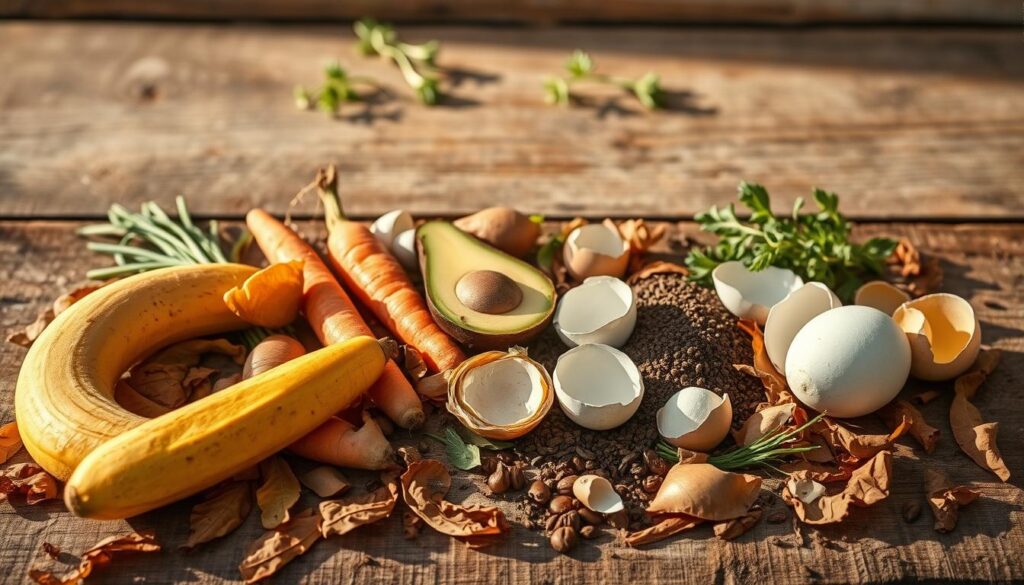
Kitchen scraps are often ignored, but they can really help your garden grow. Not just banana peels, but other kitchen waste can add nutrients to the soil. Using these scraps wisely supports sustainable gardening and improves composting.
Coffee Grounds
Coffee grounds are more than just trash; they’re good for your garden. They’re full of nitrogen and minerals that feed your plants and make the soil better. Adding used coffee grounds around your plants gives them a slow release of nutrients and helps with drainage.
Eggshells
Eggshells are great for adding calcium to your soil, which is key for strong plants, like tomatoes and peppers. Crush them and mix them into your compost. This natural addition helps your plants grow strong and supports sustainable gardening.
Vegetable Scraps
Vegetable scraps, like carrot tops or celery leaves, are full of nutrients. They can be added to your compost pile, making it richer and more diverse. By saving these scraps, you help the composting cycle and reduce waste.
Creating a Balanced Compost with Banana Peels
To make a balanced compost, layer materials well and keep the right moisture. Using banana peels in your compost helps create top-notch natural fertilizers. This method makes decomposition efficient, benefiting your garden.
Layering Techniques
For the best results, mix moist items like banana peels with dry materials. These can be shredded paper, cardboard, or leaves. This mix ensures good aeration, key for composting.
| Layer Type | Examples |
|---|---|
| Moist Materials | Banana peels, vegetable scraps, fruit waste |
| Dry Materials | Shredded paper, dry leaves, straw |
Maintaining Moisture Levels
Keeping the right moisture is critical for composting. Your compost should feel like a damp sponge. Too much water causes bad smells and slows down decomposition. Too little makes it dry and slows nutrient breakdown.
When adding banana peels, check the moisture often. You might need to water it, more so in dry weather.
Harnessing the Power of Organic Mulch
Organic mulch is key to better gardening. It keeps soil moist, controls temperature, and stops weeds. These benefits make gardening simpler and help plants grow better. Banana peels are a great choice for organic mulch, improving soil as they break down.
Benefits of Organic Mulch
Organic mulch has many advantages:
- Moisture Retention: It keeps soil moist, cutting down on watering.
- Temperature Regulation: It protects roots from hot or cold temperatures.
- Weed Suppression: A thick layer blocks sunlight, stopping weeds from growing.
How Banana Peels Contribute
Adding banana peels to your garden is beneficial. They release nutrients like potassium and phosphorus as they decompose. These nutrients are vital for plant health. They also improve soil structure and biodiversity, creating a balanced garden ecosystem.
Conclusion: A Simple Step Towards Healthier Soil
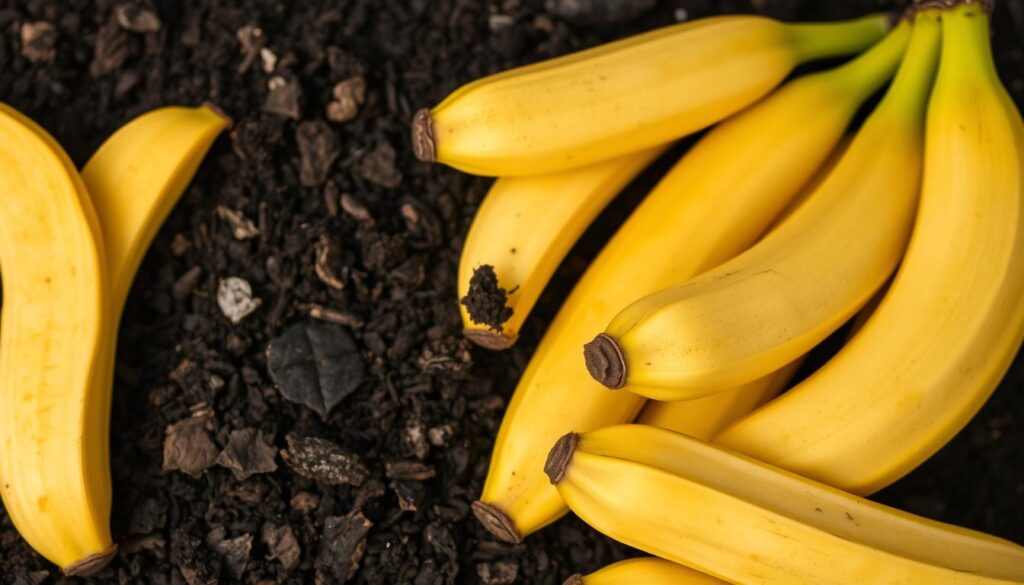
Using banana peels as mulch or compost is a simple yet effective way to improve your soil. It not only makes your soil richer in nutrients but also helps reduce waste in your garden. You can turn kitchen scraps into something valuable for your plants.
Encouraging Sustainable Gardening Practices
Adding banana peels to your gardening routine supports eco-friendly gardening. It helps you use fewer chemical fertilisers, creating a better environment for your plants. This way, you’ll see healthier plants and feel more connected to nature.
The Long-Term Benefits of Banana Peels
Using banana peels in your garden can make your plants stronger and more resilient. This simple step can greatly benefit your garden, making it more sustainable and improving soil quality. For more ideas, check out banana peel water as a natural alternative to synthetic fertilisers. Let’s work together to make our gardens healthier and more sustainable.