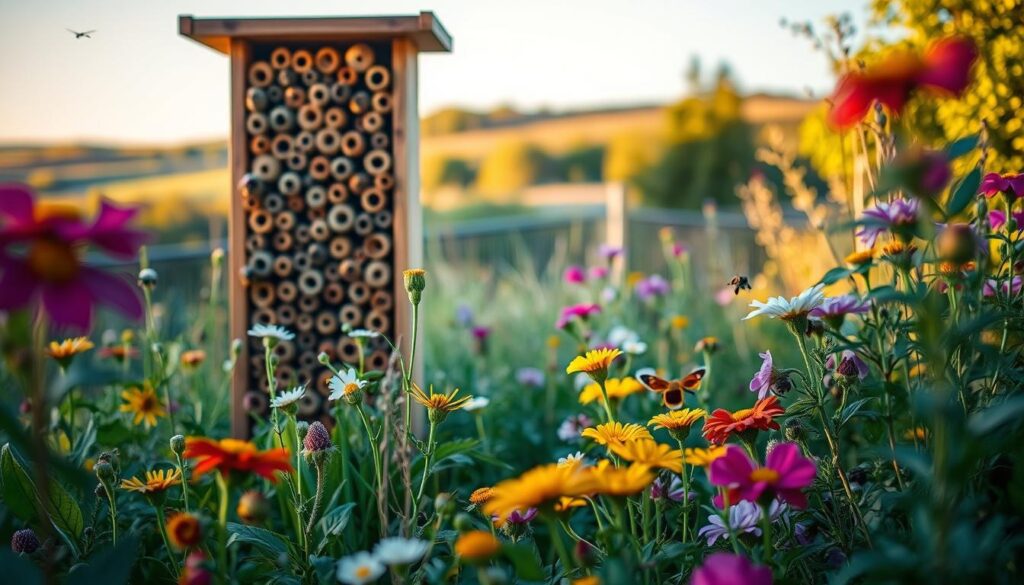
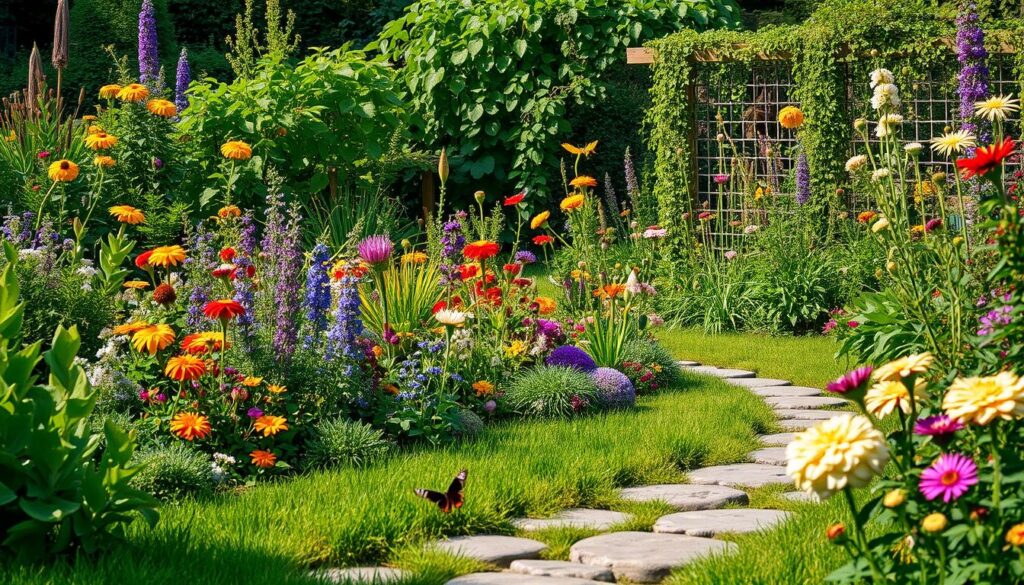
Have you thought about how a bug-friendly garden can boost your outdoor space’s look and help the local ecosystem? Starting your insect-friendly gardening journey opens up a world of vibrant, beneficial insects. You’ll create a garden that’s not just beautiful but also supports wildlife.
This guide will show you how to make a welcoming space for local wildlife. It will also reflect your personal style. You’ll learn key practices to make your garden a haven for beneficial insects.
Key Takeaways
- Creating a bug-friendly garden promotes ecological balance.
- Incorporate native plants for attracting beneficial insects.
- Utilise companion planting to foster a diverse ecosystem.
- Design your garden layout to include strategic habitats for bugs.
- Implement sustainable gardening practices to ensure long-term health.
- Engage the whole family in the joys of insect-friendly gardening.
Understanding the Importance of a Bug-Friendly Garden
Creating a bug-friendly garden is key to a healthy outdoor space. It attracts beneficial insects and supports wildlife. This makes your garden look great and keeps it balanced.
A well-designed garden is a haven for pollinators. It also helps manage pests effectively.
Benefits of Attracting Beneficial Insects
Beneficial insects like ladybirds and green lacewings are great for your garden. They eat harmful pests, like aphids, so your plants can grow well. They also help the soil by breaking down organic matter.
By welcoming these insects, you make your garden vibrant and strong.
The Role of Pollinators in Your Garden
Pollinators, like bees and butterflies, are vital for many plants. They help flowers make seeds and fruits. Without them, your garden would be less beautiful and less productive.
Creating a pollinator-friendly garden boosts biodiversity. It also supports the local ecosystem.
How Bugs Help Maintain Ecosystems
Bugs are important for keeping ecosystems stable. They break down organic matter, making the soil better for other wildlife. This supports birds, amphibians, and more.
By making your garden bug-friendly, you help these species thrive. You create a mini wildlife-friendly garden that works on its own.
Choosing the Right Plants for Your Garden
Starting a wildlife-friendly garden means picking the right plants. Native plants are key, giving homes and food to helpful insects. They look great and help your garden’s ecosystem thrive.
Native Plants that Attract Good Bugs
Native plants are vital for a bug-friendly garden. They draw in local wildlife, making your garden beautiful and healthy. Plants like foxgloves, black-eyed Susans, and cow parsley are great for pollinators and beneficial insects.
Creating Diversity with Companion Planting
Companion planting turns your garden into a bug sanctuary. It keeps pests away and helps plants grow better. For example, marigolds with tomatoes ward off pests and attract ladybirds.
The Aesthetic Appeal of Flowering Herbs
Flowering herbs like dill, fennel, and lavender are beautiful and help insects. They offer nectar and pollen, boosting your garden’s life. Planting different herbs makes your garden look stunning and supports beneficial insects.
| Plant Type | Benefits for Insects | Aesthetic Qualities |
|---|---|---|
| Native Plants | Attract diverse local insects | Natural beauty, seasonal colours |
| Companion Plants | Enhance pest resistance | Varied textures and forms |
| Flowering Herbs | Provide nectar and pollen | Fragrant, vibrant blooms |
Designing Your Garden Layout
Creating a vibrant wildlife-friendly garden needs careful planning. This planning affects the presence of beneficial insects, making your garden thrive. By focusing on bug habitats, you support wildlife and make your garden beautiful.
Strategic Plant Placement for Bug Habitats
Grouping plants in clusters helps create bug-friendly areas. This method groups compatible species together, making a rich biodiversity. Layering plants, with taller ones shading smaller ones, meets beneficial insects’ needs.
Incorporating Water Features
Water features are key in a sustainable garden. Ponds or bird baths add beauty and attract insects and wildlife. They provide water and homes for aquatic insects and amphibians. Placing them well enhances your garden’s look and supports its ecosystems.
Using Natural Materials for Borders
Borders made from natural materials like stones or logs add charm. They mark garden areas and are homes for insects. Using natural materials blends well with the landscape and helps beneficial bugs.
Creating Shelter for Beneficial Bugs
It’s important to give beneficial insects a safe place in your garden. Features like insect hotels, logs, and dense foliage help them. They also make your garden look better.
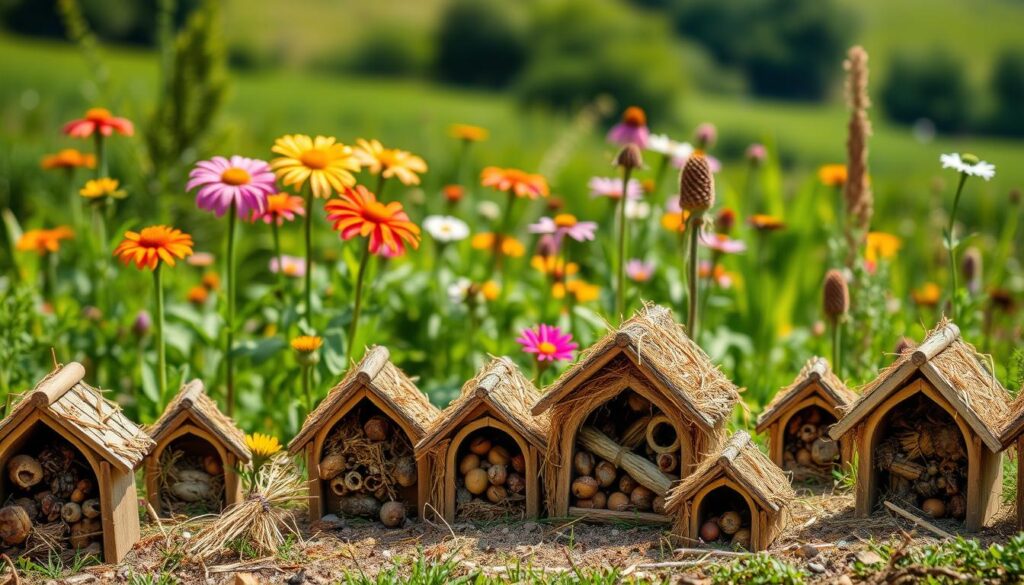
Building Insect Hotels
Insect hotels are key for many beneficial insects. Use natural materials like bamboo, wood, and straw to build them. Place them in sunny spots to attract more insects.
Using Logs and Stones as Habitat
Logs and stones in your garden are great for bugs. They provide shelter and help keep moisture, which bugs need. This also adds a charming look to your garden.
Planting Dense Foliage for Protection
Dense foliage protects insects from bad weather and predators. Mix short and tall plants to create safe areas. This boosts biodiversity and makes your garden look better.
Sustainable Practices for a Healthy Garden
To make a bug-friendly garden, you need to follow sustainable practices. It’s important to avoid harmful pesticides. This helps protect insects and keeps your garden healthy.
Switching to organic gardening boosts biodiversity. It lets natural ecosystems flourish.
Avoiding Harmful Pesticides
Traditional pesticides harm beneficial insects. Using natural pest control methods helps create a balanced environment. Companion planting, like using basil or mint, can keep pests away while helping plants grow.
By not using pesticides, you support a diverse bug population. This makes your garden more resilient.
Implementing Organic Gardening Techniques
Using organic gardening methods like crop rotation and mulching improves soil health. These practices support beneficial insects. They make your garden a lively place.
Planting a variety of plants that attract pollinators is essential. This approach strengthens your garden and supports a community of insects.
Composting and Its Benefits
Composting is a great way to improve your garden. It turns kitchen scraps and garden waste into nutrient-rich soil. This soil is perfect for beneficial insects.
Composting reduces waste and makes your garden healthier. It encourages a lively ecosystem. Adding composting to your gardening routine makes your bug-friendly garden even more vibrant. For tips on composting, check out this resource.
Encouraging Biodiversity with Wildlife-Friendly Features
To make your garden a haven for wildlife, add special features. Bee baths, wildflower patches, and nesting spots are key. They boost biodiversity and make your garden look great.
Installing Bee Baths and Feeders
Bee baths are a must for pollinators in your garden. Fill shallow dishes with pebbles for bees to land on while drinking. Sugar-water feeders help these vital insects too. These features attract pollinators and make your garden more beautiful.
Planting Wildflower Patches
Wildflower patches add colour and food for pollinators. Choose a mix of flowers that bloom at different times. This keeps insects fed all season. For tips, check out this insect-friendly gardening guide.
Setting Up Birdhouses and Bat Boxes
Birdhouses and bat boxes attract helpful creatures. They help control pests in your garden. Place them in safe spots and mix up the designs for a pretty garden.
Seasonal Changes in Your Bug-Friendly Garden
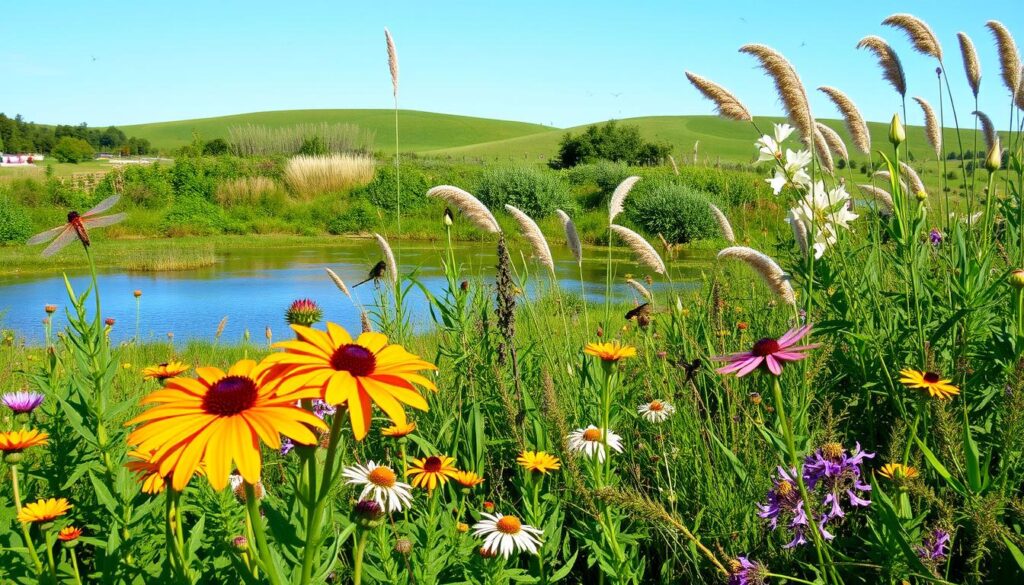
Your garden is always changing, making it welcoming for helpful insects. To keep it lively, plant throughout the year. This way, you’ll have flowers for pollinators and other beneficial bugs all year.
Year-Round Planting for Continuous Bloom
Choose plants that bloom at different times to keep your garden vibrant. Start with early spring flowers like crocus and daffodils. Then, add summer favourites like lavender and echinacea.
Don’t forget autumn plants like sedum and winter flowers like hellebores. This mix keeps your garden balanced and supports beneficial insects.
Preparing Your Garden for Winter
Winter is a time to protect insects in your garden. Keep seed heads and tough leaves to feed and shelter them. Building a woodpile from garden trimmings is great for hibernating bugs.
When spring comes, these materials will be a safe place for insects to start anew.
Springtime Activities to Encourage Moister Bugs
Spring is the time to make your garden even better for bugs. Clean your garden carefully, waiting until it’s warm enough for insects to come out. Planting new flowers not only makes your garden look good but also helps create a moist home for bugs.
Understanding Common Garden Bugs
Knowing the bugs in your garden is key to a healthy ecosystem. It’s important to tell the good bugs from the bad. This way, you can keep the good ones safe and control pests.
Learning about common garden bugs helps you keep your garden balanced and healthy. This knowledge lets you make smart choices for your garden.
Identifying Beneficial Vs. Harmful Bugs
First, learn to spot the good bugs from the bad. Ladybirds and lacewings are great for controlling pests. They help keep aphids and other pests in check.
Knowing the difference helps you protect these helpful bugs. This way, your garden can thrive.
How to Handle Pest Infestations Naturally
For pest problems, natural solutions are best for your garden. Introduce beneficial bugs like ladybirds and lacewings. Also, try homemade sprays with soap and water.
Removing pests by hand is another good way. Practices like crop rotation and interplanting can also help. These methods keep pests down without harming the good bugs.
The Role of Ladybirds and Lacewings
Ladybirds and lacewings are very important for your garden. They help control pests naturally. This is vital for your plants’ health.
To attract them, have a variety of plants with flowers all season. This creates a good home for them. Learn more about gardening with native plants here.
Engaging Children in Bug-Friendly Gardening
Getting kids involved in gardening is a fun way to connect with nature. It teaches them to care for the environment and makes learning fun. There’s lots to do that keeps their minds active, from playing in the garden to learning about insects.
Fun Activities to Get Kids Involved
Make gardening fun by starting with simple tasks. Let them help plant colourful flowers or herbs. Add games to keep things exciting and help them appreciate nature.
Teaching Kids About Insects
Teaching kids about insects is key to understanding their role in nature. Talk about how helpful insects like ladybirds and bees are. Use pictures and real-life examples to make learning fun and engaging.
Creating a Bug Hunt Adventure
Turn a simple day in the garden into an adventure with a bug hunt. Give kids bug boxes and guides to help them spot and identify insects. It’s a great way to spark their curiosity and teach them about the importance of bugs.
| Activity | Description | Benefits |
|---|---|---|
| Bug Hunt | Exploring the garden to find and identify bugs. | Enhances observational skills and curiosity about insects. |
| Planting Flowers | Encouraging children to grow easy-to-care-for plants. | Fosters responsibility and enjoyment in nurturing nature. |
| Insect Education | Lessons on essential insects and their roles. | Builds awareness of ecological balance and conservation. |
By making gardening a part of their routine, kids can develop a lifelong love for nature. This approach keeps them interested and helps them understand the world around them.
Showcasing Your Beautiful Bug-Friendly Garden
Turning your garden into a bug-friendly haven is great for local wildlife and makes your outdoor space look better. Add charming sculptures, vibrant flower beds, and natural borders to make it welcoming. These features guide the eye and make visitors stop to enjoy the garden’s beauty.
Today, sharing your garden online can make a big difference. Use social media and gardening blogs to show off your garden. It’s a chance to connect with others who love gardening and learn about green practices.
Hosting open days or tours is also a great idea. It teaches people about the importance of bug-friendly gardens. These events help build community and encourage others to garden sustainably. Together, we can make our world greener through gardening and sharing knowledge.