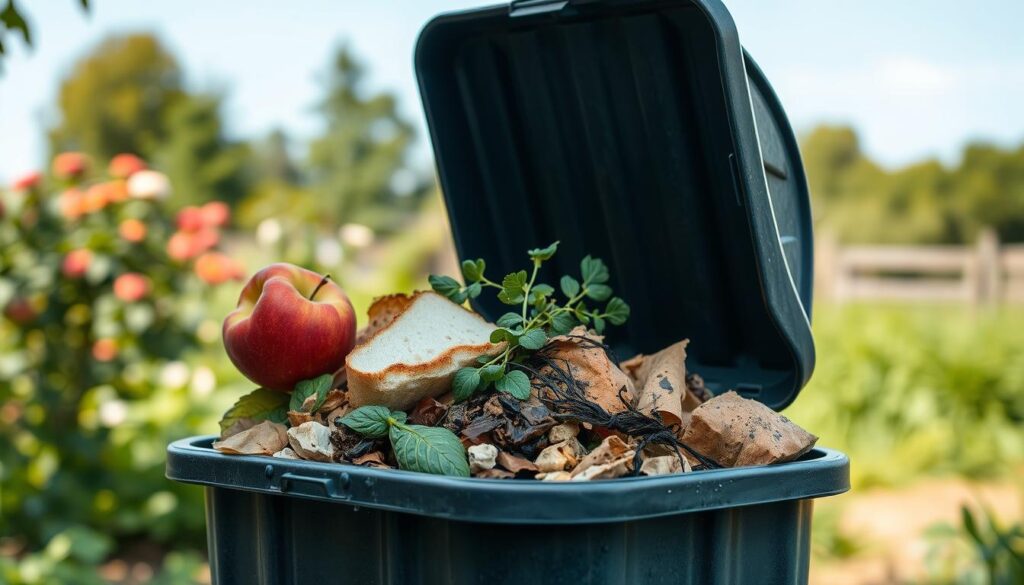
Ever wondered if leftover pizza or last week’s dairy might mess up your compost? Many people new to composting worry about making mistakes. It’s key to know what goes in and what stays out of your bin. Let’s clear up some common myths and show you how to recycle organic waste right.
Key Takeaways
- Knowing what to compost is vital for a healthy compost.
- Common mistakes come from not understanding what to compost.
- Meat and dairy can attract pests.
- Choosing the right items for your compost helps your garden.
- Looking back at past composting helps you make better choices.
Understanding Composting Basics
Composting turns organic waste into a valuable fertiliser for your garden. It’s easy and good for the planet. You mix food scraps and yard waste to create nutrient-rich compost.
What is Composting?
Composting breaks down organic materials naturally. You can use kitchen waste, grass clippings, and leaves. This creates a balanced mix that helps microbes grow. It’s a way to recycle waste and support the environment.
Benefits of Composting
Composting does more than just cut down on landfill waste. It makes soil better, holds water, and helps plants grow. It’s a green way to garden, leading to more food and a healthy garden. You get to reuse nutrients and avoid chemical fertilisers.
Common Misconceptions
Many people think composting is hard or that all waste can be composted. But, not all biodegradable items work in compost. Meat, dairy, and some oils can mess up the compost. Composting is simple if you know the basics. Clearing up these myths makes composting easier.
Items You Should Never Compost
When you’re composting, it’s key to know what not to add. Some things can make your compost go wrong, leading to bad smells and pests. Knowing what to avoid helps you make good compost that’s full of nutrients.
Meat and Dairy Products
Meat and dairy can be trouble in your compost. They break down slowly, making bad smells and attracting pests like rats. They can also mess up the composting process, causing more problems.
Oils and Fats
Oils and fats might seem okay, but they can make a mess in your compost. They slow down the breakdown of other materials. They can also cause conditions that aren’t good for composting. So, it’s best to keep oily waste out of your compost.
Diseased Plants
Adding diseased plants to your compost is a big mistake. They can spread diseases to your garden. This can ruin all your hard work in growing healthy plants. So, it’s important to keep diseased plants out of your compost bin.
| Item | Reason to Avoid |
|---|---|
| Meat | Decomposes slowly, attracts pests |
| Dairy Products | Creates strong odours, attracts scavengers |
| Oils | Hinders compost breakdown, creates anaerobic conditions |
| Diseased Plants | Introduces pathogens, contaminates compost |
The Consequences of Compost Regrets
Composting is rewarding but comes with challenges, like making mistakes. It’s key to know the effects of these errors for good organic waste management. Ignoring these mistakes can cause problems that slow down your composting.
Bad Smells and Attracting Pests
Compost piles with bad smells often have too much nitrogen. This creates anaerobic conditions. Such smells attract pests like rodents and flies, posing health risks and making composting harder.
Slow Composting Process
A slow composting process is common. It usually happens when materials aren’t balanced. A bad mix slows down decomposition, causing more composting problems and delays.
Contamination of Good Compost
Adding the wrong items to your compost can ruin it. This contamination makes good compost unusable and can harm your garden soil. It’s important to only put the right things in your compost bin.
| Composting Issue | Potential Consequences |
|---|---|
| Bad Smells | Unpleasant odours and attraction of pests |
| Slow Composting | Reduced efficiency and long wait times for finished compost |
| Contamination | Unusable compost leading to potentially harmful garden health risks |
The Surprising Truth About Citrus
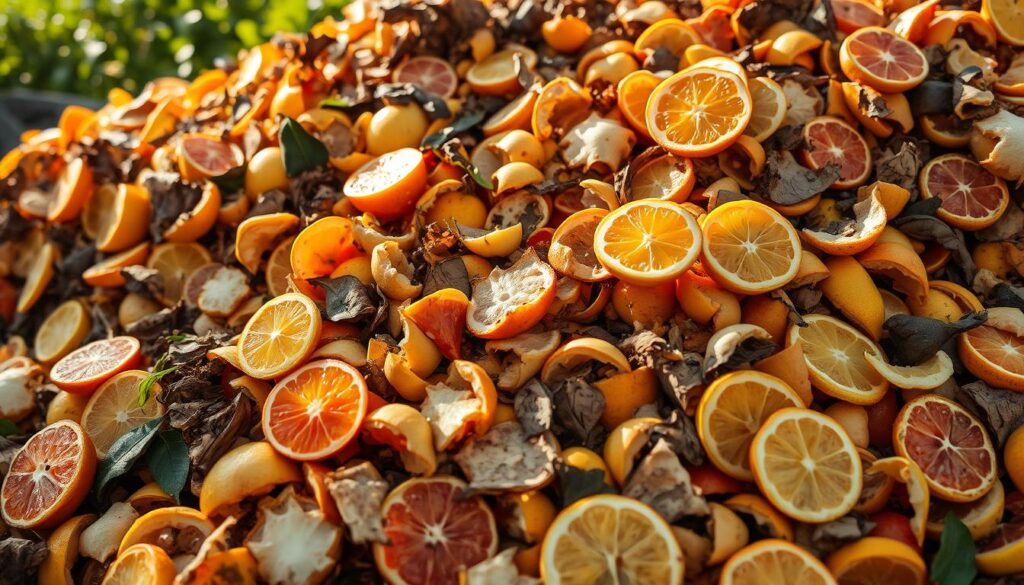
Many think citrus fruits like lemons and oranges are okay for composting. But, their high acidity can be a problem. This acidity can harm the microorganisms needed to break down organic matter well. Using some smart composting tips can help you use citrus wisely and make better compost.
Why Citrus Can Be Problematic
Citrus can be a problem in compost because it might slow down microbial activity. The acidity can make the compost pile decompose slowly. If your compost smells bad or is taking too long to break down, too much citrus might be the cause. It’s important to keep a balanced mix for good composting.
What to Do Instead
Instead of using a lot of citrus, try adding other kitchen scraps and carbon sources. Things like shredded paper, dried leaves, and other browns break down quickly. These tips help balance the acidity and make your compost better.
| Material Type | Decomposition Rate | C/N Ratio |
|---|---|---|
| Citrus Fruits | Slow | High |
| Shredded Paper | Fast | Medium |
| Dried Leaves | Medium | Low |
A good compost pile needs a balanced mix. Choose materials that help growth, not hinder it. This creates a great environment for microorganisms to work on organic recycling.
Garden Waste That Should Go in the Bin
Not all garden waste is right for the compost bin. Knowing which materials can harm your compost is key. Invasive plants and some papers are best avoided.
Weeds and Invasive Plants
Weeds, like invasive plants, can be a big problem. They might spread seeds through compost. This can cause trouble in your garden, as they can grow back and take over.
Always check your garden waste for invasive plants before adding it to your compost.
Shredded Paper versus Whole Papers
Shredded paper is better than whole papers for composting. It breaks down quickly and helps with air flow. This stops the compost from getting too wet and smelly.
Stay away from glossy or heavily inked papers. They can harm your compost. Use plain, unprinted cardboard or paper instead.
| Garden Waste Type | Compostable? | Notes |
|---|---|---|
| Weeds | No | Can spread seeds and invade your garden. |
| Invasive Plants | No | Risk of re-establishing in compost and garden. |
| Shredded Paper | Yes | Breaks down easily; enhances aeration. |
| Whole Paper | No | May mat down, hindering composting process. |
| Glossy Paper | No | Contains chemicals harmful to compost. |
The Right Way to Compost Kitchen Scraps
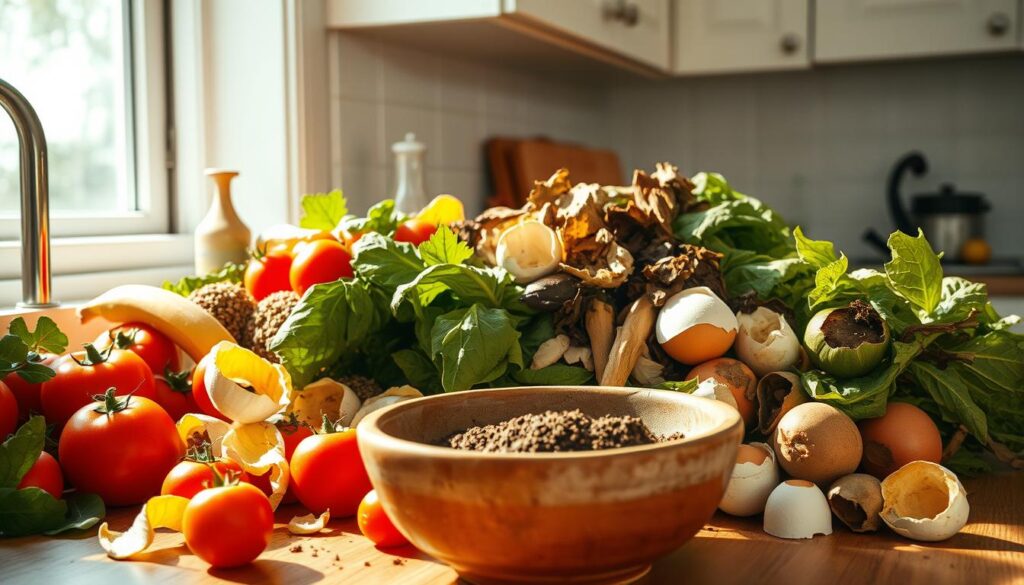
Composting kitchen scraps turns waste into rich compost for your garden. Using the right techniques makes your compost better. Knowing how to handle different materials is key to successful composting.
Fruit and Vegetable Peels
Fruit and vegetable peels break down fast, adding nutrients to your compost. They have lots of nitrogen and carbon, which are good for compost. But, don’t add peels from non-organic fruits and veggies, as they might have pesticides.
So, add only organic peels to your compost. This way, you make the most of your kitchen scraps.
Coffee Grounds and Filters
Coffee grounds are great for your compost, adding nitrogen. Coffee filters can also be composted, making it simpler. Just use unbleached paper filters to keep your compost quality high.
Coffee grounds and filters together make your compost pile richer. This helps recycle kitchen waste effectively.
Eggshells: Yes or No?
Eggshells are good for your compost, adding calcium for plant health. Crush them before adding to speed up breakdown. This helps eggshells mix well with your waste.
Adding eggshells boosts your compost’s nutritional value. It also reduces kitchen waste.
How Climate Affects Composing Choices
The climate where you live greatly affects your composting choices. It also changes how well your compost works. Knowing how temperature and moisture levels work with your environment is key. This knowledge helps you make a better compost.
Both temperature and moisture levels are important. They affect the microbes needed for breaking down materials. Even small changes can make a big difference in your compost.
Temperature Considerations
Compost temperature is key for microbial activity. In warmer places, compost breaks down faster. This is because bacteria and fungi do well in the heat.
The best compost temperature is between 54°C and 65°C. Keeping this heat up can make composting quicker. But, cooler temperatures slow it down, making composting less effective.
Adjusting your composting based on your climate can lead to better results. This ensures your compost works well.
Moisture Levels
It’s important to watch the moisture in your compost. Too much or too little can cause problems. You want it between 40% to 60% moisture.
If it’s too wet, your compost might get compacted. This stops microbes from working well. Too little moisture stops the breakdown process.
Understanding how your climate affects moisture levels is vital. It helps improve your composting efforts.
Tips for Successful Composting
Composting well means paying attention to a few key things. You need to get the C/N ratio right, keep your pile maintained, and pick the right bin. These steps will help you manage your compost better.
Maintain the Right C/N Ratio
For good decomposition, balance is key. Aim for a Carbon to Nitrogen (C/N) ratio of 25-30:1. Add *browns* like dried leaves and straw to *greens* like vegetable scraps and grass clippings. This balance helps your compost break down faster, reduces odours, and keeps pests away.
Turning Your Pile
Turning your compost pile regularly is important. It lets in air, speeding up decomposition. Turn it every few weeks, depending on its size and what’s in it. This spreads moisture and nutrients and lets oxygen reach deeper layers. It makes your compost better.
Finding the Right Bin
Choosing the right compost bin is also vital. You can pick from simple bins, tumblers, or three-bin systems. Think about your space, how much you’ll compost, and how much work you want to do. The right bin makes composting easier and more effective.
Alternatives to Composting
If you find traditional composting hard because of space or personal reasons, there are other ways. Bokashi systems and vermicomposting are great alternatives. They help reduce waste and make compost for your plants.
Bokashi Systems
Bokashi composting uses a special fermentation process. It involves a mix of beneficial microbes. By layering kitchen scraps with this mix, waste breaks down fast and without smell.
This method is great for small spaces. It also lets you compost food that’s hard to compost normally.
Vermicomposting
Worm composting, or vermicomposting, uses worms to break down waste. It turns kitchen scraps into nutrient-rich compost called vermicompost. This compost is perfect for your plants.
Worm composting can be done indoors or outdoors. It gives you flexibility in managing your waste.
Reflecting on Your Composting Journey
As you move forward in your composting journey, take time to reflect on what you’ve learned. Every mistake teaches you something new, helping you improve your composting skills. You might have learned about the wrong items to put in your bin or how to keep the right balance.
It’s important to acknowledge these moments. They help you grow and learn from composting.
Learning from Mistakes
Looking back at past mistakes can help you do better next time. Maybe you’ve had problems with smells or pests. By understanding these issues, you can make changes to improve your composting.
Remember, mistakes are just steps towards success. They should be seen as opportunities for growth, not failures.
Celebrating Your Successes
It’s also vital to celebrate your achievements, no matter how small. Maybe you’ve made a batch of rich compost or seen your garden flourish. These successes motivate you to keep going.
Sharing your successes with others can make your journey even more rewarding. It connects you with others who are also working towards a greener future.