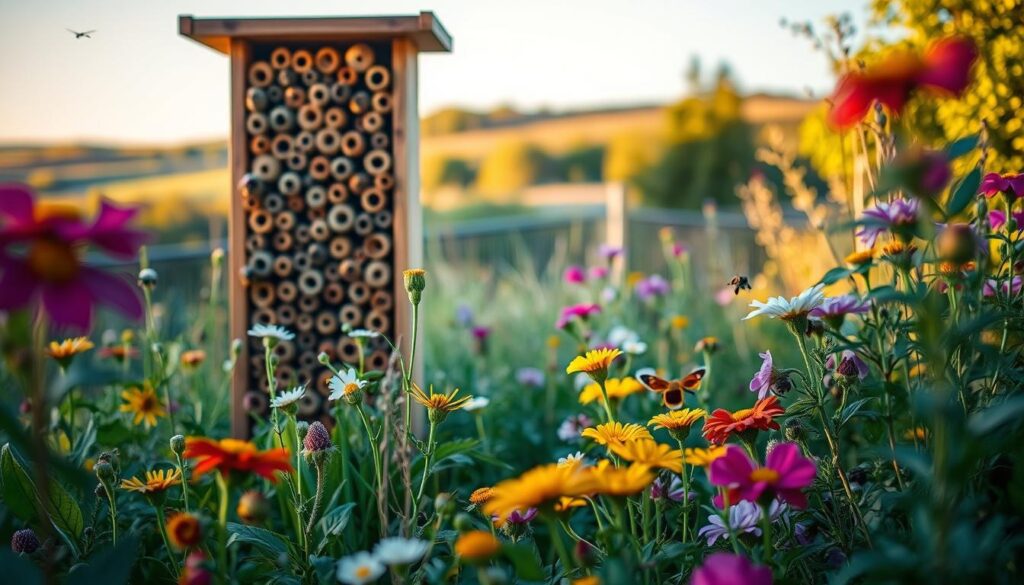
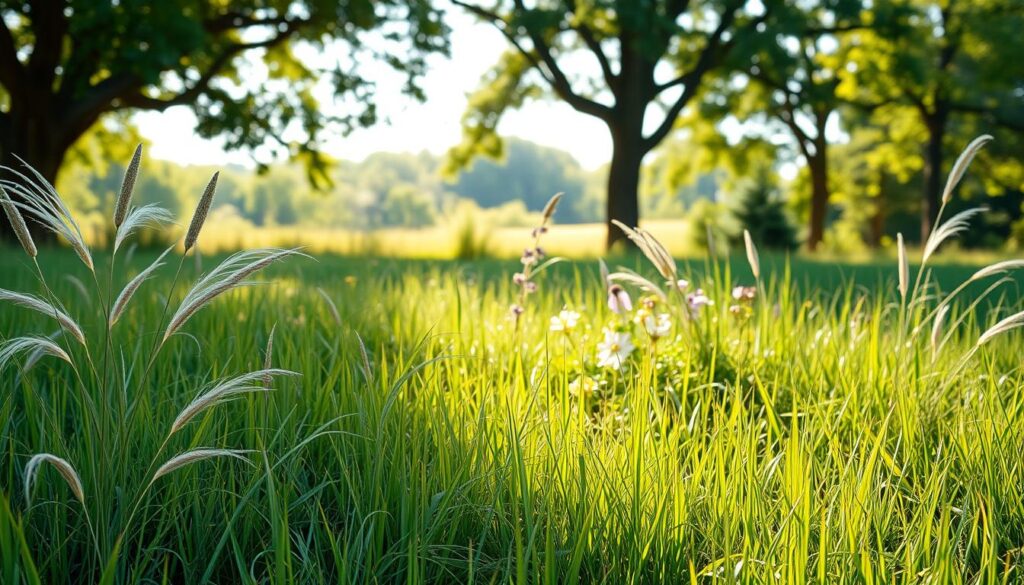
Ever thought about having a beautiful garden that needs little to no mowing? A no-mow lawn might be just what you need! This eco-friendly option lets you enjoy a lovely lawn with less work. It also helps local wildlife.
In this article, we’ll show you how to create a vibrant yard with little effort. You’ll learn how to make your outdoor space sustainable and enjoyable.
Key Takeaways
- A no-mow lawn offers a lush, beautiful landscape with minimal maintenance.
- Choosing the right plants can enhance the eco-friendliness of your garden.
- Understanding soil needs is key for a successful no-mow lawn.
- Smart watering techniques keep your lawn healthy with less effort.
- Natural weed control methods are better for the environment.
- Attracting wildlife boosts biodiversity in your garden.
What is a No-Mow Lawn?
A no-mow lawn is a new way to landscape that’s easy to care for and good for the planet. It uses special grasses and plants that don’t need much cutting. This makes it a great choice for those looking for a low-maintenance lawn.
Definition of a No-Mow Lawn
No-mow lawns often have fine fescues and other plants that don’t need much water. Fine fescues have strong roots, helping them survive dry spells and fight weeds. This creates a lawn that looks good with little help from us.
Benefits of Choosing a No-Mow Lawn
Choosing a no-mow lawn has many benefits:
- Less time and effort needed for upkeep.
- No need for regular mowing, saving time and energy.
- Less water used, helping to save water.
- No harmful chemicals needed, protecting the environment.
- Supports local wildlife and biodiversity.
Joining in No Mow May can make your yard better for nature and look beautiful. Choosing alternative lawns is a smart, eco-friendly choice for everyone.
Selecting the Right Grass or Plants
Choosing the right grass or plants for your no-mow lawn is key. It helps create a beautiful, easy-to-care-for outdoor space. By picking hardy species, you get a lawn that looks great and is good for the environment. This method also supports local plants, needing less water and care.
Recommended Grass Types for Low Maintenance
Fine fescue varieties are top picks for a no-mow garden. They grow thick and look good, needing little upkeep. These grasses do well in dry areas, staying green with little water. Other good options include:
- Perennial ryegrass
- Bermudagrass
- Buffalograss
Wildflower Options for a Natural Look
Adding wildflowers makes your no-mow lawn look even better. They help local wildlife and bring in bees and butterflies. Native wildflowers do well in your area, making them perfect for green spaces. Here are some popular wildflowers:
| Wildflower | Bloom Time | Benefits |
|---|---|---|
| Oxeye Daisy | Summer | Attracts pollinators |
| Butterfly Weed | Summer | Supports caterpillars |
| Black-Eyed Susan | Summer to Autumn | Provides food for birds |
Preparing Your Soil for No-Mow Success
Starting a no-mow lawn needs good soil preparation. The health of your grass and plants depends on your soil. Testing and improving your soil is key for a low maintenance lawn that’s good for the environment.
Soil Testing and Amendments
Soil testing shows pH levels and nutrients. Knowing this lets you add what’s needed for your lawn to grow well. Here’s how to test your soil:
- Collect soil samples from different parts of your lawn.
- Send these samples to a trusted lab for analysis.
- Check the results for any missing nutrients and pH levels.
After getting your test results, you can add lime for acidity or organic matter for nutrients if needed.
Best Practices for Soil Preparation
Good soil preparation helps your lawn thrive. Important steps include:
- Dethatching – Remove thick thatch to help water and nutrients reach the roots.
- Incorporate organic compost – Add organic material to improve soil structure and add nutrients.
- Ensure proper drainage – Check if your soil drains well to avoid waterlogging.
- Tilling the soil – Loosen the soil to help roots grow deeper.
By doing these steps, you’re on your way to a no-mow lawn that’s eco-friendly.
Planting Your No-Mow Lawn
Starting your eco-friendly lawn needs careful planning. The right time to sow seeds is key for growth. Late summer to early autumn is best, as the weather is perfect for seeds to grow.
This time lets seeds get a good start before winter. They also get to use the last bit of warmth for growing.
Timing for Optimal Growth
Getting the timing right is essential for a beautiful no grass yard. Planting in late summer helps seedlings grow strong. This is because they get the season’s leftover warmth.
Every area might have its own best time, but August or September is usually good. This way, plants are ready for winter and bloom in spring.
Planting Techniques to Consider
For planting, a broadcast spreader helps spread seeds evenly. This ensures all areas get the same chance to grow. After planting, keep the soil moist but not too wet.
Consistent watering in the first weeks is important. This helps seeds grow quickly. A strong lawn can then fight off weeds.
Watering Your No-Mow Lawn
Creating a no-mow lawn needs you to understand its water needs. It’s different from traditional lawns. A drought-tolerant lawn means less need for lots of water. New grass needs regular watering to grow strong roots, making it easier to care for.
Understanding Water Requirements
When starting your no-mow lawn, it’s key to give it enough water, mainly at the beginning. Water it often but in a way that helps roots grow deep. New grass should get:
| Watering Frequency | Duration (Minutes) | Notes |
|---|---|---|
| Every 3-4 days | 30-45 | Encourages deep rooting |
| During dry spells | As necessary | Consider extra watering |
Effective Irrigation Strategies
Using smart watering methods saves water, which is great for a drought-tolerant lawn. Drip irrigation or soaker hoses slowly add moisture to the soil, cutting down on evaporation. This method saves water and helps your lawn grow with less care. You might only need to water more during very dry times; native plants often do well with little help and let nature do its thing in most cases.
Maintaining Your No-Mow Lawn
Looking after your no-mow lawn is easy, but a few steps keep it looking great. To keep your lawn eco-friendly, you might need to mow it sometimes. This is important when it’s producing seeds to stop weeds from growing.
As the seasons change, your lawn needs different care. This helps it stay healthy and beautiful.
Minimal Maintenance Practices
- Occasional Mowing: Aim to mow only as necessary to manage seed heads and prevent invasive species.
- Height Adjustment: Modify mowing heights depending on the growth phase to promote a lush, healthy look.
- Mulching: Leave clippings on the lawn to return nutrients to the soil, fostering an eco-friendly lawn.
Seasonal Care Tips
- Spring: Check for any invasive species and manage them promptly.
- Summer: Ensure adequate water supply during dry spells to maintain grass vitality.
- Autumn: Perform a light mow to prepare your no-mow lawn for winter, allowing better air circulation.
- Winter: Assess lawn health and consider applying a seed mix suited for your region for a robust start in spring.
Dealing with Weeds Naturally
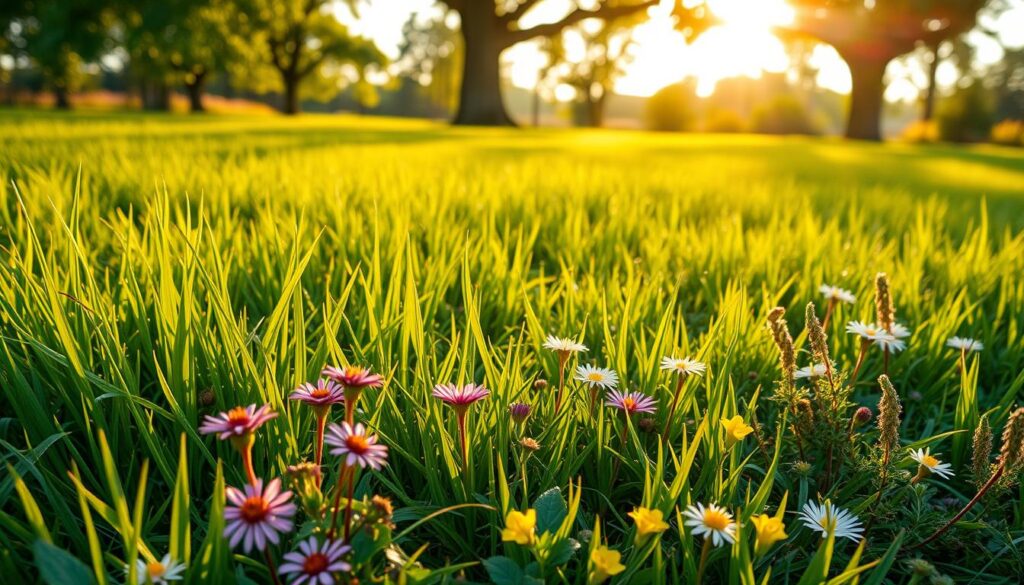
Managing weeds in a no-mow lawn is easy with organic methods. These methods not only control weeds but also support sustainable landscaping. Knowing which weeds to watch out for and how to fight them is vital for a healthy garden.
Identifying Common Weeds
First, you need to know which weeds might show up in your garden. Dandelions, clover, and chickweed are common ones. Each has its own look, making it easy to spot them. Knowing how they grow helps you manage them better.
Organic Methods to Control Weeds
Using organic methods makes weed control eco-friendly and sustainable. Mulching, spot weeding, and using natural barriers can keep weeds at bay. For example, mulching keeps the soil moist and blocks light, stopping weeds from growing.
Spot weeding lets you target weeds without harming other plants. Also, homemade sprays from garlic or neem oil can fight weeds without harming beneficial insects. These methods help your garden stay healthy and balanced.
By choosing organic methods, you’re not just fighting weeds. You’re also helping your garden thrive. This approach is part of sustainable landscaping, making your garden care better for the environment.
| Weed Type | Identification | Organic Control Method |
|---|---|---|
| Dandelion | Bright yellow flowers, jagged leaves | Mulch around plants, hand remove |
| Clover | Small, round leaves, often with white/ pink flowers | Spot weed, encourage beneficial insects |
| Chickweed | Small white flowers, spreading habit | Manual removal, use of mulch |
Enhancing Biodiversity in Your Lawn
Creating a vibrant lawn is more than just looks. Using native plants landscaping boosts biodiversity. A no-mow lawn becomes a haven for pollinators and wildlife. This makes your garden more ecological and beautiful.
Attracting Pollinators and Wildlife
To make your garden a thriving habitat, add various flowering plants. Native species are best because they match local wildlife. They help bees, butterflies, birds, and insects, keeping pests away.
You can make your garden welcoming by:
- Planting wildflowers that bloom at different times to feed pollinators all year.
- Creating shelter with dense shrubs or low plants for wildlife to nest and hide.
- Adding water sources like small ponds or bird baths to attract more species.
Companion Planting Ideas
Companion planting boosts biodiversity in your lawn. By mixing different plants, you create a balanced ecosystem. Here are some good pairings:
| Plant 1 | Plant 2 | Benefit |
|---|---|---|
| Lavender | Rosemary | Repels pests while attracting pollinators |
| Nasturtium | Radish | Deters aphids and improves growth |
| Marigold | Tomato | Repels nematodes and enhances tomato flavour |
Using these companion planting ideas makes your lawn beautiful and biodiverse. Native plants landscaping creates a lush home for wildlife. This ensures your outdoor space is good for the environment.
Environmental Benefits of No-Mow Lawns
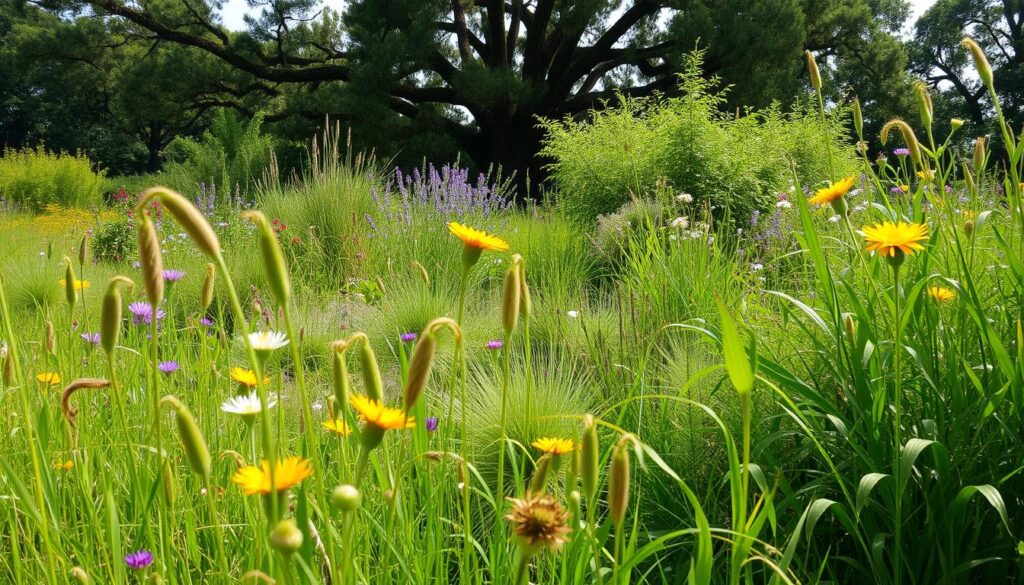
Choosing a no-mow lawn has many environmental perks. It makes your outdoor area look better and helps the planet. This choice supports nature and improves your garden’s health.
Reducing Carbon Footprint
Less mowing means less carbon emissions. Traditional lawns need mowers that use fuel or electricity, which harm the environment. A no-mow lawn, though, grows well with little help from us. This saves energy and cuts down on carbon.
Preventing Soil Erosion
Unmown grass and plants have strong roots. These roots stop soil from washing away, which is key on slopes. A no-mow lawn keeps the soil moist and healthy, fighting erosion.
| Benefit | No-Mow Lawn | Traditional Lawn |
|---|---|---|
| Carbon Emissions | Low | High |
| Soil Erosion Control | Excellent | Poor |
| Water Retention | High | Moderate |
| Maintenance Needs | Minimal | High |
| Biodiversity Support | Strong | Limited |
Switching to a no-mow lawn is more than just easy. It’s a big step towards a greener future. Think about these benefits when you update your garden.
Embracing the Aesthetics of a No-Mow Lawn
Turning your garden into an eco-friendly lawn is good for the planet. It also lets you enjoy the beauty of a no-mow lawn. By choosing sustainable landscaping, you can make a landscape full of life and colour.
Adding native plants and wildflowers makes your garden look amazing. These plants add texture and colour. They also attract wildlife, making your yard even more special.
Landscape Design Considerations
Designing your no-mow lawn is all about mixing nature with practicality. Use gravel or stone for paths to add a rustic touch. Choose spots for seating, like a wooden bench among flowers, for a peaceful spot.
Make your garden a haven for pollinators by adding flowers. This not only supports insects but also adds colour all year round.
Creative Ways to Enjoy Your Yard
Be creative with your outdoor space. Create a picnic area under a tree or a fire pit for cosy nights. A water feature can add to the calm, making your garden a peaceful retreat.
By enjoying your no-mow garden, you live more sustainably. It becomes a personal space that shows your values. Learn more about the benefits of no-mow lawns here: discover here.