Ever thought about how a simple garden could change your yard and help the environment? Rain gardens are designed to catch and soak up stormwater. They do more than look good; they help manage stormwater and support local wildlife. Let’s explore what rain gardens are, how to design them, and why they’re great for your yard.
Key Takeaways
- Rain gardens capture and absorb stormwater runoff effectively.
- These gardens improve local biodiversity by incorporating native plants.
- Rain garden design focuses on aesthetics and environmental benefits.
- Implementing rain gardens can reduce flooding and filter pollutants.
- Understanding what is rain gardens can enhance your yard’s appeal.
- The benefits of rain gardens include lower maintenance needs.
What is a Rain Garden?
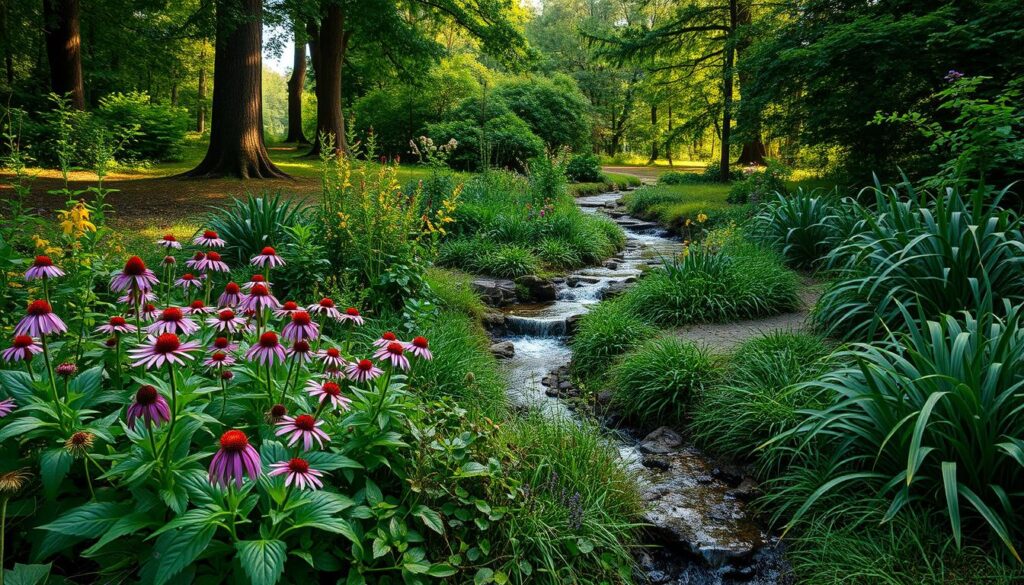
A rain garden is a smart way to handle stormwater runoff and make your yard look better. It’s filled with native plants, soil, and rocks. This setup mimics nature’s ways. Knowing about rain gardens helps manage water better in cities.
Definition of Rain Gardens
A rain garden works like a natural filter, catching rainwater from hard surfaces. It’s a depression that holds water, letting it soak in more than regular lawns. The plants in these gardens clean the water naturally, helping the environment.
How They Work
When it rains, the water goes into the garden’s basin. The soil and plants filter out bad stuff. Then, the clean water slowly goes back into the ground.
Designed right, these gardens hold water for up to 48 hours. This helps prevent flooding and erosion. To make one, you need to plan well. This includes choosing the right slope and keeping it away from buildings and septic systems. For more tips, check out this complete guide on building and maintaining rain gardens.
The Benefits of Installing a Rain Garden
Installing a rain garden brings many benefits to both the environment and your garden. It’s good for the planet and makes your garden look beautiful. Here’s how rain gardens help with sustainable practices and improve your property.
Environmental Advantages
One big benefit of rain gardens is how they clean stormwater. They catch runoff, stopping pollutants from getting into water systems. This helps keep water clean and supports local wildlife, boosting biodiversity.
Enhancing Your Garden’s Aesthetics
Rain gardens are a stylish choice for your yard. You can pick from native plants that look great and need less care. They make your garden stand out and are easier to look after than regular lawns.
Improving Water Quality
Rain gardens are key in sustainable stormwater management. They lessen runoff and prevent flooding by letting water soak in. This makes water cleaner by filtering out bad stuff before it reaches rivers and lakes.
| Aspect | Impact |
|---|---|
| Pollutant Filtration | Removes harmful substances from stormwater |
| Biodiversity | Supports habitats for wildlife |
| Aesthetic Appeal | Enhances the visual landscape of your property |
| Maintenance | Requires less upkeep than traditional gardens |
| Runoff Reduction | Mitigates flooding risks effectively |
How to Design Your Own Rain Garden
Designing a rain garden needs careful planning. You must think about several factors to make it work well. This way, your rain garden will flourish in its spot.
Choosing the Right Location
Start by picking the right spot for your rain garden. Make sure it’s at least 10 feet away from your home’s base. This keeps water from pooling near your house.
This distance also lets the garden catch water from hard surfaces like driveways and roofs. It ensures the water drains properly.
Selecting Suitable Plants
Choosing the right plants is key for your rain garden’s success. Pick native species that do well in both wet and dry conditions. These plants help local wildlife and need less care and water.
Considering Water Flow and Drainage
It’s important to understand how water moves in your garden. Watch how water flows during rain. This helps you design the garden to handle heavy rain well.
By carefully designing your rain garden, you’ll make it a success. It will also help the environment around it.
Maintenance Tips for Rain Gardens
Keeping your rain garden in top shape is key to its success. It helps improve water quality. Even though rain gardens are easy to care for, some tasks are necessary to keep them looking great.
Regular Watering and Weeding
In dry times, your garden might need watering, mainly in the first years. Make sure your plants get enough water for them to grow well. Weeding regularly stops invasive plants from taking over.
By removing unwanted plants, your rain garden can do its job better. It helps manage water runoff effectively.
Seasonal Clean-up
When the seasons change, a clean-up is important. Get rid of any leaves or branches that have fallen. This keeps your garden working well.
Also, check the drainage system to avoid clogs. This ensures water flows smoothly. Seasonal care helps your garden last longer.
Managing Plant Growth
Keeping your garden looking good means managing plant growth. Trim plants when needed to keep them in check. This also helps with air and light circulation.
Pruning makes your garden more efficient at handling water. It also makes it look better.
Rain Gardens vs. Traditional Landscaping
Rain gardens offer a unique alternative to traditional landscaping. They have many advantages. These include better environmental impact, cost savings, and sustainability.
Comparing Benefits
Traditional landscaping focuses on looks but ignores the environment. Rain gardens, on the other hand, improve local ecosystems. They soak up excess rain, reducing flood risks.
They also attract beneficial insects and wildlife. This creates a healthier environment. Traditional landscaping can’t match this.
Cost Considerations
Setting up a rain garden might cost more at first. But, it saves money in the long run. Traditional landscapes need regular care, like watering and fertilising.
Rain gardens use local plants, needing less care. This makes them a cost-effective choice for your garden.
Long-Term Sustainability
Rain gardens are sustainable over time. They use natural processes to filter water, improving the environment. By using native plants, they’re more resilient to climate changes.
This contrasts with traditional landscaping, which often uses non-native plants. These need more water and care.
| Feature | Rain Gardens | Traditional Landscaping |
|---|---|---|
| Initial Costs | Higher | Lower |
| Maintenance Costs | Lower | Higher |
| Environmental Impact | Positive | Neutral to Negative |
| Water Usage | Minimal | High |
| Biodiversity Support | High | Low |
Local Regulations and Guidelines
Before starting a rain garden, knowing local rules is key. UK flooding laws are there to protect the environment and manage water. Following these rules helps your garden and supports the community.
Understanding UK Flooding Regulations
The UK has rules to deal with too much rain and water. These laws aim to keep homes and nature safe. Knowing these rules helps you design your rain garden wisely. Look at flood risk maps to pick the best spot.
Permits and Best Practices
In some cases, you need a permit for your rain garden. This is true if it affects local water systems or public land. Talking to local authorities can clear up what you need. Always follow local advice on plants and design for the best results.
Common Myths about Rain Gardens
Many people have wrong ideas about rain gardens. These ideas can stop them from seeing the good they do. Knowing the truth about rain gardens helps us see their value in gardening.
Debunking Misconceptions
One big myth is that rain gardens attract mosquitoes. People think the water might breed mosquitoes. But, a well-made rain garden doesn’t let water stay, so mosquitoes don’t like it there.
Another myth is that rain gardens need a lot of care. But, once they’re set up, they mostly take care of themselves. They need very little help to grow well.
Realising Their True Potential
By clearing up these myths, we can see what rain gardens can really do. They make our gardens look better and help with water and wildlife. Knowing this lets us make our gardens better for the planet.
Success Stories: Rain Gardens in the UK
In the UK, many rain gardens have made a big difference. They improve city views and solve stormwater problems. These gardens also boost local wildlife and make areas look better.
Case Studies of Local Installations
In London, a once-neglected spot became a vibrant rain garden. It now holds rainwater and is home to many animals. This shows how well rain gardens work in busy cities.
Community Projects and Initiatives
Community efforts have been key in the UK. Councils and groups turned public spaces into stunning rain gardens. These gardens help manage water and bring people together.
They let locals help with planting and upkeep. This makes everyone feel connected and proud. It also teaches them about caring for the environment.
Getting Started with Your Rain Garden Today
Starting your rain garden journey is both thrilling and fulfilling. It’s essential to learn how to build one properly. Look for guides and resources that cover design and upkeep. They will help you grasp the key elements for a thriving rain garden.
Joining local gardening groups can greatly improve your experience. They offer support, share tips, and make learning fun. Being part of a community passionate about sustainable gardening will boost your motivation and provide the knowledge you need.
Begin by mapping out the spot for your rain garden and choosing the right plants. With the right steps and resources, you’ll create a stunning, eco-friendly space. It will not only beautify your yard but also help the environment.