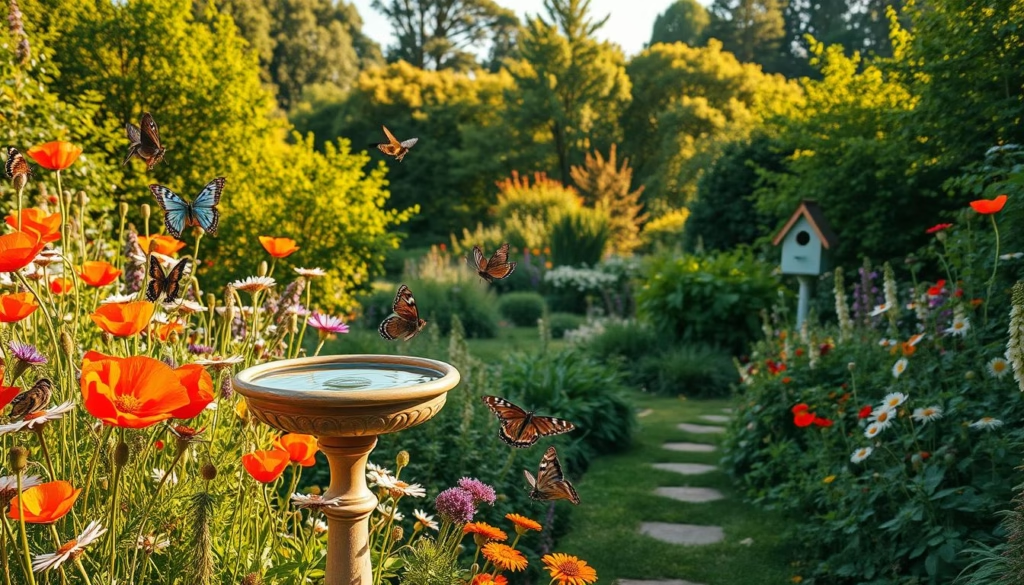
Ever thought about how your garden helps local wildlife? Turning your garden into a wildlife haven in the UK is good for the planet and vital for conservation. With most homes having bigger gardens than all our nature reserves, you can make a big impact. This guide will show you how to attract birds, bees, and butterflies, making your garden a sanctuary for many species.
Key Takeaways
- A wildlife-friendly garden supports local biodiversity.
- 87% of UK households have gardens, covering more land than nature reserves.
- Incorporating diverse plant species boosts wildlife attraction.
- Simple changes, like leaving parts of the lawn unmown, create habitats.
- Reducing artificial lighting can encourage bat populations.
For more tips on making your garden wildlife-friendly, check out this article on how to create a wildlife-friendly garden.
Your garden can be a sanctuary, a place where you nurture not just plants but also the entire ecosystem around you. By embracing sustainable gardening practices, you can help save species threatened by habitat loss and environmental change.
Why Create a Wildlife-Friendly Garden?
Creating a wildlife-friendly garden helps local wildlife and supports conservation in cities. It provides food and shelter, helping various species. This boosts biodiversity, supporting pollinators and other vital creatures, making ecosystems healthier.
Benefits for Local Wildlife
Planting native species and providing food and shelter attracts birds, insects, and more. This helps sustain their populations. Shelter also protects them from predators and harsh weather.
Environmental Impact
Many gardens together can greatly improve environmental health. Your efforts help preserve natural habitats and make cities more resilient to climate change. Gardens with more biodiversity also improve air and soil quality, supporting sustainable living.
Enhancing Your Outdoor Space
A wildlife-friendly garden turns your outdoor area into a vibrant ecosystem. It’s not just beautiful but also offers moments of joy. Watching plants and animals interact can deepen your appreciation for nature.
Choosing the Right Location
The success of your wildlife habitat creation depends on picking the right spot in your garden. Knowing what plants and wildlife need helps you create a thriving eco-friendly garden. This garden will be full of life and activity.
Sunlight Requirements
Many plants need sunlight to grow and attract wildlife. Check how much sunlight each part of your garden gets. Some plants love full sun, while others prefer partial shade.
By mixing both, you can attract a wide range of wildlife. This makes your garden a welcoming place for pollinators and other species.
Sheltered Areas for Wildlife
Creating sheltered spots is key for wildlife. Dense shrubs, hedges, and logs can protect them from bad weather. These areas give animals a safe place to rest and breed.
They help increase your garden’s biodiversity. This makes your garden a better place for wildlife.
Proximity to Existing Habitats
Think about how close your garden is to natural habitats like parks or woodlands. These areas are important for wildlife to move around. Features like hedgehog holes help animals pass through easily.
Connecting your garden to these habitats supports wildlife migration. It also makes your eco-friendly garden design even better.
Selecting Native Plants
Choosing the right native plants is key to a thriving wildlife-friendly garden. Native species fit well in the local environment and need little care. They make your garden more appealing and resilient.
Advantages of Native Species
Native plants are made for the local climate, soil, and pests. They need less fertiliser, water, and pesticides. This choice helps create a healthier ecosystem that supports local wildlife.
Many animals rely on native plants for food and shelter. This makes these plants vital for attracting and keeping various species.
Best Native Plants for UK Gardens
When picking native plants, consider these:
- Blackthorn – Essential for its berries and provides habitat for birds.
- Crab Apple – The flowers attract bees, while fruits support wildlife.
- Elderberry – A great food source for birds and known for its medicinal properties.
Seasonal Interest and Wildlife
Native plants add colour and life to your garden all year. They make your garden look better and support a lively ecosystem. By choosing native plants, you provide food for wildlife all year, turning your garden into a sanctuary.
Providing Food Sources
Creating a haven for wildlife in your garden means making sure there’s plenty of food. This supports biodiversity and makes your outdoor space more lively. By planting different types of plants, you help bees, butterflies, and birds that love seeds and fruits.
Planting Flowering Plants for Pollinators
It’s key to plant flowers that attract pollinators. Pick ones that bloom at different times to keep the food coming all year. Native wildflowers like bluebells and foxgloves are great for bees and butterflies. Adding herbs like lavender and rosemary helps bees and tastes good in cooking.
Choosing Fruit-Bearing Plants
Fruit-bearing plants are good for both you and wildlife. They offer tasty fruits for you and food for birds and insects. Plants like blackcurrants, strawberries, and apple trees are perfect. They help local food webs and make your garden more fun.
Creating a Seed-Filled Environment
Seeds attract birds and insects, making your garden a haven for them. Let some plants grow wild to produce seeds. Sunflowers and coneflowers are great for this. It boosts your garden’s biodiversity, making it a better place for all living things.
| Plant Type | Benefits | Pollinators Attracted |
|---|---|---|
| Wildflowers | Rich in nectar; support diverse species | Bees, Butterflies |
| Fruit-Bearing Plants | Edible produce; attracts birds | Birds, Insects |
| Seed-Producing Plants | Food source for birds; enhances biodiversity | Finches, Sparrows |
Choosing the right plants and creating a variety of food sources makes your garden more appealing. It also helps the local ecosystem. Every small step helps in caring for our environment.
Creating Water Features
Water features are key in a wildlife-friendly garden UK. They provide hydration and support different ecosystems. A well-designed water feature attracts various wildlife, adding beauty and peace to your garden.
Importance of Water in Your Garden
Water is vital for many species, giving them hydration, breeding spots, and habitats. By adding water features, you make your garden welcoming for birds, amphibians, and insects. This boosts biodiversity, turning your garden into a thriving ecosystem.
Designing Ponds for Wildlife
When creating a pond, make sure it has a sloping side for creatures to escape. Use native plants like water lilies and marsh marigolds to keep the ecosystem balanced. These plants provide shelter and food for wildlife and clean the water by filtering out pollutants.
Think about the pond’s size and depth. A 60 cm depth supports amphibians during winter. Shallower areas attract insects. Ensure your pond has both sunny and shaded spots to attract more wildlife.
Maintaining a Clean Water Source
Keeping your water sources clean is essential. Remove debris and algae to avoid stagnant water, which can cause disease. A natural filter or small pump can help keep the water clear. Also, have a shallow dish of water for birds in hot weather to ensure they always have access to water.
Incorporating Shelter and Nesting Sites
Creating a garden that serves as a shelter for wildlife not only enriches the ecosystem but also encourages a diverse range of species to thrive. By adding well-planned nesting sites in gardens, you enhance the possibilities for both insects and birds to establish safe homes. Here are some effective strategies to incorporate these essential elements into your outdoor space.
Building Bug Hotels
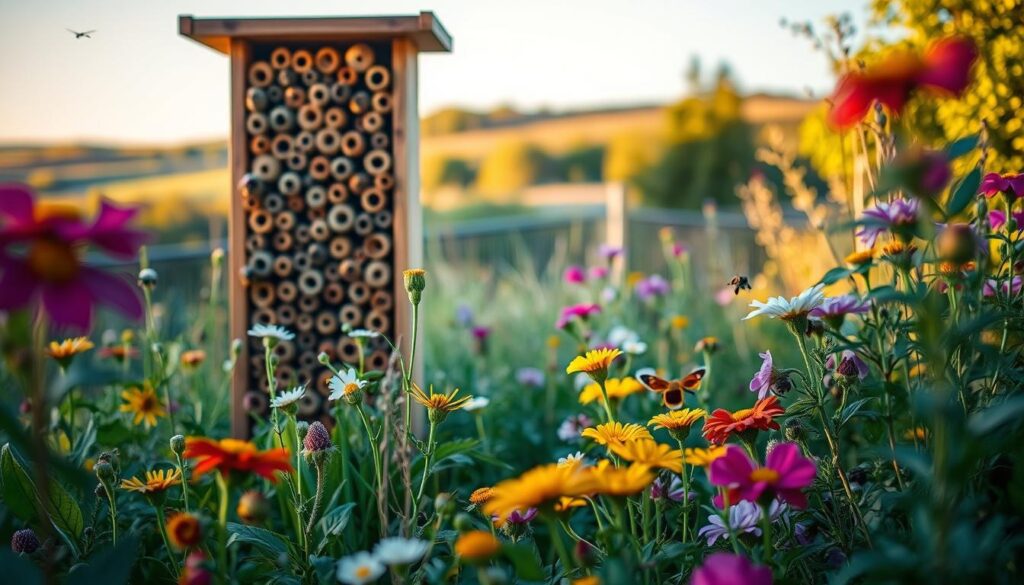
Bug hotels are an engaging and effective way to provide shelter for wildlife within your garden. By constructing simple structures using natural materials like bamboo, wood, and straw, you create a haven for beneficial insects. These hotels can attract pollinators and other vital species, promoting biodiversity. Position them in sunny spots, ideally near your flowering plants, for optimal results.
Establishing Bird Nesting Boxes
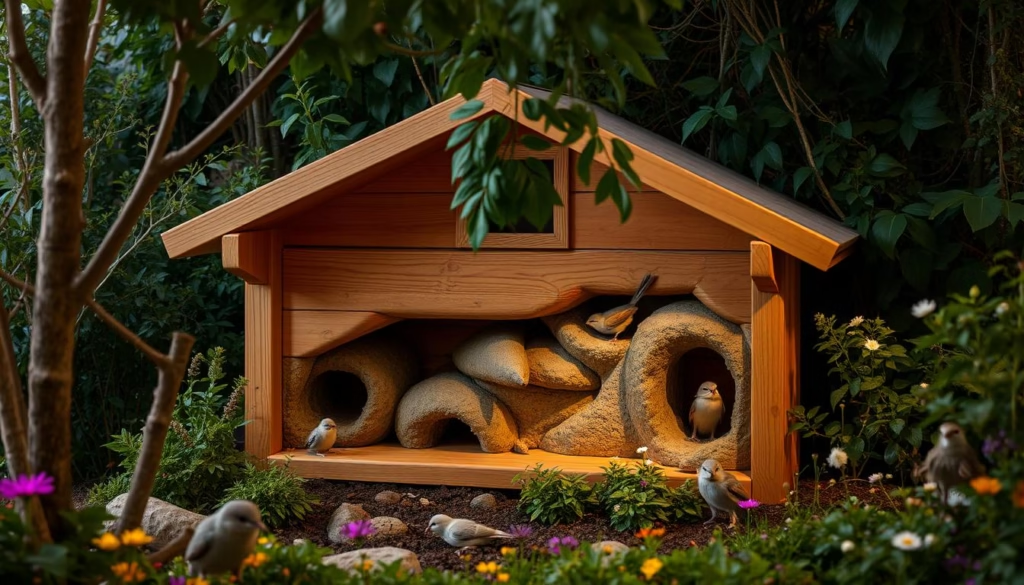
Bird nesting boxes are invaluable additions to any wildlife-friendly garden. These boxes should be placed in sheltered areas away from predators to encourage feathered visitors. You can purchase pre-made boxes or build one yourself from untreated wood. Ensure that multiple boxes are available to cater to various bird species, increasing the chance of successful nesting.
Providing Cover with Dense Vegetation
Dense vegetation plays a key role in protecting animals, mainly during harsh weather. By incorporating native plants such as hawthorns, you create ideal habitats that provide both food and shelter for wildlife. These plants help form a protective barrier, allowing numerous species to feel secure while they forage and nest in your garden.
Minimising Chemicals and Pesticides
Creating a wildlife-friendly garden means using practices that protect the environment. It’s important to cut down on chemicals and pesticides to keep local wildlife safe. Natural pest control methods help solve pest problems without harming beneficial creatures.
Natural Pest Control Methods
Using natural pest control, like introducing ladybirds or planting marigolds, is effective. These methods keep pests in check without harming the environment. Techniques like neem oil or garlic sprays also help keep your garden healthy.
Benefits of Organic Gardening
Organic gardening makes your soil healthier and attracts wildlife, making your garden more lively. It avoids synthetic chemicals, which boosts soil life and biodiversity. Healthier gardens grow stronger plants that fight off pests and diseases better.
Creating a Balanced Ecosystem
A balanced ecosystem depends on the connection between plants, soil, and wildlife. Each part is key to sustainability. Organic gardening and reducing chemicals help beneficial insects thrive, improving plant health and attracting pollinators.
Encouraging Pollination
Creating a thriving garden is linked to understanding pollinators’ role. Bees, butterflies, and other insects are key for pollination. This supports your garden and local ecosystems. By knowing what they need, you can attract them well.
Understanding Pollinator Needs
Different pollinators need different things. Some like certain flowers, while others prefer scents or colours. A diverse range of plants attracts more pollinators, making your ecosystem stronger. Focus on nectar-rich blooms and pollen sources for them.
Attracting Bees and Butterflies
To attract bees and butterflies, pick flowers that bloom at different times. This ensures food is always available, keeping your garden appealing all year. Avoid chemical pesticides, as they can scare them away. Native plants are often more attractive and beneficial.
Creating a Pollinator-Friendly Habitat
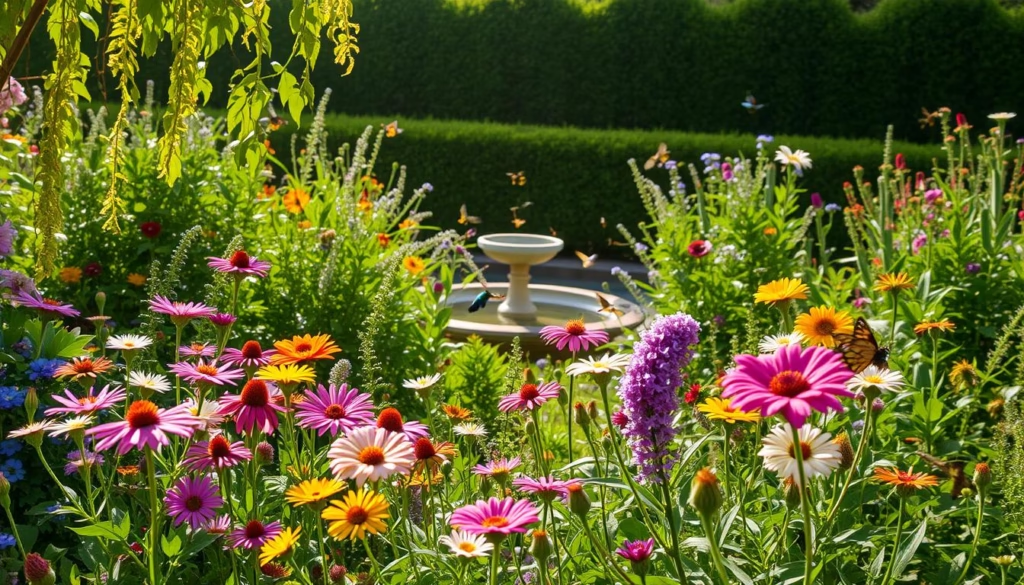
Creating a pollinator-friendly habitat is more than just planting flowers. Add sheltered spots and consistent water sources. Organic methods help maintain a balanced ecosystem, benefiting your garden and local wildlife. Your efforts will increase your garden’s biodiversity and beauty.
| Flower Type | Nectar Production | Blooming Season | Attracts |
|---|---|---|---|
| Lavender | High | Summer | Bees, Butterflies |
| Echinacea (Coneflower) | Medium | Summer to Autumn | Bees |
| Sunflower | High | Summer | Bees, Butterflies |
| Foxglove | Medium | Late Spring to Summer | Bees |
| Bee Balm | High | Summer | Bees, Butterflies |
Engaging with Local Wildlife
Engaging with local wildlife in your garden is a rewarding experience. It deepens your love for nature and raises awareness about biodiversity. Watching wildlife in your garden is exciting, as you get to see their unique interactions.
Observing from a Distance
It’s important to keep a respectful distance when watching wildlife. This way, you don’t disturb their natural behaviour. You can enjoy watching butterflies or bees without stressing them out.
Creating discreet viewing spots can make your experience better. It also helps wildlife feel safe in your garden.
Creating Movement Pathways
Designing paths for wildlife to follow can make your garden more inviting. Features like winding trails and sheltered spots attract animals. These designs let you observe wildlife up close and see nature’s fascinating dynamics.
Educating Others About Wildlife
Sharing your knowledge about wildlife-friendly gardens can inspire others. By teaching friends and neighbours, you help conservation efforts in your area. You can find tips on creating welcoming habitats at this link.
Maintaining Your Wildlife-Friendly Garden
To keep your wildlife-friendly garden alive, you need a regular care plan. This includes pruning plants at the right times and leaving leaf litter. It helps plants grow and adds nutrients to the soil.
Watching which animals visit your garden is key. It helps you know what changes to make. This way, you can make your garden more welcoming to different species.
Also, your garden needs to adapt to changes like weather and new buildings. Being ready for these changes helps your garden stay healthy. With ongoing care, your garden will be a great place for wildlife to live.