Ever thought about whether battery tools really make gardening better, or if old-fashioned manual tools are the way to go? Exploring the differences between battery and manual gardening tools is key. This article will help you decide if you should upgrade or stick with what you have for your garden care. By thinking about your gardening needs and likes, you’ll know the best choice for your garden.
Key Takeaways
- Understand the fundamental differences between battery and manual gardening tools.
- Consider your gardening needs when deciding to upgrade gardening tools.
- Evaluate the performance and efficiency of battery vs manual options.
- Recognise the long-term benefits of investing in battery-powered tools.
- Appreciate the connection and simplicity offered by manual tools.
- Factor in ecological considerations when choosing your tools.
Understanding the Basics of Gardening Tools
Gardening tools are key to keeping your outdoor space looking great. There are many types, including battery-powered and manual tools. Each has its own benefits to make gardening better.
What Are Battery-Powered Tools?
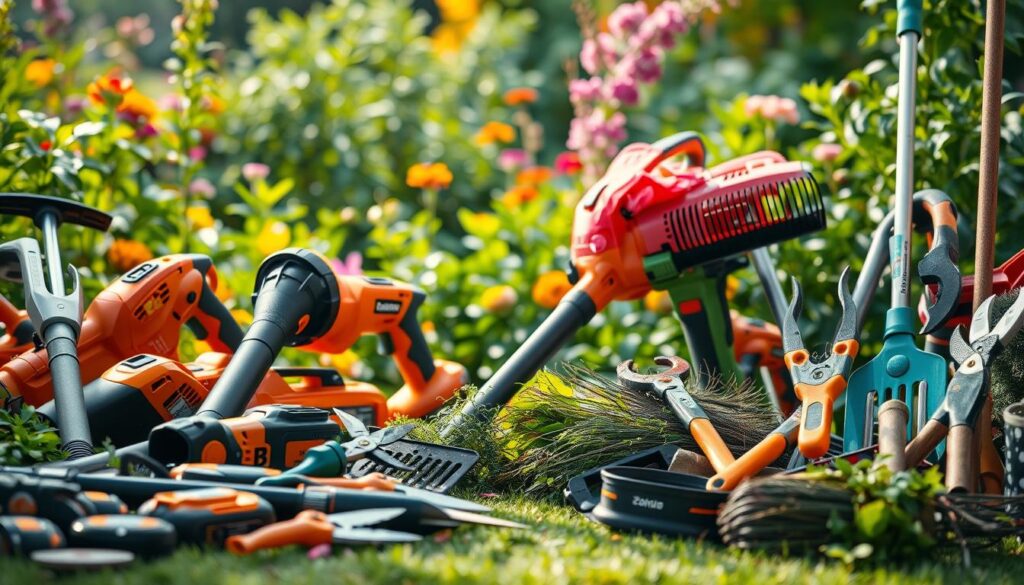
Battery-powered gardening tools are designed for ease and efficiency. They include hedge trimmers, leaf blowers, and lawn mowers. These tools are light and easy to move, without the need for cords.
Their batteries last long, making them perfect for many gardening jobs. Key features of these tools include:
- Lightweight construction, making them easy to handle.
- Elimination of cords, increasing flexibility during use.
- Quick charging options, reducing downtime between tasks.
The Appeal of Manual Tools
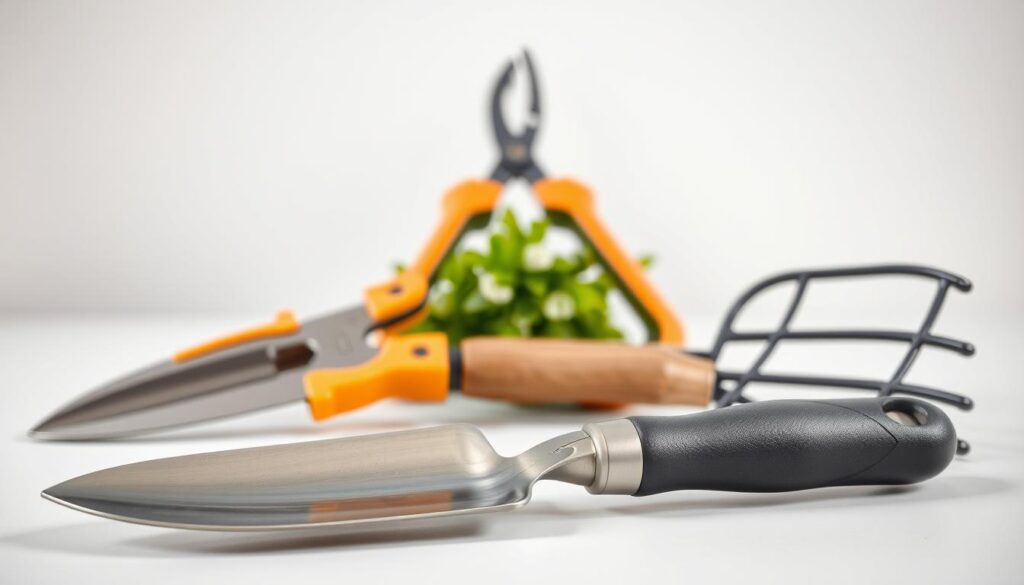
Manual garden tools, like hoes, rakes, and shovels, are loved for their simplicity and dependability. They let gardeners connect with nature, as they work directly with the soil. The benefits of using manual tools include:
- Durability, with many tools designed to last for years.
- Low maintenance and no reliance on batteries or electricity.
- Cost-effectiveness, making them accessible for all gardeners.
Key Differences Between Battery and Manual Tools
Understanding the differences between battery and manual tools is key to choosing the right gardening gear. Each type has its own strengths and weaknesses. These affect how well they work, how heavy they are, and how much upkeep they need.
Performance and Efficiency
Battery tools are often faster and more efficient, perfect for big gardens where time is precious. They can handle tough jobs quickly. On the other hand, manual tools give you more control and precision. This is great for gardeners who value accuracy.
This makes the debate between battery and hand tools interesting. Each has its own advantages, depending on what you need.
Weight and Portability
Weight is a big factor when comparing battery and manual tools. Battery tools are heavier because of their motors and batteries. This can make them harder to carry around.
Manual tools, on the other hand, are light and easy to move. They’re perfect for tasks that need quick and agile movements. If you value ease of use, your choice might depend on the task at hand.
Maintenance Requirements
Maintenance needs differ a lot between battery and manual tools. Battery tools need regular care to keep batteries and motors working well. Manual tools, by contrast, are simpler to maintain. They just need occasional cleaning and sharpening.
This simplicity is a big plus for those who like straightforward maintenance routines.
Advantages of Battery-Powered Gardening Tools
Battery powered garden tools are gaining popularity. They make gardening easier and more fun. These tools improve your gardening tasks, changing how you care for your garden.
Ease of Use and Comfort
Battery powered garden tools are easy to use. They don’t have cords, so you can move freely. They’re also light, making gardening less tiring.
You can adjust their speed for different tasks. This lets you handle delicate plants or tough weeds easily.
Reduced Physical Strain
These tools are great for people with mobility issues or injuries. They make gardening less hard. Unlike manual tools, they don’t need as much strength.
They’re designed to be comfortable. This helps prevent discomfort and makes gardening more enjoyable.
Versatility and Functionality
Battery powered garden tools are very versatile. They can do many tasks, like trimming and digging. Many have interchangeable attachments, making them even more useful.
This means you’re ready for any gardening task. It makes gardening easier and more enjoyable.
The Benefits of Manual Gardening Tools
Manual gardening tools bring unique benefits to your gardening journey. They offer a hands-on approach and a closer bond with nature. Working directly with your garden lets you feel the soil and understand your plants better.
Connection to Nature
Manual gardening tools help you dive deeper into your garden’s world. The feel of these tools in your hands makes you more aware of your plants and surroundings. This connection shows the manual tools benefits, making your garden feel more personal.
Simplicity and Reliability
Manual tools are simple and reliable, unlike battery-powered ones. Their design means less chance of breakdowns while gardening. With the right care, they last for many years, proving their cost-effectiveness gardening value. High-quality materials, like stainless steel, make them durable.
Cost-Effectiveness
Choosing manual gardening tools is a smart money move. They cost less upfront and need less upkeep than battery tools. For those watching their budget, manual tools are a great choice. They let you spend more on other gardening essentials. Learn more about ergonomic design in these tools to extend their life and your comfort by visiting this detailed resource.
When to Consider Upgrading to Battery Tools
Deciding when to upgrade gardening tools often comes down to certain signs. These signs show you need more power. Watching your gardening habits and task demands is key. It helps decide if moving to battery tools will boost your gardening efficiency.
Signs That You Need More Power
Struggling with heavy manual tools is a clear sign you need battery tool power. Look out for these signs:
- Feeling tired after simple gardening tasks.
- Often waiting because your tools aren’t efficient.
- Your garden is getting too big for your current tools.
Assessing Your Gardening Needs
Doing a detailed check of your gardening needs can show if battery tools are right for you. Think about these points:
- How often you garden.
- The types of plants and landscaping you have.
- If you can handle traditional tools physically.
Understanding these points and the benefits of upgrading can guide your decision. It helps you choose the right tools for your garden.
Cost Considerations: Battery vs Manual
Choosing gardening tools can be a big decision, and money matters a lot. The debate is often about the cost of battery vs manual tools. Battery tools are pricier at first but can save money in the long run. They make gardening easier and reduce strain, which is a big plus.
Manual tools are cheaper to start with. But, they might not be as efficient. Your choice depends on your gardening needs and budget.
Initial Investment vs Long-Term Savings
Battery tools are more expensive because of their tech and batteries. But, they make gardening easier and can save you money over time. Manual tools are cheaper upfront but might not be as efficient.
Think about how often you garden and what you need. This will help you decide which tools are best for you.
Maintenance Costs Over Time
Maintenance is another key factor. Battery tools need battery replacements and checks, which can cost money. But, they are easy to use and maintain if you do regular checks.
Manual tools, on the other hand, need little maintenance and last a long time. This means you save money on replacements and repairs.
| Type of Tool | Initial Investment | Long-Term Savings | Maintenance Costs |
|---|---|---|---|
| Battery Tools | Higher | Potentially High | Batteries and servicing costs |
| Manual Tools | Lower | Generally Low | Minimal maintenance, more durable |
Environmental Impact: Sustainability Matters
When picking gardening tools, think about their impact on the planet. It’s key to know how to dispose of battery tools properly. Using eco-friendly tools can lessen your gardening’s environmental harm.
Battery Disposal and Recycling
Throwing away batteries wrong can harm the environment. In the UK, many councils have special spots for recycling batteries. This stops bad stuff from ending up in landfills. By recycling, you help make gardening greener.
Eco-Friendly Manual Options
Manual tools are good for the planet. They’re often made from bamboo, which is strong and breaks down easily. Choosing these tools helps the environment and cuts down on battery use. Tools like hand trowels and pruning shears made from recycled stuff are great for gardening the green way.
| Type of Tool | Materials Used | Environmental Impact |
|---|---|---|
| Battery-Powered Tools | Plastic, Lithium-ion Battery | Requires proper disposal and recycling |
| Manual Tools | Bamboo, Recycled Metal | Biodegradable and sustainable materials |
Noise and Vibration: Comfort in Gardening
Choosing between battery-powered and manual tools greatly affects your gardening experience. The noise and vibration levels are key to your comfort. Battery tools are quiet, making your garden a peaceful place to be.
This quietness lets you enjoy gardening fully, without any noise distractions.
Quiet Operation of Battery Tools
Battery tools are known for their silent operation, reducing noise pollution. They are a big improvement over old petrol tools. These tools let you garden in peace, without loud noises.
They also come with ergonomic features to make gardening more comfortable.
The Experience of Using Manual Tools
Manual tools are quieter but can cause more vibration. This vibration can lead to hand and arm fatigue. They are reliable and connect you to gardening, but managing vibration is key.
It’s important to stay comfortable while gardening to keep your sessions enjoyable and productive.
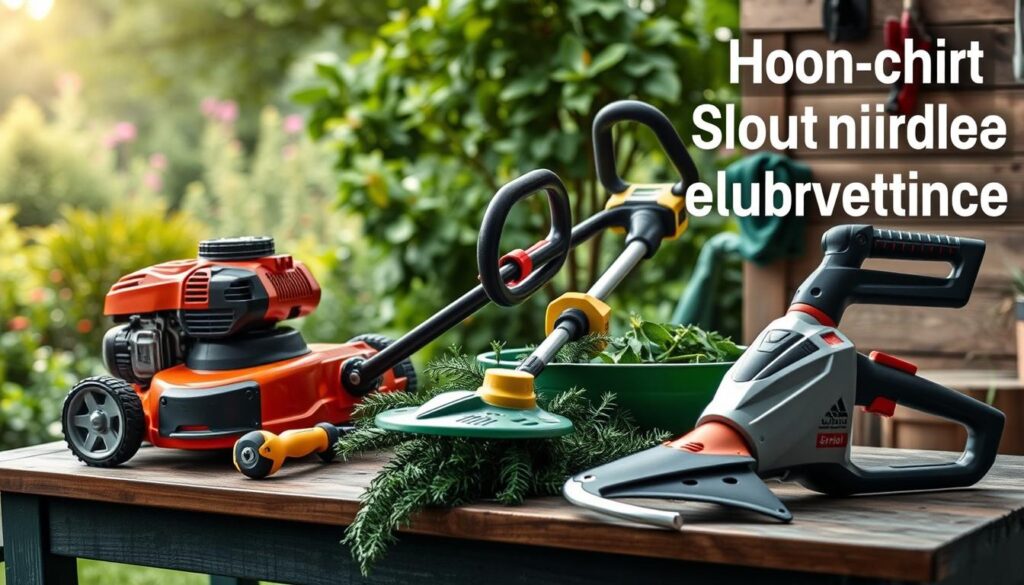
Compatibility with Other Equipment
Understanding how your gardening tools work together is key. Making sure your battery tools fit with other accessories can make gardening better. Adding the right accessories to your toolkit makes gardening easier and more enjoyable.
Battery Tool Systems and Accessories
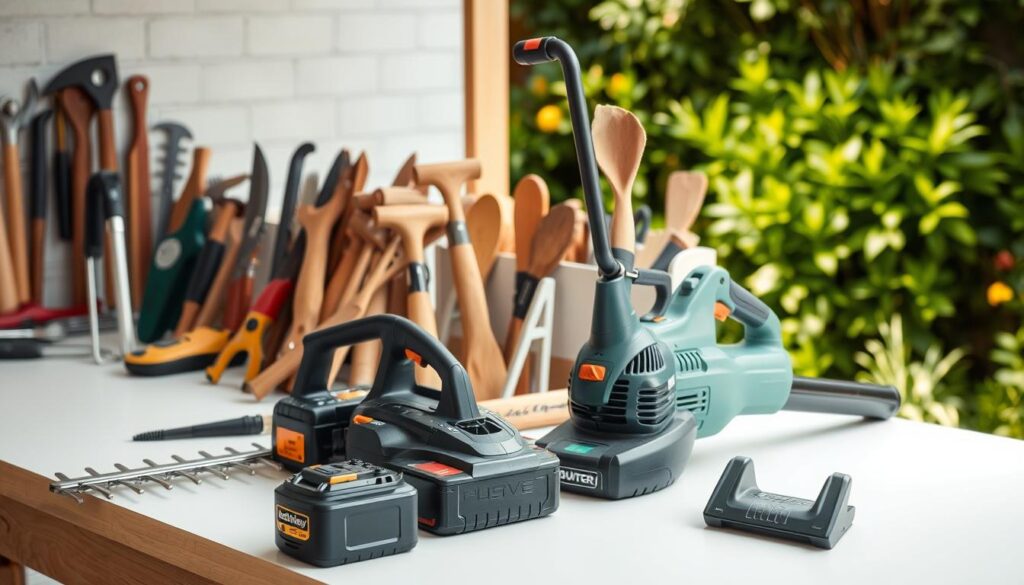
Many brands have tools that use the same battery. This means you can charge one battery for all your tools. Look for brands like Ryobi, Black+Decker, and Makita for a wide range of accessories. This makes gardening more efficient and convenient.
Integrating Manual Tools into Your Routine
Even with battery tools, manual tools are important for gardeners. Adding manual tools like hand shears and spades to your routine can help. They work well with electric tools, making gardening more effective.
Personal Preferences: Finding What Suits You Best
Choosing the right gardening tools is often a matter of personal preference. Your unique gardening style and approach play significant roles in what tools will suit you best. Whether you lean towards the modern appeal of battery-powered equipment or the classic simplicity of manual tools, reflecting on your personal gardening experience can guide your selection process.
Gardening Style and Approach
Your gardening style greatly affects the type of gardening tools you might prefer. For instance, if you enjoy a hands-on approach to gardening, you may find that manual tools resonate more with your personal preference gardening tools. On the other hand, if your gardening style emphasises efficiency and speed, battery-powered tools might be your ideal choice. Understanding this relationship allows you to choose equipment that enhances your gardening experience and aligns with your overall gardening approach.
Exploring Personal Comfort Levels
Physical comfort is key when selecting gardening style tools. A tool may be efficient, but if it doesn’t feel comfortable in your hands, it can lead to fatigue and frustration. Assess the comfort in gardening equipment you use, considering weight, grip, and ergonomics. Take the time to try out various options; the best tool may just be one that feels right and supports your gardening tasks with ease.
Conclusion: Making the Right Choice for Your Garden
When picking gardening tools, it’s all about what you need. Battery tools are easy to use and save effort, but they cost more and need extra care. Manual tools, on the other hand, let you feel connected to your garden and are cheaper upfront. But, they do require more effort from you.
Weighing the Pros and Cons
Think about what’s important to you. Knowing the good and bad of each tool helps you choose wisely. Whether you like the convenience of battery tools or the straightforwardness of manual ones, picking what fits your gardening style is key.
Tailoring Your Tool Selection to Your Needs
Choosing the right gardening tools is about what you need as a gardener. Look at your gardening style, garden size, and common tasks. This way, you can pick tools that make gardening easier and more enjoyable for you.