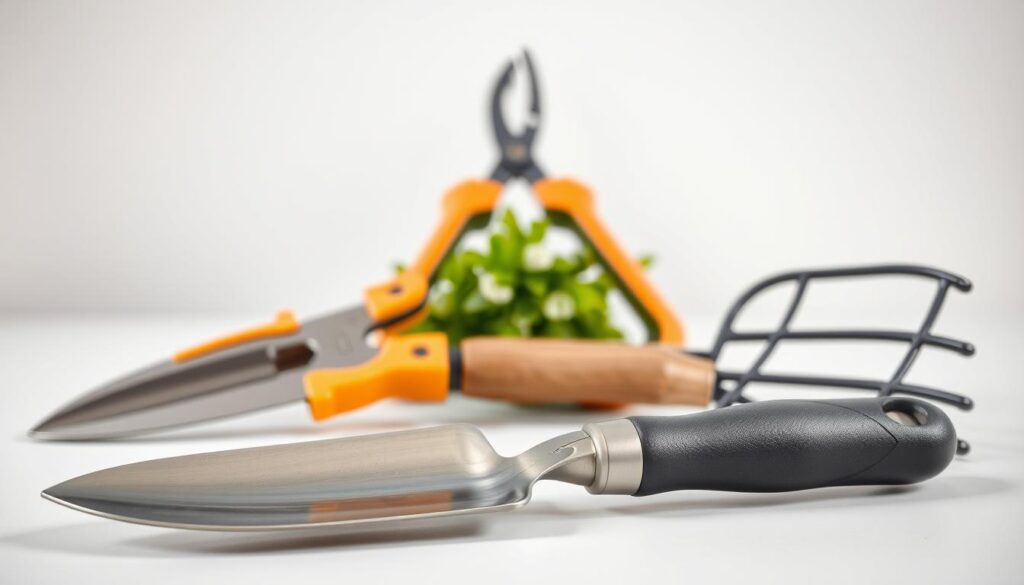
Have you ever wondered why many gardeners choose Japanese gardening hand tools? Is it the beautiful craftsmanship or the top-notch quality? As you look into authentic Japanese gardening hand tools, you’ll see why they’re more than just tools. They’re key partners in gardening.
In today’s world, gardening is both an art and a science. Knowing the value of these tools can take your gardening to the next level. Let’s explore the benefits, craftsmanship, and top picks for Japanese gardens. You’ll learn what makes these hand tools truly special.
Key Takeaways
- Japanese gardening hand tools are renowned for their superior craftsmanship and durability.
- The cultural significance of these tools enhances the gardening experience.
- Understanding what makes the best tools for Japanese gardens can optimise your gardening efforts.
- Choosing the right tools can significantly impact your efficiency and precision in the garden.
- Maintaining your tools properly ensures longevity and optimal performance.
- Explore authentic brands to ensure you are investing in quality products.
The Unique Craftsmanship of Japanese Tools
The artistry behind traditional Japanese gardening tools is amazing. It comes from centuries of history and cultural importance. These tools have changed over time, adding new features while keeping old traditions.
Learning about their history shows their value. It also shows the hard work and skill that makes them special in gardening.
History of Japanese Gardening Tools
Japanese gardening tools have a long history, over a thousand years old. They started with designs for farming. As farming got better, tools were made for different tasks, showing the bond between culture and nature.
The Edo period saw more tools made, with great care for detail. These tools were not just useful but also showed Japanese beauty. This history shows the deep respect for making things well in Japan.
Techniques Behind the Craftsmanship
The making of Japanese tools combines old techniques and top materials. Artisans use special steel for strength and sharpness, key for gardening. The forging process makes blades strong and beautiful.
The tools are also light, making them easy to use. The design of handles and blades shows a deep understanding of beauty and use. This makes Japanese gardening tools more than tools; they are an extension of the gardener’s hands.
Benefits of Using Japanese Gardening Hand Tools
Japanese gardening hand tools can really improve your gardening. They are made with care and offer special benefits. These tools are durable, precise, and last a long time, making them a great choice for your garden.
Durability and Longevity
Japanese tools are known for their durability. They are made from top materials that can handle gardening tasks well. Brands like Niwaki and Okatsune use the best steel, so these tools last longer.
This means you can use them for many years. They are a smart choice because they save you money in the long run.
Precision and Efficiency
These tools are also very precise and efficient. They are designed to fit comfortably in your hand. This makes gardening less tiring and lets you work for longer.
The sharpness and design of tools like the Nōkō make gardening easier. They help you dig, plant, and prune quickly and well.
| Benefit | Description |
|---|---|
| Durability | Made from high-quality materials for long-lasting use. |
| Longevity | Resists wear and tear, making them a cost-effective choice. |
| Precision | Ergonomic design enhances grip and handling. |
| Efficiency | Sharp tools facilitate quicker and easier gardening tasks. |
Using these tools can change how you garden. They are an investment that will help you for years to come.
Essential Japanese Hand Tools for Your Garden
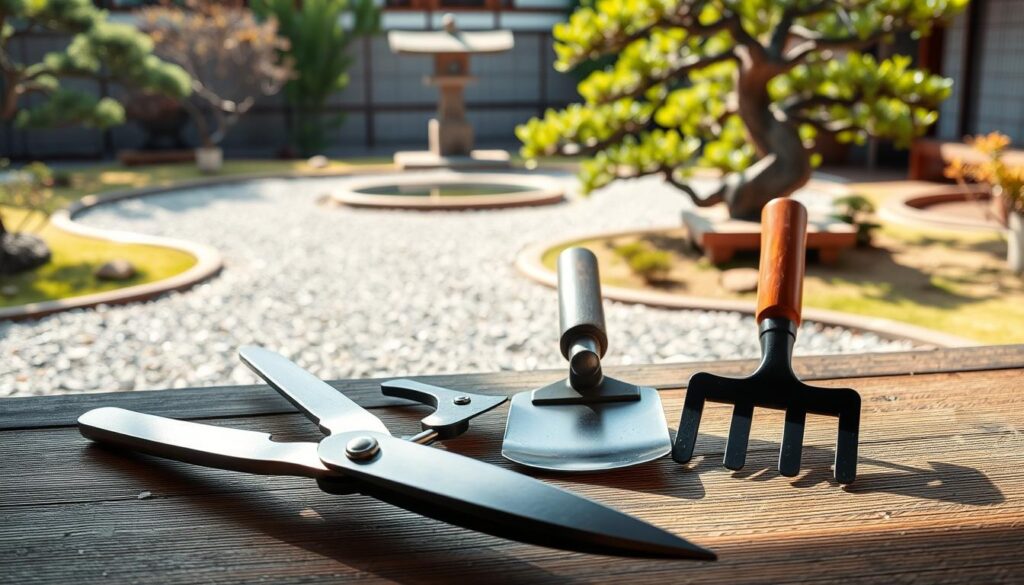
Having the right tools in your garden can make a big difference. Essential Japanese gardening tools offer both function and beauty. This section will introduce you to three key tools: the Nōkō, the trowel, and the scythe. Each tool is designed to tackle different gardening tasks, making your tool set complete and effective.
The Nōkō (Hori Hori Knife)
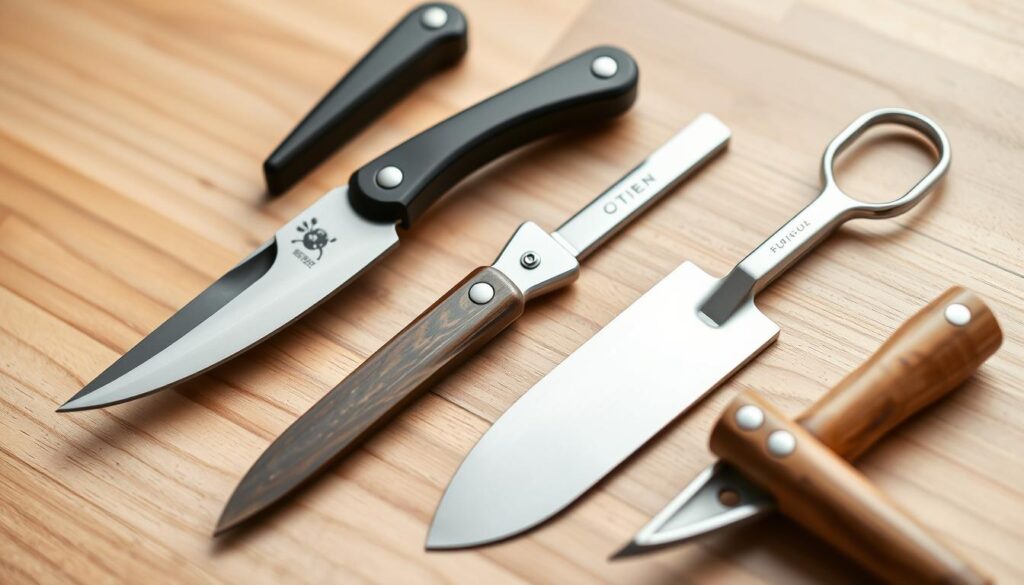
The Nōkō, also known as a hori hori knife, is a must-have for gardeners. It has a sharp edge for cutting and a serrated edge for tearing. Its strong blade is great for heavy tasks, making it perfect for both experts and beginners. Brands like Niwaki make high-quality Nōkō knives.
The Trowel
A well-made trowel is invaluable. Japanese trowels are precise for digging and moving plants. Their curved blade makes scooping soil easy, and the sharp tip helps with digging. A premium trowel set will make gardening easier.
The Scythe
The Japanese scythe is great for cutting large areas of grass or weeds. Its design makes cutting easier, reducing hand strain. It’s perfect for keeping your garden tidy. Brands like ARS offer durable and high-quality scythes.
| Tool | Functionality | Key Brands |
|---|---|---|
| Nōkō | Weeding, planting, digging | Niwaki |
| Trowel | Transplanting, scooping | ARS |
| Scythe | Grass management, cutting | ARS |
Comparing Japanese Tools with Western Alternatives
Exploring gardening tools reveals an interesting comparison between Japanese and Western tools. The materials and construction of these tools greatly affect their performance and lifespan. Knowing these differences can help you choose the right tools for a better gardening experience.
Materials and Construction
Japanese gardening tools are known for their high-quality materials. Japanese steel is famous for its hardness and sharpness. This steel makes cutting precise and reduces the need for sharpening.
Western tools, on the other hand, are often made of stainless steel or carbon steel. While durable, they may not be as sharp as Japanese steel.
Japanese tools have handles made from traditional woods like oak or cherry. These materials offer comfort and beauty. Western tools usually have metal or plastic handles, which may not be as comfortable or supportive.
User Experience Insights
Gardeners who’ve used both types of tools often notice a big difference. They find Japanese tools easier to use and less tiring. The lightweight design and thoughtful features make gardening more enjoyable.
Western tools might be tougher, but they can be heavier and more tiring to use. Many gardeners prefer the finesse and agility of Japanese tools. This shows how important comfort and ease of use are in gardening.
Selecting the Right Tool for Your Needs
Choosing the right Japanese gardening tools can make gardening better. Knowing your gardening style helps pick the right tools. Whether you’re new or experienced, the right tools improve efficiency and fun. Think about your gardening activities and which tools fit your way.
Assessing Your Gardening Style
Start by thinking about your gardening. Do you grow flowers, veggies, or landscapes? Different gardening needs different tools. For example, a Hori Hori knife is great for digging and cutting plants.
This knife shows how important it is to have tools that do many things. They save time and effort.
Recommendations for Beginners
For new gardeners, some tools are key. The Hori Hori knife is a great start. It helps with weeding and planting.
You might also want a trowel for precise soil work and a Japanese pruning saw for clean cuts. Check out tips for Japanese gardening tools for beginners. Good tools lead to a great gardening journey.
Maintenance Tips for Japanese Gardening Tools
Looking after your Japanese gardening tools right means they last longer and work better. Knowing how to care for them can make gardening more enjoyable. Here, we share key tips on cleaning, care, and sharpening to keep your tools in top shape.
Cleaning and Care
Always clean your tools after use to stop dirt and sap from sticking. This stops rust and keeps them in good condition. Use a soft cloth or brush to clean handles and blades. For tough dirt, warm water and a bit of soap work well.
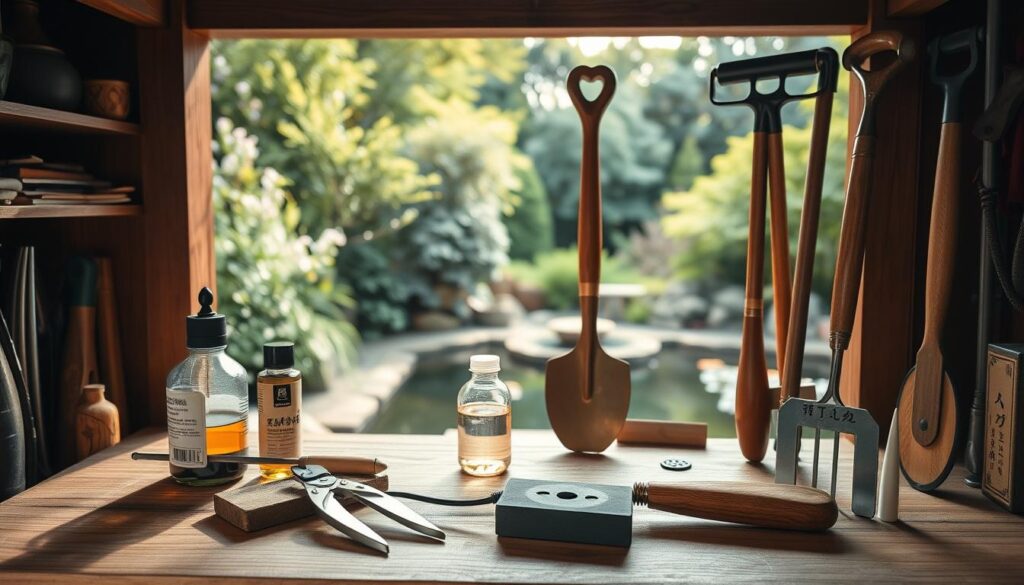
It’s important to store your tools in a dry spot. A shed or toolbox with good air flow helps prevent rust. You could hang them on a wall or use a pegboard for easy access and air.
Sharpening Techniques
Keeping blades sharp is key to Japanese gardening tool care. Sharp tools make cleaner cuts, which is better for plants. Use whetstones to sharpen. Start with a coarse stone, then a finer one for honing. Always sharpen at the right angle to keep the blade sharp.
If sharpening yourself is hard, consider getting a professional to do it. Many experts can make your tools sharp again. This lets you enjoy your garden more.
Finding Quality Japanese Gardening Tools
Starting your garden journey with authentic Japanese tools is exciting. Knowing where to find these tools can make a big difference. Many trusted shops offer a wide range of high-quality tools online and in stores. Learning to spot authentic brands is key to a great gardening experience.
Where to Purchase
Online stores have a vast selection of Japanese gardening tools. They often sell genuine products straight from Japan. Some top websites to check out include:
- Niwaki – Known for its top-notch tools and skillful craftsmanship.
- ARS – A trusted brand for reliable and precise gardening tools.
- Japanese-Bamboo – Focuses on real products that use traditional methods.
Don’t forget to visit local garden centres and tool shops. They might have genuine tools too. Always ask about their sources when looking for Japanese gardening tools.
Recognising Authentic Brands
Choosing authentic Japanese gardening tools means looking for certain signs. Genuine items have:
- Brand signs that show well-known makers with a long history.
- Quality materials that show they’re durable and well-made.
- Details in design and finish that show expert work.
By following these tips, you can truly enjoy Japanese gardening tools. You’ll also support skilled artisans who love their craft.
The Role of Innovation in Traditional Tools
The world of Japanese gardening tools is changing in exciting ways. These tools, full of tradition, are getting better thanks to new ideas. Gardeners find that new features make these tools easier to use, keeping their classic quality.
Modern Adaptations
New features like ergonomic designs and light materials are being added. These changes help you garden for longer without getting tired. Modern tech, like better sharpening systems, keeps your tools sharp and ready to go.
Sustainability in Tool Production
More gardeners want tools that are good for the planet. Tools made with eco-friendly materials help reduce waste. Local makers focus on green practices, making sure your tools are good for the earth. Choosing sustainable tools helps our planet stay healthy.
How to Incorporate Japanese Tools into Your Gardening Routine
Adding Japanese gardening tools to your routine can make gardening more fun and efficient. By learning how to use these tools, you can do more in less time. Knowing when to plant and weed helps you work with the seasons and care for your plants better.
Practical Usage Tips
Tools like the Nōkō or trowel are designed to be comfortable. This comfort helps prevent tiredness while you work. Always hold your tools firmly for better control, and clean them often to keep them sharp. For the best results, check out techniques for using gardening tools that make your work easier.
Timing and Techniques
Timing is key for great gardening results. Spring is best for planting seedlings, and late summer for weeding and soil care. Using the right techniques with your tools can make gardening more effective. Adjusting your method for different plants and soil types can help them grow better. Taking care of your Japanese gardening tools ensures they last long, helping you enjoy your garden.
Stories from Gardeners Who Use Japanese Tools
Many gardeners have seen a big change by using Japanese tools. They share how these tools have made gardening better. They talk about how these tools help them work more efficiently and accurately.
Personal Testimonials
People love the Nōkō for its many uses in gardening. One gardener said it makes weeding and planting easier, leading to a better garden. Others praise the Trowel for its balance and comfort, which helps them work longer without getting tired.
Expert Opinions
Experts agree that Japanese tools are top-notch. They say these tools improve gardening results because of their quality and design. These tools last long, so gardeners can focus on their work without worrying about broken tools.
Conclusion: Embracing the Japanese Gardening Tool Revolution
Japanese gardening tools open a new world for gardeners. They bring unmatched craftsmanship, durability, and precision. This makes gardening more efficient and fun.
The unique design of these tools changes how you garden. It lets you work in your garden with ease and joy.
Final Thoughts
Think about adding Japanese gardening tools to your collection. They do more than just help you garden. They show the beauty and tradition of each tool.
Choosing these tools is a way to respect a long-standing cultural heritage. It values hard work and care for nature.
Encouragement to Explore Further
Start looking into Japanese gardening tools. They can make your gardening better, whether you grow flowers, veggies, or landscapes. Using these tools means more than just gardening. It’s about connecting with the art of gardening.
Further Resources on Japanese Gardening Tools
Exploring Japanese gardening tools can be exciting. There are many gardening books and communities that offer great insights. These resources can help you, whether you’re new or experienced in gardening.
Recommended Books
Some books are key to understanding Japanese gardening tools. They share traditional techniques and practical tips. Reading these books can help you choose the right tools for your garden.
Online Communities and Forums
Joining online communities can make your gardening journey better. These platforms let you share experiences, ask questions, and get advice. It’s a great way to learn and feel part of a gardening community.