Ever thought about how watering your plants could boost their health? It’s key to use the right watering methods for each plant type. The tools you choose can greatly affect your plants’ health, growth, and water use.
Good irrigation helps plants grow well and can cut down your water bills. This is good for your garden and your pocket.
Looking into different plant watering solutions can change your gardening game. Managing soil moisture and picking the right irrigation gear are all important. They help create a lush and lively garden.
Key Takeaways
- Different plants have unique watering needs, affecting their growth and health.
- A variety of watering tools can optimise your garden’s efficiency.
- Understanding soil types is key for choosing the right watering methods.
- Regularly check your watering to boost plant health and save water.
- Using eco-friendly watering tools is good for your garden and the planet.
Understanding the Importance of Proper Watering
Watering plants right is key to their health. Too little or too much water can cause problems. These include nutrient shortages, diseases, and even death. Knowing how water affects plants, soil moisture, and spotting watering mistakes helps use the right tools.
How Watering Affects Plant Health
Watering affects how plants take in nutrients and grow roots. The right water amount lets roots absorb nutrients for strong growth. Using the right watering methods ensures each plant gets what it needs, making your garden flourish.
The Role of Soil Moisture
Soil moisture is vital for plant health. Tools like moisture meters help check soil water levels. They tell you when to water, avoiding too much or too little.
Signs of Under or Overwatering
Spotting watering mistakes can save your plants. Signs of too little water include wilting and yellow leaves. Too much water makes the soil soggy or muddy. If you see these signs, it’s time to change your watering ways. For more on correct watering, see this useful guide.
Different Plant Types and Their Watering Needs
Knowing how much water each plant needs is key to their health. Each plant has its own needs. Wrong watering can cause problems. This part talks about the watering needs of succulents, flowering plants, and leafy greens and herbs. It helps you find the right way to water your plants.
Succulents and Cacti
Succulents and cacti do well in dry places because they can store water. They need less water, as too much can harm them. Use tools like spray bottles to mist or gently water them every two to three weeks.
Flowering Plants
Flowering plants need the right amount of water to bloom well. They need regular water, but how often depends on the season. Use watering cans with a narrow spout to water them right, so the roots get water without the leaves getting too wet.
Leafy Greens and Herbs
Leafy greens and herbs grow best in moist soil. They need regular water, more so when it’s hot. Drip irrigation systems are great for keeping the soil moist, reducing water loss and making sure your plants get enough water.
| Plant Type | Watering Frequency | Recommended Tools |
|---|---|---|
| Succulents and Cacti | Every 2-3 weeks | Spray bottles, watering wands |
| Flowering Plants | Weekly or bi-weekly | Watering cans, hoses with nozzles |
| Leafy Greens and Herbs | 2-3 times per week | Drip irrigation systems, soaking hoses |
Best Watering Tools for Your Garden
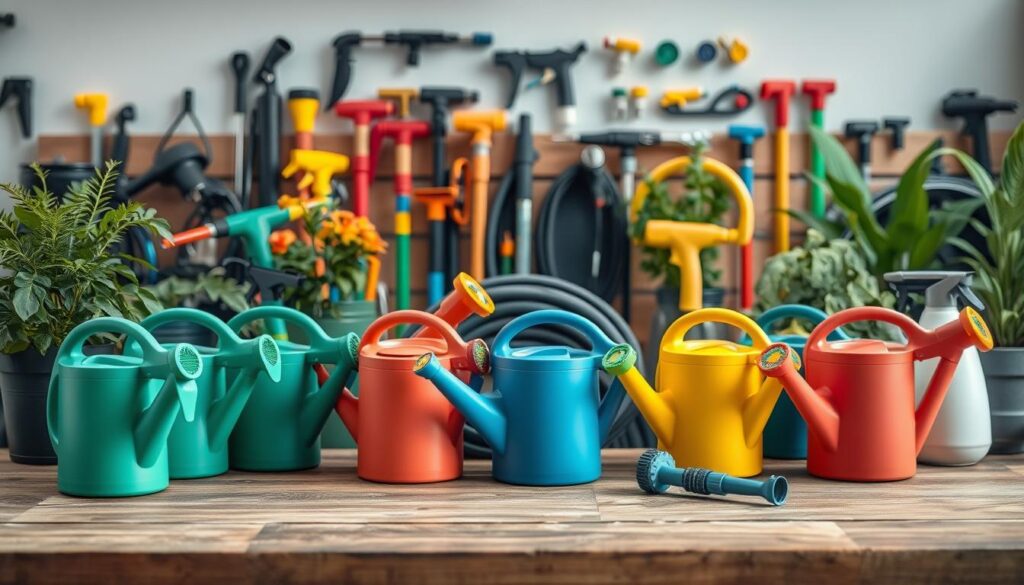
Choosing the right tools is key to a healthy garden. There are many options, each suited for different needs and plants. The top tools include watering cans, hose attachments, and drip irrigation systems. Each has its own benefits to improve your watering routine.
Watering Cans
Watering cans are great for precise watering, ideal for delicate seedlings and potted plants. They are easy to carry and use, perfect for small gardens or indoor plants. Choose ones that let you control the water flow, so you can water each plant just right.
Hose Attachments
Hose attachments are flexible for bigger areas. They come with different nozzles and sprinklers. This lets you change the spray to fit your garden’s needs. It saves time and makes sure all parts of your garden get enough water.
Drip Irrigation Systems
Drip irrigation systems are the most efficient way to water. They send water straight to the roots, cutting down on evaporation and runoff. They work best in sandy soils that dry out fast. These systems keep the soil moist, helping your plants grow well.
Choosing the Right Watering Technique
Choosing the right watering method for your garden is key to keeping plants healthy. It’s important to pick methods that fit your garden’s needs and layout. Soaker hoses and sprinklers are two popular options, each with its own benefits. Hand watering can also add a personal touch to your routine.
Soaker Hoses vs. Sprinklers
Soaker hoses slowly release water, giving it straight to the roots. This keeps the soil moist, great for beds with many plants. Sprinklers, on the other hand, cover more ground but can cause runoff in tight spaces. Knowing the differences helps you pick the best method for your garden.
Hand Watering Best Practices
Hand watering lets you control the water flow, helping you see how plants react. Here are some tips to make hand watering more effective:
- Use a watering can or a hose with a soft spray nozzle to prevent soil erosion.
- Water early in the morning or late in the evening to reduce evaporation.
- Target the base of the plants, not the leaves, to help roots absorb moisture.
By choosing the right watering techniques and being thoughtful, you can make your plants flourish and save water.
Seasonal Considerations for Watering
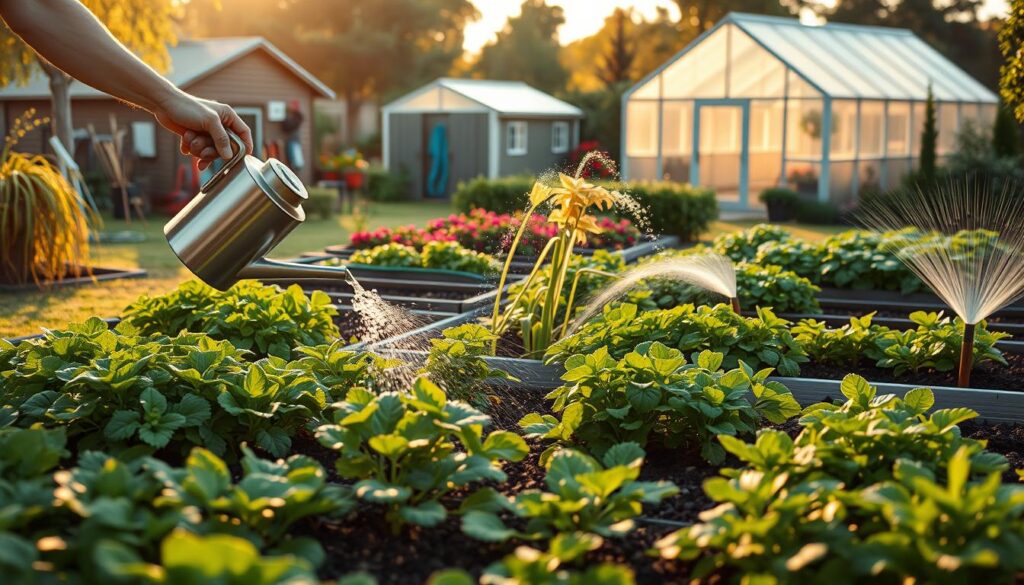
As the seasons change, so should your watering approach. Seasonal gardening tips can greatly help keep plants healthy all year. Knowing what your plants need in different weather helps you water better. This way, you save water and keep your plants thriving.
Adjusting Watering Practices in Summer
Summer brings hot weather and more evaporation. Watering early in the morning helps. This way, moisture reaches the roots before it evaporates. Using shade for plants and drip irrigation systems also helps.
Winter Watering Tips
In winter, plants need less water but not none. Check soil moisture often. Watering less but keeping soil moist is key. Mulch helps keep moisture in and protects roots.
Urban vs. Rural Gardening Watering Needs
Gardening in cities has its own set of challenges. These include limited space and resources. You must use efficient watering methods. In contrast, rural gardens often have more access to natural water, like wells or ponds. This allows for different ways to water your plants.
Watering in Small Spaces
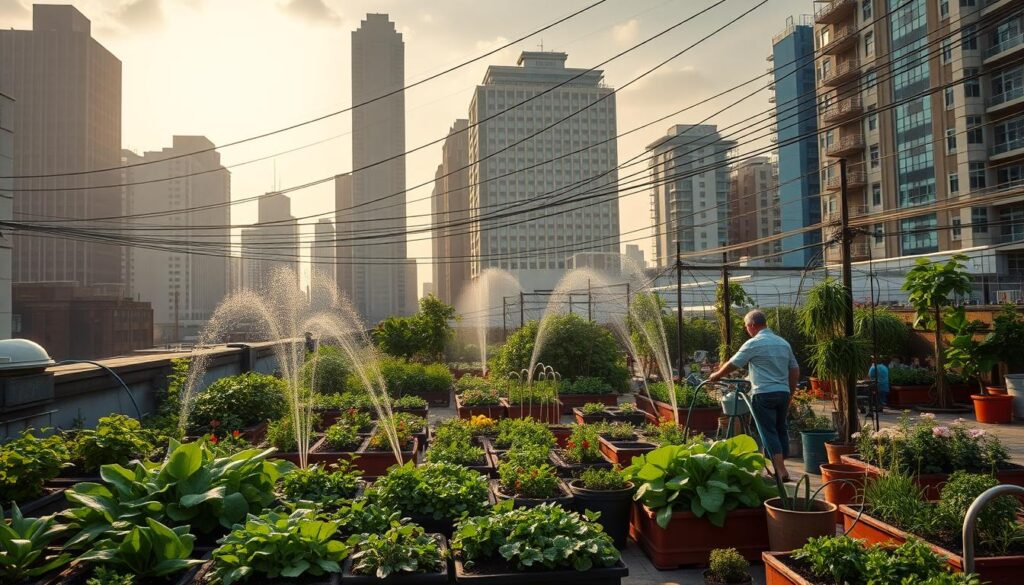
In urban gardens, water is precious. You need to make every drop count. Use drip irrigation or water-efficient containers to water plants well without wasting water. The right tools can help overcome the challenges of limited water access.
- Watering cans with narrow spouts for targeted watering
- Soaker hoses that slowly release water directly to the soil
- Rainwater collection systems to conserve water
Rural Water Sources and Techniques
Rural gardens have more water options. You can use streams, lakes, or wells for irrigation. This lets you try traditional methods like:
- Irrigation ditches for distributing water across large areas
- Wells fitted with pumps for consistent water supply
- Ponds that can serve as reservoirs for irrigation
Choosing the right method for your garden helps plants thrive and is good for the environment. With the right approach, you can overcome the challenges of watering in both cities and countryside.
Eco-Friendly Watering Tools
Using eco-friendly watering tools can change how you garden. It helps you care for your garden and the planet. It’s key to keep your garden healthy and the environment safe.
Rain Barrels
Rain barrels are a great example of eco-friendly tools. They collect rainwater for your garden. This saves water from the city’s supply.
Using rainwater makes your garden more sustainable. It also cuts down your water bills. You can put a rain barrel under your downspouts for easy water collection.
Water-Saving Devices
Water-saving devices like moisture sensors are also important. They check the soil and water it when needed. This makes watering more efficient and keeps plants healthy.
By using these devices, you help save water. And your plants get the right amount of moisture to grow well.
Common Mistakes with Watering Tools
Watering your plants right is key to their health. Many gardeners make mistakes that harm their plants. Paying attention to your plants’ signs can help you water better.
Ignoring signs like wilting leaves or yellowing foliage is a big mistake. This neglect is one of the main errors to avoid.
Ignoring Plant Signals
Plants show us when they need water through visual signs. Learning to spot these signs can make your garden thrive. For example, wilting means they need more water, while yellow leaves mean too much.
Adjusting your watering based on these signs helps your plants grow better.
Overusing Automatic Watering Systems
Automatic watering systems save time, but they can be too much. It’s important to check your plants regularly and adjust the system as needed. This balance is key to avoiding watering mistakes.
By combining automated systems with manual checks, you can ensure your plants get the right amount of water.
For more tips on avoiding watering mistakes, check out this resource. It has advice to improve your gardening and help your garden flourish.
Maintenance of Your Watering Tools
Keeping your watering tools in good shape is key to their long life and best performance. Clean and store them right to stop damage from dirt and debris. This care not only makes your tools last longer but also makes watering more efficient.
Cleaning and Storing Your Tools
After gardening season ends, clean your tools well. Rinse out any dirt to stop blockages later. Store them in a dry, covered spot to keep them safe from the weather.
Hang hoses or store watering cans upside down to stop rust. This helps keep them in good condition.
Regular Checks for Leaks and Wear
Checking your tools regularly is important. Look for leaks in hoses and connections. Even small leaks can waste a lot of water.
Fixing worn-out parts quickly keeps your tools working well. It also stops bigger problems from happening. This way, you keep your gardening tools in top shape and ready to use.